
DRIES VAN NOTEN SS27: FIGHTING REALITY THROUGH NAP DREAMS
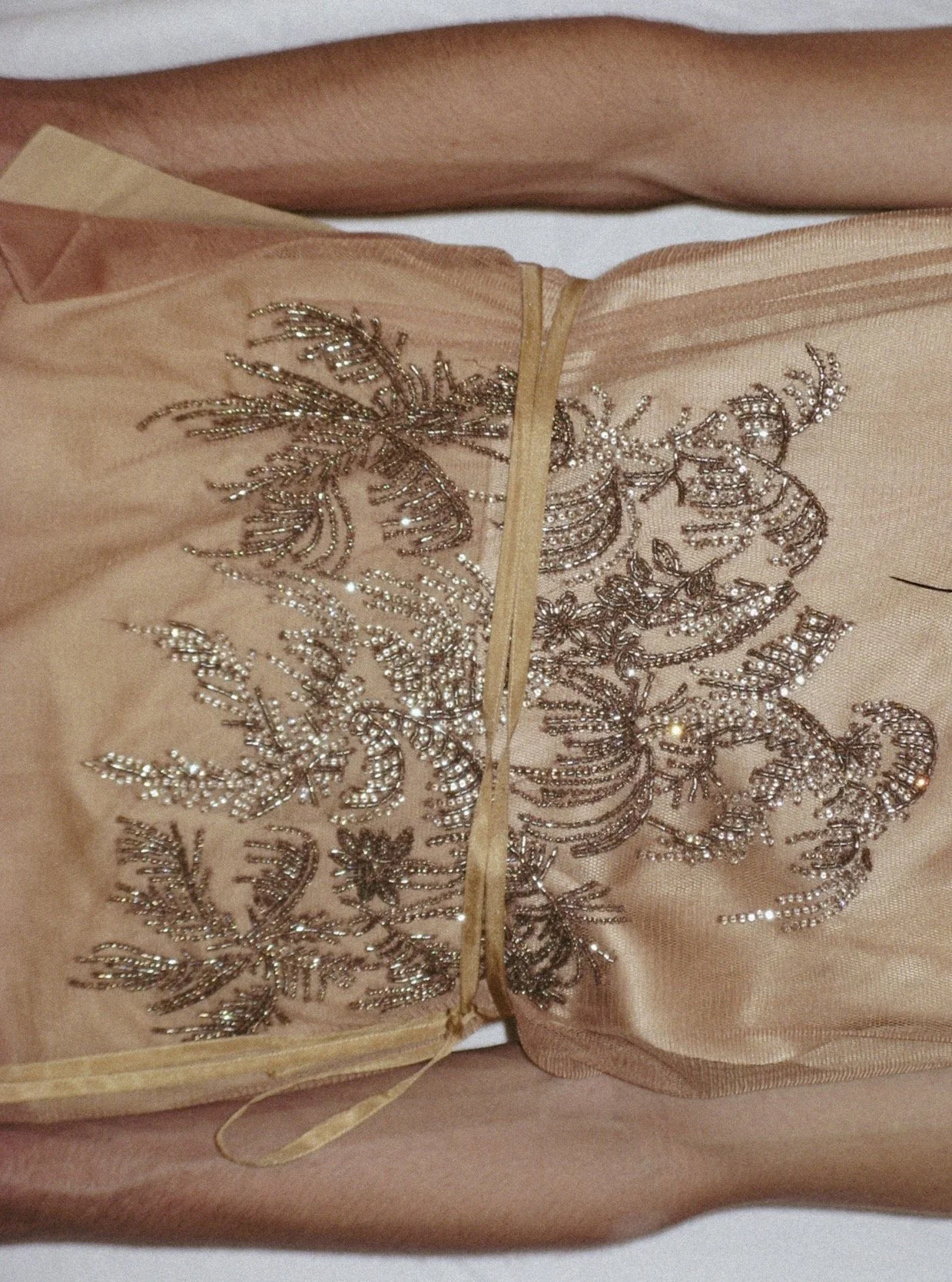
What does menswear look like just after waking up? Not polished. Not particularly interested in behaving. Its edges are soft, its logic slightly impaired, its sensuality still intact from sleep. For Spring/Summer 2027, Julian Klausner approaches Dries Van Noten’s wardrobe from precisely this unstable place: somewhere between the real and the imagined, the dressed and the undressed, the body and its fantasy.
The collection takes its cue from Stéphane Mallarmé’s “L’Après-Midi D’Un Faune” (“The Faun’s Afternoon”), the 1876 poem in which a half-man, half-animal creature wakes from an afternoon sleep in the woods after dreaming of nymphs. He cannot quite determine what was real and what was fantasy. Rather than resolve the confusion, he returns to sleep.
Klausner is interested in that blur, the moment when the senses have not yet caught up with consciousness. His clothes operate accordingly. They are less constructed than allowed to happen. Tailoring softens. Shirts loosen. Fabrics fall close to the body without gripping it. Wardrobe staples lose their usual authority and become strangely intimate. A relationship between accessories can be observed through the paired selection of textiles.
The ambition is simple: to make something that feels light and delicate. But here, lightness is not weightlessness for its own sake. It is a rejection of the stiffness traditionally built into menswear. Klausner takes the masculine wardrobe and lets it exhale.
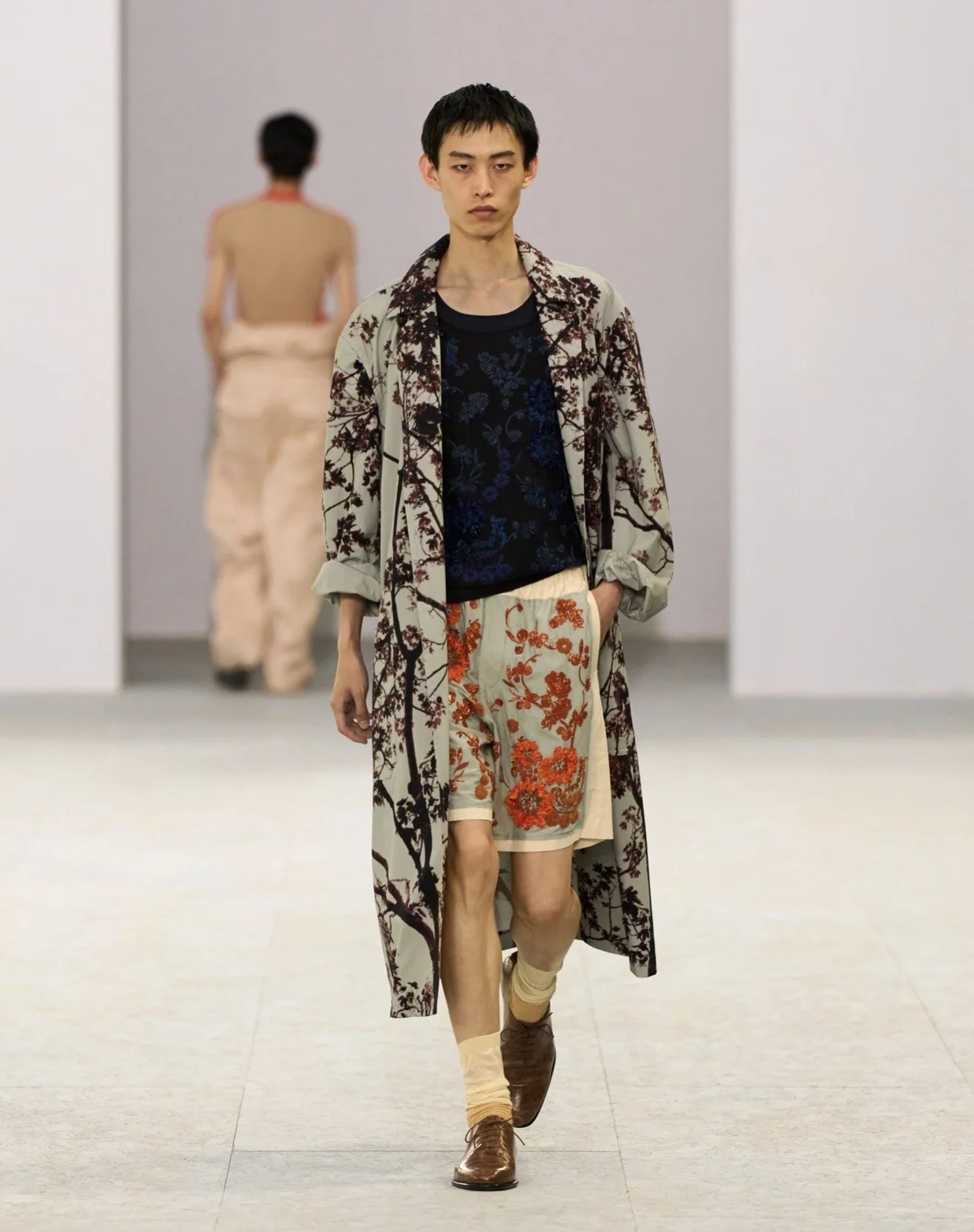
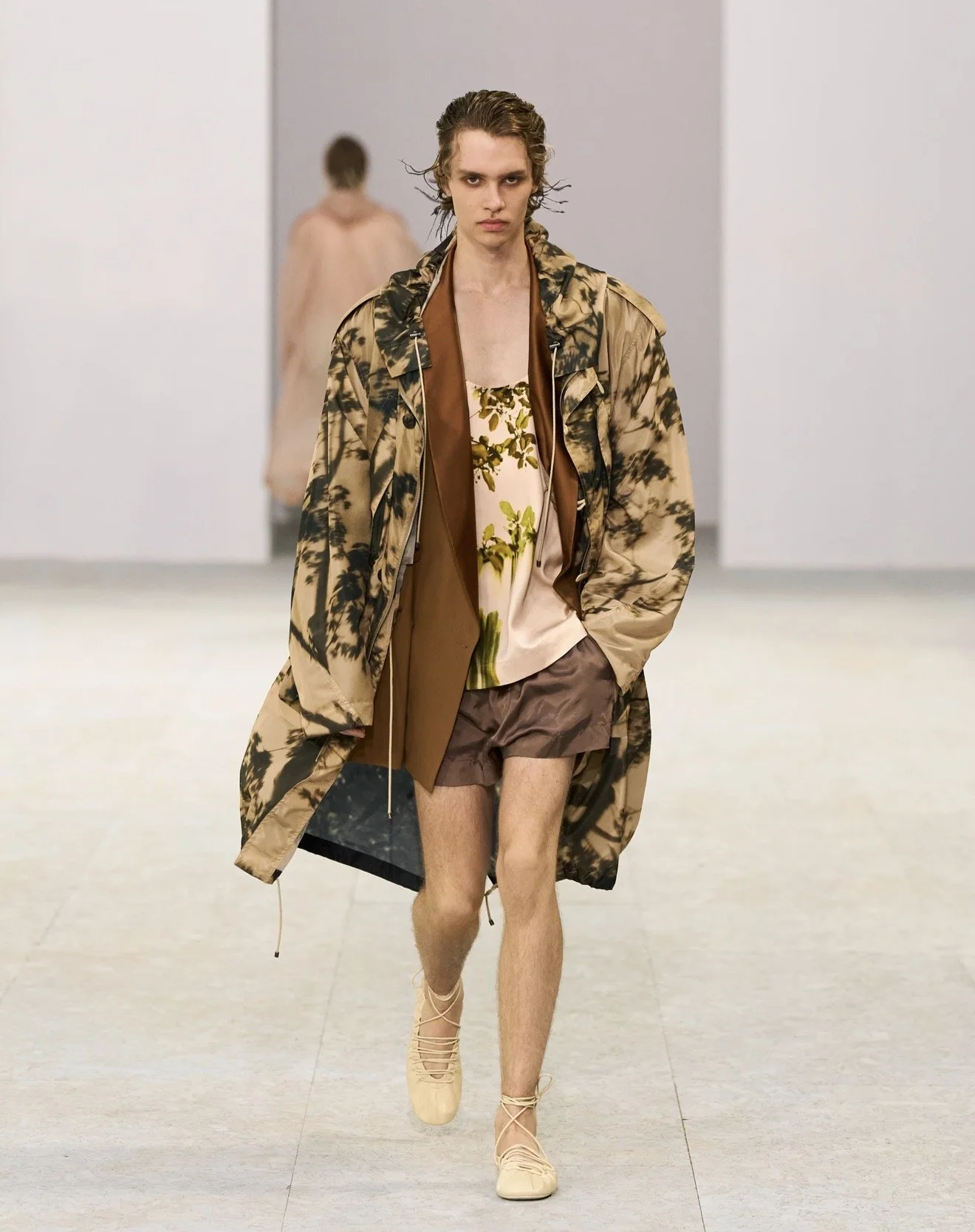
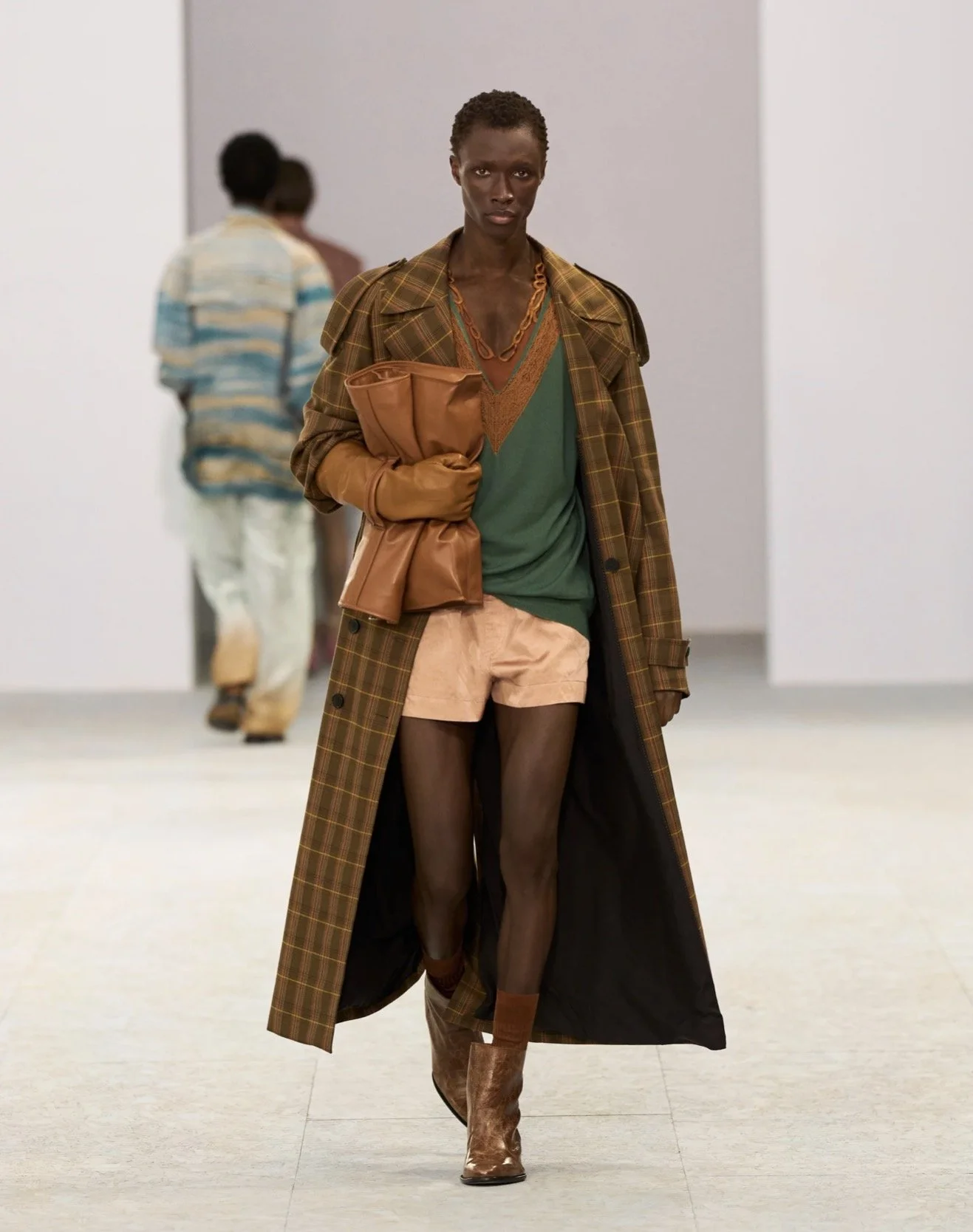
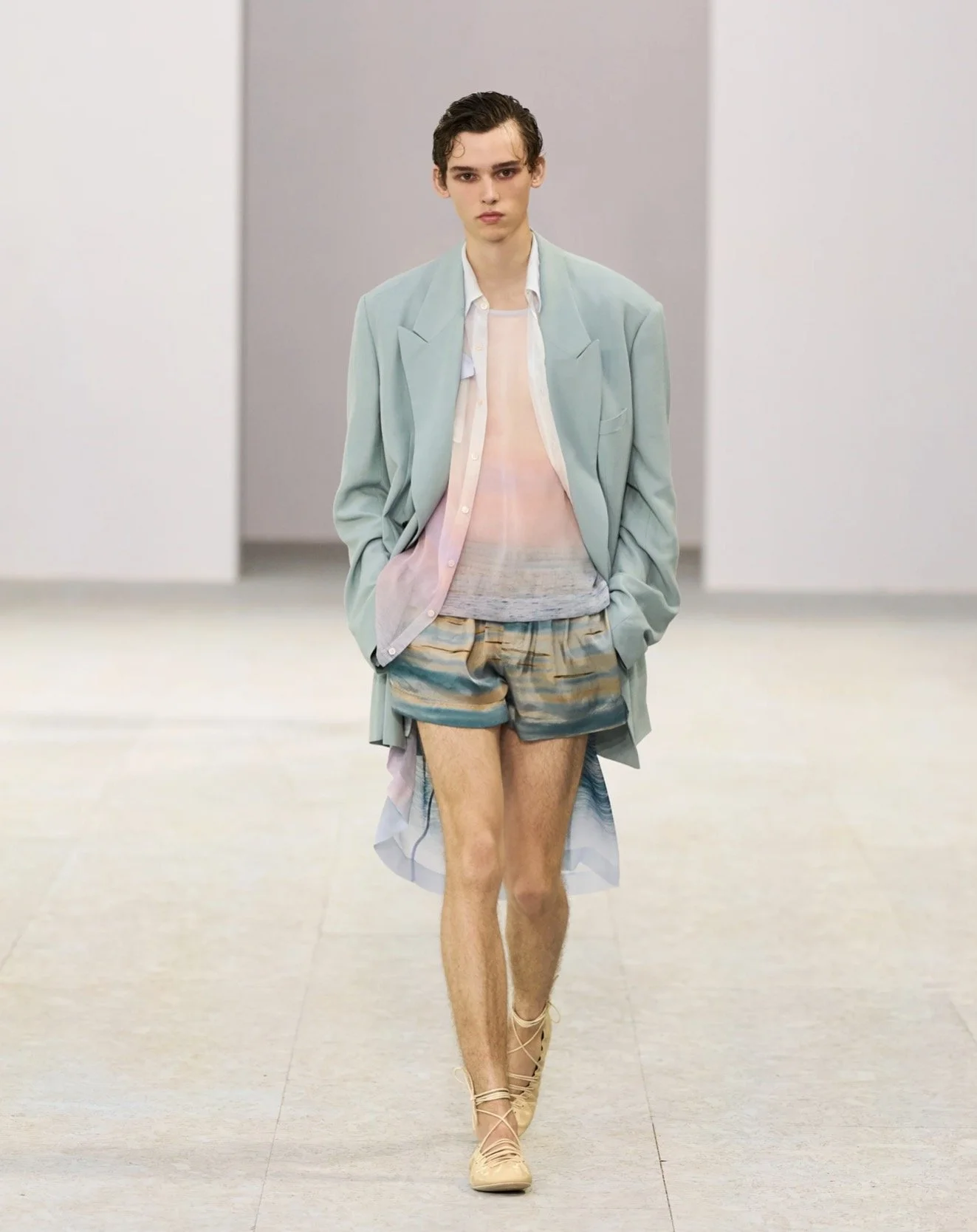
There are hints of lingerie, suggestions of undress, clothes that seem almost caught halfway through being put on. Sensuality is present without becoming a spectacle. It is in the fabric, in the exposure of the body, in the softness of a silhouette. The clothes do not announce sex; they imply it. That distinction matters.
The palette works in much the same way. Blush and earthy cosmetic tones sit close to the skin, while saturated greens and blues cut through them with the force of nature. The effect is not pretty so much as visceral: skin, soil, foliage, water, sleep. The colours feel as if they have been absorbed rather than chosen. Nature, here, is not scenery. It is a state of mind.
The collection imagines the masculine wardrobe lying beneath a tree, somewhere between consciousness and sleep. There is no ambition to dominate the landscape or even particularly to interact with it. This is clothing for rest, a tribute to the simple, almost radical pleasure of doing nothing in nature.
Then come the charms: little found objects arranged on chains, like the fragments a bird might collect while building a nest. They are deliberately modest, almost absurdly tender. Yet they give the collection one of its clearest ideas: fantasy needs objects. Dreams leave debris behind. Klausner makes that debris wearable.
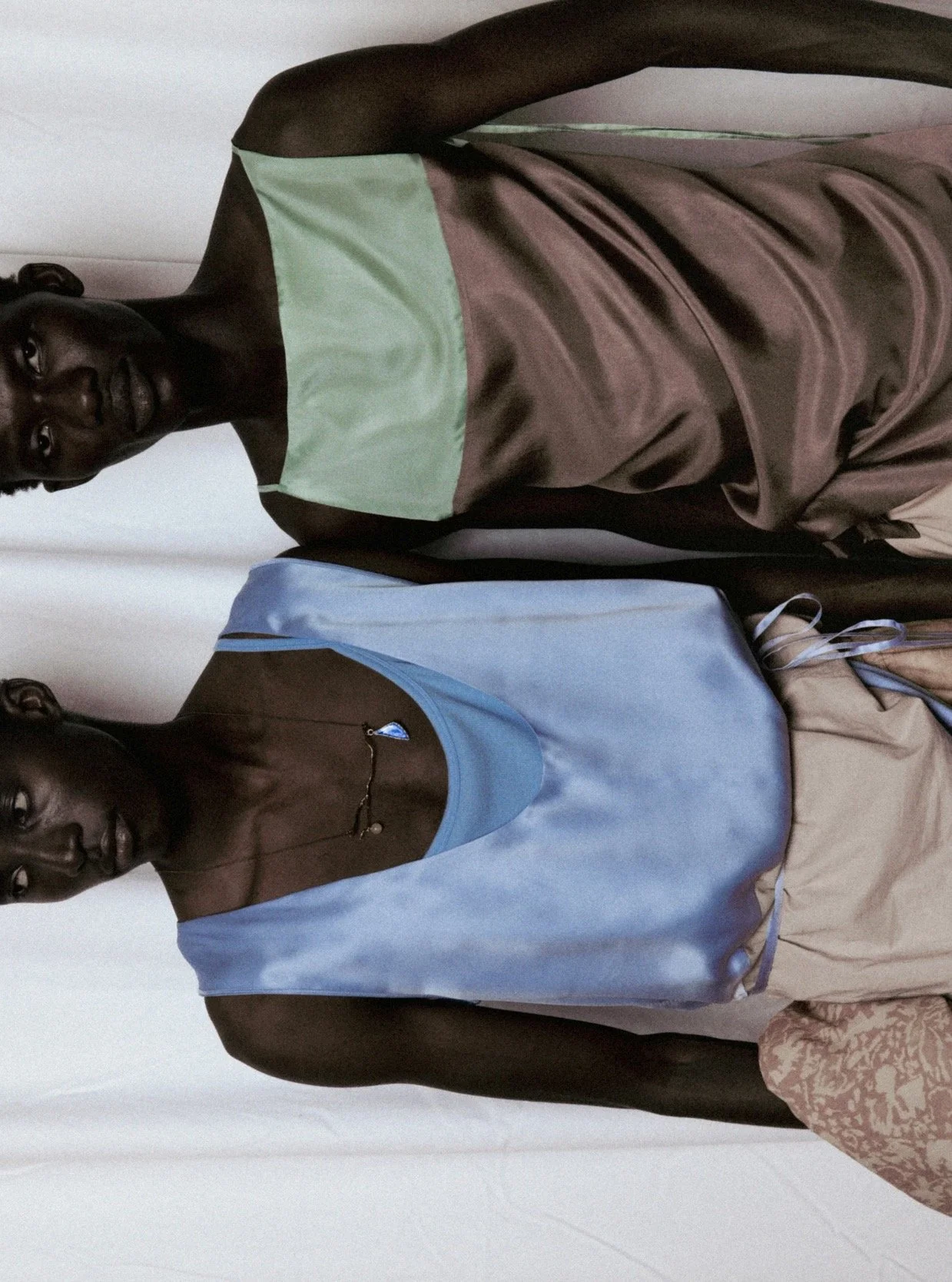
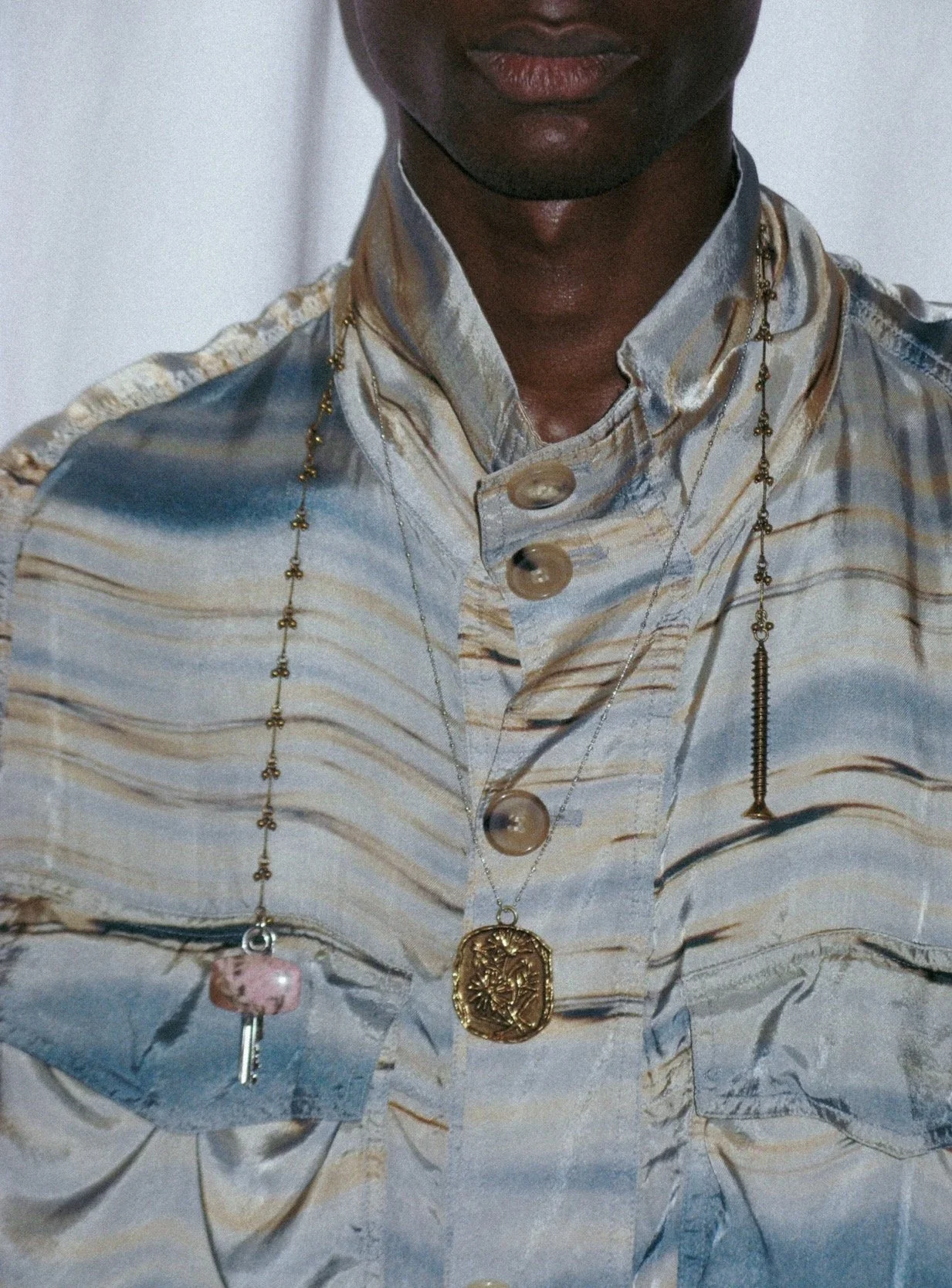
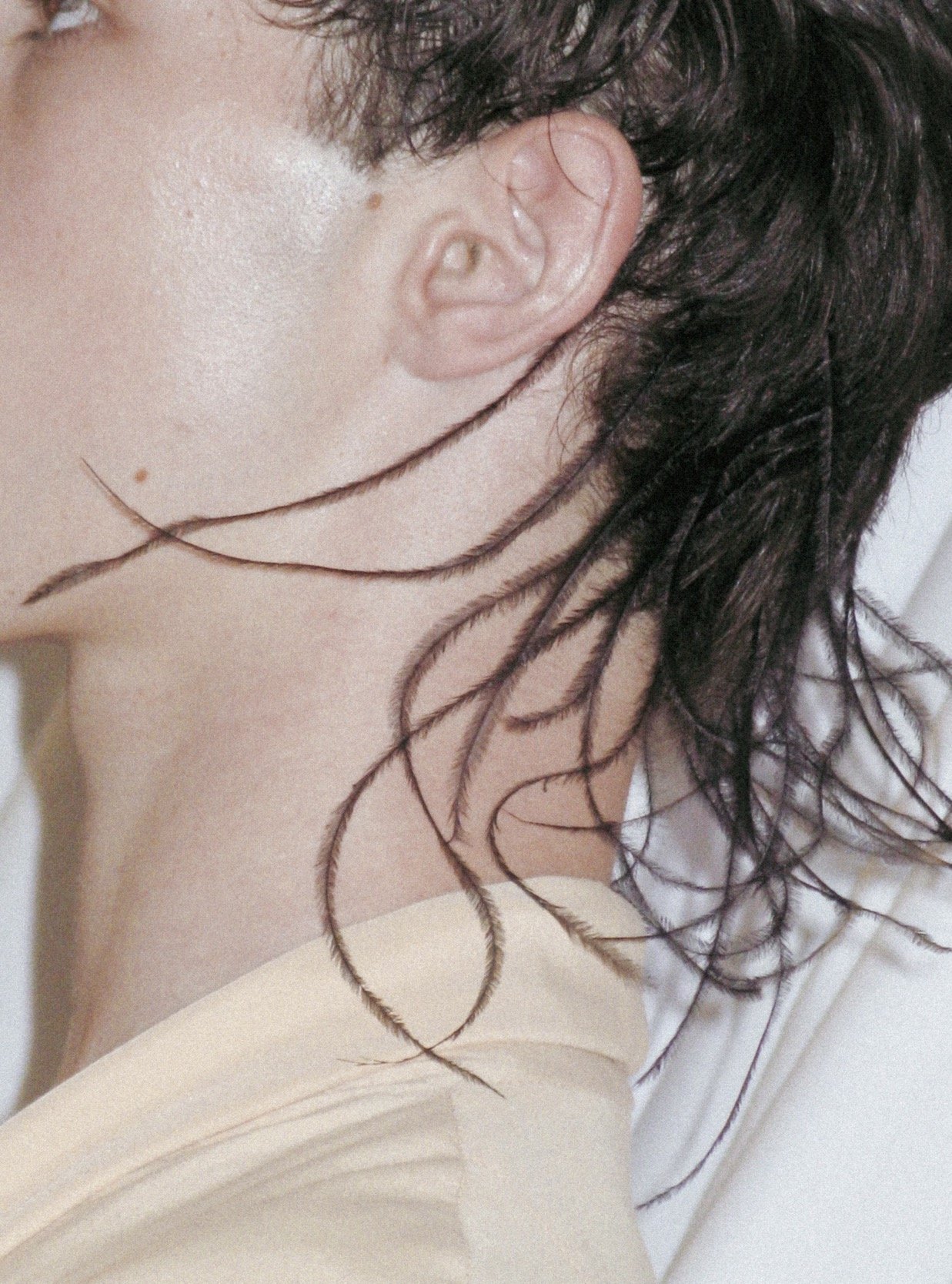
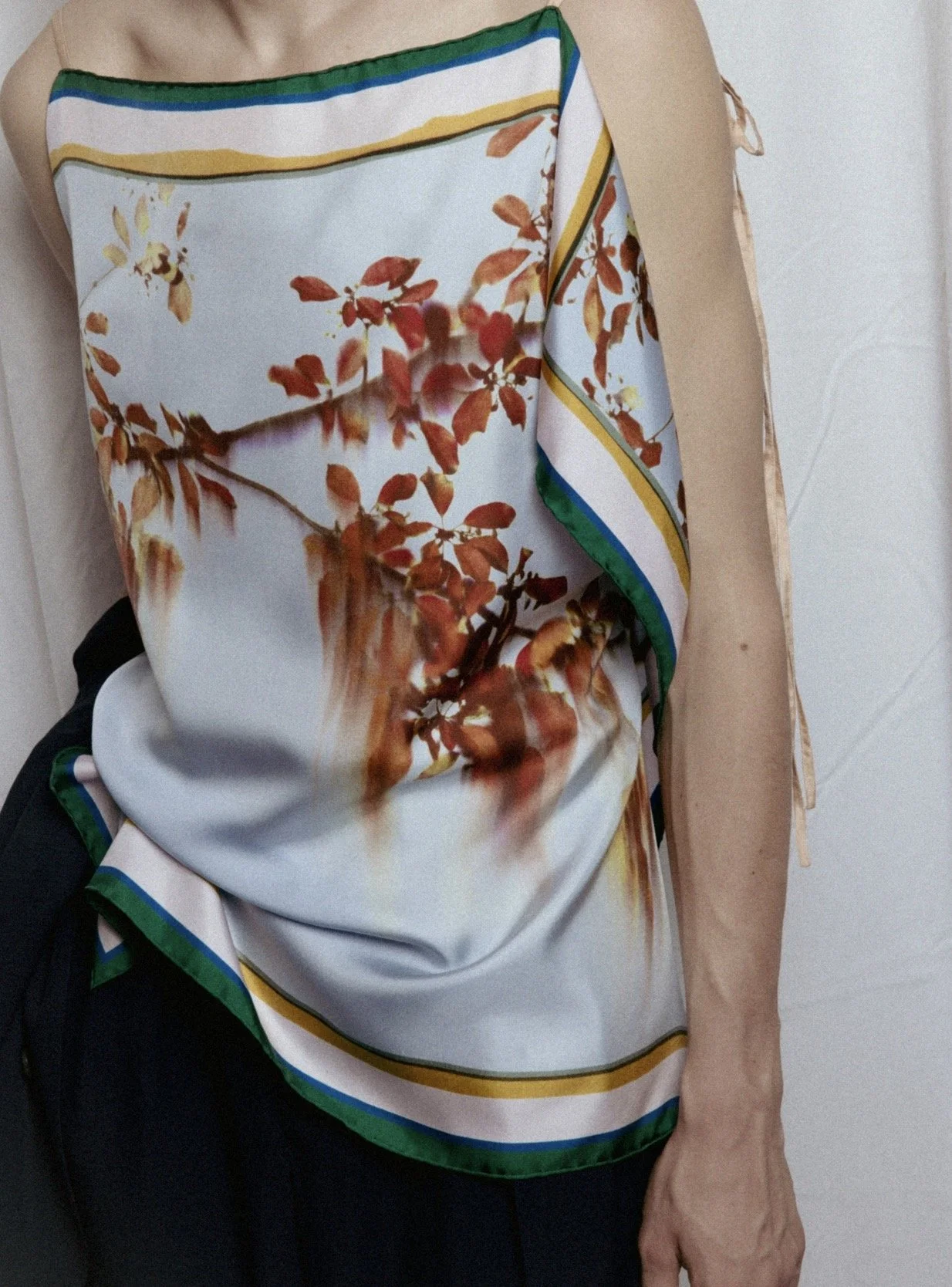
The danger of dreaminess in fashion is obvious. Softness can become vague. Poetry can become perfume. References to fantasy can easily collapse into styling exercises. Klausner mostly avoids the trap by grounding the collection in clothes that remain recognisable even as their purpose shifts. A shirt is still a shirt. A trouser is still a trouser. They have simply been deprived of some of their certainty.
That uncertainty is the point. This is not menswear trying to reinvent itself through novelty. It is menswear being made strange through sensation. The familiar is softened until it becomes unfamiliar; the masculine is loosened until something more ambiguous can emerge.
The result feels like the residue of an afternoon nap: beautiful, slightly disorienting, impossible to hold onto for long. And perhaps that is the collection’s smartest move. It does not try to make the dream believable. It makes waking life feel less convincing. Better to close your eyes again.
Words by @alraco43