
EVADE HOUSE REFLECTS ON MANEVA THROUGH A SENSORY FILM
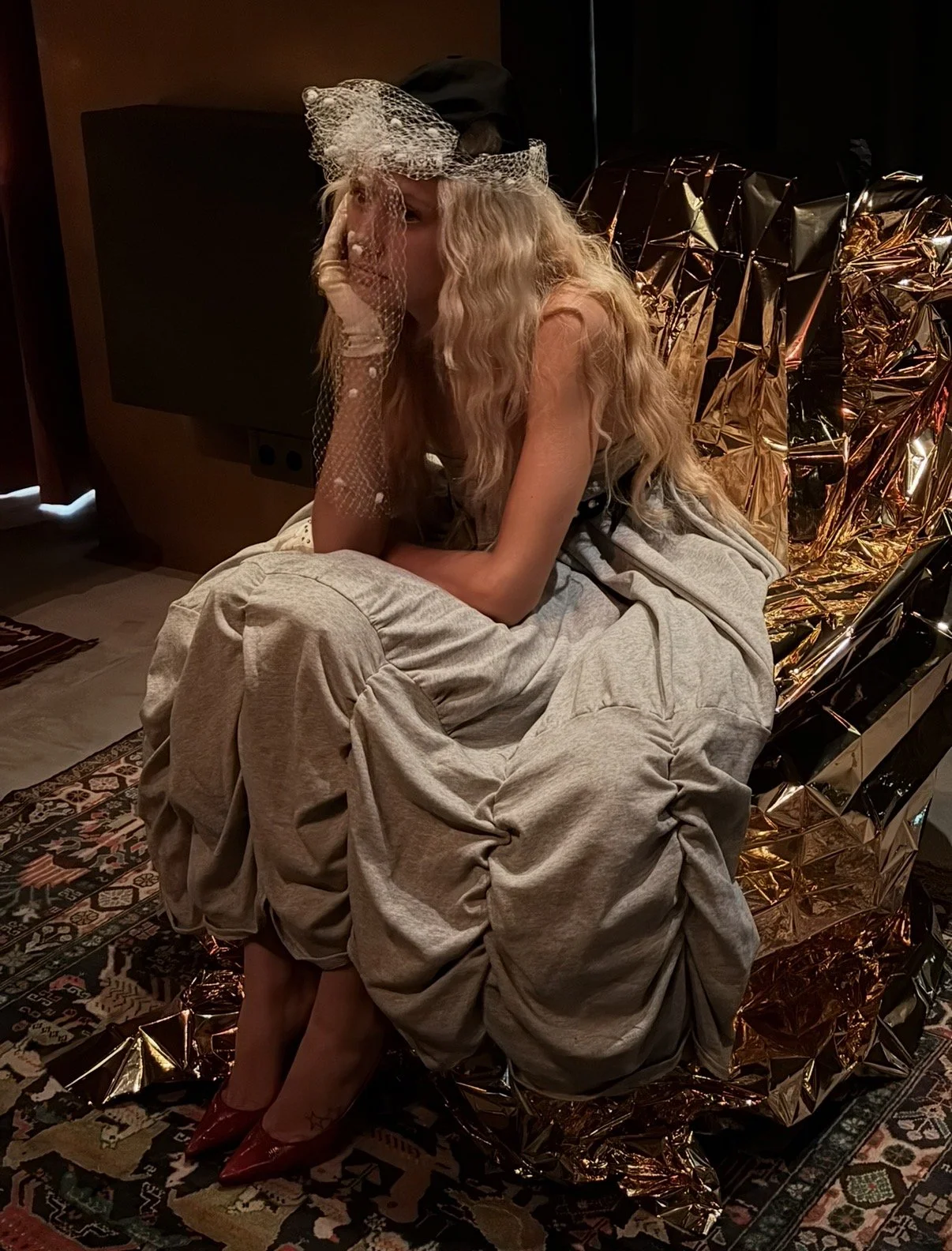
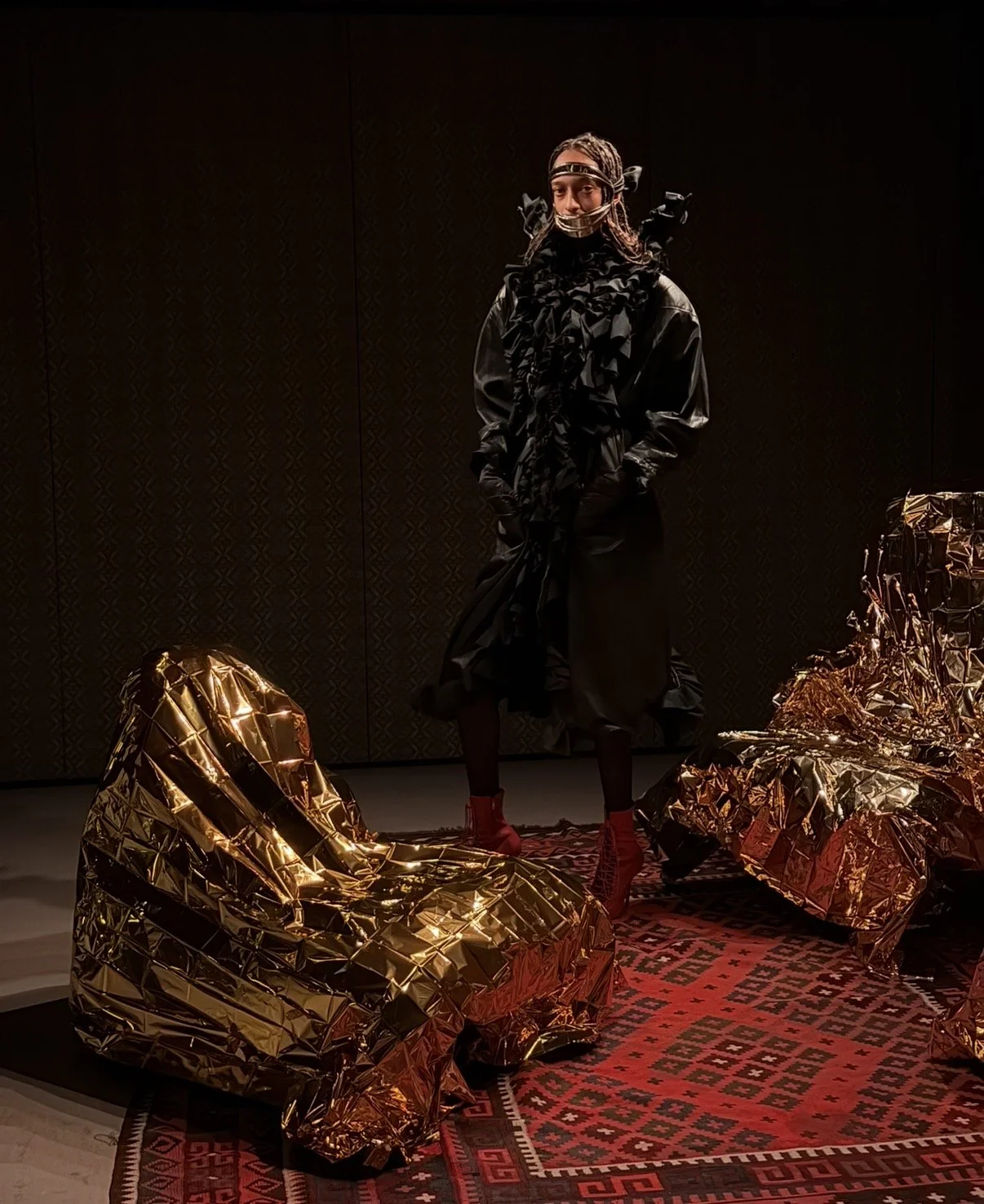
In a fashion landscape increasingly shaped by immediacy, algorithms and an endless cycle of micro-trends, Evade House has carved out a space defined by something far more personal. The Madrid-based label approaches clothing as a form of storytelling, building a visual universe where nostalgia, experimentation and contemporary youth culture intersect. Rather than simply following the rhythms of the industry, Evade House seems interested in constructing its own language. One rooted in emotion, memory and the intimacy of the handmade.
There is an instinctive quality to the brand’s work: familiar silhouettes are distorted, reconstructed or placed in unexpected contexts, while references to childhood, domesticity and everyday life become part of a broader exploration of identity. This tension between the ordinary and the strange has helped Evade House emerge as one of the more distinctive voices within Spain’s new generation of independent fashion. At a moment when young designers are increasingly expected to be brands, content creators and cultural commentators all at once, Evade House offers an interesting case study in how a small label can turn a deeply specific point of view into an expanding creative world.
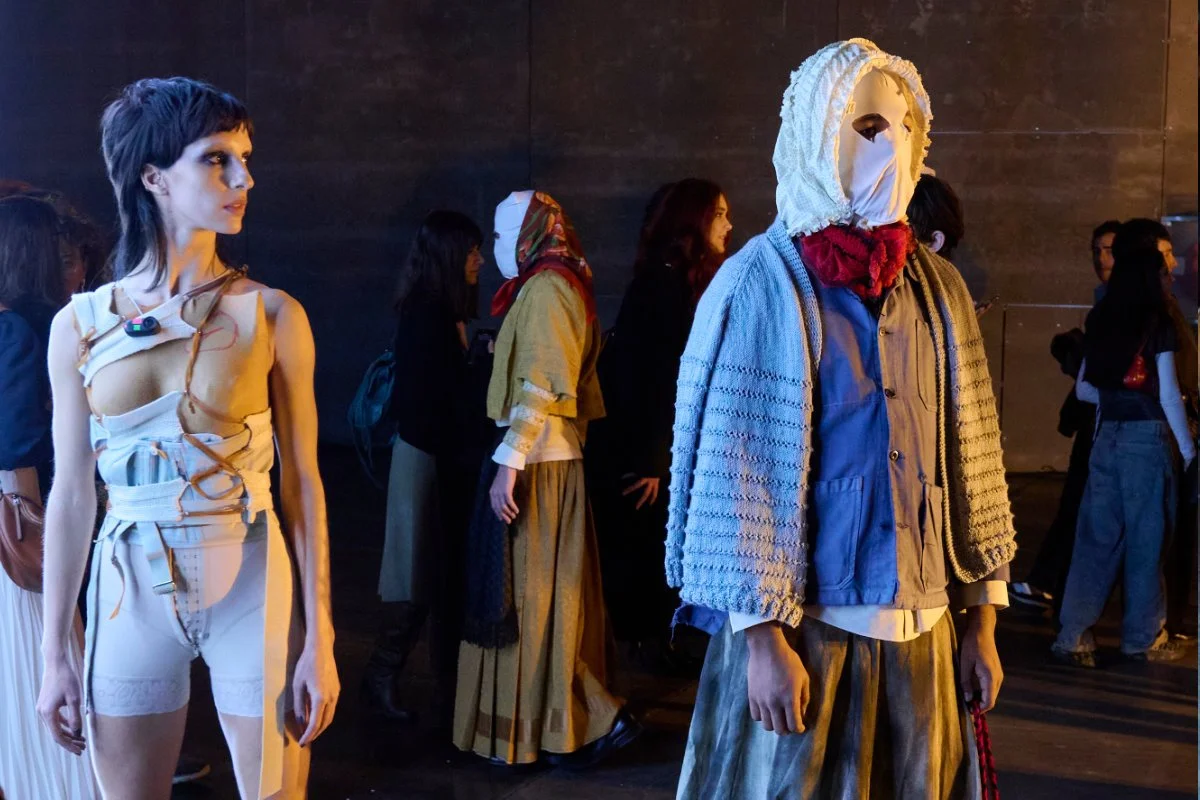
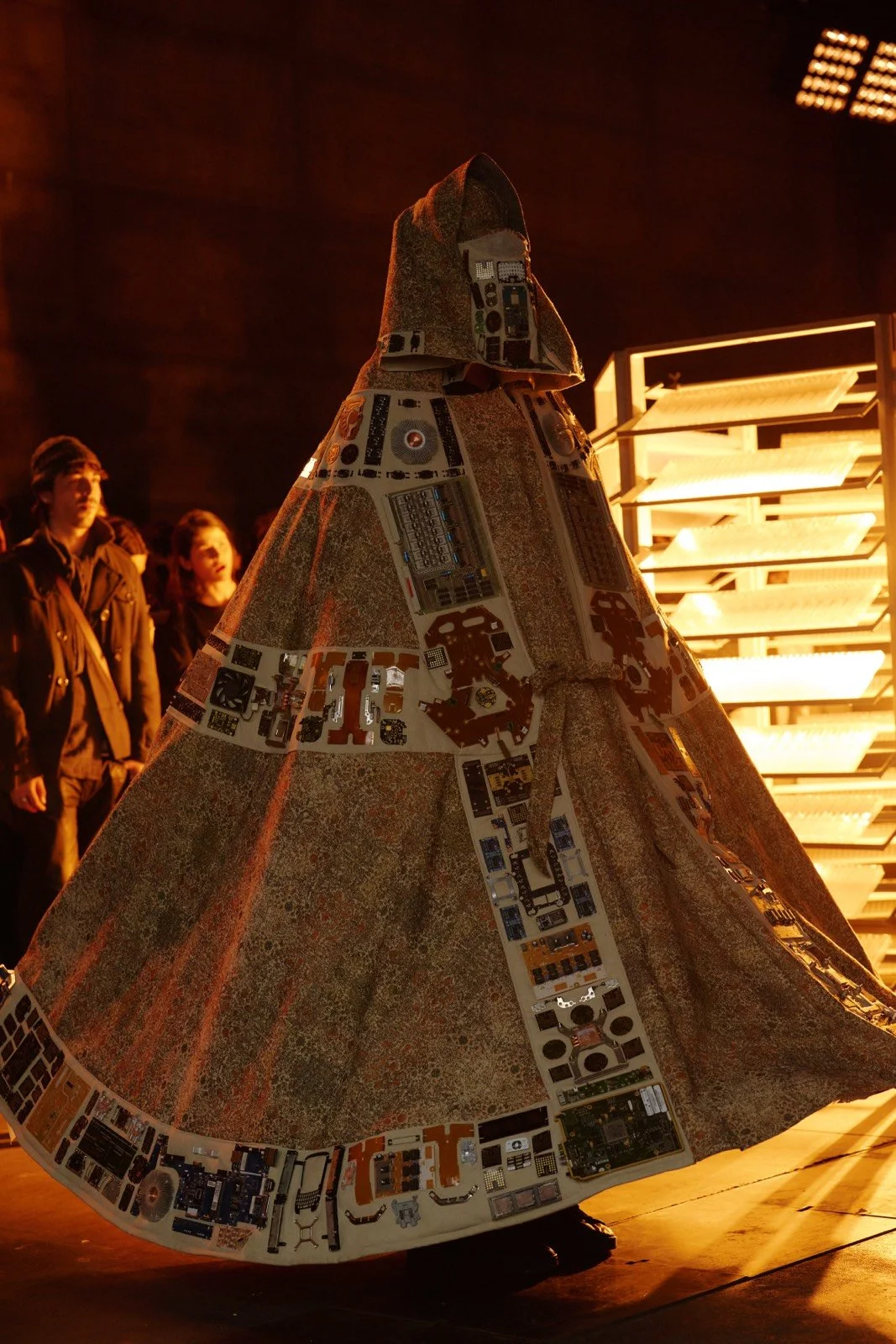
Back in March at OMODA Madrid es Moda, Evade House used “Maneva” to push beyond the logic of the runway and into something closer to ritual. Staged at the Satellite Pavilion of Madrid Arena, the presentation relied on movement, repetition and atmosphere to give the clothes meaning beyond their construction. What made it effective was not its literal presence so much as the physical language it introduced: tension, instinct, resistance and release. That same rawness carried into the clothes, where reclaimed leather, merino felt and natural fibres gave the collection a deliberately worn, tactile quality, while obsolete technological objects and equestrian references prevented the material language from slipping into nostalgia. The strongest looks felt unresolved in the right way: more interested in transformation than finish. Rather than treating sustainability as a message to be announced, Maneva embedded it into the texture of the collection, making reuse feel like part of Evade House’s visual vocabulary rather than a separate statement.
Months after MANEVA first unfolded as a live performance, Evade House returns to the collection through film, turning what was once ephemeral into something that can be replayed, dissected and re-read. Shot with more than 30 cameras trained on each model, the project does not simply archive the March presentation; it fractures it, multiplying perspectives on bodies, garments and movement. That shift feels particularly fitting for a collection built around memory, loss and the impossibility of holding onto time. By moving the work from the runway to the screen, Evade House also exposes one of fashion’s central contradictions: the desire to preserve an image of something whose power often lies precisely in its disappearance. At Nômade Temple, the static exhibition and projection extend that tension, confirming cinema not as an accessory to the collection, but as part of the brand’s way of thinking about fashion itself.
There we had the pleasure to listen to a little conversation moderated by Lu Millet between Evangelina Julia, the founder of Evade House, Carles F. Galí, the director of photography of MANEVA, and Anxo Casal, the film editor of MANEVA. It was an incredible experience to discover how curation is one of the most important aspects of the project and how community based brands are the future of the fashion and creative industries. We need to understand that delegating is one of the most difficult things to do in a creative project, more if it is as personal as this one, but if you want to make it as big as possible is a necessary step. Also, there is a magic about the film editor not experiencing the performance and encountering lots of footage from different angles of the same event and trying to capture the essence of it. Grief over the death of a loved one is one of the most harrowing things that can happen to you, yet it is something we will all experience at some point. So having this many people involved in a personal project, speaks volumes about the desire of making something meaningful. Even having Yerai Cortés as the carousel of the catwalk was the cherry on top to bring everyone to cry and feel something more than just watching clothing move in an overwhelming performance.
Perhaps that is where MANEVA ultimately succeeds: not in asking us to remember every look, but in leaving us with the feeling that something happened around them. From a deeply personal experience of grief, Evade House has built a project that only becomes larger through the involvement of others: performers, filmmakers, musicians, collaborators and, eventually, an audience. There is something quietly radical in that willingness to relinquish control. In an industry obsessed with authorship, image and the mythology of the singular creative genius, Evangelina Julia’s world suggests that intimacy does not necessarily disappear when more people enter the room; sometimes, it becomes sharper. The runway may have lasted only a few minutes, and the film can never fully reproduce what happened inside Madrid Arena, but perhaps preservation was never really the point. MANEVA is most compelling when it accepts that clothes, bodies, memories and people inevitably move on. What remains is the trace and Evade House seems increasingly interested in what we choose to do with it.
You can check out the full video through this link: https://youtu.be/VMS_mpCCOxI?si=_WYaT6ZKLS-Lx0bb
Words by @alraco43