
Coming home is like rediscovering a piece of clothing you haven’t worn in years. You recognise it and remember why you liked it. However, something has changed. Perhaps it is you, or perhaps you simply see it differently now. In practice, it means facing your memories, recognising what has changed and discovering that, no matter how familiar the journey may be, you never return to exactly the same place.
In fashion, coming home has an additional dimension: doing so in front of hundreds of people. There is also the pressure of proving that you not only remember where you come from, but that you also have something new to say.
Maria Grazia Chiuri has come home, and she knows FENDI well. The Italian designer returns to the Roman fashion house where her professional career began. In 1989, she worked as an accessories designer for the brand, and decades later, she returned as its creative director.
Without a doubt, this news has generated considerable hype within the industry, as it is clear that she is not the same person who left the brand years ago. The audience was eagerly waiting to discover her current creative vision and see which direction she would take the fashion house in.
Her career has been shaped by her interest in femininity and identity. After almost a decade at Dior, we can see that her intention was not to reinvent the brand from scratch, but rather to update it from a feminist and contemporary perspective. This generated considerable debate, as some people understood her vision and connected with her aesthetic, while others struggled to understand her work. What is clear is that she has always remained faithful to her feminist values and has consistently tried to translate them into fashion in the best possible way.
For her Spring/Summer 2027 collection, Chiuri proposes something that may seem simple at first, but actually has much more depth than it initially appears. She invites us to look at ourselves and at the clothes we choose to present ourselves to the world in. It is about reflecting on the decisions we make regarding our bodies.
The show took place in a room covered entirely with mirrors, making this concept literal. The idea was directly inspired by the artwork Cubo di specchi by Italian artist Luciano Fabro. There is no way to escape our own reflection, although we can always choose to look at it from a different perspective. Through sheer fabrics and silhouettes that quietly follow the shape of the body, the designer creates a collection that explores identity and freedom. It also addresses the somewhat complicated relationship we have with our wardrobes, and how often we get rid of garments simply because we no longer consider them trendy, when in reality, we may just not know how to make them work for our bodies anymore.
When we take a closer look at the runway looks, we can see that some are absolutely savage, while others are not quite as exciting… There is a constant interplay between underwear and outerwear, between what we choose to reveal and what we prefer to keep to ourselves. Lace appears without necessarily being associated with lingerie. Sheer fabrics are no longer used exclusively as a provocative element but become a sophisticated way of dressing. Tailoring brings structure while also referencing her idea of femininity and challenging traditional gender standards, an idea that runs throughout the collection. As a designer, she aims to represent freedom through her looks and portray an empowered individual, while making it clear that freedom cannot be measured by the number of centimetres of skin we choose to reveal.
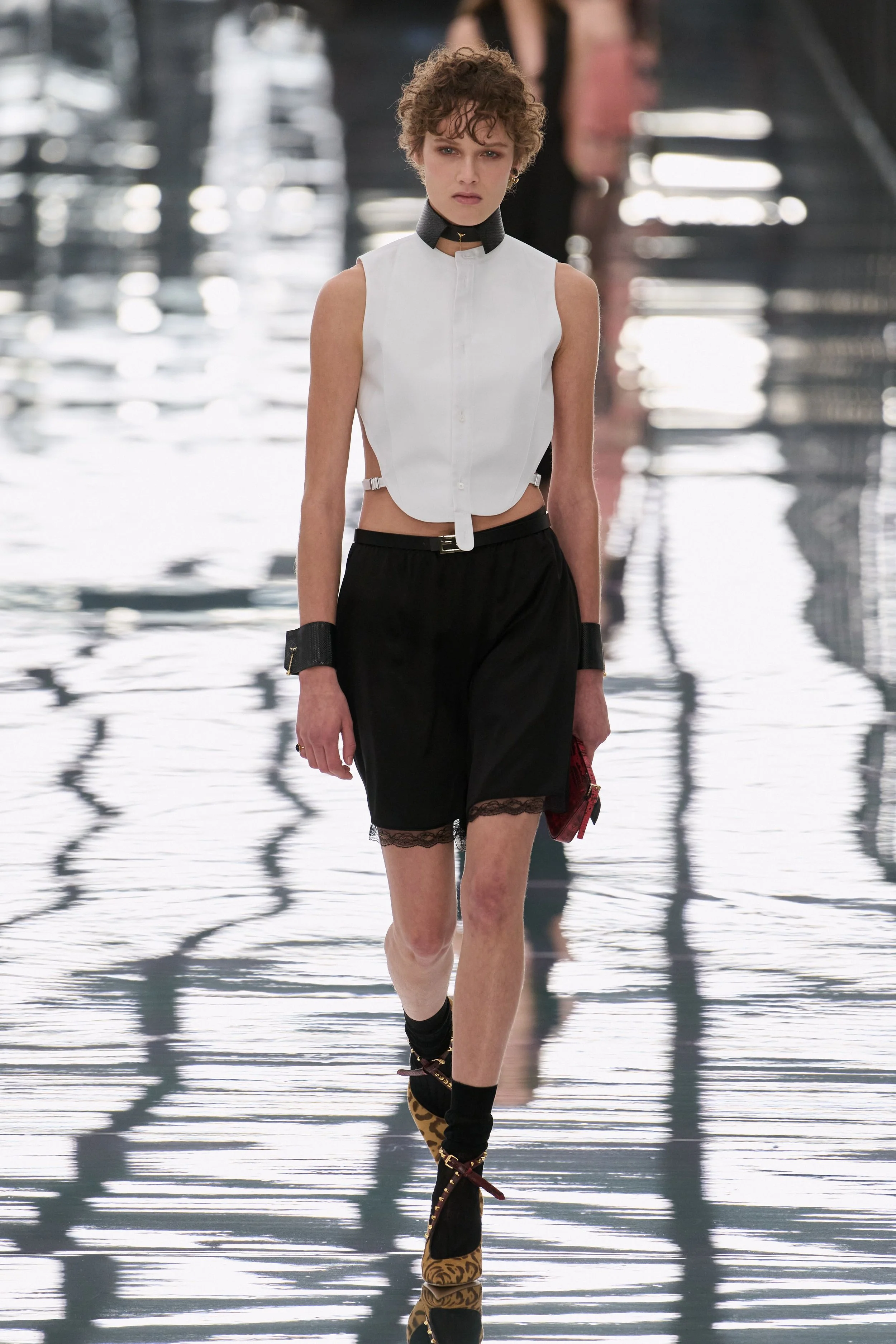
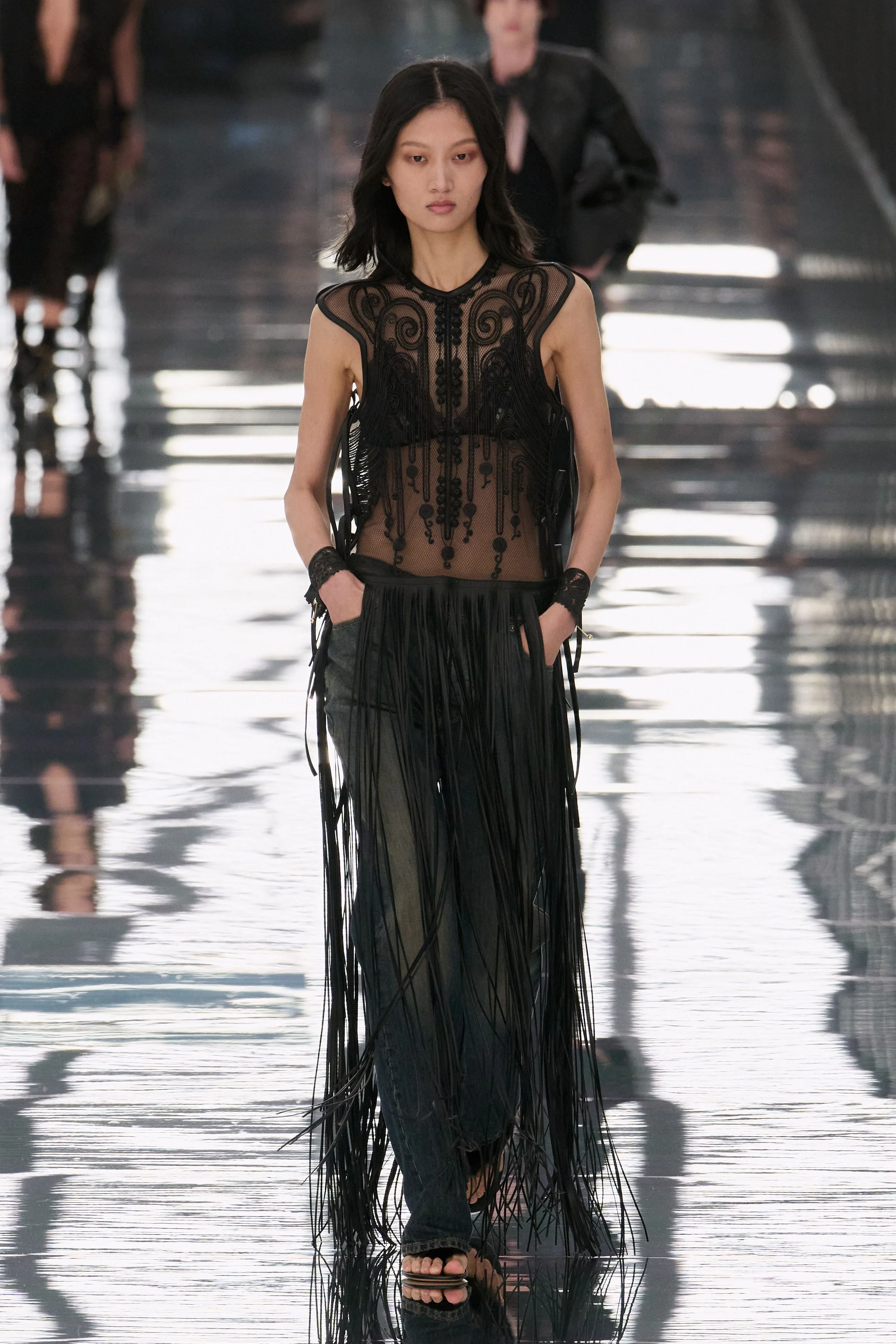
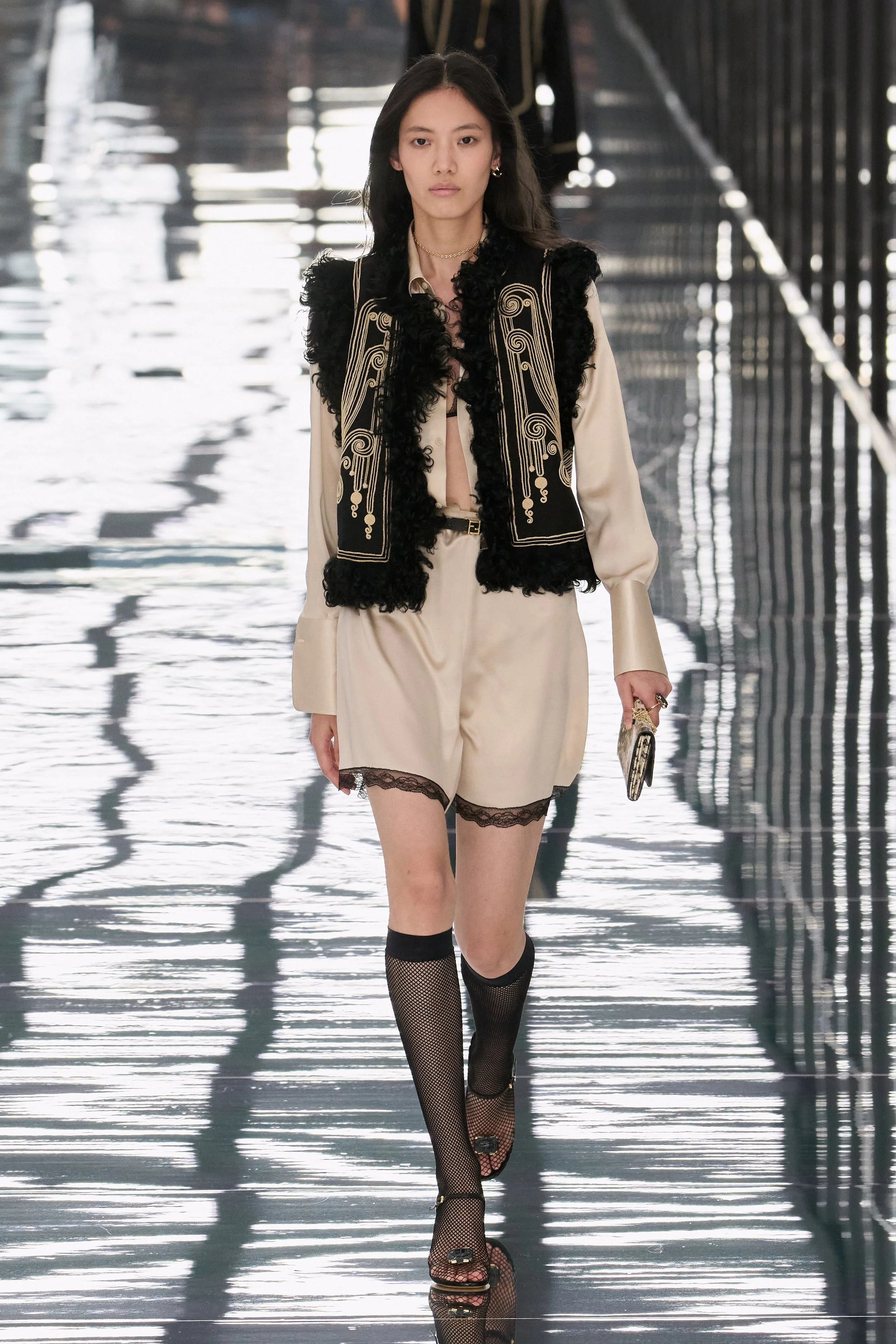
Chiuri has been interested in these issues for some time, and at FENDI, she approaches them through a language that feels much closer to everyday life. Underwear moves out onto the streets, tailoring loses some of its rigidity, and garments are no longer so easily confined to traditional categories and standards. The idea of a shared wardrobe for men and women runs throughout the collection without becoming something overly cliché. Instead, she wants to offer a new perspective on an idea that many fashion brands have been trying to explore for years, but that few seem to have successfully translated into fashion. Her aim is to bring these ideas about gender together. We currently live in a society that is deeply divided over many social issues, which is why Chiuri uses this collection to speak out against traditional gender roles, offering a more contemporary perspective rather than repeating the same outdated approach that many brands have been proposing for years.
The choice of a mirrored room does not seem accidental either. Social media has become part of our everyday lives. We live surrounded by images of ourselves, as well as carefully edited versions of our identities that circulate online as though they were the only possible reality. In this context, truly looking at ourselves is much more complicated than it seems. The mirrors used in the show also remind us that there is no single way of seeing ourselves. Perhaps this is why the collection works best when it leaves room for interpretation and allows the audience to question its message through personal introspection.
When it comes to the runway looks, I believe the message is clear, but perhaps the styling has not been executed in the most successful way. Some looks give me everything, while others leave me completely indifferent. I feel that a certain level of coherence is missing. As I have mentioned, I think some of the outfits do not stand out as much as they could have.
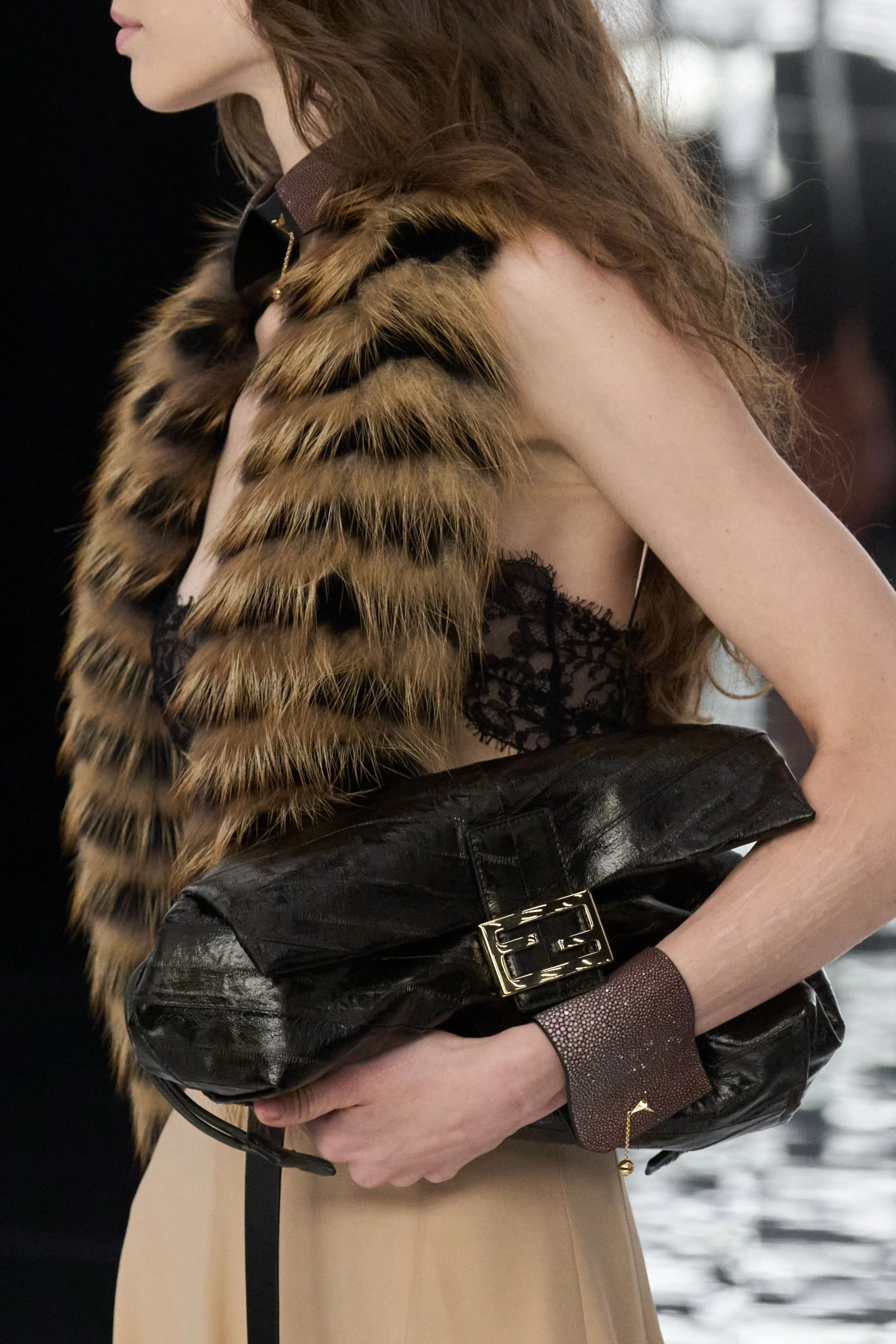
Black dominates a large part of the collection, but far from looking flat, it is transformed through lace, silk and sheer fabrics. Bras and satin shorts peek out from underneath fur stoles. We also see garments featuring cut-outs, fringes and embroidery that add a more nocturnal feel. There is also room for tailoring, unbuttoned shirts, jeans and white T-shirts, which tone down the drama and bring the garments closer to everyday life. We can see how the designer follows a glam-rock direction, while also introducing a more minimalist approach in certain looks.
I do think the opening look is coherent and successful. It represents the concept and makes it clear what the show is going to be about. However, this idea gradually gets lost as the show progresses. It starts off strong, challenging gender roles, but this vision is not consistently maintained throughout all the outfits, and some more underwhelming moments begin to appear. Look 50, for example… It’s giving nothing.
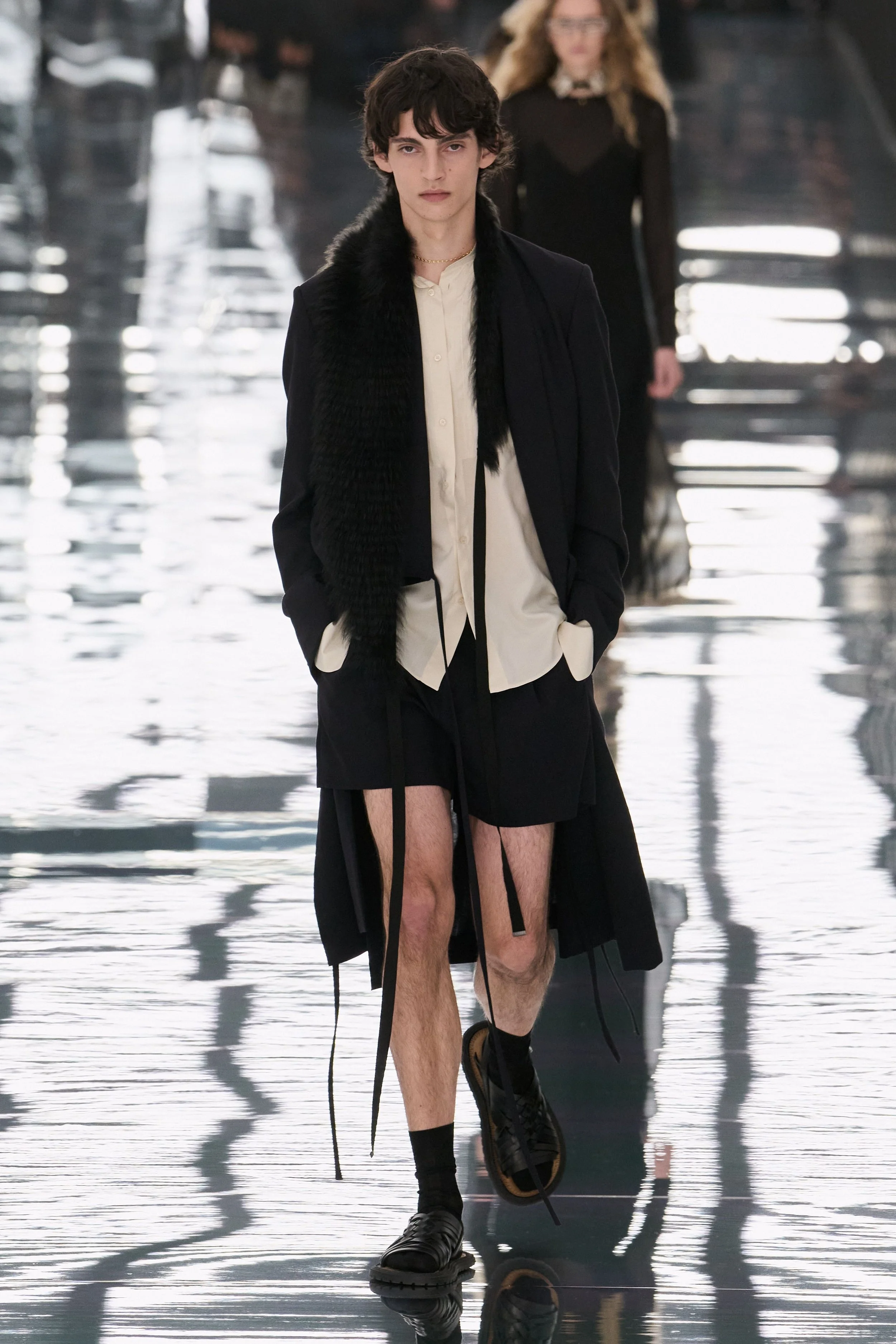
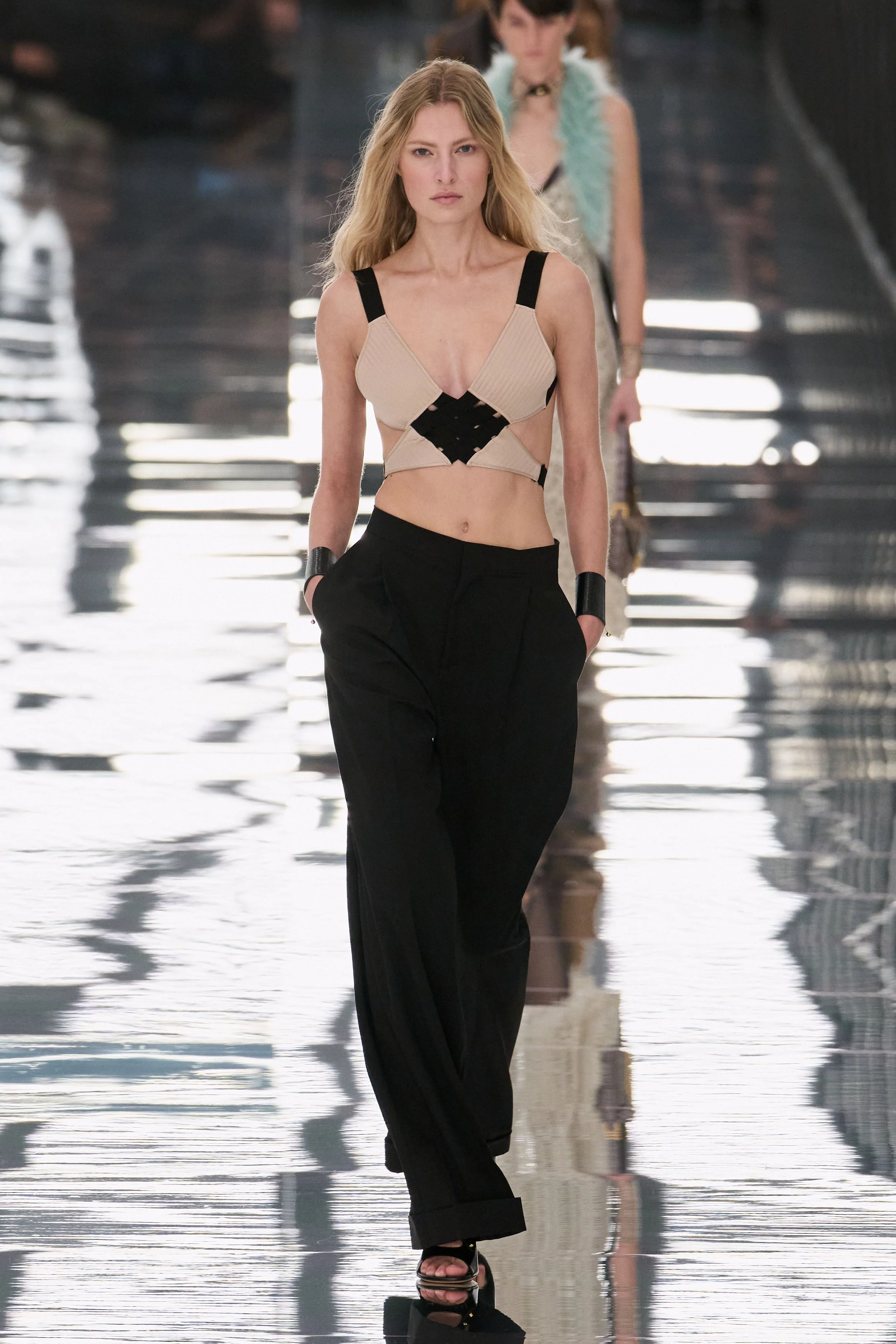
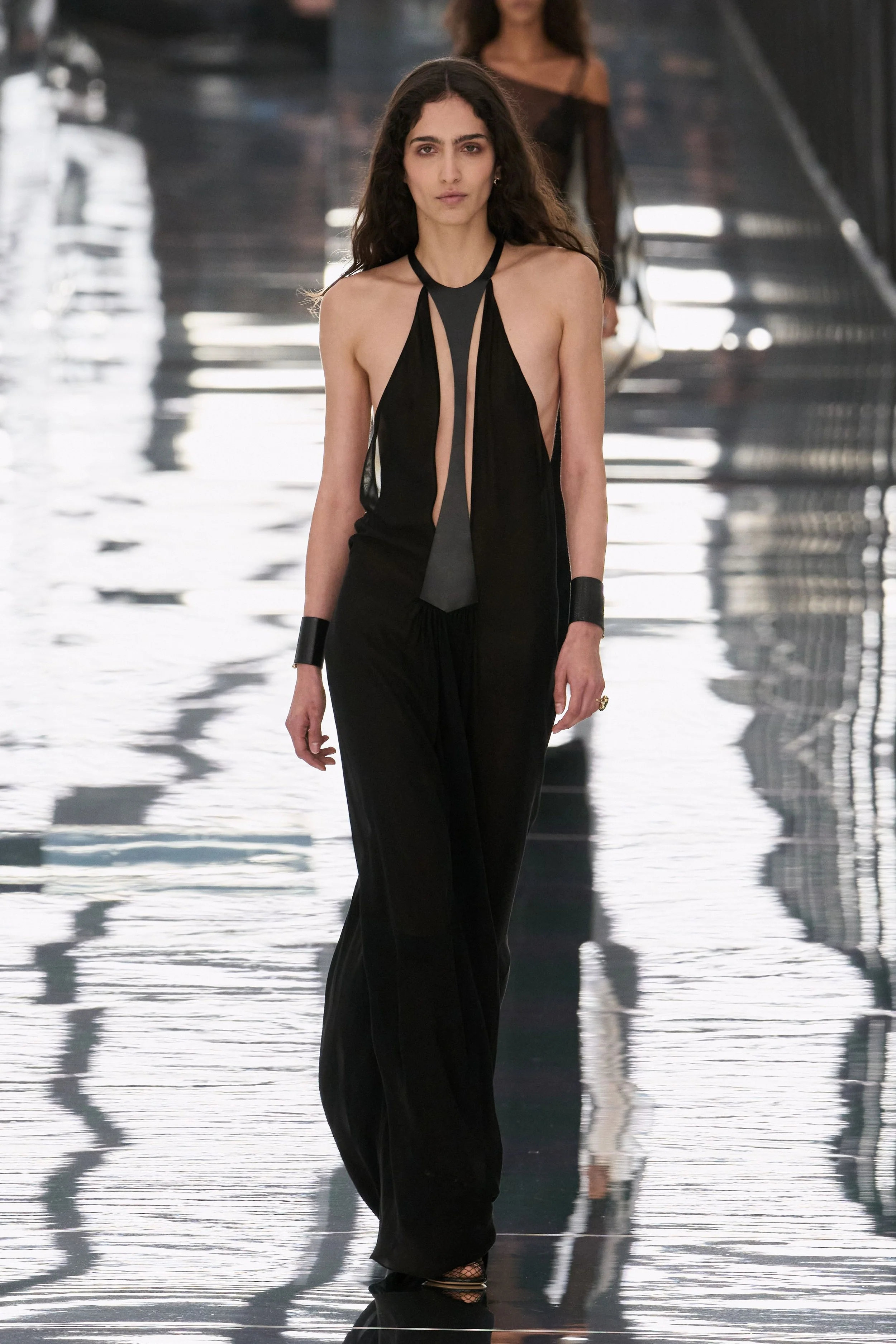
On the other hand, I think the choice of models was very successful. Their profiles fit the collection’s message extremely well, and they undoubtedly managed to communicate its vision throughout the entire show.
As for the soundtrack, it helps to make the whole concept feel less serious. With Raffaella Carrà’s Rumore and Adriano Celentano’s Prisencolinensinainciusol, the show finds a playful, unexpected and distinctly Italian rhythm. There is a sense of humour and an atmosphere that does not take itself too seriously. The musical choices work well with a collection that speaks about freedom without turning every runway appearance into a deeply meaningful moment. Because, yes, fashion can have something to say about the world, but it can also make us want to enjoy ourselves and simply disconnect from a world full of so many constant stimuli.
Perhaps the most interesting thing about this return is that Chiuri does not seem interested in rebuilding exactly what FENDI once was, nor in reproducing the designer she herself used to be. Coming home does not mean recovering a previous version of yourself, but rather accepting that the place itself has also changed and that you are no longer the person who left. The collection plays with memory, but it does not depend on it. It is important to look back and remember where we come from, while bringing a contemporary perspective to the present.
It remains to be seen how this new chapter will evolve and how far the relationship between Chiuri’s creative message and the commercial reality of a major luxury fashion house will go. For now, her proposal leaves us with an idea that goes beyond the season’s trends. Getting dressed can also be a way of reconciling with our bodies, questioning the rules we have learned and deciding what we want to keep and what we are willing to change. We can go further instead of simply remaining trapped within the rules imposed by society.
In the end, perhaps coming home is precisely about that. Recognising where we come from without feeling that we have to remain the people we once were. Walking through the same door and discovering that there are still things to do, and even new places to go. Understanding that sometimes, starting over does not require travelling any further, but simply learning to look differently at the place we have always belonged to.
Words by @luciamirandaag
Translated by @alraco43