
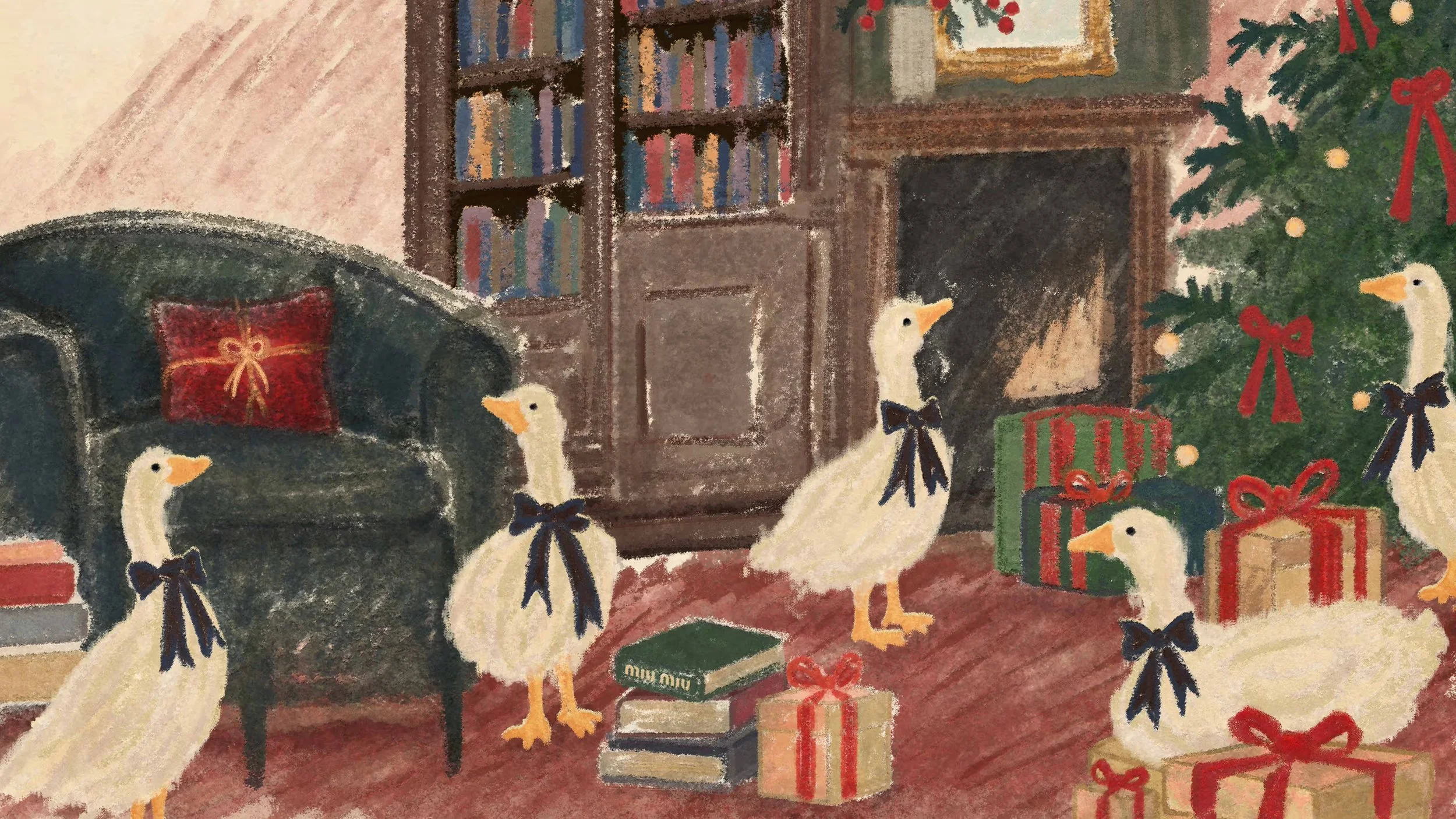
At Christmas, luxury turns the everyday into something extraordinary, even if nobody can quite agree on how much it should cost.
There is a trick as old as the sweets dentists leave in their waiting rooms: give away something cheap to charge a great deal for something expensive. In December, that trick becomes a seasonal philosophy. And this year, its most refined expression comes from Milan, bearing the Miu Miu name, and takes the form of a gift of writing paper.
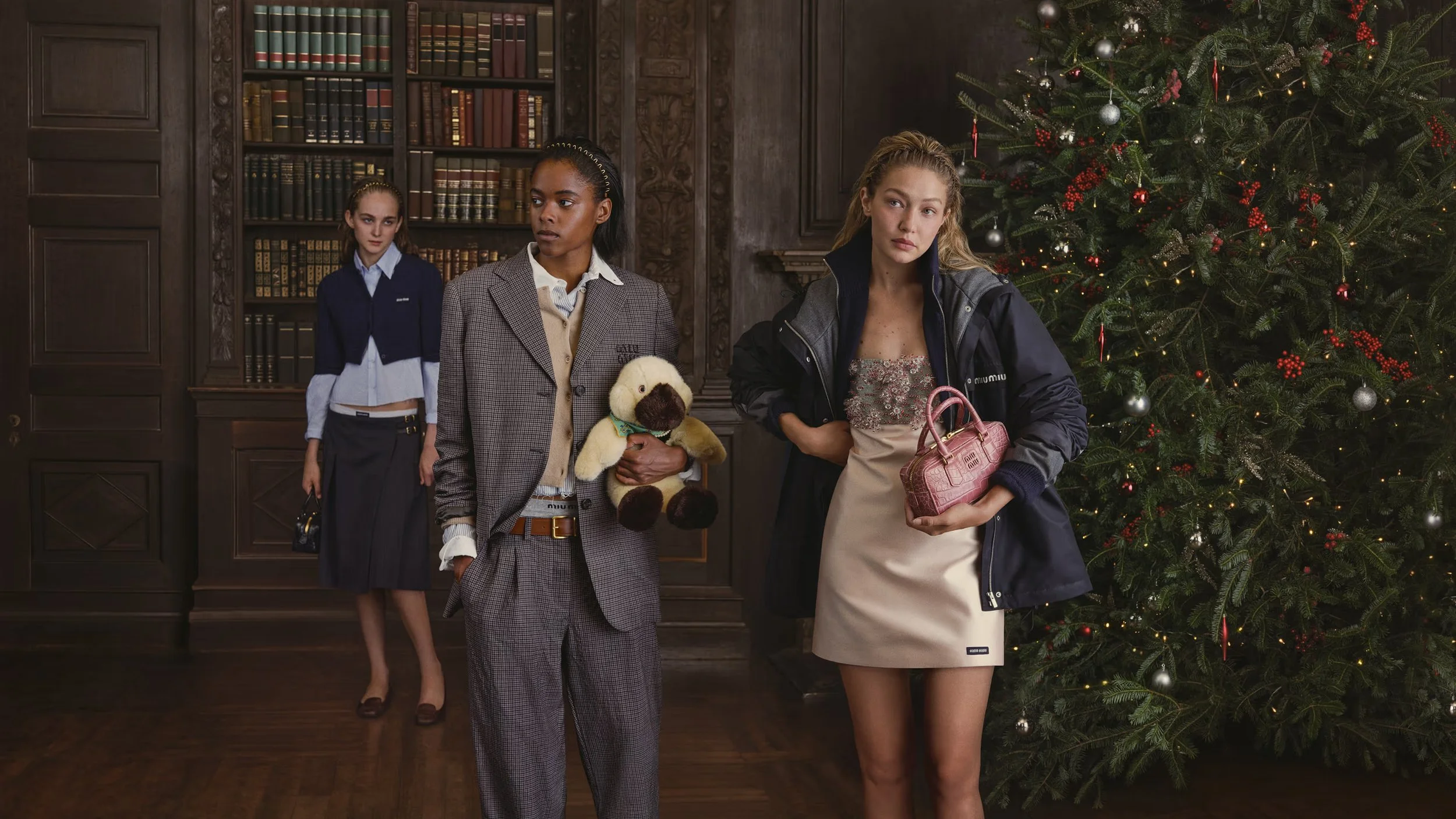
The project is called Miu Miu Correspondence, and WWD revealed it this Wednesday: a Christmas activation developed with Pettinaroli, the historic stationery shop on Via Brera in Milan. From November 27 to 29, the brand will be giving away writing sets in-store: letter paper and envelopes decorated with Miu Miu branding, alongside illustrated Christmas postcards. The graphics tie in with the brand's 2026 Christmas campaign, photographed by Tina Barney and featuring Gigi Hadid, Crystal Fish and Louisa Jacobson in a playful, tongue-in-cheek bourgeois fantasy, reimagined here in a more innocent and candid register.
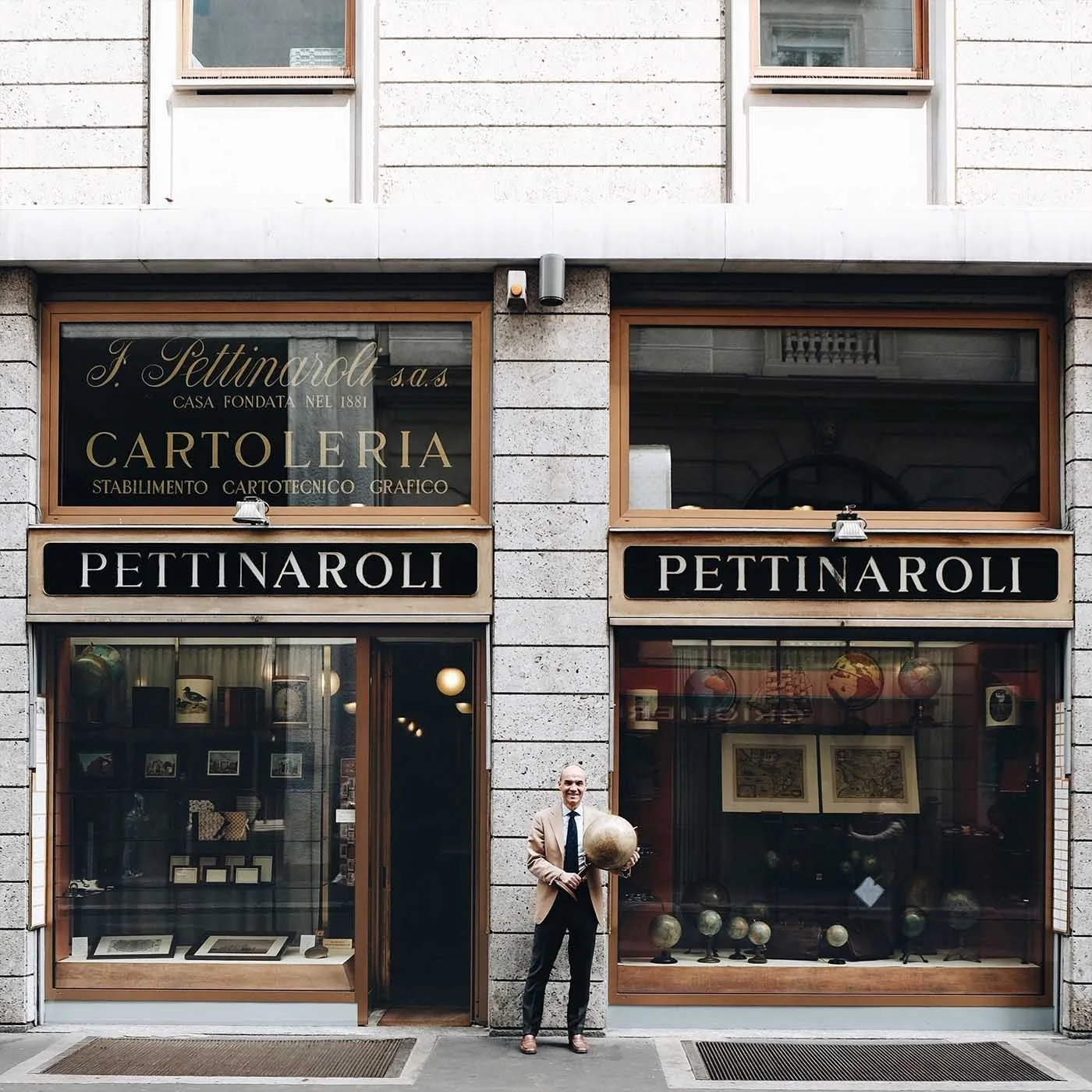
The business of giving away something cheap
Why would anyone give away paper? Because paper costs very little, while attention is expensive. A stationery set is an invitation to conversation: it gets photographed, shown off and discussed, then sits on a bedside table for months with the brand's name on display. Three days, one address, a free gift: scarcity, a reason to make the trip and press coverage that money cannot buy. Miu Miu isn't charging in euros; it's collecting something euros can't purchase.
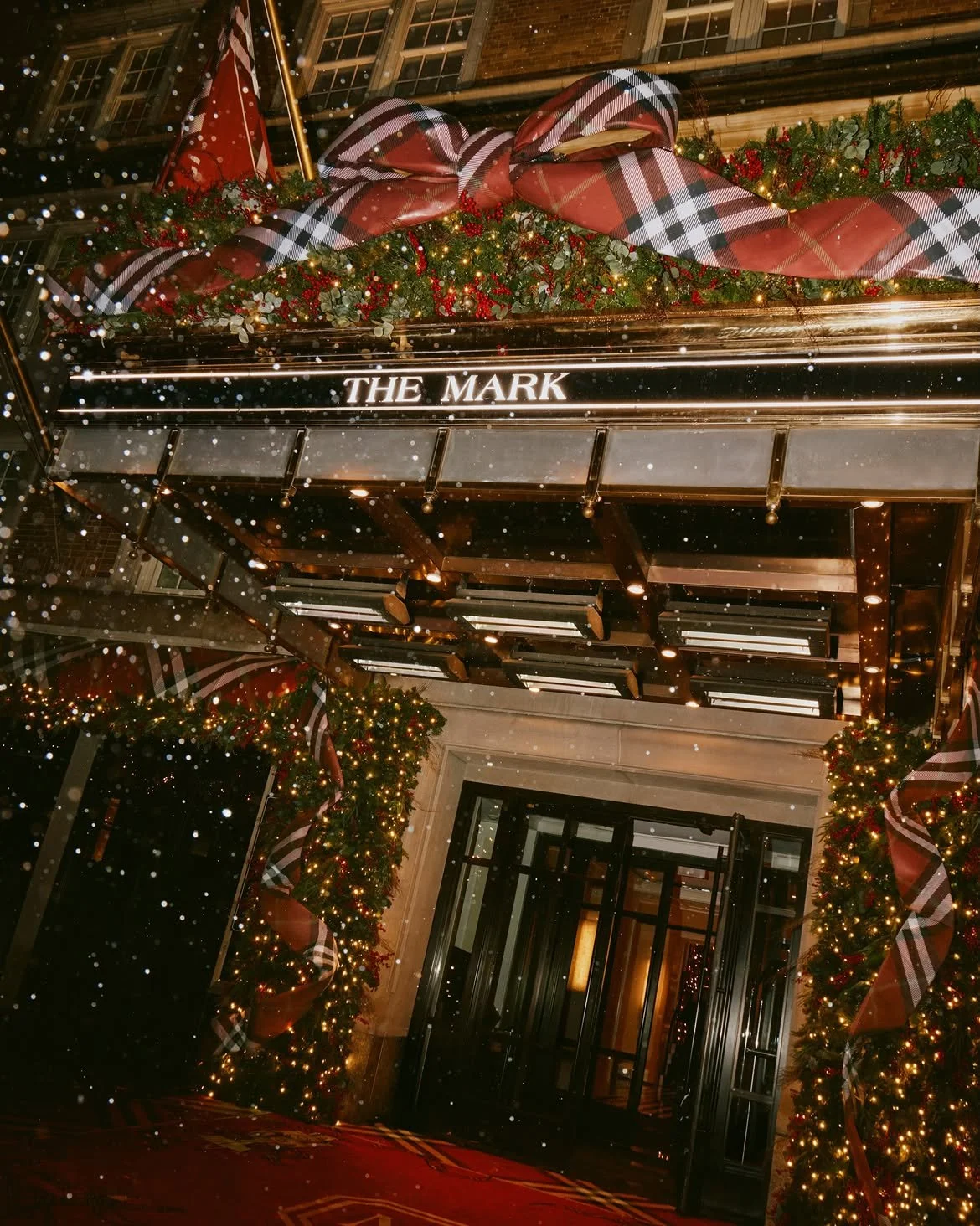
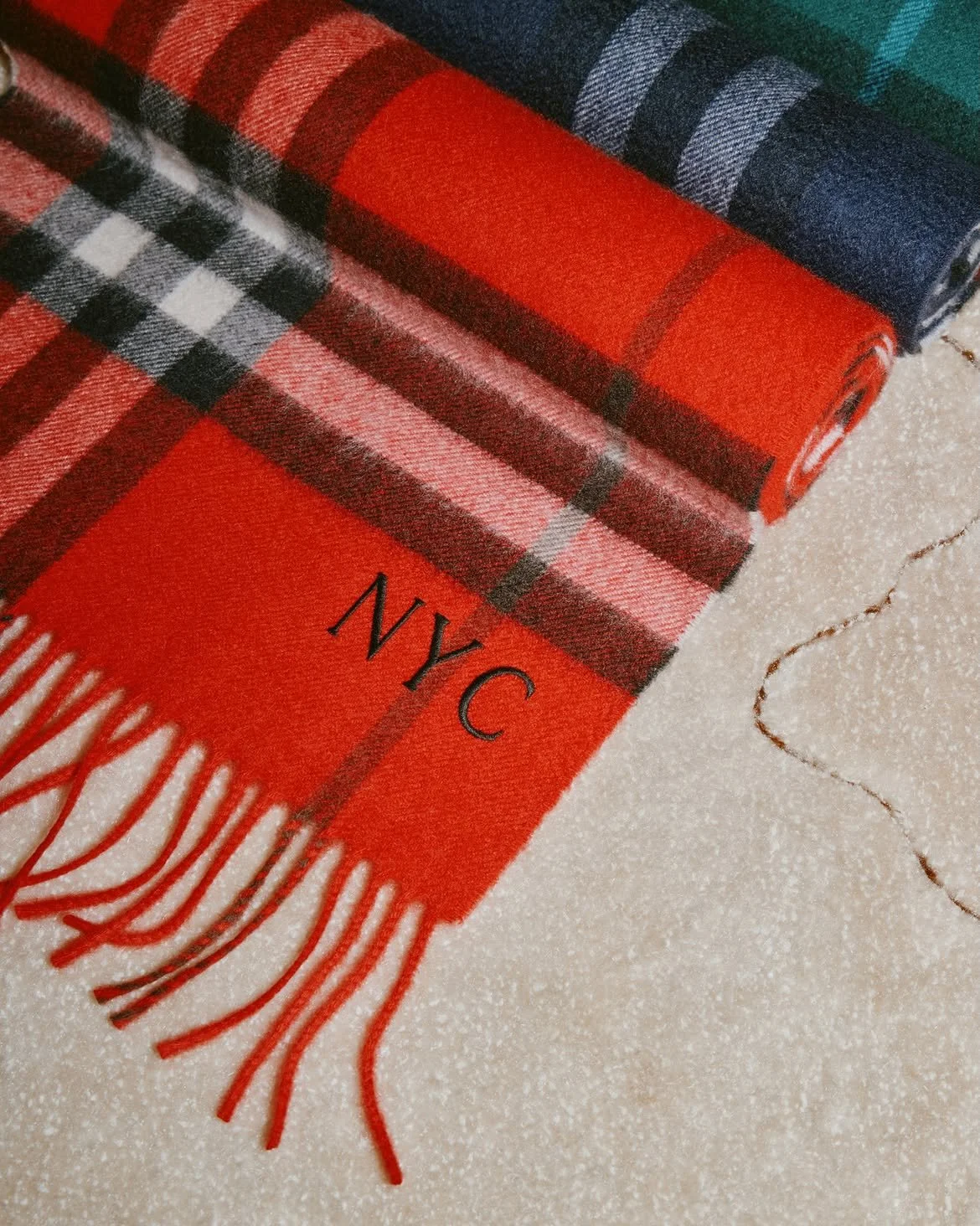
Burberry is playing the same game with ribbon. This Christmas, the brand is offering complimentary gift wrapping, with hand-tied ribbon boxes and a scarf tube developed especially for the occasion, as well as personalisation with up to three initials on many items. It has also dressed New York's The Mark hotel in its signature red check until January 4, 2027: an oversized bow at the entrance and flower carts offering keepsake postcards alongside hot chocolate, as part of a campaign celebrating the brand's 170th anniversary. The scarf costs money; the bow doesn't. But the bow is what gets photographed.
When something cheap comes with a price tag
The advent calendar is the commercial version of the same idea: twenty-four doors, twenty-four miniature doses of anticipation. It works wherever a product can be scaled down (perfume, makeup, candles) and struggles in fashion, where there is no such thing as a mini sweater. But luxury has turned the little box with doors into a category of its own, complete with its own pricing ladder.
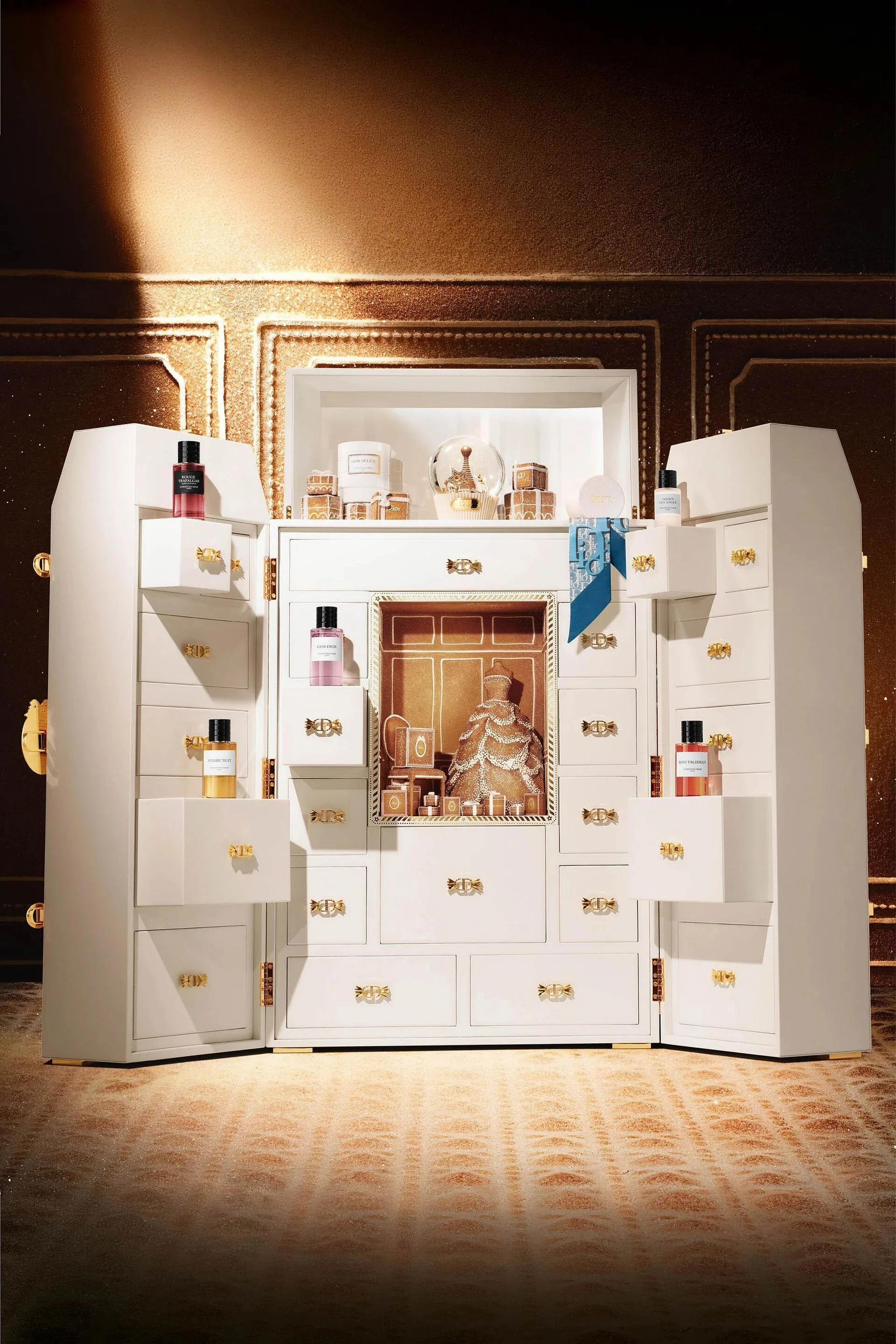
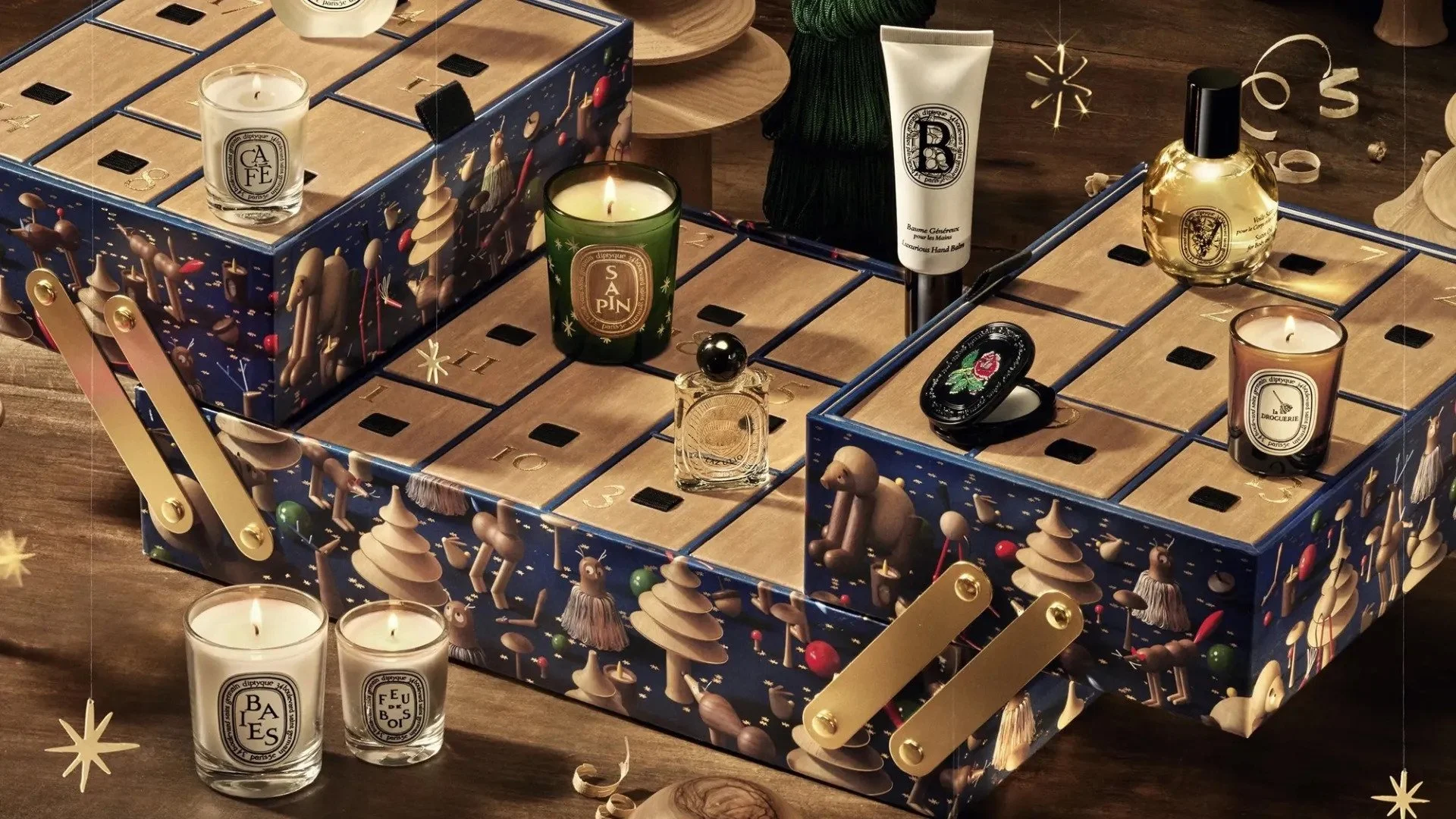
Dior charges $800 for Le 30 Montaigne, which recreates the façade of its historic boutique and conceals 24 products, and $8,200 for La Malle des Rêves, designed like a dollhouse. Chanel asks $2,800 for The Chanel Chalet. Diptyque charges $525 for 25 drawers housed in a 5.5-kilogram artisan's case, created with artist Jean-Simon Roch and designed to be kept and refilled. Jo Malone's version costs $495 and comes in a trunk. In these cases, the contents are full-size products and the packaging is part of the object itself: you pay for it, and you can see what you're getting.
Skims: $148 for a surprise
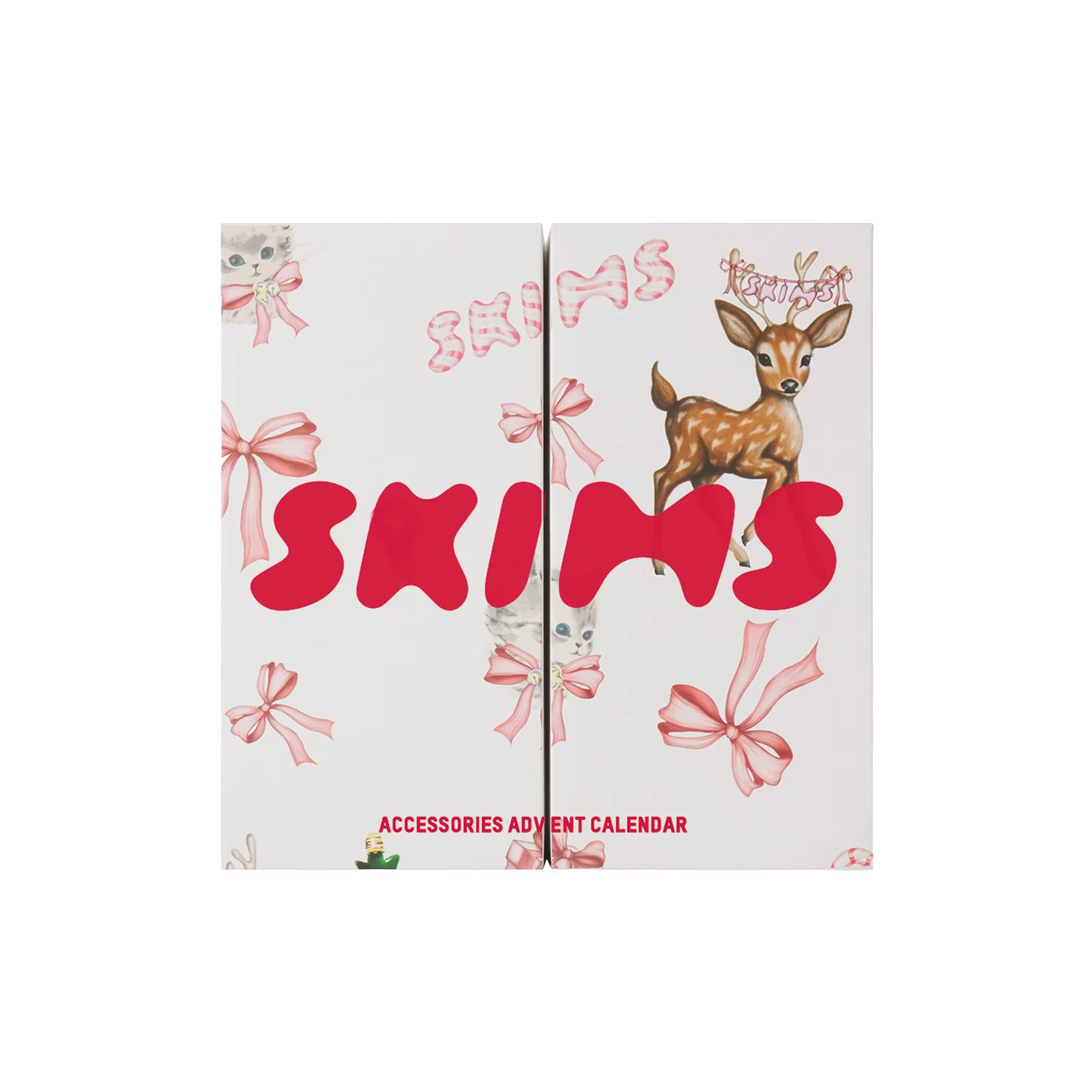
And then came Skims. Kim Kardashian's brand launched a 12-day advent calendar in October, listed on its website under accessories, for $148. Inside: scrunchies, mini fabric scrunchies, hair clips, bra strap holders and four keychains. It sold out and was subsequently placed on a waiting list. As soon as the unboxing videos hit TikTok, the backlash was immediate: one review racked up more than eight million views, while one creator did the maths, putting the cost at around $12 per door.
Consider the symmetry. Miu Miu gives away something that costs very little; Skims charged for something that costs very little. The objects are almost identical; the deal is the exact opposite. With Miu Miu, nobody feels ripped off because nobody has paid. With Skims, customers paid for the anticipation, the community bought into the promise without knowing what was inside, and the calendar sold out before anyone had seen its contents. That's called trust, and it's precisely what was broken. Trust, unlike a hair clip, cannot simply be replaced.

Why every brand wants a Christmas collaboration
It's worth remembering the scale of the market we're talking about. The US National Retail Federation (NRF) forecasts that November and December sales will reach $1.013 trillion, up 4.2% on last year, and estimates that these two months account for an average of around 19% of the retail sector's annual sales. These are US figures, from the market that tracks this data, but the underlying logic travels: a significant part of the year's business is at stake in December, and every brand is competing for attention at the same time.
That's why collaborations matter. First and foremost, they're a loan of reputation, and that's where the partnership comes in. Miu Miu lends a 145-year-old stationery shop its youth and irreverence, while Pettinaroli lends Miu Miu something no advertising budget can buy: the patina of authenticity. Two names that, together, say something neither could communicate quite as effectively alone.
It's also about differentiation. In December, everyone dresses everything in red, velvet and bows. And there are two ways to stand out amid all those ribbons: shout louder or go somewhere nobody else is looking.
Then there's marketing in its purest form: a collaboration creates a story worth telling, a place worth visiting, an object worth photographing and an excuse for the press to talk about you without having to pay for the coverage.
What are we really buying?
Perhaps the question isn't whether the Skims calendar was bad (judging by the reactions of those who opened it, it was), but why we care so much. If the contents of the box didn't matter, nobody would be outraged. We're angry because what we're buying isn't a hair clip or a perfume: it's the feeling that someone has thought of us, that we belong to a club whose membership card, in December, is sold in instalments.
Miu Miu does the opposite, and that's precisely why it can afford to give something away. At a time when the scarce commodity is no longer the product itself but something far harder to capture (a stamp, an address, three days, a handwritten note that belongs to no one else), luxury has discovered that the most expensive thing it can offer is something it cannot charge for.
It remains to be seen how many of those who make their way to Via Brera will actually sit down and write a letter. Probably very few. But that postcard on the bedside table will remind us, and anyone who sees it, that once upon a time we had something to say.
And that, in December, is luxury.
Words by @andowalking