
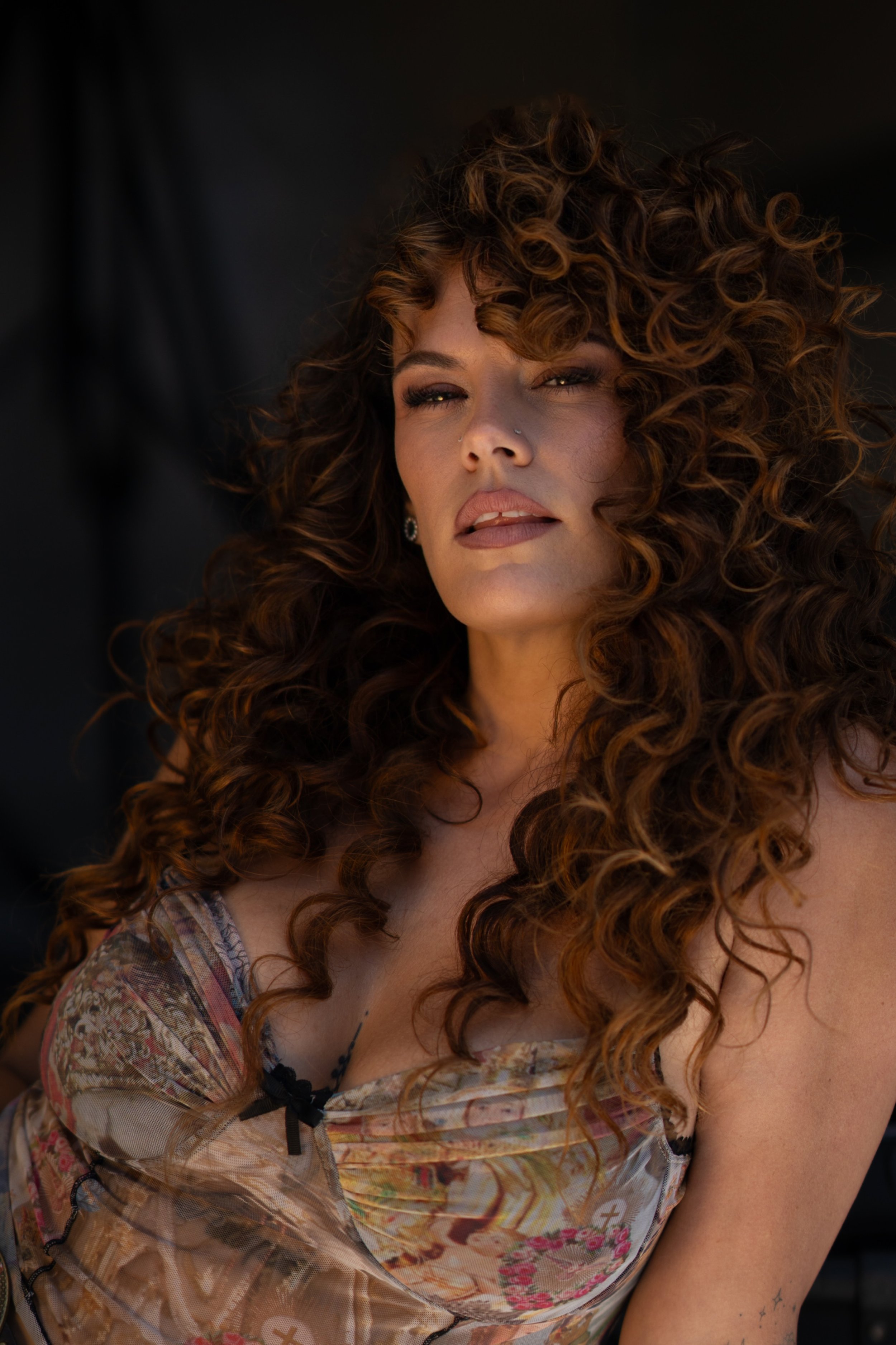
Mel Ömana has never understood music as a territory defined by boundaries. From her earliest projects rooted in underground rap to her participation in Benidorm Fest, the Canarian singer, songwriter, and performer has built an artistic identity that finds its greatest means of expression in experimentation and the blending of genres. Soul, jazz, hip-hop, Afro-Caribbean rhythms, and Latin sounds coexist throughout a career that refuses to be reduced to a single musical category. Now, with Glowpical, her latest musical project, that diversity takes on a more personal dimension. Introduced through the single Este es mi año, the five-track EP brings together different musical styles to explore the contradictions of human emotions through an imaginary deeply connected to her Canarian roots.
In this conversation, Mel Ömana reflects on the difficulties of developing an artistic career from an island territory, the expectations that followed her participation in Benidorm Fest, and the role aesthetics and experimentation play in constructing a distinctive identity. She also discusses her relationship with live performance, the creative processes that remain hidden behind a finished song, and how her experiences of childhood bullying shaped her understanding of self-worth. Rather than presenting strength as a permanent quality, the artist defends the right to make mistakes, change one’s mind, and embrace the contradictions that exist within every individual.
ÁLVARO RAMOS: To begin with the present, where do you find yourself personally and artistically right now? How would you define your musical identity in 2026, particularly with the release of Este es mi año, the first single from Glowpical?
MEL ÖMANA: I think I’m in the same place I’ve been defending for the past five years: musical diversity and the blending of sounds. At certain points, that has even worked against me because people would ask what exactly I was doing. But I’ve always stood by it. I used to think, how can I have so many vocal nuances, how can there be such a vast musical universe, and yet I’m supposed to limit myself exclusively to hip-hop or jazz? I think Glowpical is the synthesis of that entire journey. It’s the project through which my artistic identity will finally make sense, although I feel people have already started to understand it. It’s a way of establishing that Mel Ömana represents diversity and eclecticism. That’s where I am right now. I’m releasing an EP with five completely different genres, but every song sounds like Mel Ömana. And that’s precisely what I’ve spent years trying to build.
AR: Before getting into the project, I’d like to ask you about your stage name. Where does Mel Ömana come from, and how did it become part of your identity?
MÖ: It happened almost by accident. When I was little, people would always call me a melómana, someone who is passionate about music. And when I started using Facebook, I didn’t want to use my real surname. So I played around with my name, Mel, and the Spanish word melómana. One day, I uploaded a song to Facebook that I’d recorded with my ukulele, and it went viral. Suddenly, lots of people started following me, and something happened that I found hilarious: some understood the wordplay, but others genuinely thought Ömana was my surname. People even asked me whether I was related to other people with that surname. I liked that interpretation so much that I decided to keep it. I removed the accent mark, added the umlaut, and it became my stage name. I thought it was interesting to have something that worked almost like an artistic surname rather than inventing a completely different name. And it all happened without much planning.
AR: Your earliest projects were closely connected to underground rap, whereas now you’re exploring more tropical, danceable, and uplifting sounds that seem to connect directly with your roots. Has your understanding of music changed, or has what you need to express through it simply evolved?
MÖ: For me, music is a laboratory of constant experimentation. I’ll probably continue changing forever because my music is closely connected to my personal circumstances and what I need to express at any given moment. I also write my own lyrics, so they’re inevitably influenced by whatever I’m going through. I come from soul and jazz, although I later moved into rap. When I released #EatPapaya, my first project, I was angry, and rap helped me process that emotion. Now I’m much more connected to a brighter side of myself. But that doesn’t mean the darkness has disappeared. That’s precisely what Glowpical is about: allowing all our emotions to coexist. We can disagree with what’s happening in the world while simultaneously feeling profoundly grateful to be alive. And both feelings can exist without making us feel guilty. That’s what the project represents: bringing light to our shadows. That’s why I feel that everything has changed and, at the same time, nothing has changed. Because what I’ve always defended is diversity. I know I repeat that word constantly, but it really defines how I understand music.
AR: Este es mi año feels almost like a statement of intent, but also a personal celebration. Why did you decide that this particular song should introduce this new chapter?
MÖ: Because, for me, the year begins in September. I’m one of those people who feels that new cycles begin with the start of the academic year, not in January. New seasons begin in September, and, as a true Virgo, it’s also my birthday month. Although the entire EP had been taking shape throughout the year, I knew I wanted to introduce this new sound in September. So the choice felt completely natural. Actually, I think the song chose me. It was simply a matter of saying: this is the one we’re going with.
AR: We live in a culture that constantly pushes us to improve ourselves, reinvent ourselves, and prove that we’re experiencing the best moment of our lives. Este es mi año can also be interpreted from that perspective. How do you distinguish genuine transformation from the pressure to be constantly evolving?
MÖ: I think that’s a very personal question because I wouldn’t feel comfortable telling someone where their decisions come from or why they’re doing certain things. It’s like when people ask a woman why she’s wearing something low-cut and assume she’s trying to attract someone’s attention. Maybe she’s simply hot. We can’t constantly assign intentions to other people. I don’t think external pressure and personal celebration are mutually exclusive. We can feel pressure while also deciding to celebrate the good things in our lives. I don’t deny darkness or our shadows. Quite the opposite. What I try to do is bring light to them. But I also don’t feel the need to decide who’s authentic and who isn’t. I follow what people transmit to me and what I personally connect with. Telling someone they’re not authentic seems quite presumptuous, especially when you know nothing about their personal journey. I pursue authenticity and individuality, but I understand these are personal, spiritual, psychological, or emotional processes. Everyone has to go through that journey with themselves. Have I experienced pressure? Of course. But I’m also not an artist who only shows the beautiful side of her personality. I’m quite rebellious, pretty cheeky, I don’t hold back much, and I’m certainly not someone who sits on the fence. That said, just because someone chooses to project a different image doesn’t mean they’re not authentic. I don’t know their story.
AR: Glowpical brings together influences from Afro-Caribbean and Latin American genres, from bachata to other tropical sounds. Beyond that musical diversity, what did you want to convey emotionally through the project?
MÖ: To begin with, the concept of the tropical is closely connected to my origins. I’m Canarian, and we live in a subtropical territory. I wanted to talk about those geographical areas that influence us through their climate, vegetation, and everything surrounding us, because those things also shape who we become. But I’m also interested in the idea of the jungle, in everything that being alive entails. That’s why there are five songs in five different genres. Each one explores an emotional state: wounds, the beautiful side of life, anger, romantic love… Everything a person might experience. I’ve built the EP around five emotions that serve as a starting point for exploring how we feel and how those feelings transform. I didn’t want to make a project that spoke only about happiness. I wanted everything we are to be present, including the things we usually prefer to hide.
AR: How do you manage to build a recognizable sonic identity from such different influences? What makes five songs belonging to different genres still feel like part of the same artistic universe?
MÖ: I think it has to do with the place I’m creating from. For years, I’ve defended that diversity and eclecticism, even when people told me that audiences would never fully understand my project if I continued working that way. But I don’t feel comfortable making only ballads. There might be a moment when I’m incredibly angry, and I don’t want to express that anger through a ballad. I need another language. I think my identity has a lot to do with my lyrics, how I compose, and a sense of rebellion that always ends up appearing in my music. I don’t know exactly why, but I suppose it’s because that’s part of who I am. There’s something about this EP that’s making me particularly happy. People from my team and the music industry who have listened to it tell me that the five songs are completely different, yet they all sound like me. And that’s exactly what I’ve been defending for so long. There were moments when people told me my project would never make sense to audiences, but I was convinced that it would. Because I believe that anything created from a place of truth eventually develops its own identity.
AR: You’ve decided to document part of the creative process behind Glowpical alongside your producer, Dave. What actually happens inside a recording studio that audiences rarely get to see?
MÖ: We’ve created a series of short videos showing what the process was like. Obviously, there are many more nuances because we spent so many days working on it, but I think they offer a pretty good understanding of what happens inside a studio. I was interested in showing the less glamorous parts too. There are moments when I’m sick, others when I’m frustrated, or when things simply aren’t working out the way I’d hoped. Because it’s not all flower power. I consider myself an artist who is deeply connected to live performance. I think it’s the part of music that fascinates me the most, that conversation that happens with the audience. The studio, on the other hand, creates certain levels of stress for me. You have to hit a particular note, repeat a take, record it again, listen back, make corrections… It’s incredibly detailed work, and sometimes it can be quite tedious. I enjoy it, of course, but there are artists who absolutely love being in the studio and for whom performing live is secondary. For me, it’s exactly the opposite. I wanted to show that side because audiences often hear a finished song without imagining everything that happened before it reached that point. I think the video blog allows people to experience that reality much more directly than any explanation could.
AR: Humor, sensuality, empowerment, and vulnerability all coexist in your music. Do you find it easier to expose yourself emotionally when you can do so through a character?
MÖ: When I get onstage, I obviously exaggerate certain parts of myself, but they’re parts that already exist. For example, when I wrote #EatPapaya, I was angry. I’m no longer in that same emotional state, but when I perform those songs, I can reconnect with that anger. So there’s an element of performance, of course. But I don’t feel that I’ve created a specific character. In fact, sometimes I think I’m more of a character offstage than I am onstage.
AR: Is there any experience or emotion that you still find difficult to transform into music?
MÖ: No, not really. If I want to talk about something particularly raw, I use metaphor. I find it a really interesting and enjoyable tool. I don’t think everything needs to be expressed literally. For example, if I want to write about a violent situation, I don’t necessarily need to describe exactly what happened. There are artists who write from that very direct place, and I think that’s wonderful, but I don’t connect as much with that way of composing. I prefer to find images, metaphors, or other devices that allow me to transform what I’m feeling. But there’s no subject that makes me particularly uncomfortable when it comes to writing, composing, or singing.
AR: You come from the Canary Islands, a territory where diverse cultural influences have historically coexisted and whose relationship with the rest of the world has been shaped by both cultural exchange and geographical isolation. How has that context influenced your musical sensibility?
MÖ: Enormously. Saying one hundred percent would be difficult because you can never really measure something like that, but it’s undoubtedly been decisive. Canarian identity is shaped by living in a fragmented, geographically vulnerable territory with a very particular history, marked by colonization and different cultural legacies. There’s also the difficulty we’ve historically faced when trying to leave the islands. To travel anywhere, you need to take a plane or a boat. All of that influences the way you relate to the world. There’s something about the Canary Islands that I’m always proud of, and that’s the enormous creativity that exists there. I think those circumstances have contributed to developing a very particular artistic sensibility. And I’m not just talking about music, but about many areas of creative expression. The history, the territory, the limitations, and the mixture of cultures have generated a distinctive way of understanding art. Without a doubt, the Canary Islands gave birth to me as an artist.
AR: Are there any sounds associated with your childhood that you’ve rediscovered while developing your career? References that were perhaps so present in your life that you weren’t even conscious of their influence?
MÖ: It’s funny because it’s not that I’d forgotten them. They were so deeply ingrained in me that I hadn’t even considered bringing them back. They were simply there. I often think about Canarian verbenas, those popular outdoor celebrations. All those sounds associated with merengue and Latin rhythms that are part of the way we celebrate. Obviously, I bring them into my own world, making them a little more mischievous, a little more Mel Ömana. But if you listen to my music from the beginning, you realize those influences have always been present. Even #EatPapaya, which is much closer to hip-hop, has a deeply Latin rhythmic foundation. It’s not something I’ve discovered recently. It’s something I’ve always carried within me.
AR: The Canarian music scene has gained enormous international visibility in recent years. However, that recognition doesn’t necessarily mean the structural difficulties have disappeared. From your perspective, what obstacles do artists still face when trying to develop a music career from the islands?
MÖ: I think having to relocate is still one of the main problems. Until relatively recently, if you wanted to develop a music career, you had to leave the islands. And I think that even today, if you want to be present in certain spaces within the industry, you still need to travel. For example, Quevedo spent some time living in Madrid because, logistically, it’s much easier. But that means uprooting yourself from the place where you were born. Social media has changed things enormously and helped reduce that distance, but the industry is still heavily concentrated in major cities. The Canary Islands have also experienced a significant talent drain. Many incredibly talented artists and producers had to leave to find work and develop their projects.
And then there’s the financial aspect. Making music costs an enormous amount of money. If you don’t have the resources, constantly traveling from the islands becomes a genuine obstacle. But there’s another dimension that I think is even more important, which is the emotional one. Having to accept that, in order to pursue your dreams or work in the field you love, you must leave part of your life behind is incredibly difficult. I still live in the Canary Islands. I take flights every week, but I’d rather spend three hours flying there and another three hours coming back if it means I can return home. Maybe there will come a point when my professional commitments make that impossible, and I’ll have to move. If that happens, I’ll do it. But for now, I want to continue living there.
AR: Your participation in Benidorm Fest allowed you to reach a much wider audience. After experiencing that level of exposure, did your relationship with the music industry change? Did you ever feel that external expectations were beginning to influence your artistic decisions?
MÖ: Benidorm Fest affects everyone who takes part in it. It’s an enormous platform for exposure, and I genuinely can’t find a way to see that as something negative. That doesn’t mean it automatically guarantees you a career. You don’t participate in Benidorm Fest and suddenly become an international star. Afterward, you have to keep working, have a vision, a project, and a team that supports that vision. But in my case, it was particularly important because it allowed me to break through that Canarian ceiling we were discussing earlier. The Canary Islands have an incredible number of artists and an enormous amount of talent, but there isn’t an industry structure as strong as the one you might find elsewhere. The festival allowed me to reach a much larger community, gain visibility, and open up new possibilities. It also helped me find the team I’m working with now, which is my dream team. I’m extremely grateful to the people I worked with previously, of course, but right now I feel that I’m exactly where I wanted to be. So, in my case, everything that came after Benidorm Fest was positive.
AR: Earlier, you mentioned how, for years, some people struggled to understand your artistic proposal. Have you ever felt that your versatility worked against you?
MÖ: I think it might have been perceived that way from the outside, but I never experienced it like that. Quite the opposite. I always considered my versatility an advantage, particularly when performing live. Someone might discover my music on Spotify and not completely understand what I do. But when they come to a concert, everything suddenly makes sense. That also happened at Benidorm Fest. I wasn’t a favorite going into the competition, not by any means, but people understood my live performance. And the thing is, I’m a singer who sings to perform live. I don’t make music just so someone can listen to me on Spotify. I want people to come to a concert, experience it, and enjoy the organic side of music.
For years, I defended that idea with everything I had. There were people on previous teams who suggested I focus on just one style, and I would tell them no. Because, to me, music is one whole, and it offers endless possibilities. I think an artistic career has to be understood in the long term. If your only goal is to achieve an immediate hit and become internationally famous, perhaps you’re not really putting culture and music at the center. That’s how I see it. And now we’re seeing that this kind of stylistic freedom is becoming much more widely understood. There are artists who come from rap and are now making salsa, for example. Why not? If you can do it and you want to do it, do it. And if you want to dedicate yourself exclusively to rap, I think that’s perfectly fine too. But that’s not the kind of artist I am.
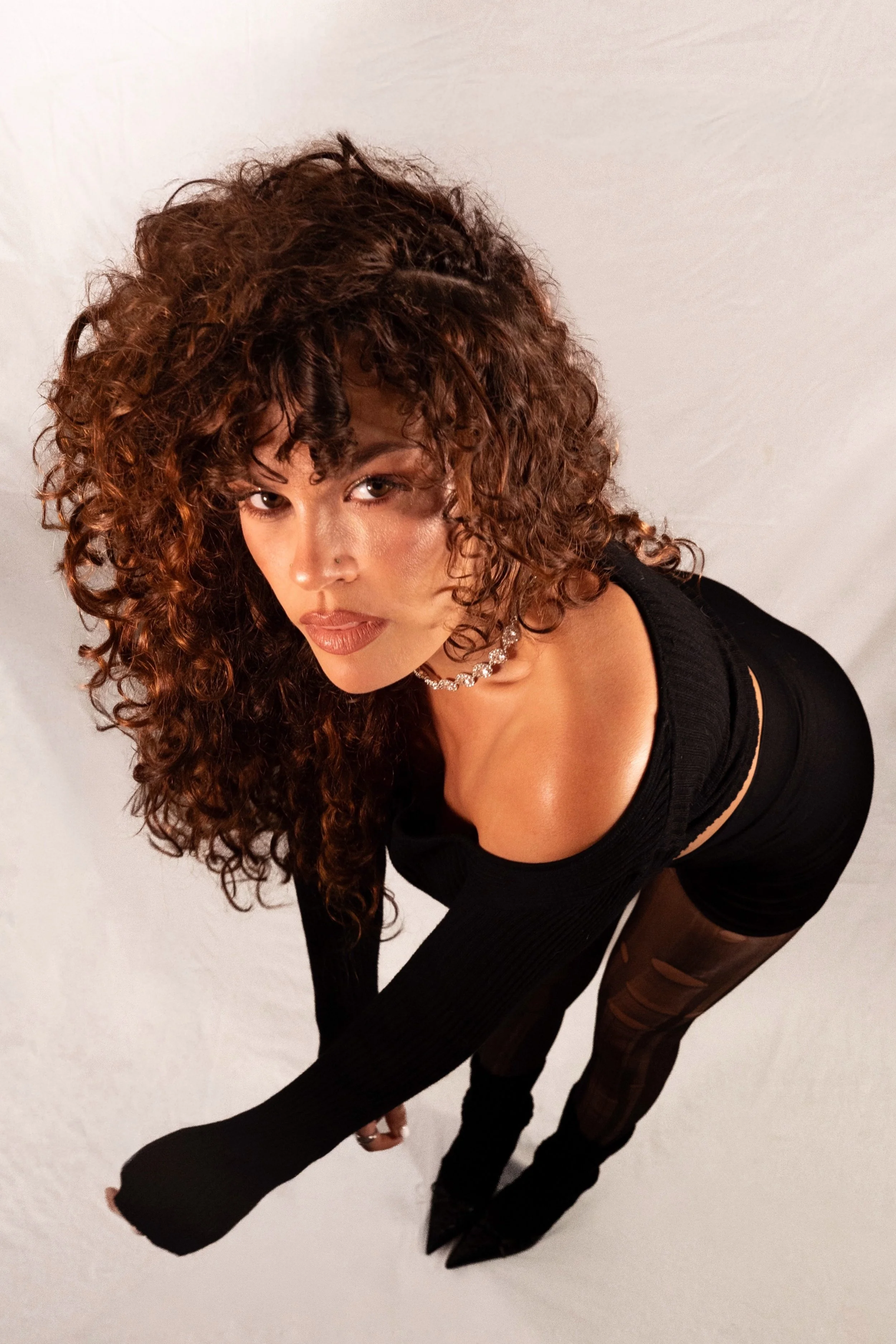
AR: Beyond the music, your project also has a very recognizable visual identity. How do you construct the aesthetics and narratives that appear in your music videos, cover artwork, and styling? What role does imagery play within your artistic universe?
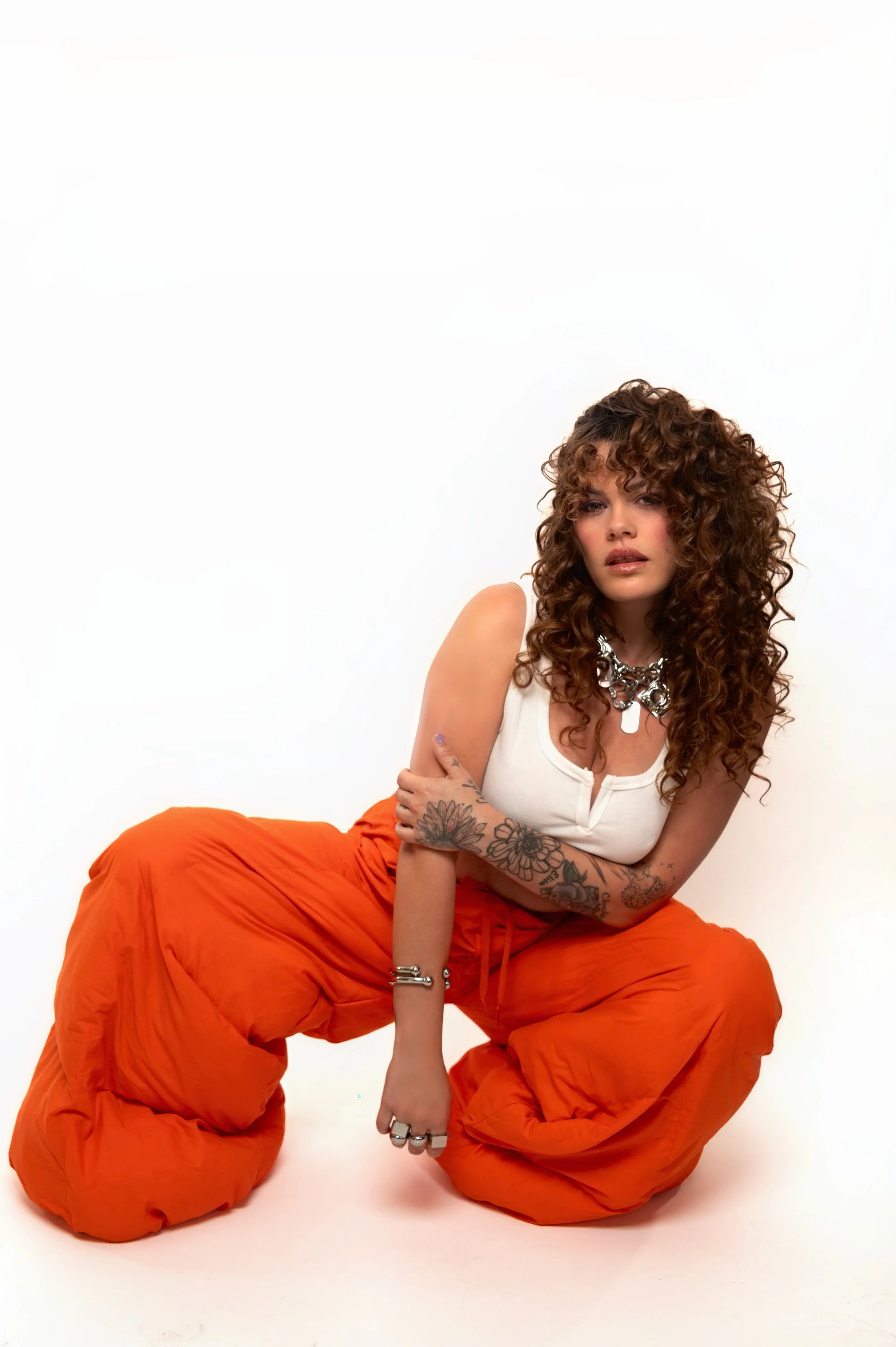
MÖ: Right now, I have a very clear idea of the visual universe I want to build. I’m drawn to warm colors, particularly reds and oranges. I want to develop an image that has something of an island diva about it, but also that of a warrior, with a certain strength and aesthetic toughness. There were already elements in #EatPapaya that connected with my current identity, but back then, everything revolved more around fruit and a much more rap-oriented aesthetic. My body language was different, more open and more connected to that particular moment in my life. Later, I started incorporating other elements, some closer to Afro-inspired references. But there’s one thing I’ve always maintained, and it has a lot to do with who I am: my hair. I haven’t straightened my hair in ten years. My hair is part of my identity, my relationship with music, and also that idea of the jungle and nature that appears throughout Glowpical. Now I feel that all those elements are much more connected. The project’s visual universe is completely clear to me.
AR: Your public image is often associated with that of a very strong, confident, and outspoken woman. Do you ever feel pressure to constantly project that strength?
MÖ: Sometimes I get the feeling that people might think I don’t show my sensitive side. But I also think anger is a form of sensitivity. Strength can be too. I don’t feel external pressure to present myself as strong because it comes naturally to me. However, I think there are moments when that image might work against me. Because it can seem as though I’m always doing well, that I’m always strong, and that’s simply not true. Often, strength comes from having to overcome challenges constantly, not because you’ve chosen to be strong. I wish I didn’t have to be strong all the time. I would love it if life didn’t affect me so deeply and I didn’t constantly have to search for tools to overcome certain situations. I’m a very sensitive person. In fact, I’m extremely sensitive. And I think that sensitivity is present in everything I do, even if it sometimes manifests through an attitude that others might interpret as strength.
AR: We live in an industry where it seems that every artistic decision has to be justified by immediate results. Do you think there’s still room to make mistakes, experiment, and develop an identity without constantly having to prove that everything is working?
MÖ: I think there’s less and less room for that. But I want to become a safe space where that possibility still exists. I find it deeply worrying that making mistakes has almost become something unforgivable. There’s nothing wrong with making mistakes, as long as you’re capable of recognizing them and learning from them. But in order to realize you’ve made a mistake, you also need an environment that allows you to make one in the first place. If every time someone makes a mistake, they’re immediately called out and there’s no opportunity to reflect, change, or learn, we’ll end up living in a world where everyone is afraid of stepping outside what’s established. And that’s going to lead us to constantly trying to fit into a box. I don’t want to fit in.
I want to belong, and there’s a difference. And I want other people to feel that they belong without having to give up who they are. Obviously, there are mistakes I won’t tolerate. I’m aware that certain behaviors and situations are profoundly wrong and can’t simply be excused. But I also believe that when someone is capable of acknowledging what they’ve done, reflecting on it, and genuinely trying to change, there should be an environment that allows that learning to happen. It’s not just about having the right to make mistakes yourself, but also about being able to create spaces where other people can learn. And I think that’s something we desperately need.
AR: If you listened to Glowpical again in ten years, particularly Este es mi año, what would you like to remember about the person you are today? What do you hope you’ll have left behind?
MÖ: The truth is that I’ve always been a little bit in love with myself, but not from a place of superiority. I come from a childhood in which I experienced bullying, and growing up with that wound is incredibly difficult. When you’ve experienced bullying as a child, there’s a part of your mind that constantly makes you feel inadequate, as though there’s something about you that doesn’t fit.And that’s something that can stay with you for a very long time. In my case, therapy and the work of looking inward helped me begin to change that perception. I had to learn to tell myself: “Girl, love yourself. There’s a place for you too.” When I say I’m in love with myself, I don’t mean that I think I’m incredible or that I’m the greatest person in the world. What I mean is that I’ve learned to feel that I’m enough. And that took me a very long time.
When you’re bullied as a child, you can grow up believing that you’re somehow inadequate. It’s a wound that, even today, can sometimes reopen. The difference is that now I can recognize it and take responsibility for it as an adult. And I think this moment in my life is particularly important because I’m much more aware of who I am, what I’ve experienced, and what I still need to work on. If I could speak to the Mel of today ten years from now, I think I would thank her. Thank you for not remaining trapped in that wound, in that fear, or in that panic. Thank you for continuing, for looking inward, and for learning to take responsibility for your own life. That’s what I’d like to remember. Not because I feel that I know everything, far from it. I still have so much to learn. But because I feel that I now have a level of self-awareness that I didn’t have before. And I like to think that the Mel I am today is building the path for the Mel I’ll become in ten years.
AR: And finally, what advice would you give to younger generations trying to find their way into the music industry?
MÖ: Work on your personal identity and put in the effort. Build something that’s truly your own and work hard for it.
Questions by @alraco43