
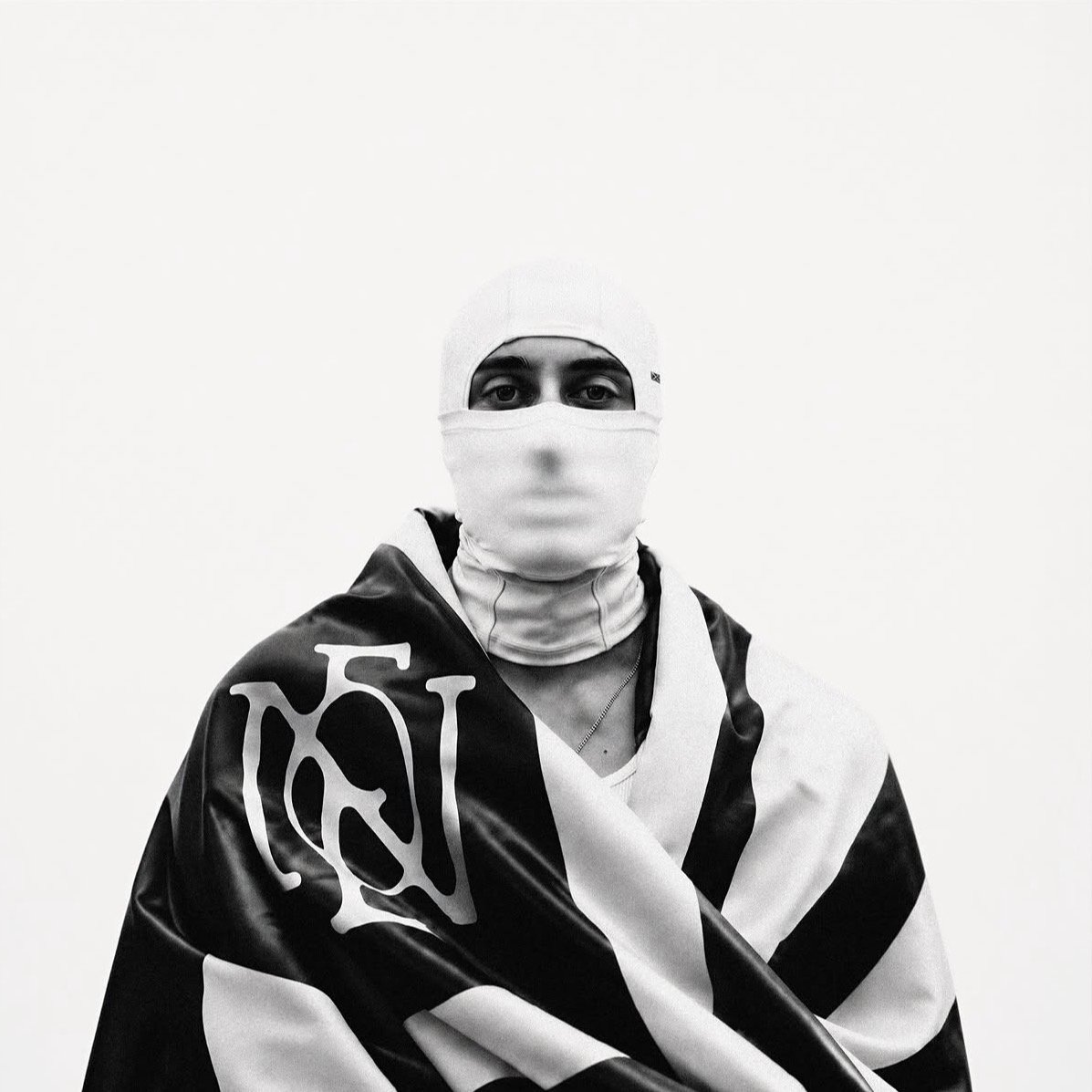
After years of exploring the boundaries of rap and building his own musical identity, Shoda Monkas presents El Neolandés, an album that brings together all the different versions of himself that have shaped his career. From Paz Feelin’s to MUM SHE LOVES ME and LO QUE NOS QUEDA DE GUAPOS, the artist from Albacete has developed a language in which introspection, humor, pop culture references, and a sensitivity that challenges some of the codes traditionally associated with hip-hop coexist. Now, that evolution takes shape in a conceptual universe that goes beyond music: an imaginary nationality with its own flag, passport, and aesthetic identity, revisiting the idea of belonging to a new wave, but from a much more conscious and mature perspective. Featuring twelve tracks and collaborations with Ptazeta, Juancho Marqués, Zeballos, and Natos y Waor, the project celebrates creative freedom as the result of years of learning, mistakes, and encounters.
In this conversation, Shoda Monkas reflects on the need to let go of ego, the role of fashion in constructing an artistic identity, and the personal experiences that run through the lyrics of his latest work. He also discusses his relationship with masculinity, the importance of remaining faithful to one’s values, and the contradictions that arise when a profession you love requires sacrificing time with the people who matter most. Rather than approaching El Neolandés as an exercise in nostalgia, the musician sees the album as an opportunity to reconcile with his own journey and, above all, to fall in love with his creative possibilities all over again.
ÁLVARO RAMOS: To begin with, I’d like to look back at your discography. You’ve released several projects in which you’ve explored different sounds and approaches to songwriting. How did we get to El Neolandés, and what makes this album particularly important within your career?
SHODA MONKAS: I think this latest project is ultimately the result of everything I’ve learned throughout my career. The mistakes, the good experiences, the good and bad people I’ve encountered, the industry itself, and all the musical genres I’ve experimented with until I found where I feel comfortable. El Neolandés is the result of all of that. That’s why I consider it my best album. Because everything I know now, I didn’t know when I was making the previous ones. Every experience has contributed something, and somehow, all that learning is present in these songs. I think it’s the project that best reflects where I am artistically right now.
A. R.: If you had to define Shoda Monkas in 2026 using just two words, which would you choose?
S. M.: Confidence and relevance.
A. R.: Something that particularly stands out about El Neolandés is the leap you’ve made in terms of visual identity. We’re not just talking about an album cover, but an entire universe with its own aesthetic, narrative, and even a fictional nationality. How did you begin constructing that imaginary world?
S. M.: Interestingly, it was actually quite easy to build because it’s something I’d been developing in my head for the past three years. Ever since I released the song El Neolandés, I started imagining what that universe would really look like. I pictured Neolandeses wearing oversized clothes and balaclavas because they came from somewhere extremely cold, with snow everywhere… I started imagining what this fictional nationality would be like. And little by little, everything grew. We’ve created a passport, a flag, and a visual identity that belongs to that world. When the time came to develop the album, I spoke with my team, with Diego, who’s responsible for the videos, with Elena, with my managers… And I showed them a document where I’d been writing down how I wanted everything to look. Then we spoke with Hurtado, who was responsible for the album’s graphic design, and the whole process was pretty straightforward. I had such a clear vision in my head that I just needed to find the right people to bring it to life. It wasn’t an aesthetic that suddenly appeared to accompany the release. It was something I’d been imagining for a very long time.
A. R.: Where exactly did the idea of the Neolandés come from? Because inventing a nationality, developing its symbols, and turning it into the central concept of an album feels almost like a piece of performance art. What was the starting point?
S. M.: The idea is actually very simple: if the new wave were a country, its people would be called Neolandeses. It came from a conversation we had when we were starting to make some noise in the music scene. Back then, we considered ourselves part of a new wave, or at least we liked to think we were. And I thought it would be funny, at a much more mature point in my career, to call the album El Neolandés, as a nod to that period. There’s also something I really like about all of this: even though the years have passed, the love I feel for music and for what I’m doing right now is even greater than what I felt back then. I still feel like I’m new to all of this. That’s why I liked revisiting that idea. It’s not just about looking back, but about recognizing that the excitement of discovering new things is still there.
A. R.: You’ve also expanded the number of producers you’ve worked with on this album. Some songs are closer to rap, others are more melodic, and there are moments where you experiment with different rhythms. How did you build that sonic diversity, and what role did the producers play in the final result?
S. M.: It depended a lot on the energy I had each day and what I felt like doing at that particular moment. Soke, for example, played quite a significant role in the project. He helped me identify things I’d already done and other directions I could still explore. Sometimes he’d tell me that I’d already worked with a particular sound quite a lot, that I could experiment in another direction, or that there was something he was particularly good at that might work well with my style. But every producer has contributed something huge. Diconics, for example, produced four songs on the album, and those four tracks have incredible energy. What’s interesting is how the process evolved. With the producers I worked with at the beginning, I’d arrive with my ideas, and they’d take me in different directions. With the ones I worked with later, I already had quite a lot of material developed, and their role was to identify what was missing, what needed to be removed, or how we could finish building the songs. Everyone brought something essential to the project. And I think you can hear that in the final result.
A. R.: The album also features collaborations with artists from quite different musical backgrounds, including Ptazeta, Zeballos, Natos y Waor, and Juancho Marqués. How did you choose those voices, and what did you want each of them to bring to the project?
S. M.: Most of those collaborations had been pending for a really long time. I’d been talking to Ptazeta since 2023 and to Natos since 2022. We’d spent years saying we needed to make something together, but for one reason or another, it never quite happened. I’d also met up with Zeballos in 2025 to make a song that ultimately never came out. So many of the collaborations on the album were things that already existed in some way, conversations and projects that had been left unfinished and that finally found their place on this record. The exception would be Juancho Marqués, who came into the project almost at the last minute. That was an incredible surprise because Juancho has always been a huge influence on me. Being able to work with him was a really special experience.
A. R.: Galope Galope! opens the album by addressing the setbacks you’ve experienced, the mistakes you’ve made, and how you’re beginning to enjoy the rewards of everything you’ve been through. At what point did you feel you’d stopped being an emerging artist and started recognizing yourself as someone with an established career?
S. M.: I think that process had a lot to do with letting go of my ego. There was a time when I was writing songs for other artists whom I respect enormously. And while I wasn’t going through the best period of my own career, some of those people were experiencing really successful moments and releasing the music we were making together. That experience made me understand a lot of things. Above all, it helped me realize that I didn’t need to be in the spotlight all the time to be happy making music. I think that was the most important part of my personal and artistic growth: no longer needing that constant attention. When you manage to let go of part of your ego, you also start enjoying the process in a completely different way.
A. R.: Galope Galope! also includes references to not having traveled much beyond your own surroundings and not having studied at Yale. There’s something interesting about that contrast between the idea of international success, heavily influenced by American culture, and a reality much closer to the experience of a working-class family. How has your background influenced the way you understand success?
S. M.: I never went on school trips, for example. I come from a completely ordinary family. My parents are incredible, they’re the best, and they’ve always given me absolutely everything, but there were times when organizing certain things was financially difficult. Before turning thirty, I’d barely traveled outside Spain. I spent a week on an exchange in a town in France, near Rennes, and I’d been to Paris, but that was about it. Until relatively recently, I hadn’t had the opportunity to visit places like London. I’m only now beginning to discover that world I couldn’t explore before. And that also appears in the songs because I feel like I’m working really hard so that, one day, my children can experience certain things differently. It’s not a criticism of my parents, not at all. They always gave me everything. There were simply other priorities. Sometimes you had to work, sometimes traveling wasn’t possible, and that was our reality. The Yale reference makes me laugh precisely because of that contrast. I’ve traveled all over Spain hundreds of times, but I never received a scholarship to study abroad or had those kinds of experiences. And I think it’s interesting to speak from that perspective too.
A. R.: In Balón d’Or, there’s a reference to Dior, and fashion seems to be becoming increasingly important in your visual universe. What’s your relationship with fashion like? Is there a particular brand you’d especially like to work with?
S. M.: I really love fashion. I’m definitely not an expert, and I actually feel like it’s something I still need to explore further. I’d love to become more involved in that world, attend fashion shows, and who knows, maybe even walk the runway myself one day. It’s something I’d really like to do in the future. If I had to choose a brand to buy something special from, something that truly represented a celebration, I’d probably choose Jacquemus. I really like what they do.
A. R.: In Lalala, you talk about losing friendships because of unpopular opinions. We live in a time when personal relationships often seem to be built around sharing certain beliefs or positions. How far are you willing to change in order to preserve a friendship?
S. M.: I’m thirty-three years old, and there’s a phrase I absolutely hate: “That’s just the way I am, and if you can’t deal with it, that’s your problem.” I hate it because I believe that if you treat people badly, if you’re an asshole, then you need to change. You can’t justify every kind of behavior by saying it’s simply part of your personality. But changing attitudes that hurt other people is one thing, and giving up your principles and values just to please others is something completely different. And that’s where I draw the line. If I firmly believe in something, if I’ve reached that conclusion rationally and I’m not acting selfishly, I’m not going to change my mind simply because someone else doesn’t like it. If that means we have to stop being friends, I’ll be really sorry. But there are certain things I’m not willing to compromise on.
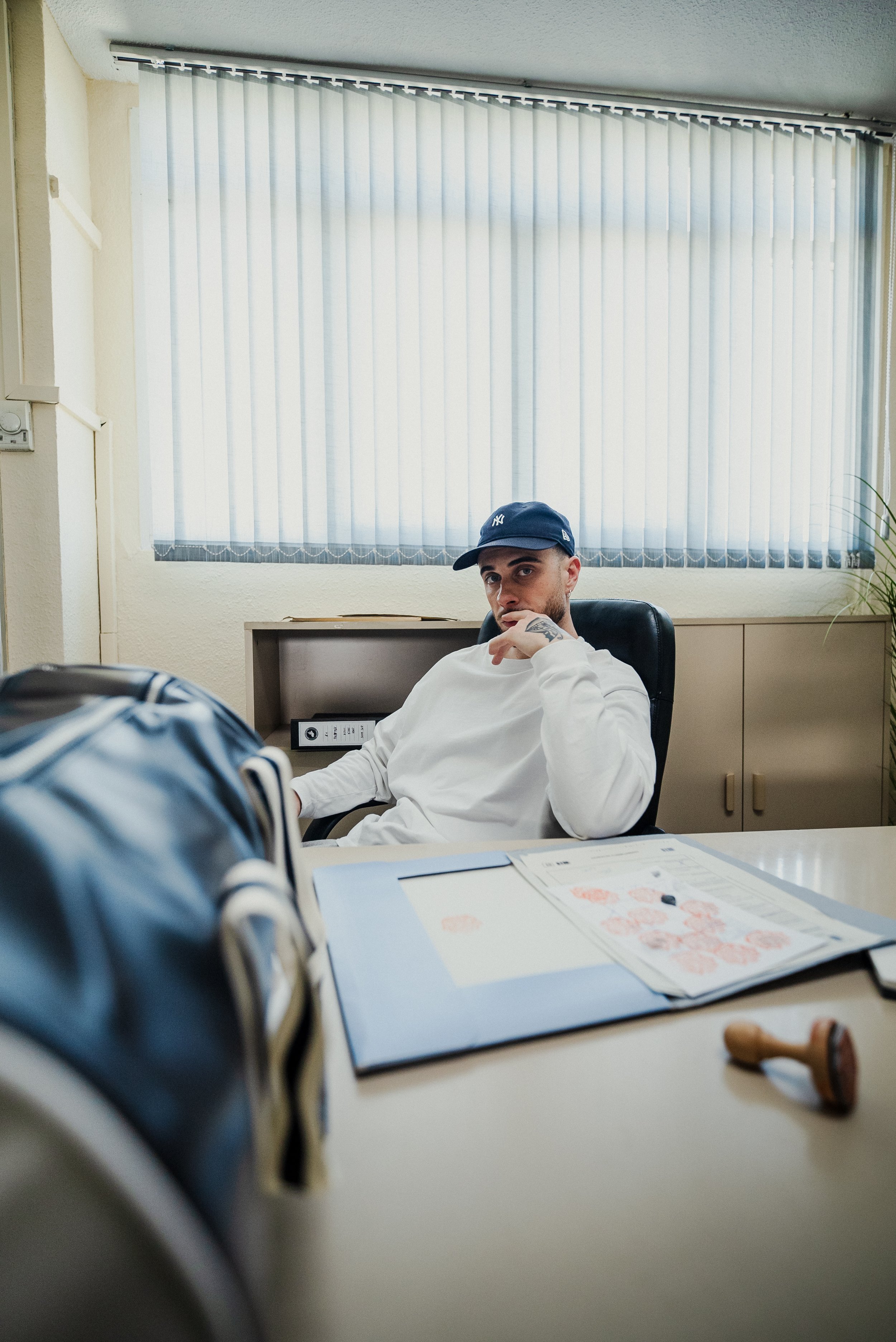
A. R.: There’s a line on the album that I find particularly interesting: “I’m wearing another man’s name on my underwear.” Beyond the humor, I think it’s a powerful image about masculinity and its contradictions. We’re used to seeing how men’s underwear turns the name of a brand or designer into a status symbol. How did you come up with that idea?
S. M.: That line has an amazing story because I actually stole it from Zatu from SFDK. We spent three days together in Seville. I went with my brother and my manager, and we had an incredible time working in the studio. We made two songs that, for different reasons, we eventually decided not to release. But there was one line that I thought was absolutely brilliant. Some time later, I was working on a song and realized it fit perfectly. So I brought it back and put it into the track. About three weeks before the album came out, I spoke with Zatu and told him I had something to confess, that I’d used that line. And he told me it was unbelievable because that was precisely the only line from those songs that he’d also recycled for a track on his upcoming album. To make things even funnier, my song was going to come out before theirs, so it would look as though they’d copied me. I asked him whether he minded if I kept it, and he said there was absolutely no problem. Of course, I promised I’d always make it clear that the line was his because I think it’s genius. It’s one of those things you hear and immediately think: how did I not come up with that myself?
A. R.: What’s interesting is that it can also be interpreted as a way of making fun of certain codes of traditional masculinity. The idea of wearing another man’s name on your own body, particularly on an item of clothing so closely associated with masculinity, challenges that constant need to prove a particular identity.
S. M.: Absolutely. There’s nothing fragile about that kind of masculinity. I think it’s a brilliant way of playing with those references and approaching them through humor. That’s why I loved it so much when I first heard it. Zatu has always been an absolute reference point for me, and that line is incredible.
A. R.: Although you work with different producers, how directly involved are you in the production decisions? Have you ever considered producing your own songs?
S. M.: I’m very involved in the production process. Whenever we’re working on a song, I’m always sitting next to the producer. I like participating in the selection of sounds, giving my opinion about how each element should work, and following the entire process closely. I think that has a lot to do with how I’ve worked over the past few years. I’ve spent a lot of time working closely with producers like Zack and Toni, and for quite a while I was an artist who developed almost every project with just one producer. That made me incredibly interested in that side of music. Obviously, I don’t want to take any credit away from the producers because I wouldn’t be anything without them, but I like being involved in the decisions and understanding how every song is constructed.
A. R.: In Truly Yours, there’s a particularly interesting reflection on work and being away from the people you love. You talk about spending much of your time sleeping away from home and how that sometimes makes the job feel less well paid than it seems. How do you manage that contradiction between doing something you’re passionate about and losing time with the people closest to you?
S. M.: First of all, I’m aware of how privileged I am to be able to make a living doing something I love. There are so many people with jobs that are much harder than mine who also spend more time away from home than they’d like. But it’s true that I’m a very family-oriented person. I really love spending time with my people, my friends, and my family. In fact, that’s precisely why I still live in Albacete. I come to Madrid every week, and I don’t mind having to travel constantly because it’s important to me to keep living close to the people I love. And yes, there are moments when you wonder whether it’s really worth it. In my case, the answer is still yes, because music makes me incredibly happy, because I’m still young, and because I think I’m managing to divide my time reasonably well between work and my personal life. But that doesn’t mean there aren’t sacrifices. There are things money can’t make up for, and time with the people you love is one of them.
A. R.: In Enemies, you play with the idea of having an angel’s name, distancing yourself from the bad boy image so often associated with certain codes of rap. What’s your relationship with religion and that kind of symbolism? Is it something you’ve explored before?
S. M.: I’ve referenced religion many times, but I always bring it into my own world. I’m not religious, and I certainly don’t believe in the Church as an institution. If I had to believe in something, I think it would be in the people who were here before us and are no longer with us. When I need help or feel like I’m going through a difficult moment, in some way, I ask them for it. I have a song from my 2024 album called Un beso a los anillos, which is precisely about that. I always carry something connected to my family, my partner, or my friends. And when I’m far from home or going through a difficult situation, kissing those rings is my way of feeling that they’re with me. I think everyone needs to believe in something when life becomes overwhelming. And in my case, what keeps me grounded is my people.
A. R.: One of the collaborations that caught my attention the most is Maxituning, featuring Ptazeta. There’s a very interesting meeting between your universe, which is much more closely connected to rap and trap, and her artistic identity, which has developed a very recognizable aesthetic within urban music and queer culture. How did your relationship begin, and how did you end up making this song together?
S. M.: We met through social media. We started following each other because we really liked each other’s work, and little by little, we began talking. In 2023, I was in Granada working with Toni, and we’d been making music for a few days. Since I was already talking to Zule, we thought it would be cool to prepare something to send her. We made an early version of the song and sent it over. I remember traveling back from Granada while having a video call with her, talking about when we could meet up and work together. But in the end, for different reasons, we couldn’t make it happen until September 2025. She came to perform at the Albacete Fair with Los 40 and decided to arrive a day early so we could get into the studio. We spent some time deciding whether to make something completely new or revisit that idea we’d left unfinished. When we listened to it again, we both knew immediately that it had to be that one. Because it perfectly combined her more mainstream side, that incredible reggaeton she makes, with my more trap-oriented sound. I think the combination turned out amazingly well.
A. R.: I’m also interested in how your identities coexist within the song. There’s something quite distinctive about that mixture of sexual codes, references to desire, and an aesthetic connected to car culture. Was that combination a conscious decision?
S. M.: Everything came about very organically.We never sat down and decided that we had to make a song with a particular message or a specific statement. We got together, worked on the music, and that’s what came out. And I think that’s precisely why it works so well, because nothing was forced. I also really love how it turned out musically. I think that, at least during the first few days after the album’s release, it was one of the most underrated tracks on the record. To me, it has incredible energy.
A. R.: There’s also something almost nostalgic about revisiting the world of maxituning, cars, magazines, and that visual culture that was so present during the 2000s. What’s your relationship with that universe?
S. M.: A huge one. When I was a kid, my school folders were covered in pictures of cars I’d cut out of magazines. I loved everything about it: the magazines, the engines, the images of modified cars… It was amazing. And I find it really funny to bring that culture back because those are references we grew up with, and now they almost seem forgotten.
A. R.: In Recap, you reunite with Zeballos. Earlier, you mentioned that you’d already tried collaborating in the past. What was it like to revisit that relationship, and what did it ultimately bring to the album?
S. M.: We had unfinished business. We’ve got along really well for years, and in 2025 we’d already met up to make a very romantic song that ultimately never came out. In fact, part of that original idea ended up appearing in another song on the album, Joven Romeo. I recovered some lines I’d written back then and incorporated them into the new track. So, in a way, that previous collaboration ended up finding its place too. Later, we ran into each other at the RocknRolla festival, and the opportunity to meet again came up. He was going to be in Madrid, I was going to be there too, so we got into the studio and ended up making the song. And something else really important came out of that connection: thanks to Zeballos, I started working with Diconics, who produced four songs on the album.
A. R.: It’s interesting that you’ve gone from working so closely with a single producer to opening up the project to many more people. Did you feel that you needed to step outside your creative comfort zone?
S. M.: Yes, completely. I think I’d become too comfortable. And working with more producers has brought out sides of me that I didn’t even know I could develop so much. It’s incredible to listen to the album now and realize all the things I’ve been able to do. When I listen to this record, I think it’s perfect. I absolutely love it. And I don’t think there’s anything wrong with saying that because I’ve worked incredibly hard on it. But a huge part of why I’m so happy with the result is precisely the contribution the producers have made. They managed to bring things out of me that I didn’t even know were there.
A. R.: Toward the end of the album, we find El Caribe en Navidad, featuring Natos y Waor. It’s a song that introduces a different kind of energy into the project. How did that collaboration come about?
S. M.: I’d been talking to Natos for years. We’ve always got along really well and had wanted to make music together for a long time. This time, everything finally fell into place, and we managed to do it. When we got together in the studio, we tried out several different songs. El Caribe en Navidad started taking shape with Soke, who also works as a producer with them. Once we had the pre-chorus and chorus, we realized Gonzalo could fit incredibly well on the track. So I sent it to him. At first, he told me he seriously doubted he’d like it as much as another idea we’d been working on because we already had a different song that was quite developed. But about two weeks later, he messaged me saying he’d listened to the track and that we absolutely had to give it a try because he thought it was incredible. And when he got involved, everything flowed amazingly.
A. R.: Was it important to you that the song appeared on the album regardless of whether the collaboration happened?
S. M.: Yes, absolutely. El Caribe en Navidad was going to be a single from the album with or without Gonzalo. I really loved the concept, the energy, and everything the song represented. Even though El Neolandés has a much more intense and hard-hitting identity at certain moments, I felt that this track was necessary. It spoke for itself. And having Gonzalo eventually join the song was incredible because he managed to make it completely his own.
A. R.: The album closes with Donde tú estés, a much more intimate song that contrasts with the energy of Galope Galope!. How did you decide that it should be the closing track? Do you structure the tracklist according to the sound of the songs or the stories they tell?
S. M.: The funny thing is that Donde tú estés was one of the first songs we made for the album, and originally, it was supposed to be the introduction. But once we had all the tracks, I started thinking a lot about the order. I knew Galope Galope! and Donde tú estés would occupy the first and last positions, although I wasn’t sure which should go where. In the end, we decided to open with Galope Galope! because it represents the essence of El Neolandés much better. It immediately places you inside the album’s universe and introduces its energy. Donde tú estés, on the other hand, felt like a necessary moment of calm after listening to everything that came before. I really liked the idea of starting the album with enormous energy and ending by leaving the listener in a much more emotionally vulnerable state. Something funny also happened when I listened to the whole album. I don’t usually listen to my records from beginning to end very often, but whenever I reached the last song, I felt like my body wanted to go straight back to the beginning. I kind of hate it when artists say their album is a journey and that there’s this whole conceptual progression, but I have to admit that this one has turned out really well.
A. R.: Beyond the individual songs, what do you take away from the entire creative process behind El Neolandés? What have you discovered about yourself, both as an artist and as a person?
S. M.: I take away an incredible learning experience. After making this album, I feel capable of doing so many more things than I thought I could. I feel much more confident in myself and in my abilities. And there’s something particularly important: it’s helped me fall in love with my own music again. I’m not talking about falling back in love with music in general, because that love never disappeared. I’m talking about falling back in love with the things I can create. With my own creative potential. And that gives me an enormous amount of confidence.
A. R.: We live in an industry where many emerging artists seem pressured to achieve immediate results. Based on your experience, having gone through very different stages in your career, what advice would you give to someone who’s just starting out?
S. M.: I think an artist’s career journey is the most important thing they have. You can go through a period when your music is playing everywhere, when everything is working incredibly well, and then experience a stage when things don’t go the way you expected. And you can also make your way back to that level of success afterward. That’s why I think that if you genuinely want to achieve something through music, you have to work consistently. And above all, you can’t become obsessed with results. First, because you can’t control them. And second, because constantly focusing on them will only introduce negative things into your creative process. I’d say you need to focus on whatever you’re doing at any given moment. If you’re making an album, focus on making the best album possible. If you’re on tour, focus on giving the best concerts you can. If you’re doing interviews, focus on answering the questions properly. I think that’s how you build a career in the long term. Work incredibly hard and be present throughout every part of the process, without constantly thinking about what will happen next.
A. R.: Finally, you’ve just presented the album at an event surrounded by people who are important to you. What was that first presentation like, and what can you tell us about the upcoming tour?
S. M.: The presentation was very family-oriented, which is exactly how I like doing things. Everyone was there, from my nephew to my parents, my in-laws, and so many people close to me. A lot of friends came too, people from the industry, people outside the industry, and friends I’ve known my whole life. It was incredible. Having Taïs guide the event and bring everything together was also a brilliant decision. It made the whole presentation really enjoyable and helped everything flow perfectly. As for the tour, we’re preparing eight shows in venues that we’ll be announcing soon. We’re also trying to confirm as many festival dates as possible and organizing everything that’s coming up. The tour will begin in January, and I’m really happy with what we’re building.
A. R.: Which song do you think connected most strongly with the audience during the presentation?
S. M.: I’d say Donde tú estés. But I also think the context had a lot to do with it. I performed it after everyone had listened to the entire album and after I’d explained the concept and everything behind the project. At that point, people were completely immersed in the universe of El Neolandés. And then that song came along. I think it was a really emotional moment, and it managed to touch a lot of people.
A. R.: And which songs are connecting most strongly with people who have discovered the album outside that presentation?
S. M.: So far, I’d say Una Meta + Grande, featuring Juancho Marqués, and Truly Yours. Those are two of the songs people have been messaging me about the most. They write to congratulate me, to tell me how deeply they’re connecting with them, or that they’re surprised by certain sides of me they hadn’t heard before. And that makes me particularly happy. Especially with Juancho’s song, because people had been saying for a long time that our voices could work really well together. Finally being able to make it happen and seeing people respond like this is an incredible feeling.
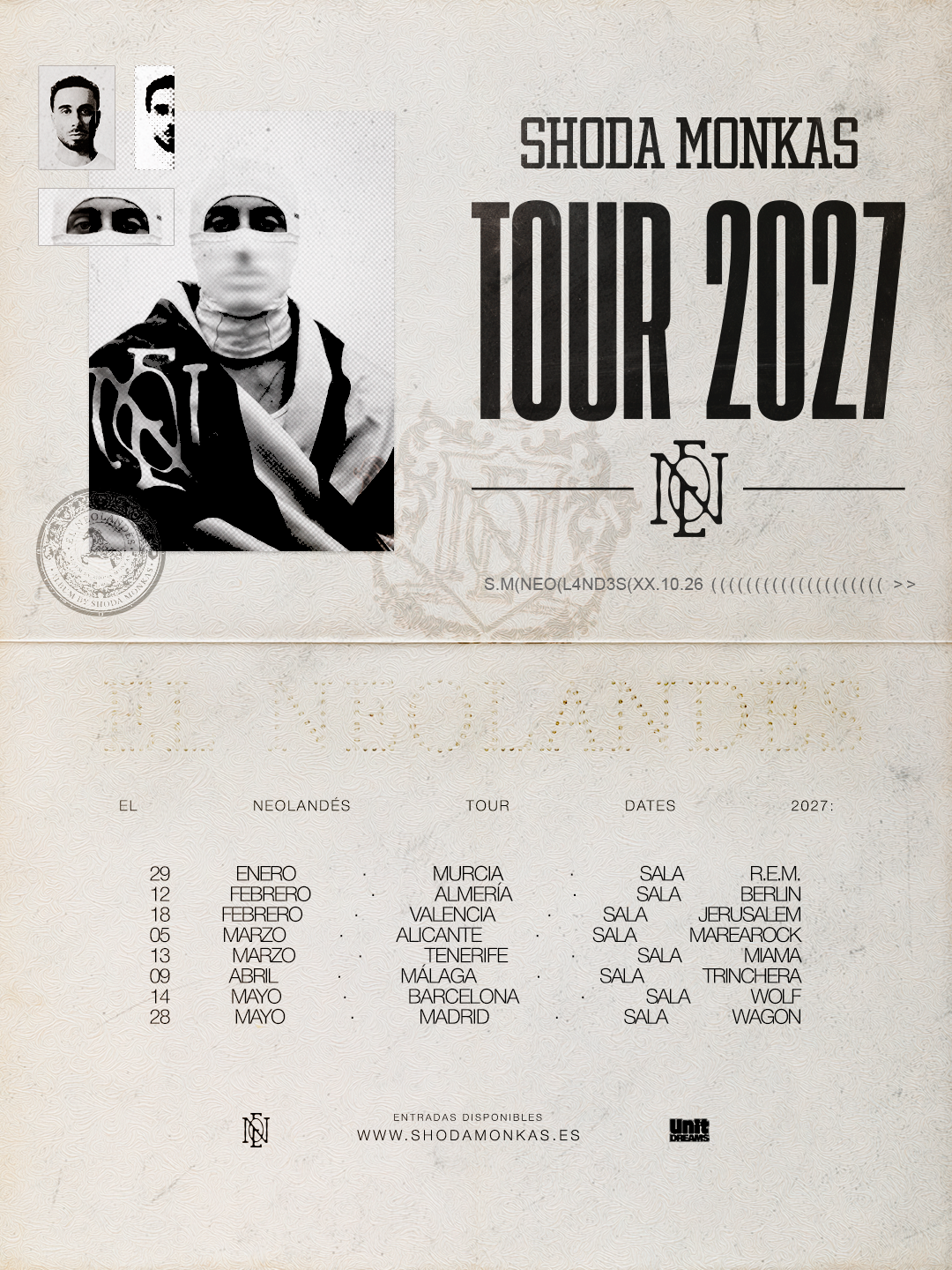
You can experience El Neolandés live in the next following dates:
Jan. 29 2027, Sala R.E.M., Murcia, Spain (tickets through this link)
Feb. 12 2027, Sala Berlin, Almería, Spain (tickets through this link)
Feb. 18 2027, Sala Jerusalem, Valencia, Spain (tickets through this link)
Mar. 05 2027, Sala Marearock, Alicante, Spain (tickets through this link)
Mar. 13 2027, Sala Miama, Tenerife, Spain (tickets through this link)
Abr. 09 2027, Sala Trinchera, Málaga, Spain (tickets through this link)
May. 14 2027, Sala Wolf, Barcelona, Spain (tickets through this link)
May. 28 2027, Sala Wagon, Madrid, Spain (tickets through this link)
Questions by @alraco43