
WHEN BOTTICELLI MET THE BAMBOO GROVE: FENG CHEN WANG SS27
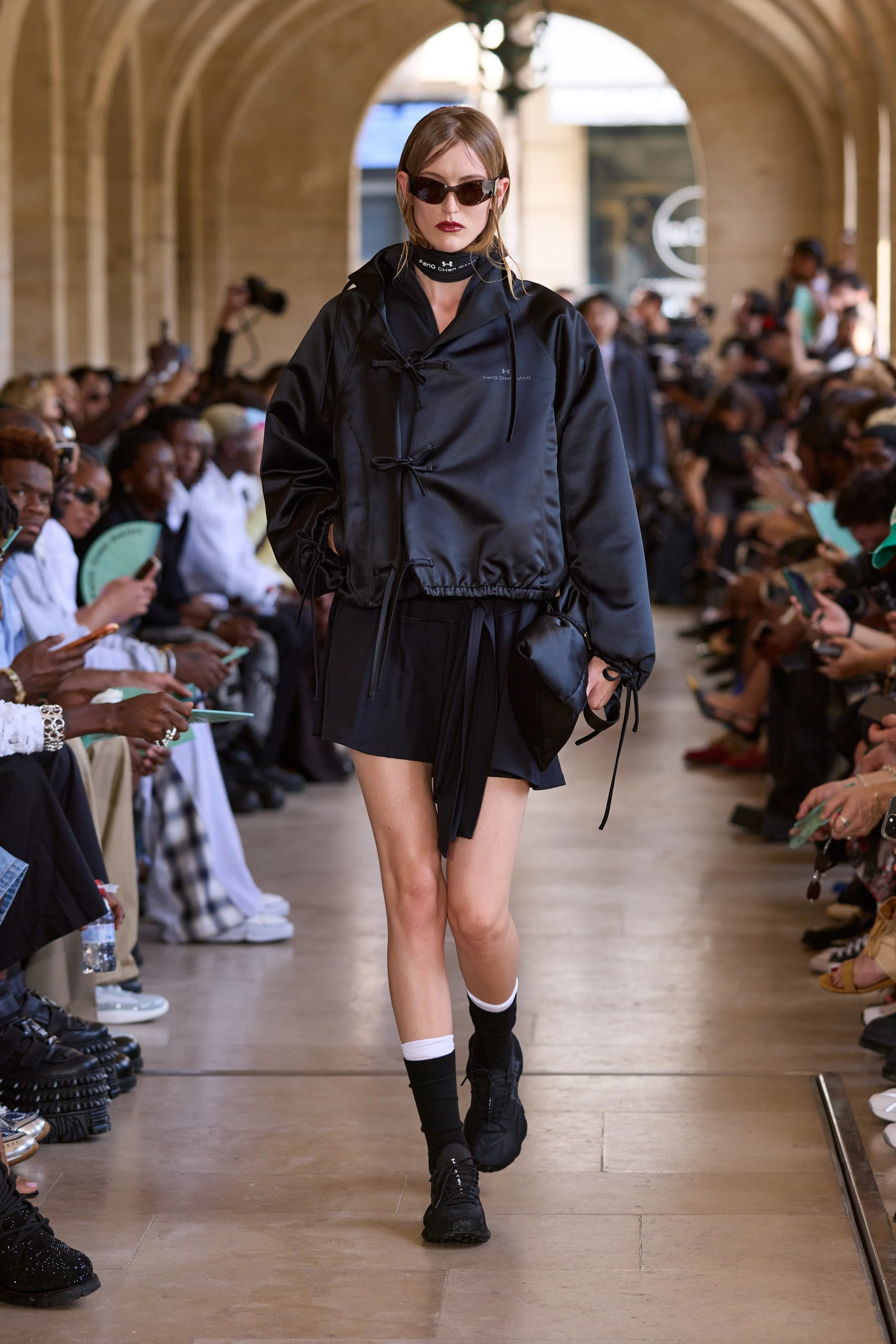
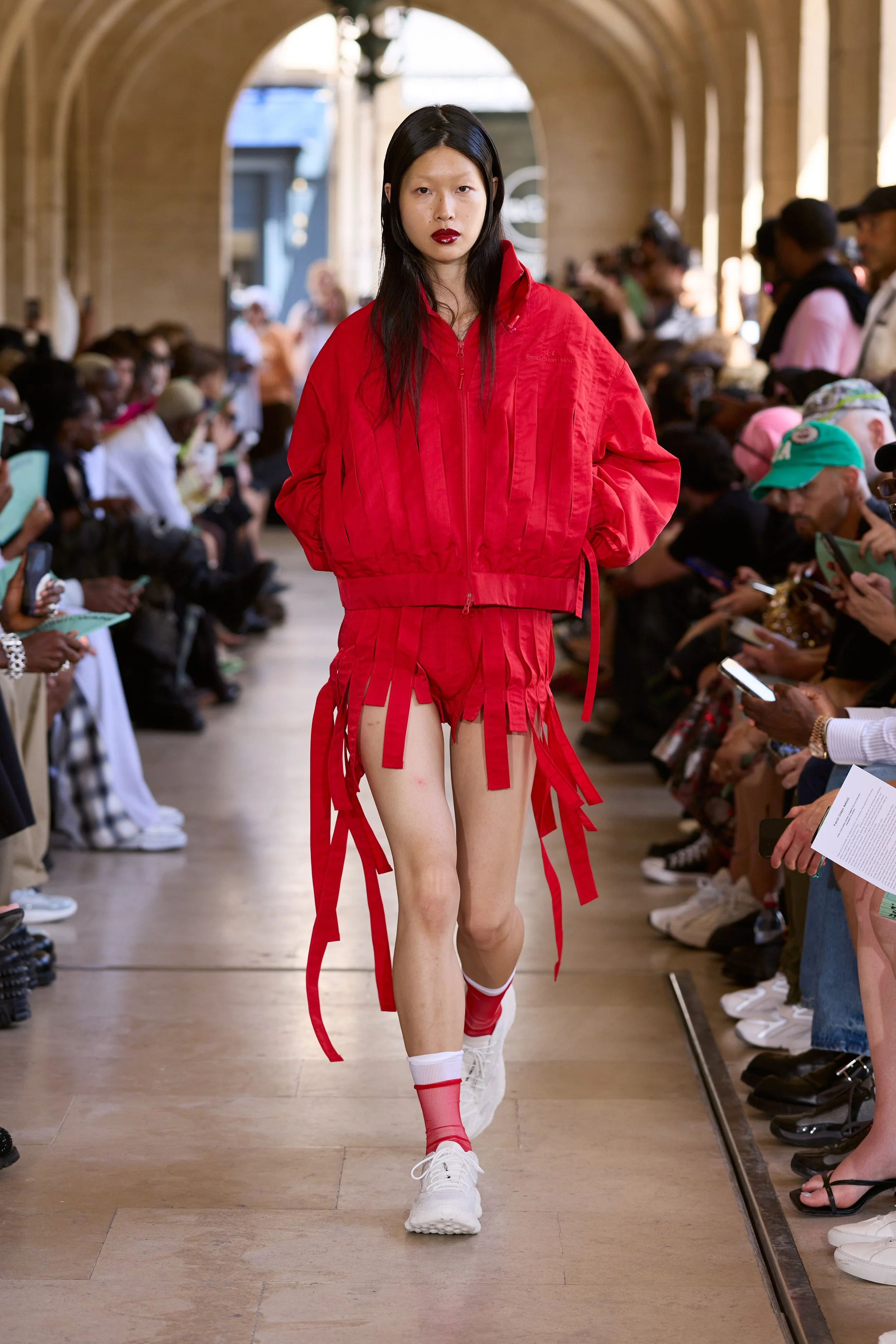
With Dreaming of Spring, the Chinese designer presents a collection where the Italian Renaissance and Chinese philosophy converge through fashion.
Feng Chen Wang has long approached fashion as a form of cultural inquiry. Dreaming of Spring, her Spring/Summer 2027 collection presented during Paris Fashion Week, reaffirms that vision. Once again, Wang places history, art, and material innovation on equal footing, moving beyond cultural references as decorative gestures to construct a narrative in which East and West no longer stand in opposition, but become part of the same story.
The show also marked one of the season's most significant announcements. After months of speculation, Feng Chen Wang officially confirmed her appointment at Under Armour as Long Term Creative Partner. The title itself is telling. Rather than framing the project as a conventional collaboration, Wang describes it as a long-term creative partnership designed to evolve over time and explore new ground between authorial design and technical innovation.
The first chapter of that relationship was already visible on the Paris runway. The debut pieces developed alongside the American sportswear brand introduced high-performance materials, athletic silhouettes, and a subtle retro-futuristic sensibility into Wang's visual universe without disrupting its identity. Flashes of her signature Chinese red, technical outerwear, and performance-driven separates felt less like a departure into sportswear than a natural extension of her creative language.
Yet before discussing the garments themselves, it is worth considering the idea that holds the collection together.
Dreaming of Spring begins with the meeting of two deeply symbolic worlds. On one side stand the Seven Sages of the Bamboo Grove, the celebrated scholars of China's Wei and Jin dynasties who transformed the bamboo forest into a refuge where philosophy, poetry, and artistic expression could flourish beyond social convention. Opposite them is Sandro Botticelli's Primavera, one of the defining masterpieces of the Italian Renaissance, where gods, nymphs, and allegorical figures inhabit an eternal garden celebrating fertility, transformation, and rebirth.
Separated by centuries, geography, and culture, these two worlds are brought together within a single landscape. Wang does not simply juxtapose references; she allows both traditions to breathe within the same collection.
That vision takes shape through generous, fluid silhouettes recalling the robes of ancient Chinese scholars, while Renaissance-inspired drapery introduces an almost sculptural dimension. The body is enveloped naturally, without rigidity, as though the fabric were suspended in motion around its wearer.
The finishing details also contribute to this narrative. Raw edges, exposed threads, and loosely tied fastenings create a constant sense of movement. Nothing appears entirely resolved. The garments retain a certain fragility that brings them closer to an ongoing creative process than to a finished object.
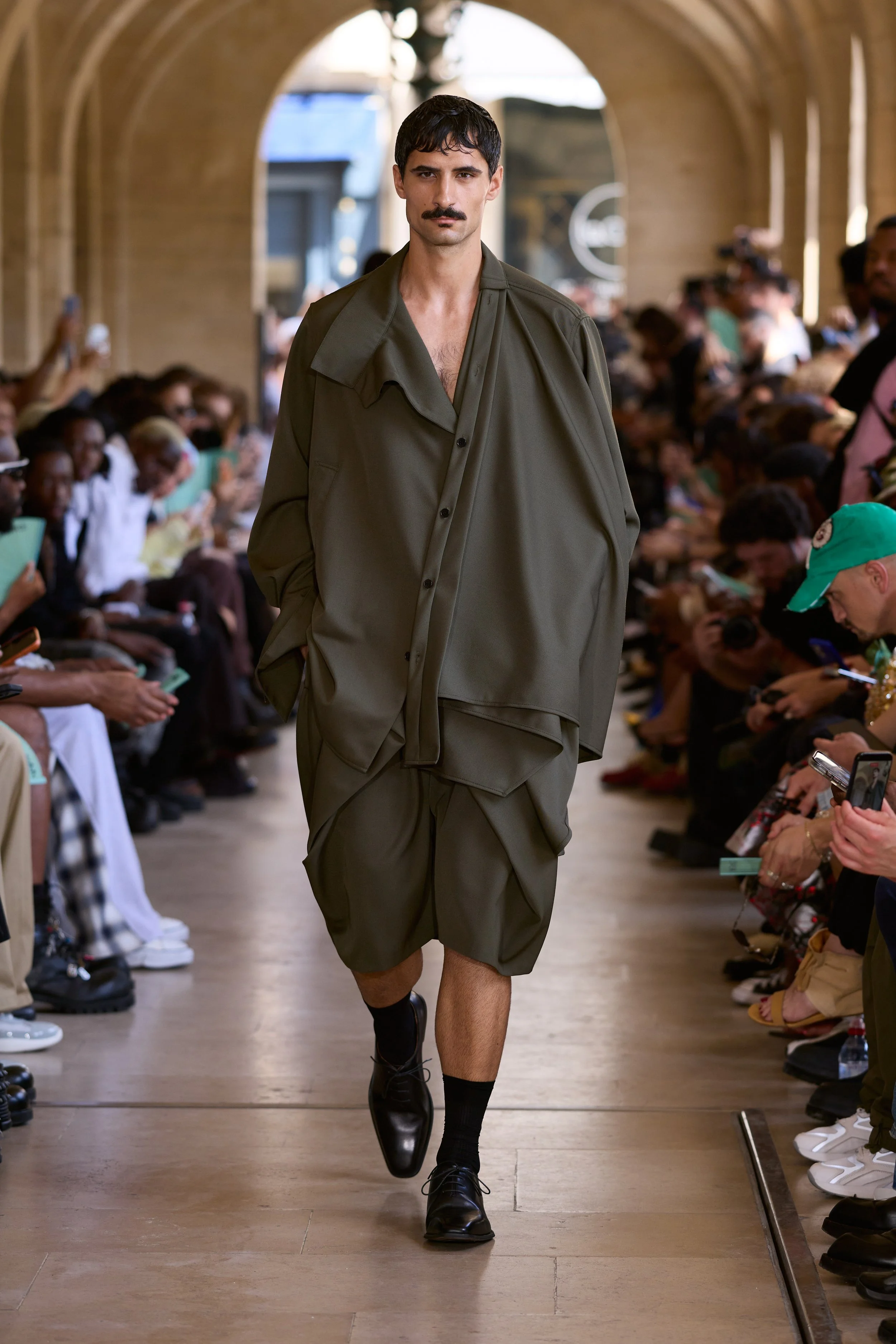
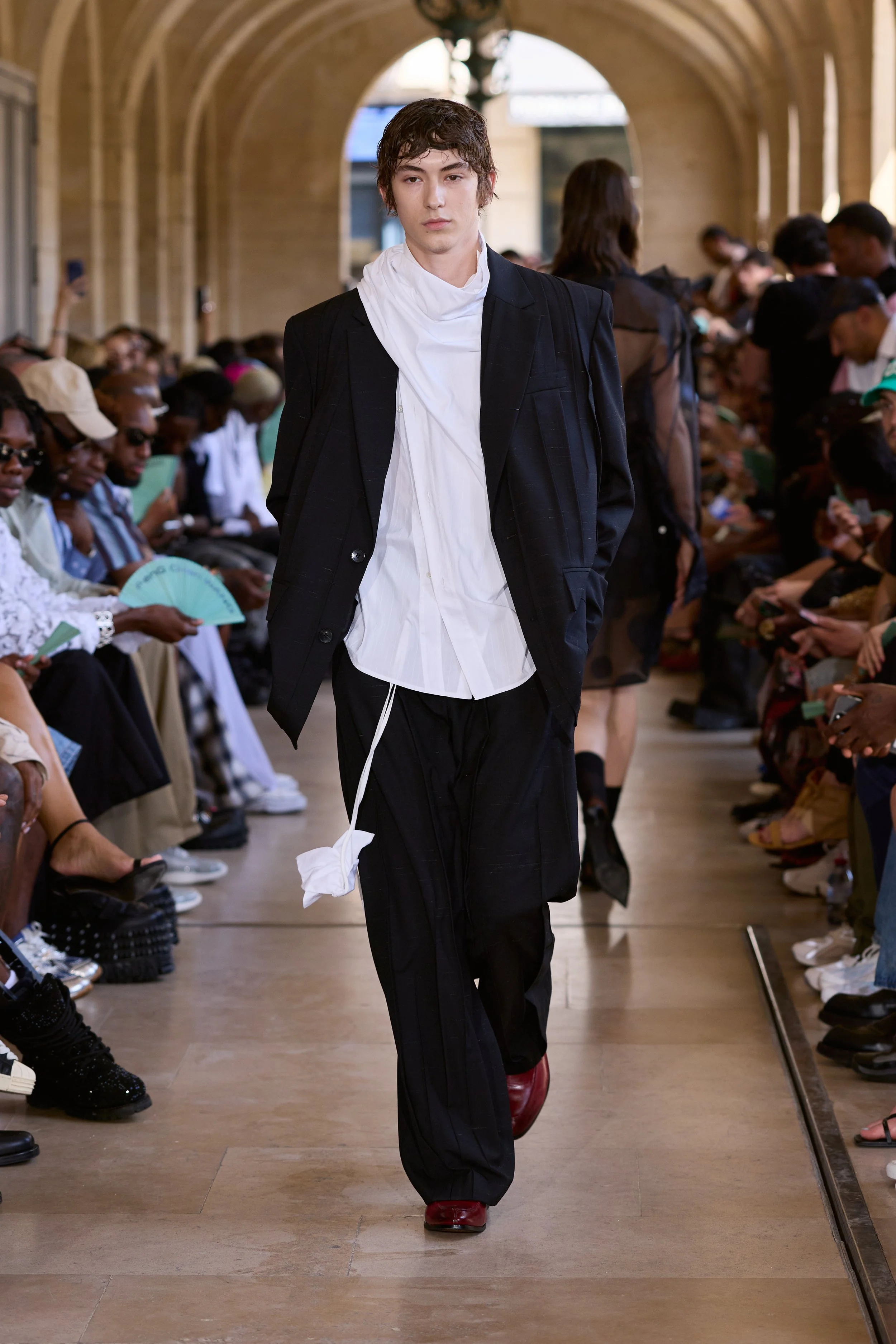
Textile experimentation remains one of the defining strengths of Feng Chen Wang's practice. This season, one of the collection's most compelling innovations is her exploration of botanical contact printing on leather, a handcrafted technique developed on sheepskin in which real flowers and plants are pressed directly onto the surface, allowing their natural pigments and tannins to transfer through the catalytic effect of sunlight. Rather than creating a conventional print, the process leaves behind the literal imprint of nature itself, making every piece inherently unique.
This material research is complemented by sheer fabrics that evoke morning mist, lightweight layering that adds depth, and a color palette that builds a visual bridge between the ink washes of Eastern painting and the richness of Renaissance oil painting. Even denim moves beyond its utilitarian roots through metallic finishes that Wang describes as an expression of quiet luxury—a restrained sophistication that finds value not in excess but in the treatment of the material itself.
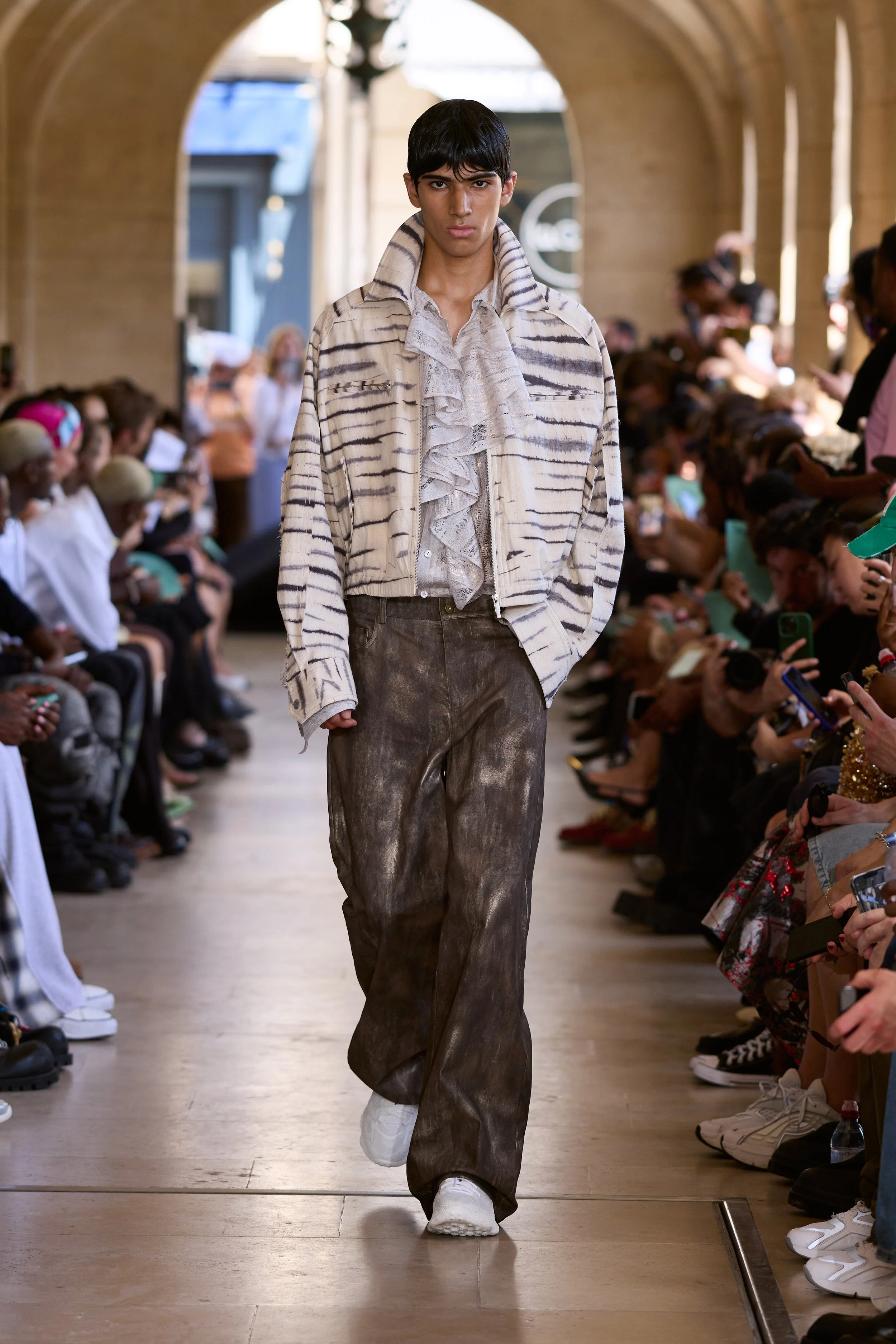
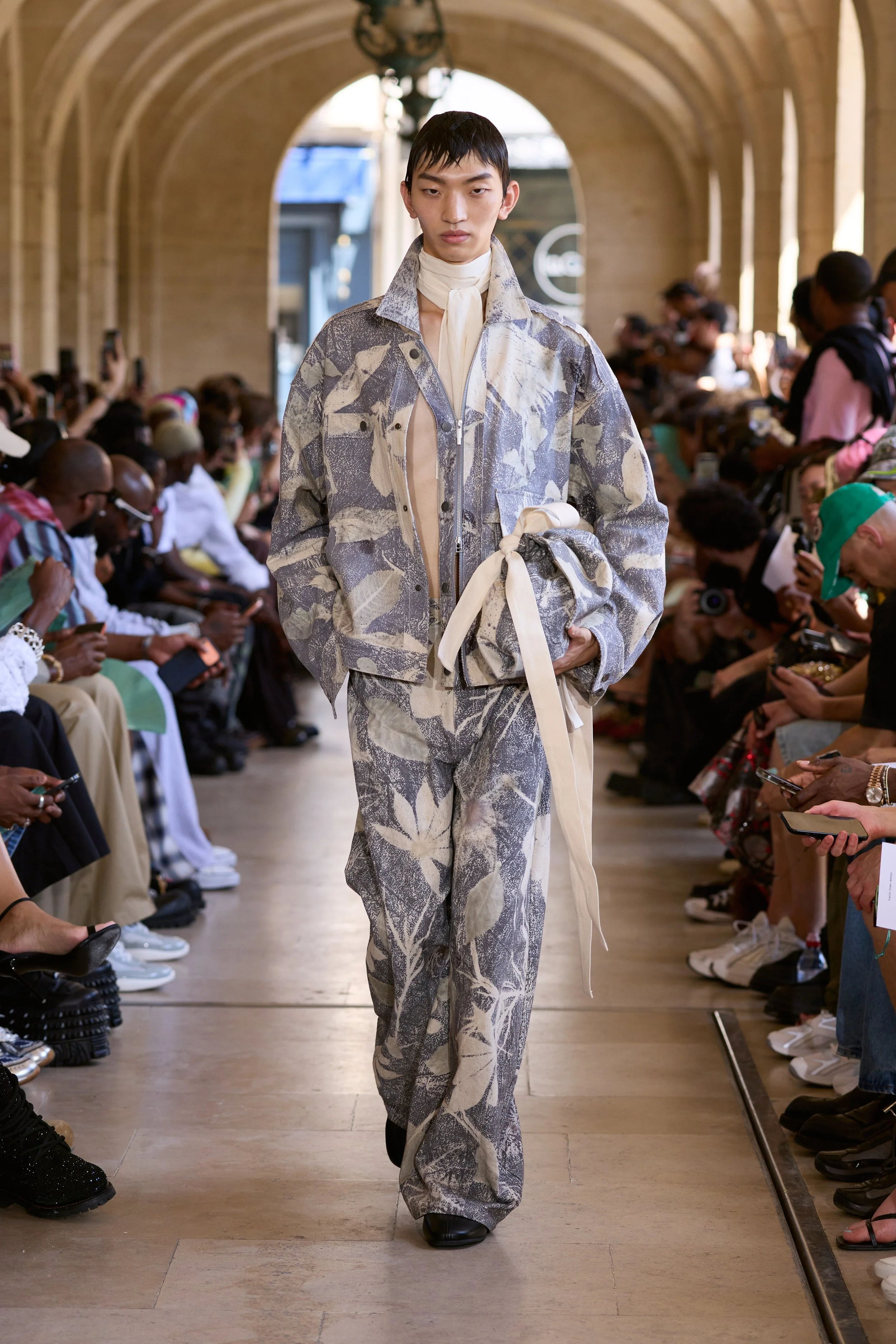
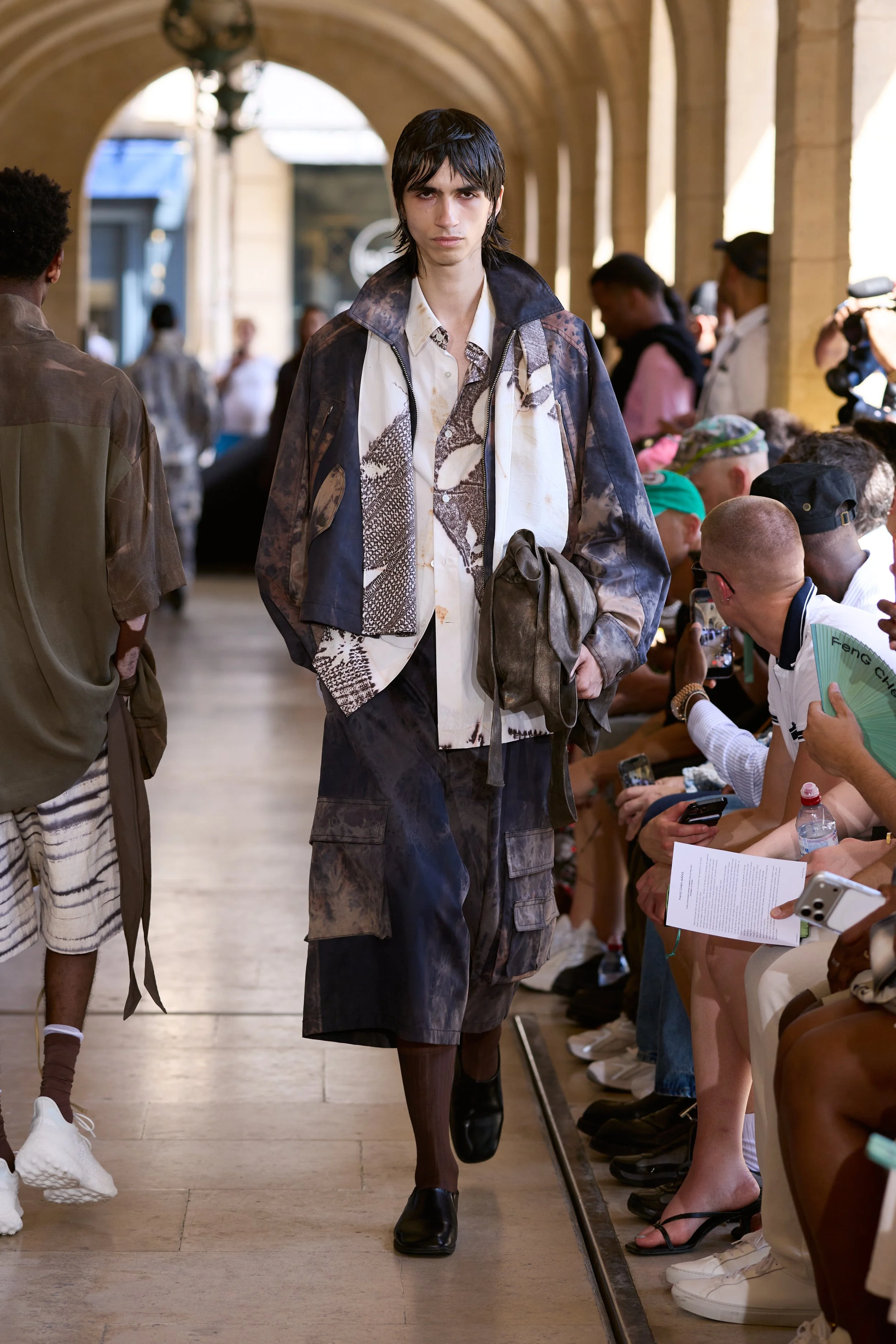
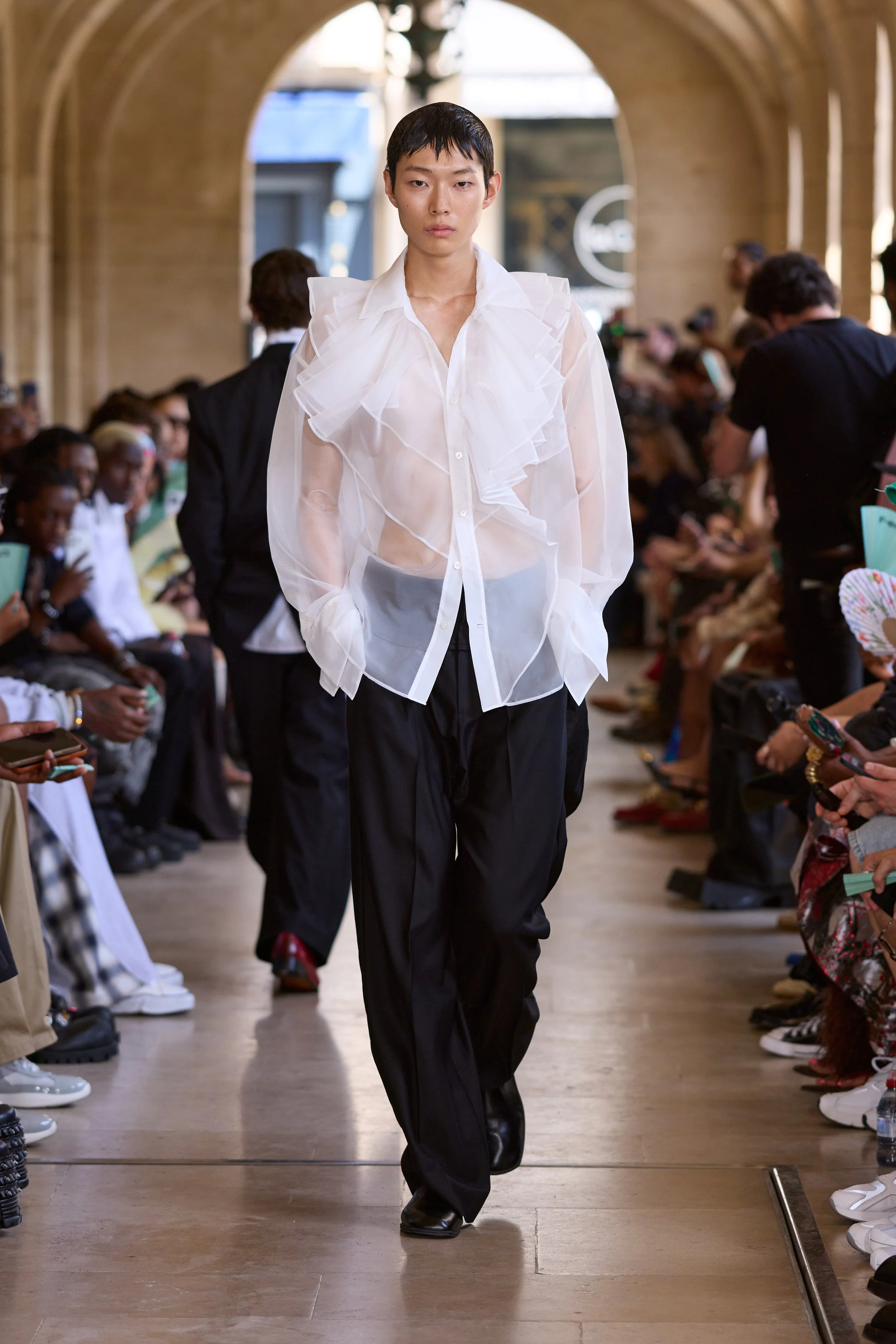
The collection also revisits some of the most recognizable codes of traditional Chinese dress through a distinctly contemporary lens. The cheongsam is reimagined in deconstructed dresses, pankou knot fastenings replace buttons and zippers on leather jackets and sportswear, while floating ribbons, cross-over robes, and references to ceremonial tailoring coexist effortlessly alongside Western tailoring, denim, and performance wear without allowing any one influence to dominate the others.
Perhaps that is Dreaming of Spring's greatest achievement. Feng Chen Wang is not interested in blending cultures until their differences disappear. Instead, she demonstrates that distinct traditions can coexist while preserving the qualities that make each of them unique.
At a moment when fashion often employs cultural references as little more than aesthetic shorthand, Wang proposes something far more ambitious: a creative language in which history, philosophy, craftsmanship, and technological innovation become inseparable.
The result is one of the season's most assured and conceptually coherent collections. Every decision—from the cut of a silhouette to the development of a textile or the reinterpretation of a traditional fastening—serves a singular vision. More than presenting a new collection, Feng Chen Wang confirms that her creative universe continues to evolve through a rare combination of conceptual rigor, aesthetic sensitivity, and the ability to imagine the future without letting go of memory.
Words by @andowalking