
LA LLAMA BY PAUL LÓPEZ & GERARDO DEL HIERRO: THE LIVING ECOSYSTEM OF SPANISH DESIGN
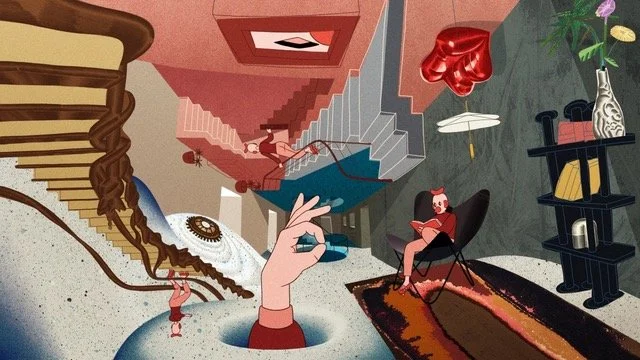
‘La Llama’, directed by Pau López and Gerardo del Hierro as part of Audiovisual from Spain (ICEX)’s ‘Where Talent Ignites’ campaign, seeks to connect architecture, visual culture, and the objects that are part of our daily lives through an animated short film that transforms Spanish design into a narrative experience.
Produced by White Horse and Apartamento, with creative direction by Turbo and animation by The Post Office studio, the film takes viewers on a journey through the imagination of Spanish design from a contemporary perspective. Far from constructing a conventional historical narrative or a catalog of famous names, ‘La Llama’ takes a more sensory approach: a house in constant transformation where different eras and styles coexist.
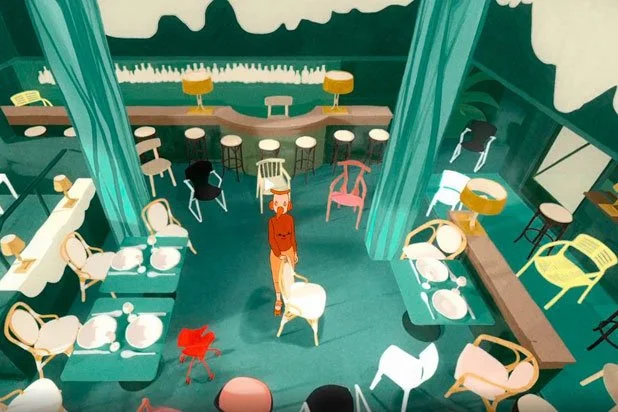
This sort of mutating house serves as the narrative framework for the short film. Its rooms expand, change shape, and continually reinvent themselves, reflecting design’s ability to adapt to cultural shifts without losing its identity. As the story unfolds, a universe where architecture, art, and culture intertwine emerges.
At the center of this universe lies the imagination of Jaime Hayon. The Spanish designer, internationally renowned for his visual language, serves as the piece’s central figure. More than a main character, Hayon acts as a sort of invisible guide who brings together the various references that appear in the short film.
Pau López explained that one of the objectives was to build “a visual dictionary of the real,” paying attention to those elements that often go unnoticed but shape our daily experience: a chair, a lamp, or any object that accompanies everyday life. This perspective broadens the traditional definition of design, as rather than associating it solely with iconic pieces or highly exclusive creations, this work reminds the audience that design also resides in common objects; those used without pausing to think about them and which, nevertheless, shape the way people relate to spaces and to one another.
The decision to present it as an animated piece is particularly great for developing this idea. Objects can transform, spaces can mutate, and cultural references can coexist in the same place without needing an explanation. The music also contributes to building this atmosphere, as the voices of Yerai Cortés and La Tania add an emotional layer that connects the visual concept with the sensibility rooted in contemporary Spanish culture.
The result is a brief yet ambitious work that avoids the most obvious promotional formulas to offer an open perspective on Spanish design. Rather than celebrating a collection of objects or individual names, ‘La Llama’ presents creativity as an ecosystem that continues to transform itself. Like the house that serves as the setting for the short film, design appears here not as something finished, but as an ongoing process of reinvention.
Words by @joaquinxbc