
CARRIERI BY LUCAS CARRIERI: AN IN-DEPTH INTERVIEW
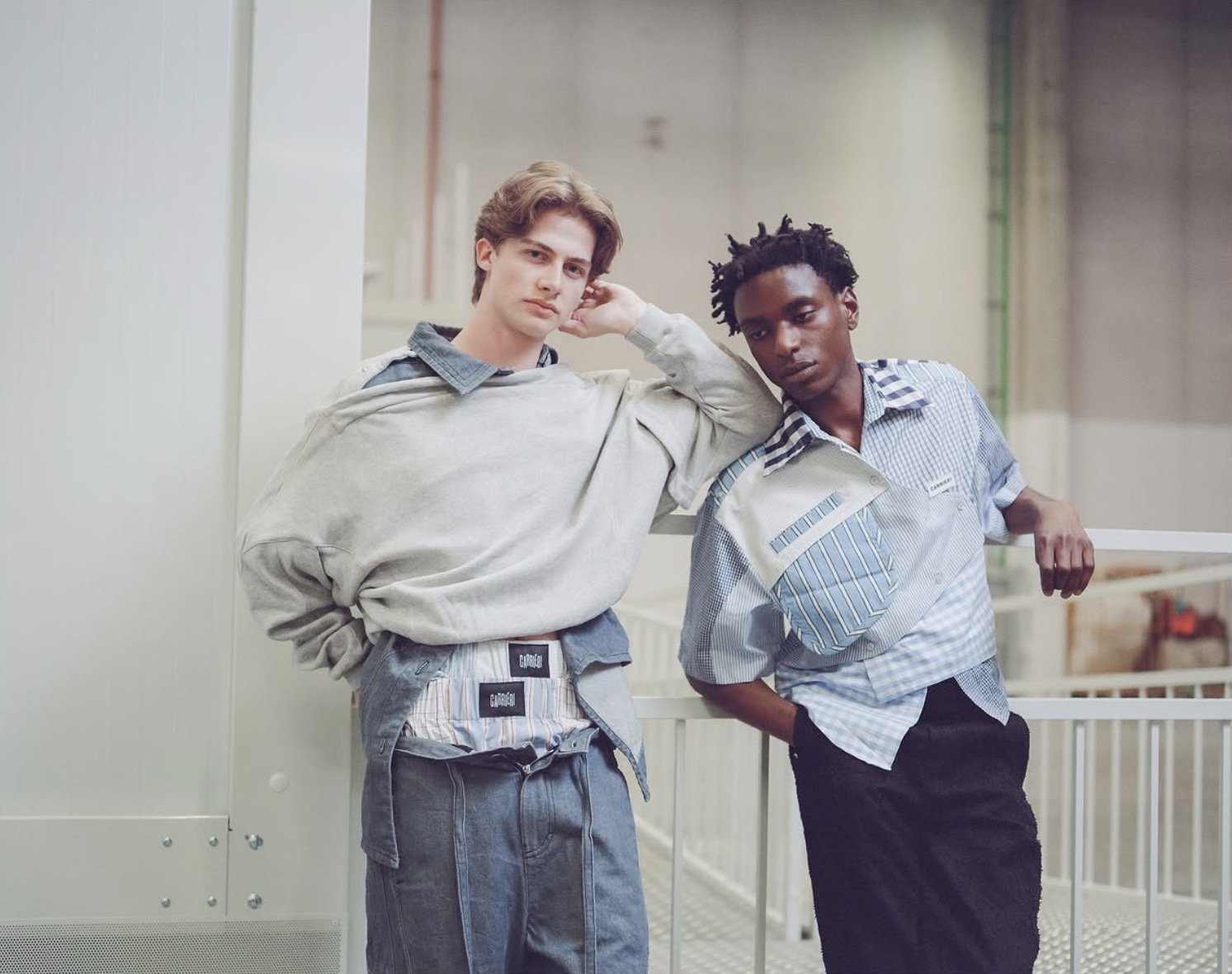
photo by @abgonal
In just a few years, Luca Carrieri has established himself as one of the most promising voices in Spain’s emerging fashion scene. Born and raised in Rosario, Argentina, Carrieri’s path into fashion was anything but conventional. Without a family background in the industry, he discovered fashion design while studying in his hometown, where he found not only a profession but also a space in which his individuality became a strength. What began as a personal project during his final year at university—selling self-produced T-shirts through local pop-ups—gradually evolved into a growing independent label that attracted the attention of stylists and creatives beyond Argentina.
After relocating to Madrid, where he completed a master’s degree at IED and joined Reparto Studio, Carrieri continued to develop his namesake brand alongside his professional work. His recent presentation of “Star Fox” at 080 Barcelona marked a significant milestone, earning widespread attention for its emotionally driven narrative, innovative use of upcycled materials, and contemporary reinterpretation of everyday clothing. In this conversation, Carrieri reflects on his journey from Rosario to Spain, the challenges of building an independent fashion label, the importance of community and collaboration, and his vision for a fashion practice that remains functional, inclusive, and deeply connected to reality.
Álvaro Ramos: First of all, I'd like you to introduce yourself to a new audience who will get to know you through this interview. Who is Luca Carrieri in 2026? Where does he come from? What's his background?
Lucas Carrieri: It all started when I began my fashion design degree in Rosario, Argentina. I didn't have the option of going to Buenos Aires, so I decided to study in Rosario. I didn't come from a background related to fashion or garment making, but when I entered that world, I felt very comfortable. For the first time, I felt that I had value in a space, that what made me different was something positive.
During my final year project, I started my own project very organically. I made a t-shirt, people liked it, I started reproducing it and organizing pop-up shops. Some stylists from Buenos Aires began contacting me.
Then, for personal reasons, I decided to leave Argentina. I had ended a long-term relationship and felt I needed a change. I had never left Rosario, so I decided to come to Madrid. I had been here once on vacation, and the city really impressed me. Furthermore, we share a language, and I have Spanish citizenship.
Upon arriving, I completed a master's degree at IED, and while searching for Spanish brands, I found Reparto Studio. I sent them my portfolio and ended up doing an internship there. I've been working with them for three years now. Today, I divide my time between Reparto and my personal project.
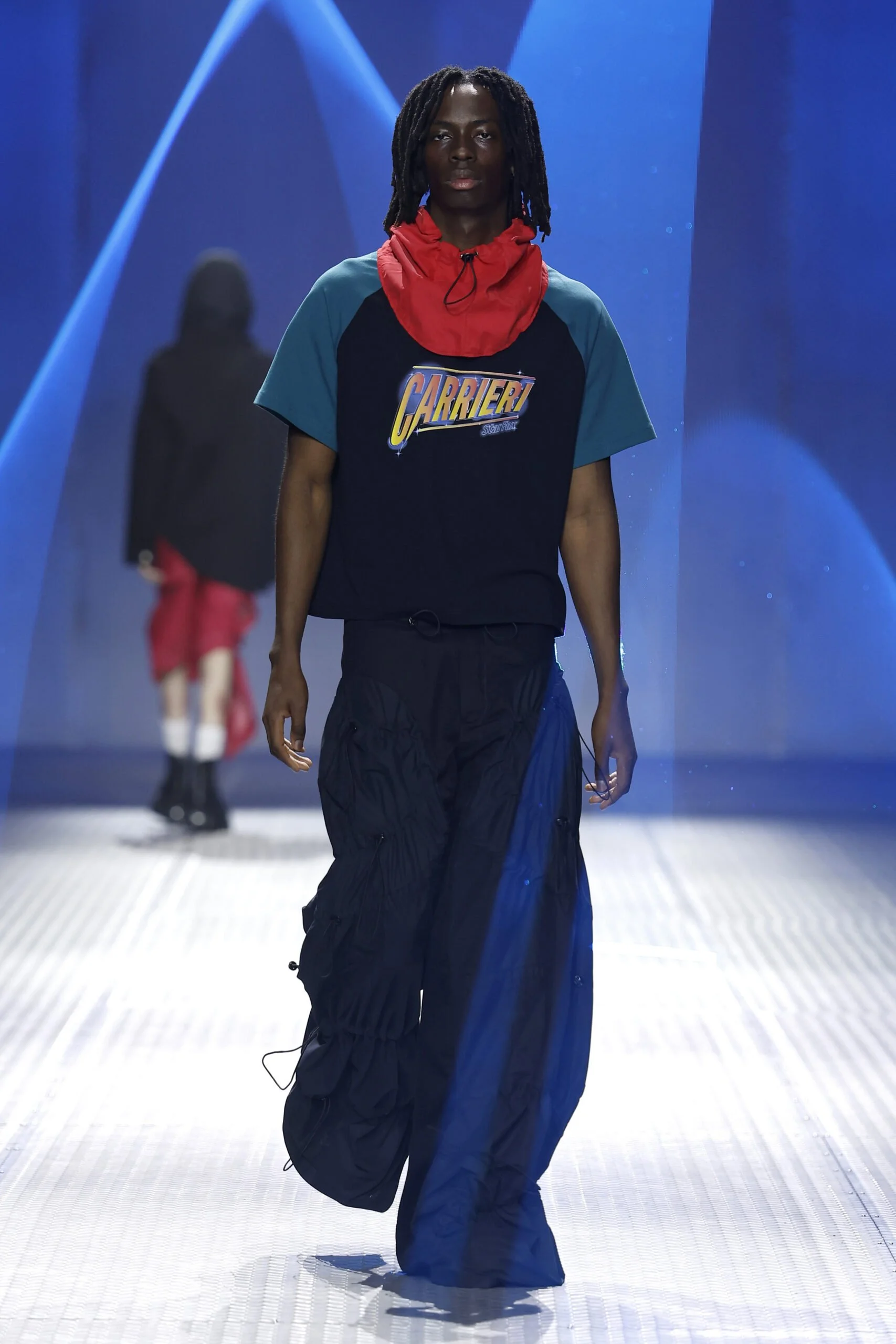
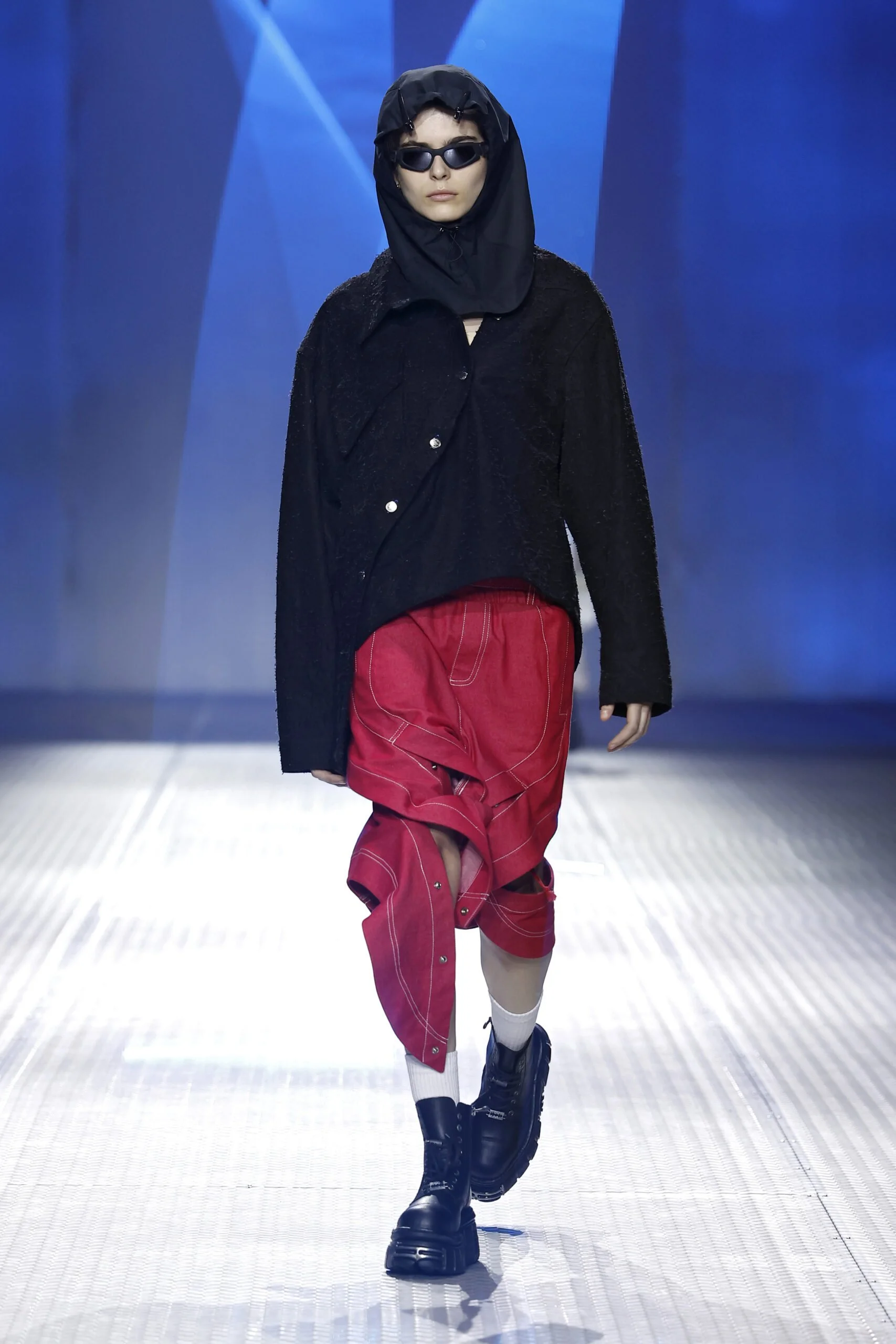
AR: I personally discovered your work at one of the EGO showroom editions during MBFW Madrid. How did you experience this opportunity?
LC: I participated in February 2025. My goal was always to win the prize. I don't have a large support structure, nor do I come from a wealthy family, so when I participate, I want to do well and take advantage of every opportunity. At that time, it was the first time the platform didn't have a sponsor, which made the project's initial expansion difficult.
AR: How was the brand received in the Spanish market? Did you make any sales?
LC: Yes, I sold much more than I expected. I had analyzed the market quite a bit while working at Reparto Studio, trying to understand what niches existed and where I could position myself. I was very pleasantly surprised by the public's response.
AR: Did you feel more supported by 080 Barcelona Fashion than by Madrid Fashion Week?
LC: Yes. I applied to EGO and wasn't selected. I was pretty convinced I would get in because I saw positive signs and I really believed in the proposal. When I received the rejection, it was a blow, because I had already developed the concept a lot and several collaborations were underway. I felt I couldn't let the project be reduced to a presentation among friends, so I kept going.
AR: At what stage of the collection were you when they told you no?
LC: Conceptually, it was very far along. I had a strong idea of what I wanted to convey and I felt it was a different kind of proposal. I had already finalized collaborations and the project had grown a lot. That's why I couldn't abandon it.
AR: Tell me a little more about the collaborations that made the collection you just presented at 080 even more appealing.
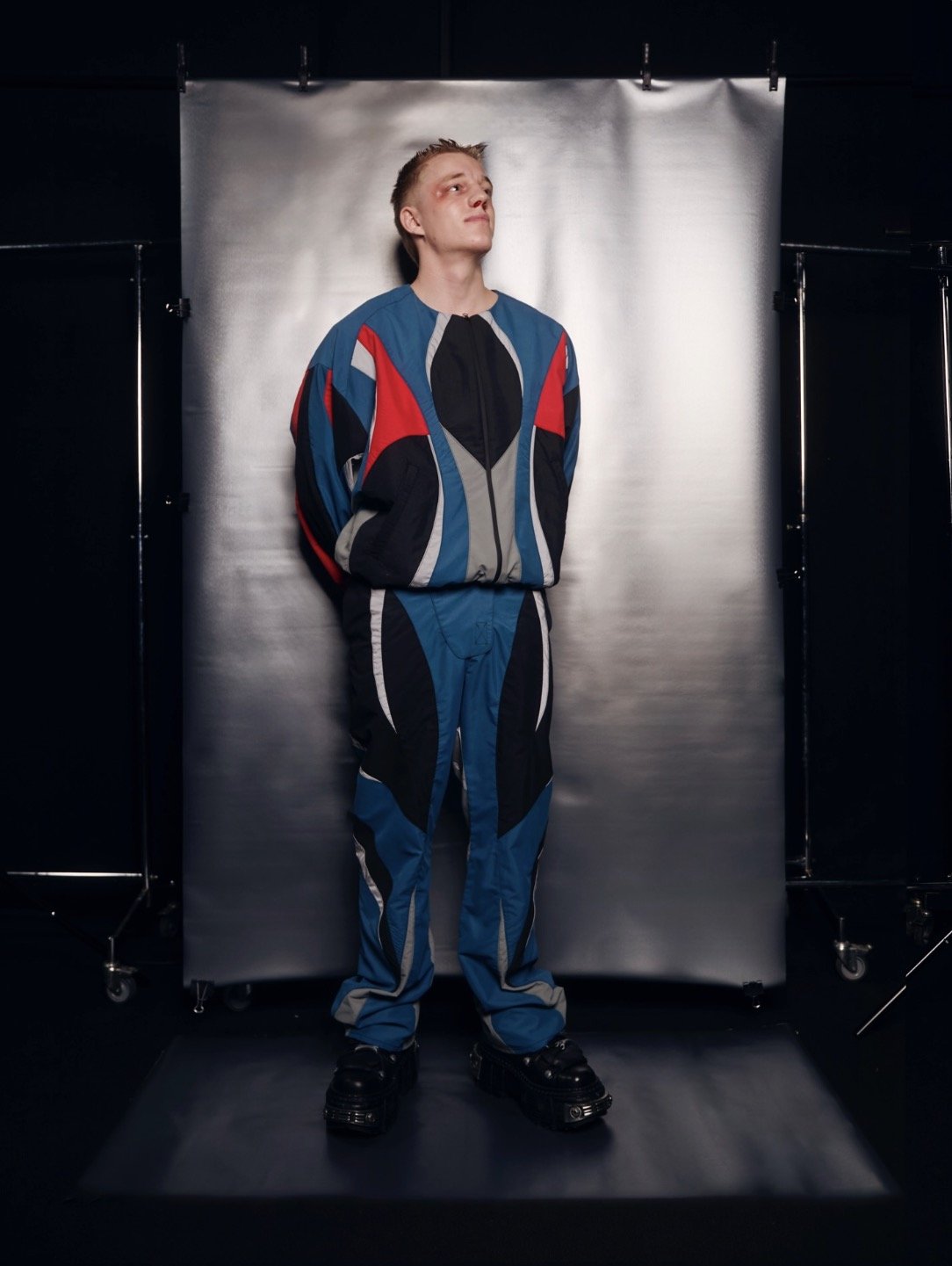
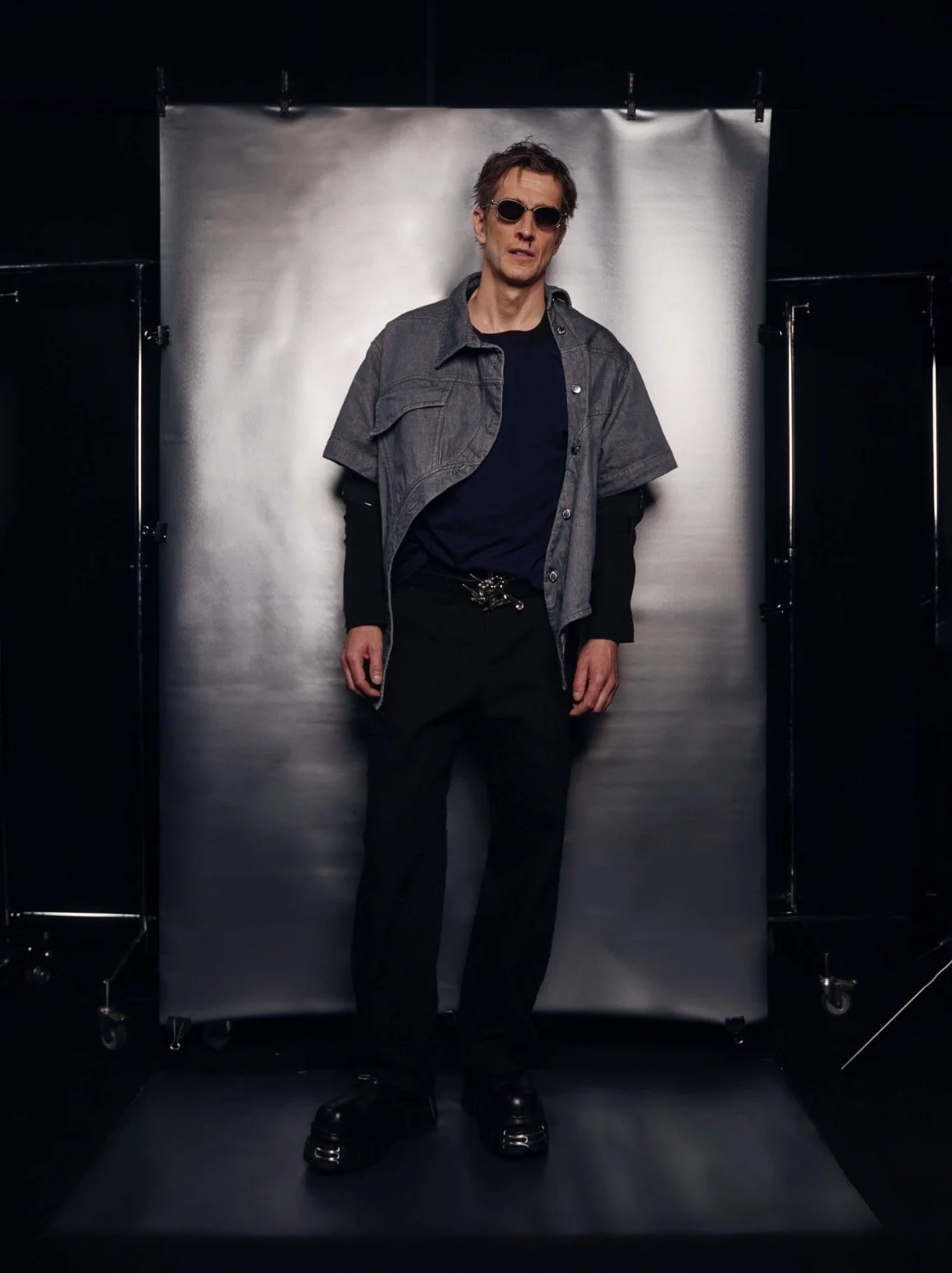
LC: I worked with Humana, using secondhand clothing for upcycling. They also gave me a little financial support, and we're going to have a presentation in one of their spaces. I also collaborated with GOROBEI, who made jewelry for the collection. New Rock provided the footwear, Flama contributed eyewear, and Scuer made some berets especially for the collection. It all came about very naturally, thanks to personal connections and the enthusiasm the project generated.
AR: What was it like working with Flama Eyewear?
LC: I met them at an event in Valencia. I saw their glasses and fell in love with them. For me, the world of eyewear is very important, and I absolutely wanted to include them in the collection. There were few options in Spain for this type of collaboration, and they were incredibly willing to help from the start.
AR: You had a huge team behind you. How did you handle that responsibility?
LC: It was daunting because so many people were involved. In a startup brand, practically no one receives significant financial compensation, so I felt a great responsibility towards all the collaborators. Even so, everyone was very committed to the concept, and that made the process very special.
AR: Do you work with student interns?
LC: No. It's a conscious decision. After spending a lot of time doing internships myself, I see that many emerging brands operate solely thanks to student interns, and I didn't want to replicate that model. Also, since I specialize in pattern making and sewing, I can handle much of the technical work myself.
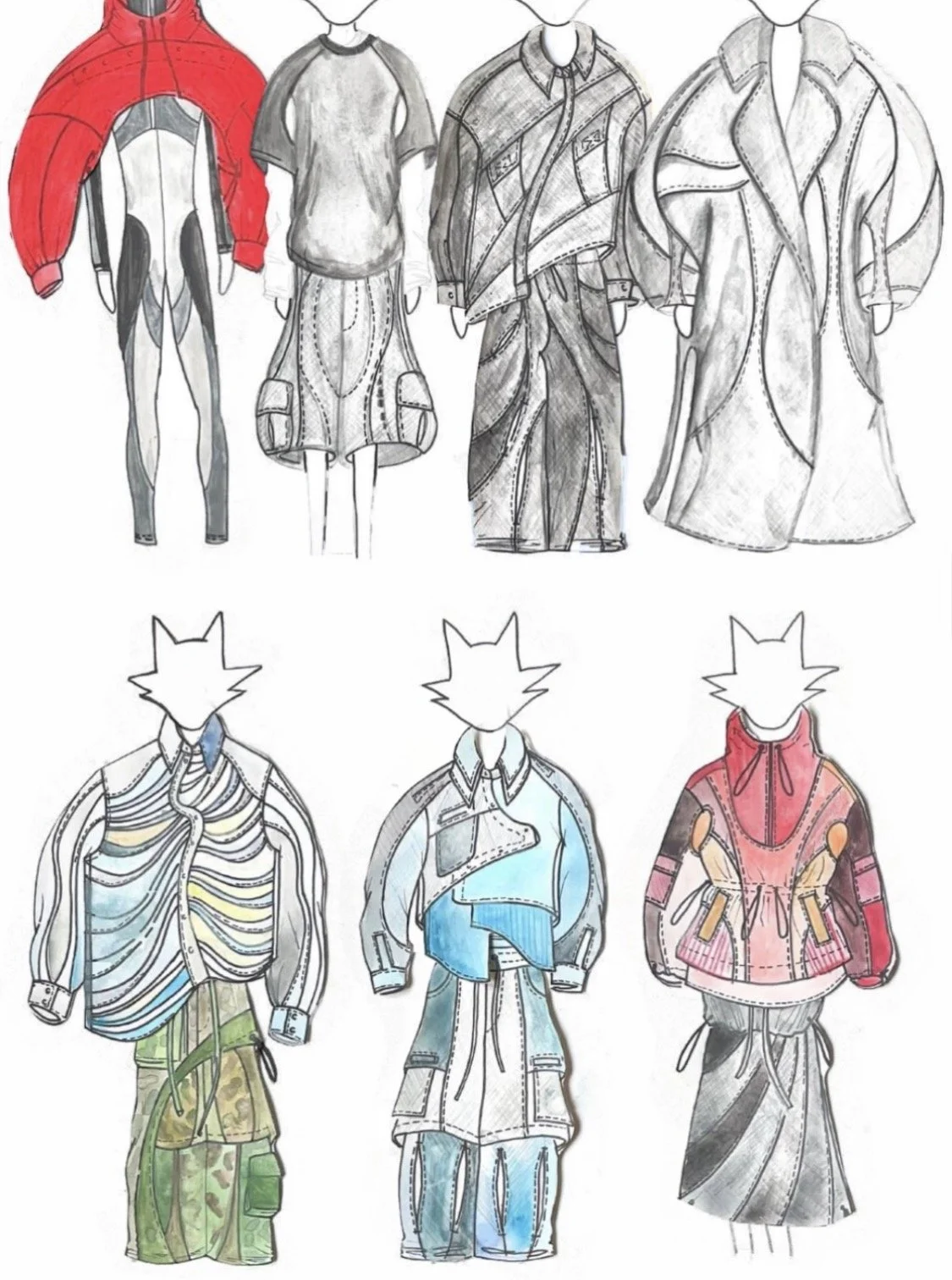
AR: What was the creative process like for “Star Fox,” the latest collection you just presented on the Barcelona runway?
LC: I always start with personal experiences. Star Fox was one of the first video games I remember playing. I was born in 1993, and my older brother introduced me to that universe. Later, my ten-year-old nephew came into the picture, and I started thinking a lot about my own childhood. My brother sent me a trailer for the game, and I felt a very strong emotion. That's when I realized there was a story I wanted to tell.
AR: In your description of the collection, you talk about reinterpreting everyday clothing. What does that mean to you?
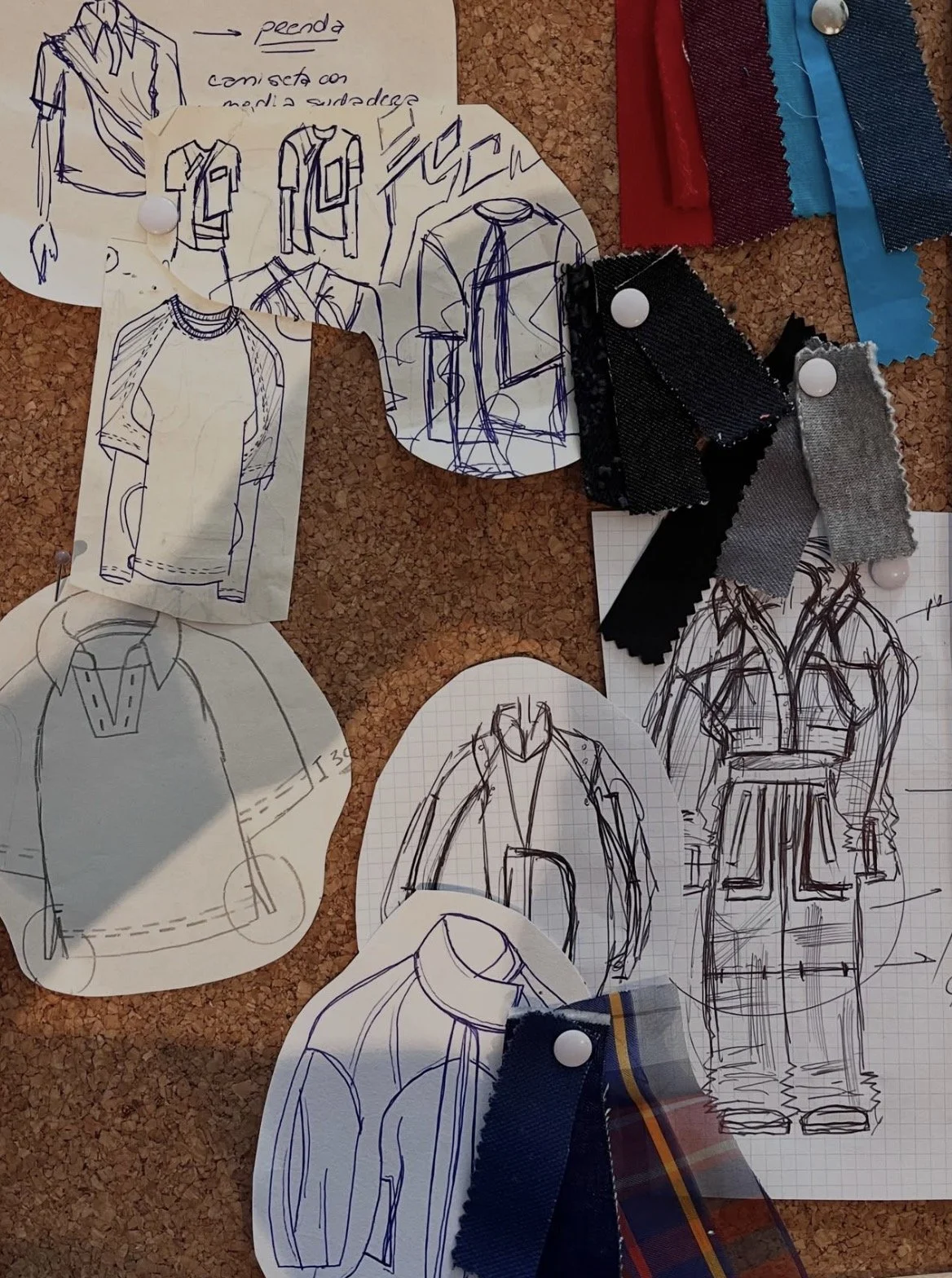
LC: The clothes I see every day on the street are my main source of inspiration. My vision of fashion comes from the everyday. I design a lot directly from the pattern. I have an initial idea, but the design really emerges when I work on the garment technically. That's where the reinterpretation comes in: taking something familiar and transforming it. I don't believe in creating from scratch. What I do is reinterpret existing elements of everyday clothing.
AR: Your brand doesn't seem to focus on the sexualization or objectification of the male body, even though we see scantily clad models. Is that a conscious choice?
LC: Yes. Although there are elements that might have a certain sensual charge, it's not a central aspect. What interested me was reflecting the diversity of the people around me. When I saw the photos from the show, I recognized my friends, people who were all different from each other, with different backgrounds and body types. I found that very beautiful.
AR: How do you approach the more commercially viable pieces in a collection?
LC: I design with the idea that everything should be marketable. I can't afford to create looks that are completely ephemeral or impossible to market. Everything has to have a potential commercial application. I try to maintain the collection's identity without resorting to the basics. I'm especially pleased because I believe the commercial pieces still retain the visual language of the collection.
AR: Had you dabbled in retro aesthetics in your work before?
LC: Not in this way. I had worked on small capsule collections before. This was my first complete concept collection, so I had a lot of freedom. The retro aesthetic belongs specifically to this project and this story. I don't yet know how I'll approach the next collection, but I want to maintain the emotional component and the reinterpretation of garments as part of the brand's language.
AR: What does working with upcycling and recycled fabrics mean to you?
LC: It's very influenced by my experience at Reparto Studio. At first, it came about practically because I had access to repurposed materials and fabrics. Then I discovered that it also fit perfectly with the concept. In addition, I liked the idea of working with vintage shirts that had already had a previous life. There's something very beautiful about reusing those garments and giving them a new story.
AR: How do you see the difference between the Spanish and Argentinian industries?
LC: The Argentinian industry is much smaller and more closed. While it's already noticeable how difficult it is to break into certain circles in Spain, it's even more pronounced in Argentina. Furthermore, the economic context significantly impacts the development of the fashion industry. At the same time, this lack of resources fosters incredibly vibrant creative scenes because it forces a constant search for alternative solutions.
AR: How did you experience the support from 080 Barcelona Fashion?
LC: Very positively. I felt cared for and valued from the very beginning. The visibility was also enormous. We were featured in publications like GQ and felt a level of support that's crucial for an emerging brand. The experience made me think that perhaps my project fits better in Barcelona's creative scene than in Madrid's.
AR: Are you considering moving to Barcelona?
LC: I'm not ruling it out. After my experience at 080, I saw that there's more support and resources available for emerging projects there. Plus, a large part of our costs came from relocating from Madrid. Barcelona has a very interesting scene and offers support tools that can be important for the brand's growth.
AR: What are your short-term dreams for Carrieri?
LC: I need to develop a solid business structure and secure funding. Right now, the goal is to find sponsors, patrons, or investors who can help consolidate the project and ensure its continuity.
AR: What advice would you give to someone who wants to create a brand?
LC: Many people told me not to do it, even industry professionals. But if you truly have that creative need, it's hard to ignore it. My advice is to be prepared to work incredibly hard and to have unwavering conviction. If you don't have a genuine passion, the process can be very tough.
AR: And for someone studying fashion?
LC: I think fashion education needs a profound overhaul. Often, the artistic aspect is overemphasized, while fundamental aspects like pattern making, garment construction, and business knowledge are neglected. I would recommend developing your own projects alongside your studies and seeking learning opportunities outside the academic environment.
AR: How would you define Carrieri in three words?
LC: I would say it's: Functional, Inclusive or adaptable to different body types, and Connected to reality. The last one is especially important to me. I want the brand to engage with what's happening outside the world of fashion.
Questions by @alraco43