
COWARD BY LUKAS DHONT (SSIF‘26): FINDING FREEDOM IN THE MIDDLE OF WAR
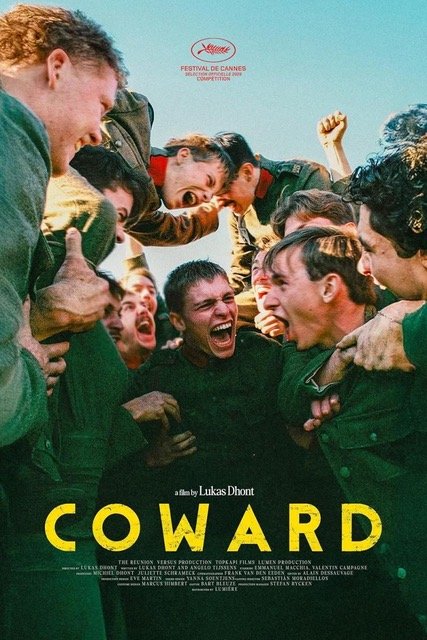
In war, courage has traditionally been associated with moving towards danger rather than away from it. The soldier who charges into battle is celebrated; the one who runs from it is branded a coward.
Set during the First World War, ‘Coward’ follows Pierre and Francis, two young men whose relationship develops in the shadow of a conflict that demands obedience, sacrifice and an almost complete surrender of individuality. Pierre is a soldier struggling with the expectations placed upon him, while Francis finds a temporary escape from military life within a troupe of performers staging drag shows for the troops. Their worlds collide in a space where, for a brief moment, tenderness and self expression are allowed to exist alongside death.
War films often make violence visible through spectacle, but Dhont takes another route. In ‘Coward’, the war is frequently felt rather than shown. There is almost always the sense that violence is happening somewhere beyond the frame, but the director is more interested in what it does to the people who are forced to live with it. This restraint makes the film surprisingly intimate. Death is always present, but so is the possibility of love. The two main characters are constantly placed against each other, creating the central tension of the film.
The shows that Pierre and the other performers offer are tolerated because they entertain the soldiers and temporarily lift their spirits, but within that limited permission they create something much more meaningful. They sing, dance, dress differently, joke, kiss and inhabit identities that military life would otherwise force them to suppress. The theatre becomes a small pocket of freedom in the middle of an institution built around discipline.
For Francis, especially, the stage becomes a place where femininity is not something to hide. Valentin Campagne brings an extraordinary energy to the character. One of the film’s most memorable images is Francis performing a mock labour scene, transforming the absurdity of the performance into something almost profound: life and femininity emerging in the middle of a film surrounded by death.
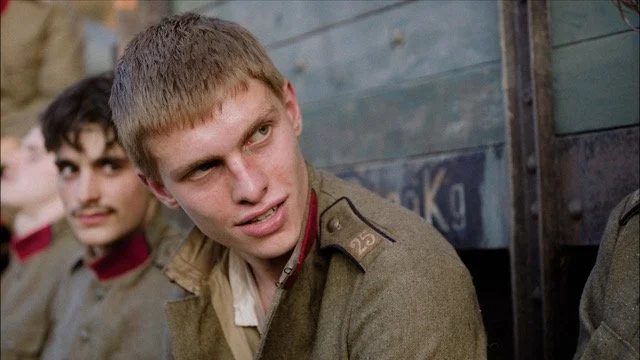
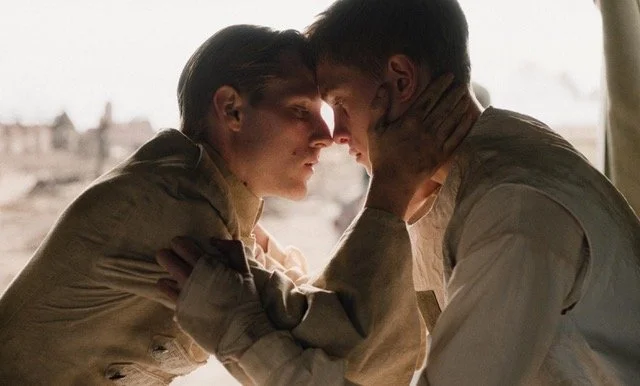
Emmanuel Macchia takes the opposite approach as Pierre. His performance is quieter, and his face becomes a landscape of fear and repression, but also desire. Dhont repeatedly trusts the camera to stay with him, sometimes for longer than conventional storytelling would allow. Together, Macchia and Campagne give the film its emotional centre, and their shared Best Actor award at Cannes feels inseparable from the way their characters communicate.
Their relationship is also where ‘Coward’ becomes most moving. Dhont does not need to turn their romance into a grand declaration. It develops through small gestures: a look held for a second too long, bodies moving closer, moments of physical tenderness and stolen intimacy.
In ‘Coward’, that gentleness becomes political without ever needing to announce itself as such. Against a world obsessed with masculinity and violence, and against a war that reduces human beings to soldiers, Dhont gives his characters room to be lovers, performers… simply themselves.
The question becomes even more complicated when love enters the picture. To love someone in a world that may punish you for doing so requires accepting the possibility of loss, but so does refusing to love. Protecting yourself from pain can become another form of imprisonment. Pierre and Francis are constantly caught between these two possibilities: surrendering themselves to the roles imposed upon them or risking everything to become who they actually are.
Words by @joaquinxbc