
FRANCISCA VALENZUELA SPEAKS ABOUT THE WORLD OF MALDITA
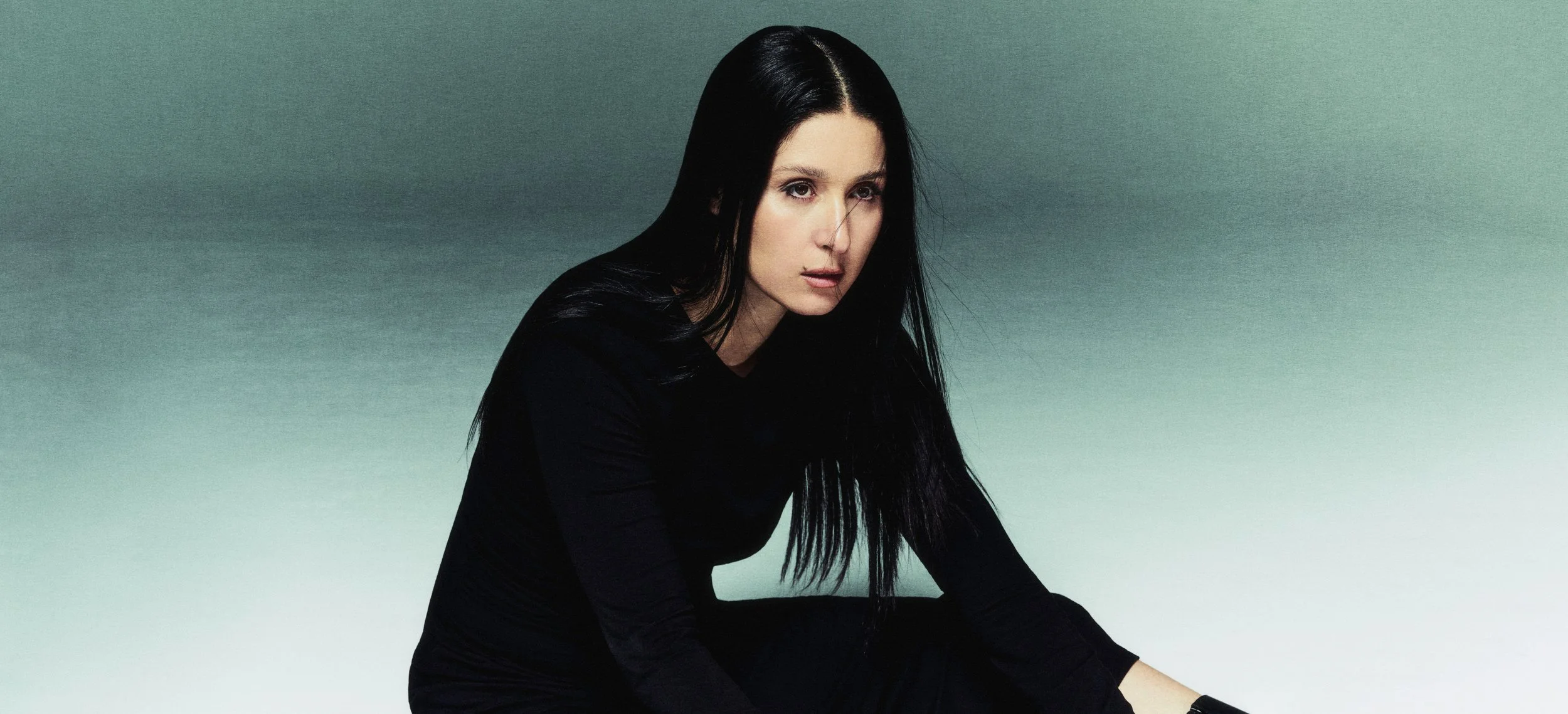
Francisca Valenzuela has spent years building a career on her own terms, but in 2026, independence feels less like a statement of intent than the foundation from which she is willing to dismantle everything else. Motherhood, postpartum anxiety, intrusive thoughts, anger and the exhausting machinery behind sustaining an independent career all collide in her latest work, perhaps her most unfiltered project to date. What was initially imagined as a glamorous, hyper-confident return became something far less polished and considerably more interesting: a record born from the reality she was actually living. In this conversation Valenzuela reflects on the tension between vulnerability and performance, the economics of independence, the piano as an almost living creative partner and the strange contradiction of making deeply personal work that eventually belongs to thousands of strangers. She also speaks candidly about the limits of representation, the importance of queer spaces within her musical universe and why young artists should spend less time chasing visibility and more time figuring out what, exactly, they have to say. After years of navigating an industry that often rewards immediacy over identity, Valenzuela sounds less interested than ever in fitting neatly into it and more certain of the artist she has become.
Álvaro Ramos: For someone discovering you for the first time through this interview, who is Francisca Valenzuela as an artist in 2026?
Francisca Valenzuela: I’m an artist and creator who writes and tells her truth at the piano. I make music that I would describe as alt-pop, art pop, piano-driven and confessional. My music moves through the human experience of being alive and of being a woman in the world.
AR: Your music has always had a deeply confessional element to it. Is there anything you still find difficult to write about, or something you haven’t yet dared to turn into a song?
FV: That’s such a good question. I actually think that everything that has moved me, even things that might be considered more taboo or uncomfortable, I’ve explored anyway. On Maldita, for example, there’s postpartum, postpartum psychosis and postpartum anxiety. There are also songs dealing with rage and anger. I don’t know if there’s something I haven’t been able to approach because of a specific boundary, but I do feel there’s something I still haven’t managed to communicate. It appears slightly in Levemente infeliz: this feeling of alienation, of thinking, “How ridiculous does it feel that I’m doing this while the world is falling apart?” It’s something that’s always hovering around, although I don’t know whether it has translated into a specific song or subject yet. And maybe I’d love to make a song about giving birth, as specific as that sounds. I’d love to explore that because it’s such a psychedelic experience. I’ve explored it visually, but not musically yet. Beyond that, I generally write about whatever I want.
AR: How has your relationship with vulnerability changed since you first started writing songs?
FV: It has become freer and much more open. I think I’ve always had this unconscious, organic, visceral impulse to write and tell things in an honest, real, authentic and lived way. But there have definitely been periods and albums where, even if there was one very vulnerable song, other parts of the record were much more performative, controlled or calibrated. It was like turning down the volume on that vulnerability. I’d say Adentro and Maldita are the records where I’ve been able to explore it most consistently and understand that there’s value not only in vulnerability itself, but also in who I’ve been during those vulnerable periods: the anger, the discomfort, the tension. I think about Ya no se trata de ti, for example. That song set a precedent for the way I write. It made me realise: “OK, I can write this verbose song, use a word like ‘susceptible’, have a really deep and specific message, and it can still resonate.” That was when I thought, “Oh, OK. This is my thing. This is what I do.” Because sometimes there’s a difference between the idea of who you want to be and who you actually are; what your strengths are and who you can really become as an artist. There was a period when that dissonance was visible and palpable. Now I feel like I always come back to myself and to my essence.
AR: Your lyrics often start with incredibly intimate experiences and end up connecting with thousands of people. At what point does a personal experience stop feeling exclusively yours?
FV: I think it happens even before I write the song. Whenever I’m going through anything in life, I’m always looking for opportunities to connect with and validate that experience. If I’m seeing someone I like and I’m obsessed with them, I look for literature, films and songs that reflect that. If I’m grieving, I do the same thing. And now, with motherhood, I’ve had this insatiable hunger for testimonies about that experience through different forms of artistic expression. So I always think a song has the possibility of becoming collective, although when I’m creating it, I don’t think about anybody else. If I did, I’d start judging myself and becoming insecure. I think there’s always the potential for something to go beyond me, but I create from myself. The collective experience comes afterwards. I also try to bring certain blind spots into the light: images, feelings or situations that we all experience but perhaps don’t even realise we’re experiencing. We don’t see them, and yet somehow we’re all seeing them at the same time.
AR: You’ve built your career around creative independence and honesty. What have you had to sacrifice to maintain that level of control over your music?
FV: It’s difficult to imagine what would have happened under different circumstances because I made the decisions I made and, ultimately, you assume they were the right ones. When other possibilities appeared in front of me, they simply didn’t feel like my path. And I always chose, because I was also lucky enough to have the choice, whatever made sense to me. I’d say the biggest sacrifice of being an independent creative artist has been giving myself to it completely. I know that sounds obvious, but it requires an enormous level of commitment. Creating is almost the minimum. Then there’s all the management: visualising, conceptualising and executing a project, building something from Chile and taking it out into the world. It has required far more dedication and learning than I ever imagined. It’s a lot of time, a lot of energy and a lot of getting knocked down along the way. But at the end of the day, being different or being independent feels like a benefit in my case, rather than a sacrifice. The other paths simply weren’t for me. I also don’t think something works when it doesn’t feel authentic, regardless of the type of music or project. You can go from A to Z in terms of sound and vibe, but selling something you can’t actually embody yourself feels strange. It doesn’t work for me.
AR: The piano has been a constant throughout your artistic identity. What does it allow you to express that perhaps you don’t find in other instruments? Where did that relationship begin?
FV: I don’t remember exactly when I started playing piano. I do remember going somewhere, seeing a piano and just being completely mesmerised by it. Later I had a Casio keyboard with pre-programmed songs (Whitney Houston and things like that) and I remember pretending I was actually playing them. But I don’t have one specific memory where I can say, “That’s where it started.” I think I love it so much because it becomes such a complete companion. I have rhythm, melody, harmony, percussion; I have everything. I genuinely feel like the piano is a companion to me. I studied classical piano for many years, and I remember that discipline of practising one piece for four or five hours a day. I almost think of the piano as an animal, as something alive. I don’t know exactly why I ended up with it, but I feel it was able to accompany my needs in a way other instruments haven’t. I play guitar too, but something happened with the piano that became this very intense romance, this feeling of complete companionship. It allows me to represent everything I do: I can play staccato, legato, and bring the volume right down. It has a range that I’ve always identified with.
AR: You founded Frantastic Producciones to develop your work on your own terms. Do you think it’s genuinely possible to remain independent in an increasingly concentrated industry? And being Chilean, was independence partly something you had to do? Would things have been different if you had started in Spain?
FV: I started Frantastic with my second record. I was independent with my first album too, but Frantastic didn’t exist yet because I didn’t even know you could do something like that. I do think it was circumstantial in Chile because there was a lack of infrastructure and access to professional structures. If I had started in Spain, Mexico or Argentina, maybe things would have been different. That doesn’t change the fact that I’m now a huge advocate and activist for independence. I also think that, at some point, every artist is going to have to do some of that work themselves. And if you find a team, whether that’s a major label or an independent structure, that makes sense for you as an artist, then great. In my case, maybe I simply didn’t find the right team. If a major had approached me at the time with a team I really connected and vibed with, perhaps something different would have happened. But it didn’t. Being independent is difficult. And to be very specific for any artists who might read this: if I hadn’t had the traction I had in Chile from performing live and being able to generate the resources to finance my career, it wouldn’t have been possible. Between albums, I would work for years to raise the money to make the records, tour and pay the people working with me, even if everything was happening at a smaller, more independent level.
Capital is an issue because everything costs money. And you want to participate in this industry without constantly asking people for favours. You want to collaborate and create actual employment opportunities. So I’d say my independence started by default and continues now by choice. There’s also a huge difference compared with ten or fifteen years ago because there are many more intermediate structures today. Right now, for example, we’re at the Believe offices. They’ve been partners during this stage and we’ve built a great relationship. We’ve taken that independence and given it more legs, more arms, more body, more family. Ten or fifteen years ago, access to structures like that was completely different. I remember when I first appeared on Spotify with Tajo abierto. It was through Altafonte and it was geoblocked in Chile because Spotify didn’t even exist there yet. Imagine that. We come from a much more analogue era.
AR: After so many years combining music, production and activism, are there moments when you wish Francisca Valenzuela could simply be an artist, without also carrying the responsibility of managing things, representing something or defending particular causes?
FV: Yes. Although I’d separate two things: management is one thing, and being a spokesperson or supporting certain causes is another. Management exhausts me much more than the second one. The activism comes very organically, even through the artistic work itself, and it has never really been a problem because I’ve always participated in the things I wanted to participate in, in the way I wanted to. I’ve also been able to give space and a microphone to people who are doing things I want to support. But management does exhaust me. Building projects consumes so much of you, and in careers like this you often don’t know which battle to abandon and which battle is worth fighting. I’m much better at that now. I understand that life is much bigger than just music. But there are still days when it’s, “Did we send that rider? Did we send that email? Did we check that thing?” And yes, it gets tiring.
AR: Moving into your latest work, how did the process begin? Did you already have a clear musical and visual direction? Because aesthetically it feels like a huge leap; much riskier and more uncompromising.
FV: Thank you. The funny thing is that, conceptually and thematically, this album wasn’t the album I originally intended to make. I was postpartum, my daughter was around four or five months old, and I started thinking, “OK, I’m going to work on something new. What do I want to do?” And I had a completely different album programmed in my head. The songs didn’t exist, but the idea was glam. I was like, “I’m going to come back hotter than ever. I’m going to do something glamorous, sexy, Miley Cyrus…” I was obsessed with this idea and I have no idea where it came from because, at that point, I was barely showering. Then I started talking to my friend Francisco Victoria, who produced the record with me, and he said: “Explore what you’re actually living through with the same curiosity you use to explore other periods of your life in your records.” That was a catalyst. I thought, “What am I reading?” Because my lifeline at that point was books about motherhood. And I don’t mean manuals about breastfeeding; I mean testimonies of fierce, difficult experiences of motherhood, in every language and from every period of history. When I started looking at all of that, I thought, “This is the body of work keeping me alive. What am I saying about it?”
And then this urgent vomit appeared. It was incredibly organic, spiritual and profound. We made it very quickly, at home, and it was a total surrender and release. I think it’s the most me thing I’ve ever made. Internally, it feels much closer to what I felt when I made my first and second albums than to everything that happened in between. It’s a return to myself in the purest, most complete way. And I wanted to honour that artistically too, without compromising. I wanted to make something sharp, pointed and intentional; without being afraid of rubbing people the wrong way, without worrying whether it was ugly or beautiful, with makeup or without makeup, with dirty hair… I’d always carried certain ideas about what a woman or an artist was supposed to be. They were like ghosts that appeared whenever I moved too far away from that image and pulled the handbrake. This project was about releasing that handbrake. I think motherhood helped me do that. That force had always existed inside me, but I’ve also always been very accommodating. This allowed me to free myself, choose exactly who I wanted to work with and say: this is the photographer, this is the clothing, this is the video. With Bugambilia, for example, I could build a reference around A Woman Under the Influence and Possession and say: I’m going to look like this, and I don’t care if I look insane or like a witch being burned at the stake. It was about no longer being afraid of that.
AR: I wanted to ask specifically about Debería tomar más agua, because it feels like a song where so much of what you’ve just described converges. There are so many thoughts and references accumulating throughout it, and then you have those two distinct sections. What can you tell us about how it came together?
FV: It’s a portrait of intrusive and neurotic thoughts. I’d say it’s about postpartum, but also about being a human being in the world today. I don’t think it’s limited to that one experience. What’s interesting is that many of those questions were literally written down in different places in a notebook. I had a breastfeeding log and then another general notebook where I wrote things down (medication, things I had to do) and many of those questions were sitting there. They were also things I was Googling. It was literally the stroller, women, music… my morning Google searches. It was simultaneously the most complicated and the simplest piece to make. At first, it was just going to be an enumeration. Then Francisco and I were talking about how strange that enumeration feels within the context of postpartum; almost like a horror film. I said, “Why don’t we look at Wendy Carlos references, something like The Shining?” So we started working from there, with string arrangements and a way of reciting the words that captured the urgency, speed and anxiety I was feeling inside my head. Originally, I didn’t even know whether it would be on the record. Then I thought, “Well, I can do whatever I want.” And it became an interlude representing this new reality, this particular moment.
AR: Listening to this work, there’s also a sense of re-emergence. Do you see it as a before-and-after moment in your career?
FV: Yes. And I feel that musically, but also in terms of how everything is being managed. I was just talking to someone who knew me years ago, and then there was almost a ten-year gap before we crossed paths again. And I was thinking about how important it is to be able to come back as an independent artist, with the team I want, doing things the way I want and telling the story the way I believe it should be told. I also feel like it’s a re-emergence and a rebirth. Even though I’ve been doing this for a long time, strangely, it feels new. But I’m arriving at this stage with all the experience accumulated through those years and through all these other parts of my life.
AR: For someone entering your universe now, which songs would you recommend they start with?
FV: I’d say Malacara. Also Déjalo ir from Adentro. From this record, I really like Komorebi. And Levemente infeliz. From the previous record, I’d recommend Hágame un poquito más, from Adentro, and Juan.
AR: There’s something I find particularly interesting about listening to your work as a man: there are experiences you write about that I know I’ll never be able to access completely. I can listen to a song about childbirth, for example, and try to understand it, but there’s still a physical and experiential barrier. Which songs do you think could be an entry point into your music for a male audience that might feel that distance?
FV: I love this question. It’s such a good question. I think that within my audience, while there’s obviously a very strong identification with female voices, there’s also a really important gay audience. I love that audience, they’re everything to me, and I also grew up artistically in those spaces: queer parties, clubs… There’s a part of my musical world connected to the flamboyant, theatrical and outspoken. Songs like Tómame, Me muerdo la lengua or Prenderemos fuego al cielo. There’s also this more disco-oriented world that feeds off the freedom of queer and gay spaces, that acceptance and that invitation to live and love yourself as you are. I think that can be one entry point: the side of my work that, rather than being cerebral or confessional, is more outspoken, diva-like and dancy. Another entry point would be the more sentimental side, with songs like Afortunada or La fortaleza, or tracks like Salvador, which has a political dimension and deals with the human experience from a more collective place, beyond one specific gender perspective.
AR: It’s similar to what happens with cinema. You can witness an experience that will never be yours and connect with it, but you also know there’s a limit to how completely you can identify with it.
FV: Totally. In that sense, for example, Adentro is a breakup record, and there’s something very universal about that. It isn’t built around bodily experiences specific to being a woman. I also have this whole side of my writing, which I haven’t explored as much recently, that’s more literary. Songs like Buen soldado, Salvador, Crónica, Cuequita del Corazón, Los poderosos… There I’m singing either from my position as a citizen or sometimes adopting somebody else' perspective to talk about much more universal subjects. That can also be another invitation into my world from a different perspective.
AR: Finally, what would you say to younger generations trying to enter the music industry and build a career as artists? If you had to start again today, knowing everything you know now, what would you do?
FV: The first thing, as obvious and difficult as it sounds, would be to focus on your craft. Find the identity of your craft before you try to sell it. A lot of people come to me asking, “How do I get likes and buzz?” And I say, “But what are you selling?” That’s your shop window, but what are you actually proposing? What are you giving people? Whatever your sound is, everything is valid. But sharpen it. Really understand what your point of view is and what your identity is, because that’s the cornerstone that will sustain every conversation, every concert and every Google search that comes your way. If you’re going to make music A, B or C, obsess over that world and take it all the way. And in the same way you obsess over your music and creativity, create another space (perhaps a more executive one) to think about where you want to exist as a musician. If you like Vetusta Morla, Francisca Valenzuela or whoever else, ask yourself: what space do they occupy? How did they build their careers? How do they operate? Try to understand how to exist, because you don’t exist in a vacuum. You exist within a world. If you want to make a living from this, you have to understand the practical side too. I think there’s often this illusion that you’re going to sit there and somebody will eventually arrive and solve your problems for you. That very rarely happens.
Most of the artists I know, regardless of their country, age or career trajectory, have shown a level of determination, intelligence and strength that is genuinely overwhelming and moving. You can’t just sit there thinking, “I’m owed this.” You have to work. And there’s one other thing that has become very important to me: curiosity. We work in something that is fundamentally about connection. How lucky are we that being curious and connecting with other people is part of our job? Being fascinated by other artists, by your peers, by communication… I try to remember that whenever I’m in a bad mood about something. Being able to do this for a living is already an anomaly. It’s a tiny percentage of people who get to dedicate themselves to this and, on top of that, preserve their identity and their creative proposition. So I’d really advocate for that approach if what you want is to build a lasting career. Because there are also many different kinds of careers. Maybe you don’t want that. Maybe you want to do other things or reach different places, and that’s completely valid too. The important thing is identifying what you want to build and understanding which tools can actually get you there.
Questions by @alraco43