
FROM TIKTOK TO THE MUSIC STAGE: AN IN-DEPTH INTERVIEW WITH LAUTY GRAM
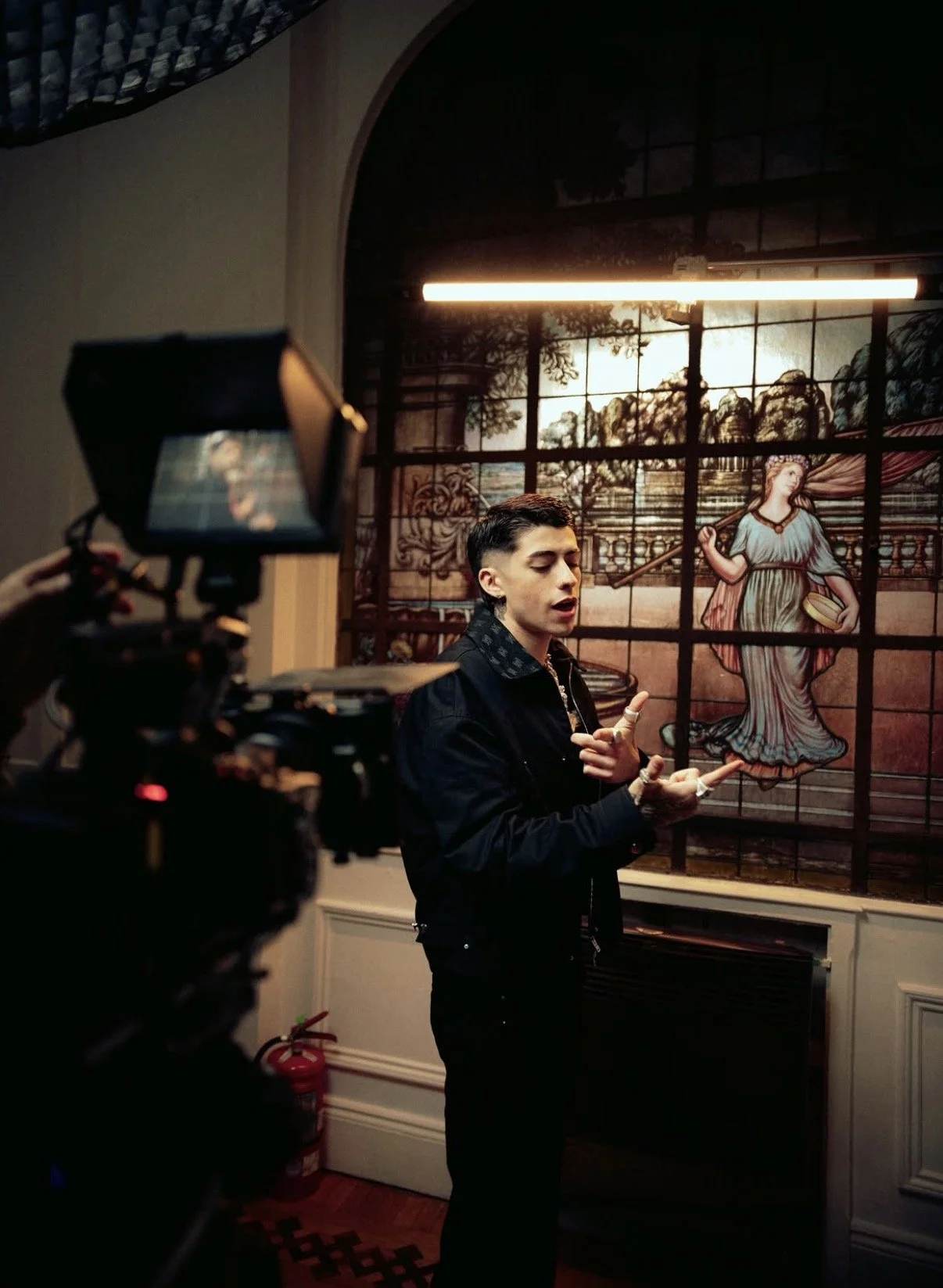
Before taking the stage in Spain for the first time, Lauty Gram is in a moment of transition. The Argentine artist has built one of Latin America’s most recognizable Gen Z careers by blurring the lines between influencer and musician, turning viral TikTok moments into charting hits and a rapidly growing live following. But as he prepares to release his debut album and dreams of headlining his own show in Argentina, his ambitions now extend beyond streaming numbers. In this conversation, Lauty reflects on the evolution of his career, the role social media continues to play in his creative process, his growing fascination with fashion and live production, and why originality remains the driving force behind everything he does.
Álvaro Ramos: To start off, who is Lauty in 2026? Where does he come from, and where is he headed?
Lauty Gram: Right now, Lauty is a singer, but also a bit of an influencer. I feel that way because I like constantly uploading content that goes beyond just the music. I enjoy combining the two worlds. Actually, I started out as an influencer. I began on Instagram, and when TikTok came along during the pandemic, I started creating content there too. Everything progressed step by step. Today, I still have that love for social media and for posting videos. If a day goes by without me posting anything, I feel bad about myself. That’s why I try to upload at least one or two videos a day—using a trending audio clip, a song of mine, doing a challenge, or anything else. I need to stay active. My next goal as an artist is to put on my own show in Argentina. I feel like that’s the next step, alongside releasing my first album.
AR: Up until now, you’ve mainly released singles. How do you envision that first full-length project?
LG: Yeah, I’ve only put out singles so far. The closest thing to a project was releasing two songs together last summer, but I’ve never dropped a batch of songs all at once. I don’t picture an overly long album. I think it could have seven or eight songs, but without them being excessively long tracks. Maybe two-and-a-half-minute songs, or around three minutes if there’s a collaboration. I don’t want the project to be monotonous or for people to feel like they’re listening to the same thing over and over. My idea is for each song to have a completely different flavor and for all of them to be able to stand out on their own.
AR: The new generation consumes increasingly shorter songs. Are you worried that the audience won’t have the patience to listen to a full album?
LG: I think you have to find the right formula. You don’t need to release a huge number of songs or make five-minute tracks. You can create a compact project with short songs that are distinct from one another. It’s also useful for live shows. Often, you get invited to a festival or a party and only have fifteen minutes to perform. Having a cohesive project of that length can work better than being forced to pick songs from different eras.
AR: You’re performing in Spain for the first time, at the Boombastic festival in Asturias. How do you choose your setlist for a new audience?
LG: It’s a unique situation because I’ve never performed in Spain. I don’t know the area, nor do I know exactly how many people listen to my music there. That’s why, when selecting songs, I’m going to pick the ones that have made the biggest splash on social media. Some people might not know who I am, but they might recognize the songs from hearing them on TikTok. Yesterday, I was at a producer friend’s birthday party here in Madrid. We went to a club, and he played some of my songs. People didn’t know I was there or that the tracks were mine, but they were singing along. I was standing right there watching them, thinking, “Wow.” It’s incredible that my songs have reached Spain thanks to the power of TikTok.
AR: You’re very well-known in Argentina, whereas in Spain you can still go out relatively unnoticed. How do you handle that contrast?
LG: It was great yesterday to be in a club without people looking at me differently. I felt like just one of the crowd, and I really enjoyed it. Obviously, I’m very grateful to be famous in Argentina because it’s a huge deal and very hard to achieve. But going from one extreme to the other is strange and pleasant at the same time. In Argentina, I try to live a normal life. People come up to ask for photos or videos, and I never mind doing it. The only time I don’t like being asked for a photo is when I’m eating. When I’m about to put a piece of meat in my mouth, and suddenly someone taps me to ask for a picture. That’s my only boundary.
AR: What were your first steps on stage like?
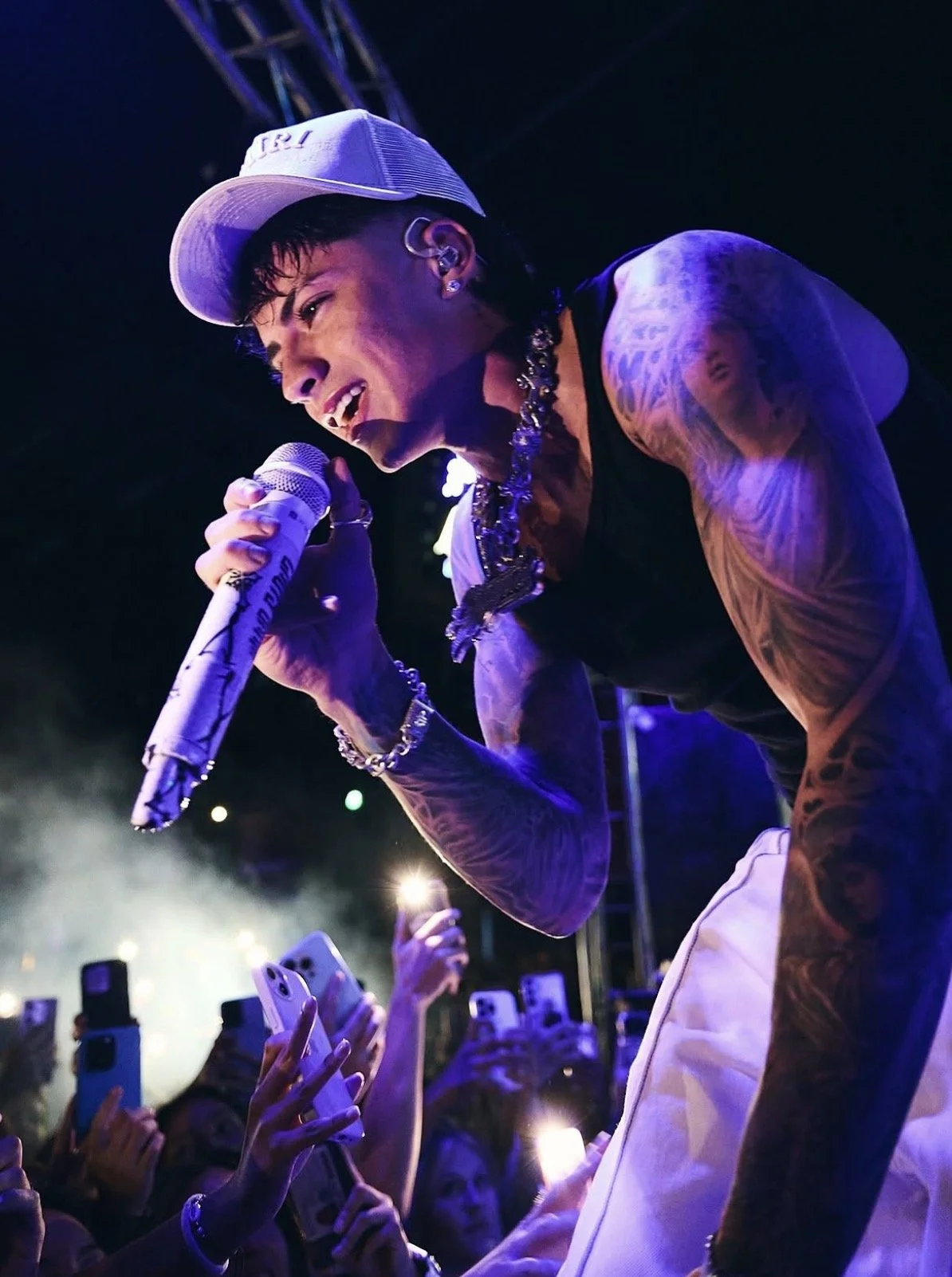
LG: In Argentina, just like here, performing in nightclubs is very popular. That’s how I started out. My first songs started gaining some traction on TikTok, and I’d get booked to sing at various venues. I remember stepping onto the stage alone, with a wired microphone, accompanied only by my DJ. It was just my manager, the DJ, and me. Then things started to grow. I began getting booked for festivals in cities across other provinces and for free municipal events that drew huge crowds. That’s when we realized we needed to get serious and build a real project. We brought on a sound engineer, a DJ, a visual artist, and dancers. In Argentina, I might perform with six or eight dancers, depending on the size of the stage. Now I have the chance to do it here in Spain, though it does come with some pressure since I don’t have the same resources available. I won’t have dancers or the full professional visual setup, but I will have a good sound system. That’s the essential part: making sure my voice and the beat sound great. I’m going to give it my all regardless.
AR: How important is aesthetics to your artistic project?
LG: It’s huge. I’m still building and defining my aesthetic, especially regarding my outfits, but people in Argentina really appreciate the way I dress. I like wearing colors that aren't necessarily the norm for a night out at a club back home: pink, purple, yellow, or more extravagant shades. When I travel to Madrid, France, or Italy, I try to buy clothes in those colors because they’re harder to find in Argentina. I also personally plan everything related to the stage show: the visuals, the dancers' costumes, and the color schemes. I like us to be coordinated. If they’re wearing black with red accents, I’ll wear black with a red detail, too. Each song has its own visuals, and at certain points, the lyrics from the rap verses appear on screen. I try to make sure everything matches the color of the outfit I’m wearing. I love being fully involved in the project.
AR: In urban music, there’s still this idea that a male artist’s image should look effortless or unconcerned. Do you agree?
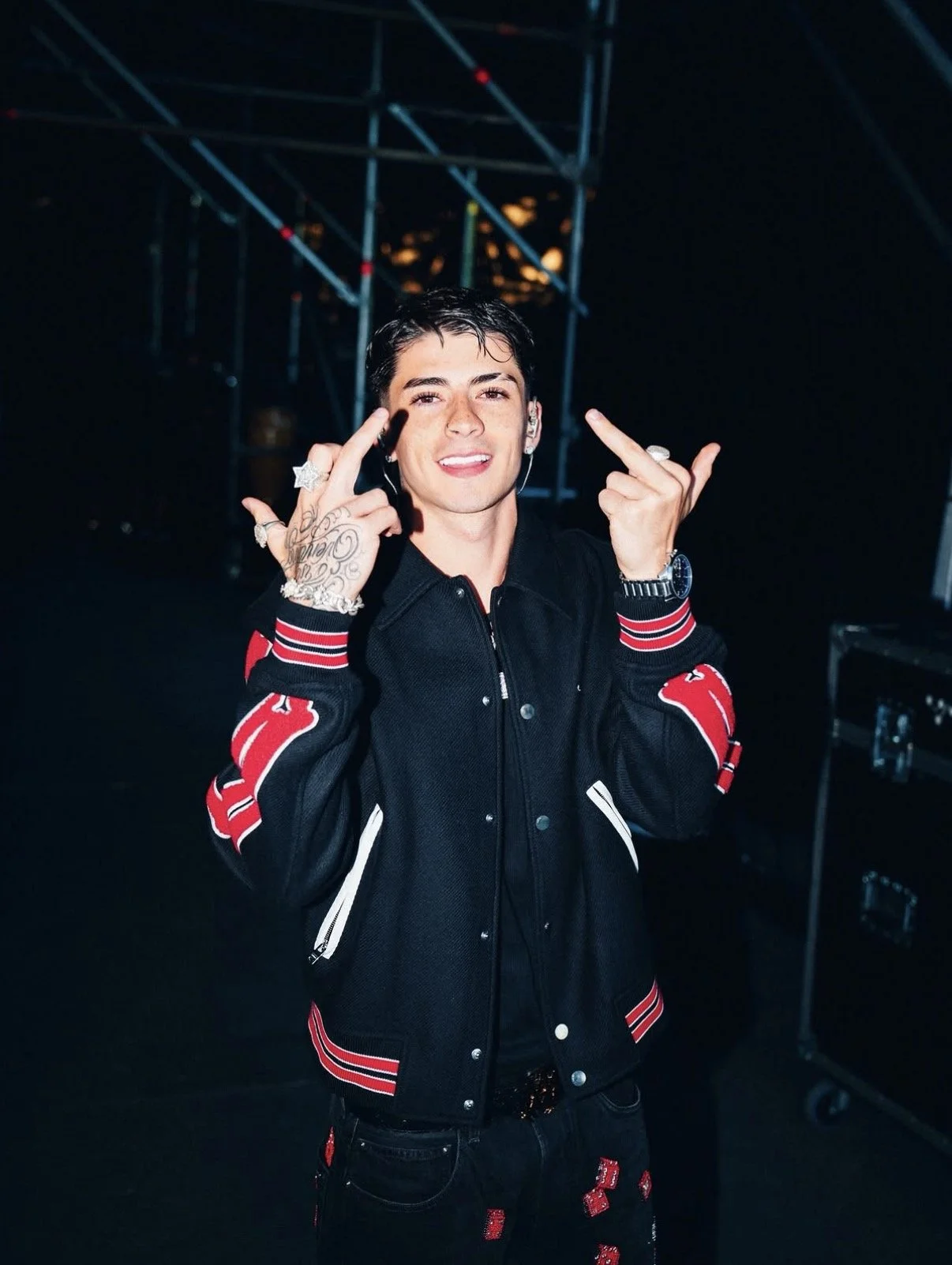
LG: No, I completely disagree. I try to go all out with my outfits for every show. I like wearing chains and rings, having my hair styled, and looking put-together. Whether I’m stepping in front of a camera, performing, or even just heading out on the street, I try to look sharp. I like taking care of my appearance.
AR: Do you have a relationship with any Spanish brands?
LG: About a year and a half or two years ago, I was in Ibiza and Nude Project reached out to me. I visited their store, and they treated me incredibly well. They gave me sweatshirts, t-shirts, and pants. They were very generous, and I have a lot of love for them. Now I want to check out their Madrid store, too. I like how bold they are with their designs and colors; they have an originality that really resonates with me. I’m also familiar with Scuffers because it’s becoming quite popular in Argentina. A lot of people wear their clothes, though I haven’t worn them myself yet.
AR: And what brands from Argentina would you recommend?
LG: I really like Amiri, even though it’s not an Argentine brand. What draws me in most is the sparkle they incorporate into many of their pieces. Every item has a unique detail: stones, crystals, or shimmering finishes. I love wearing that kind of clothing, including pants or sneakers with sparkly details. Whenever I go to the U.S. and walk into an Amiri store, I feel like I’m stocking up on outfits for the month and for my shows. To avoid feeling too guilty about the cost, I tell myself I’m investing in myself and my image.
AR: Would you like to attend one of their fashion shows in Paris?
LG: I’d love to. Every new season they release is dangerous for me, because I literally want to buy everything.
AR: Getting back to social media, what was the turning point in your career?
LG: The first major decision was to stop reading or listening to negative comments. It’s a really hard decision because, these days, people criticize you for everything. When you try to do something new, people immediately pop up trying to tear you down. For me, it was crucial to think: “I don’t care what they say; I’m going to do it anyway.” Then came one of my first songs, which went viral on TikTok right away. It became hugely popular in Argentina, Chile, Uruguay, and I think Mexico, too. People turned a part of the song into a pretty bold challenge, and every video racked up tons of views. My career progressed song by song. The first one got around two million streams, and I couldn't believe it. I thought people were going to criticize me or laugh at me.
When I started out, switching disciplines was really frowned upon. TikTokers were just TikTokers, streamers were streamers, and singers were singers. It seemed like no one could do multiple things at once. I decided to give it a try. I released a song without any warning; no countdown, no prior announcement. People were surprised. The next song hit seven or eight million streams. Then I released “Tranquila,” which reached about twenty million. Everything moved forward step by step. Finally, the song that changed my life arrived: “Vida Gangster.” That’s the song they played at a club in Madrid, everyone in Spain was singing along and dancing to the TikTok move. On YouTube alone, it reached around 180 million views. Nothing extraordinary happened at first; in the first three weeks, it had maybe 600,000 views. Then it went viral thanks to a challenge that ended up sweeping the globe. Later, I released “Uf, mi amor,” which racked up about sixty million views, and “La pistola,” which hit around thirty million. From then on, every song I put out became a hit in Argentina. I have a repertoire that people sing along to everywhere. They might not know who I am, but they know the songs.
AR: Now the challenge is to complement those songs with a visual spectacle.
LG: Exactly. I know people know the songs and will sing along to them. That’s why I want to add a visual element. While people are listening to or singing the tracks, I want them to enjoy what they’re seeing, too. I don’t want the show to be limited to just playing well-known songs.
AR: Some of your songs have a very sexual element. How do you handle the sexualization of your songs on social media?
LG: I like that people use my songs however they want. Nowadays, thanks to social media, everyone can show their true selves. If a girl wants to use a song while showing some cleavage, or a guy wants to appear in a more provocative way, everyone is free to do what they like. Obviously, there has to be a limit. Platforms remove certain content, and you also have to respect people who don’t want to see anything too explicit. But as long as that line isn’t crossed, I have no problem with it. Plus, those kinds of videos tend to generate a lot of views, comments, and shares. The algorithm pushes them hard, and if my song is playing in the background, even better.
AR: What would you say to the young Lauty if he could see everything you’ve achieved?
LG: When I was little, my dream was to be a YouTuber. I was a huge fan of Vegetta777. My dream was to record Minecraft videos, build houses, and make a career out of that. I also grew up watching and listening to Spanish YouTubers. That’s why I’m pretty good at imitating the Spanish accent. I can speak with my Argentine accent or switch to the Spanish one. Sometimes people think I’ve lived here for years. I would tell the younger Lauty to keep moving forward, to keep pouring his energy into things, and to never stop trying to prove to himself what he is capable of. I was never one to feel self-conscious, and I think that was crucial in becoming who I am today. If you feel embarrassed doing something you truly love, if you don't want to put yourself out there or worry too much about people criticizing you, you’ll never achieve what you want. I am grateful to that Lauty who was never shy and who always kept pushing forward.
AR: You’re also a huge soccer fan and a Real Madrid supporter. Where does that connection come from?
LG: I used to watch matches featuring Cristiano Ronaldo, James Rodríguez, and Gareth Bale about ten years ago. I’ve liked Real Madrid ever since. All my friends back home supported Barcelona because of Messi. Obviously, Messi is an Argentine legend, and for me, he’s number one. My support for Real Madrid isn’t about choosing between Cristiano and Messi. I liked the whole package: the kit, the club’s aesthetic, and the players they had. I always enjoyed watching Real Madrid matches more than Barcelona’s. These days, I watch all their games: League, Champions League, and the Cup. When Madrid plays, I go home, sit on the couch, turn on the TV, and experience it just like any other fan.
AR: How are you experiencing the World Cup from Spain?
LG: It makes me nervous. I want to see how the Spanish people experience the matches, and I’d love for the final to be Spain versus Argentina. I want to experience what soccer is like here: the nerves, the streets, the chants, and the atmosphere. It’s a very special experience to live through it from Spain.
AR: Which songs would you recommend to someone wanting to start listening to your music?
LG: I’d recommend “Qué cabrona,” because I love the lyrics and the melody. Also “Mayor que yo.” It’s a song I really enjoy singing live because the crowd gets so into it. It’s about dropping hints to someone older than you, and during shows, the audience sings it as if they were actually saying those words to someone. For something more upbeat, club and party music, I’d recommend “Me escapé” or “Sí o no.” “Me escapé” was actually played at a club in Madrid yesterday, and everyone danced to it. I think those songs give you a pretty good idea of the different sides of my music.
AR: What advice would you give to someone wanting to break into the music industry?
LG: The most important thing is not to constantly look at what the person next to you is doing. You can’t think, “I’m going to see what this artist is doing so I can copy it.” If you do exactly the same thing as someone else, you won’t shine or stand out because there won’t be anything unique about what you’re offering. You have to try to be original with your words and find key phrases that stick in people's minds, that specific part that makes someone think, “I like this song because of what it says right here.” You also have to consider commercial appeal. In a song, it’s crucial to have a part that gets stuck in your head, paired with a catchy rhythm. And if you can incorporate something that works on TikTok, even better. You might create an incredible song with spectacular lyrics and an amazing melody, but if it doesn’t have a snippet that works on social media, it’s very hard to get any real traction these days. TikTok and Instagram are incredibly powerful right now. People hear a song over and over in videos, and later, when they get in the car or hop in the shower, they play that track because it’s stuck in their heads. The industry might change in a year, two, or three, but that’s how it is right now. My recommendation is to create a commercial sound without losing your originality.
AR: It sounds like you analyze social media as a professional tool.
LG: Yeah, I’m constantly strategizing. My friends or my manager see me on my phone looking at TikTok all the time, but I’m not just wasting time. I use it to see what’s trending, what people are singing, which snippets they like, and what topics they’re talking about. My mind is constantly analyzing everything. That’s why it bothers me a bit when people say I’m on my phone all day doing nothing. In reality, I’m working and analyzing things, even if I’m the only one who knows exactly what’s going on in my head.
Questions by @alraco43