
GIULIA BE: AN IN-DEPTH INTERVIEW
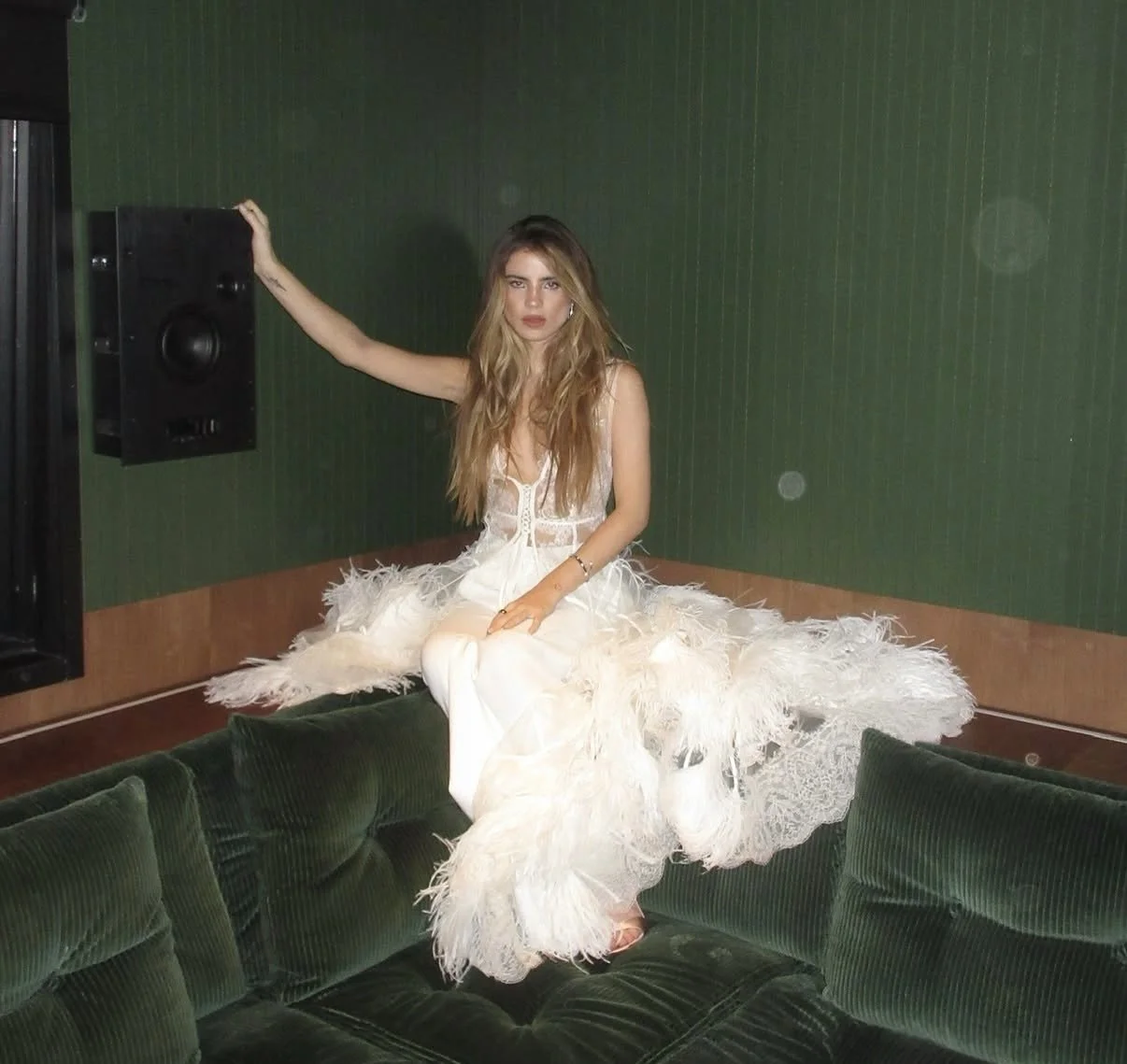
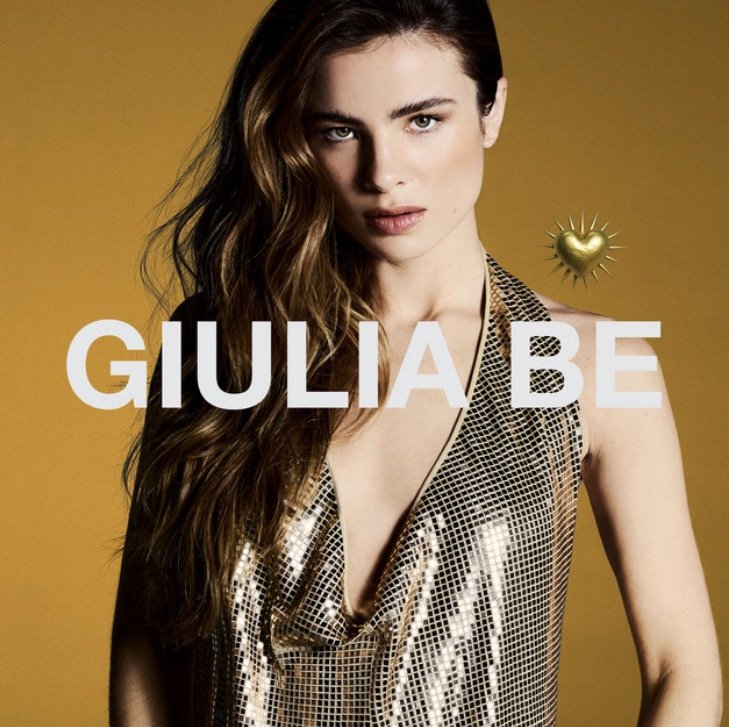
Few artists embody the idea of a global career quite like Giulia Be in 2026. The Brazilian singer, songwriter, actress, and now trilingual storyteller is constantly on the move, taking her ambitious new project—aptly titled GIULIA BE—across continents. Divided into three distinct chapters in Portuguese, Spanish, and English, the project features 21 songs and 21 accompanying videos, reflecting the different versions of herself that exist within each language. Fresh from performances in Miami, Mexico City, São Paulo, Lisbon, and Madrid, Giulia arrives in Spain celebrating not only a new artistic era, but also the fulfillment of a long-held dream: singing for Spanish audiences in their own language.
In this conversation, Giulia reflects on the creative journey behind her most personal project to date, discussing how songwriting differs from acting, the lessons she has learned from the characters she has portrayed, and the emotional worlds she explores through each language. She also opens up about the songs that shaped her career, the collaborators who inspired her, the women she admires across the music industry, and the experiences—from heartbreak to self-discovery—that continue to fuel her artistry. Warm, thoughtful, and refreshingly candid, Giulia reveals the many layers behind the artist who is redefining herself on a global stage.
Álvaro Ramos Corvillo: The first thing I want you to do is introduce yourself. Who is GIULIA BE in 2026? Where are you from and how did you get here?
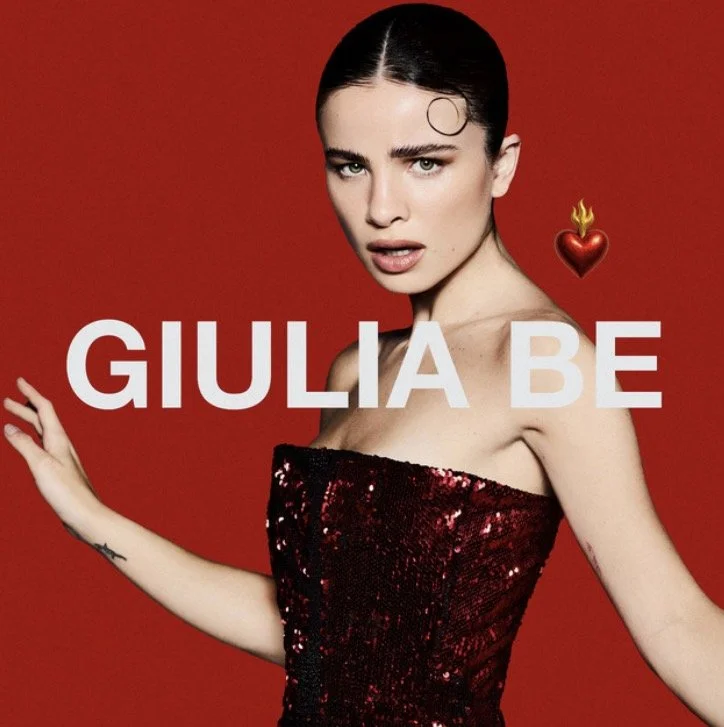
Giulia Be: I'm still a singer, songwriter, and actress. But now my current residence is the airplane, because I'm constantly traveling everywhere with this showcase. I recently performed in Miami, Mexico City, São Paulo, Lisbon, and now we're in Madrid. This project is named after me: GIULIA BE. It's a project I created in three parts: one part in Portuguese, one part in Spanish, and one part in English. Each part has seven songs and seven videos, so in total there are 21 songs. And here we are in Madrid, fulfilling a dream, which is to sing here.
AR: Do you have anything on your Madrid checklist?
GB: I've been to Madrid before, and the first time there was something on my mom's checklist: to go to a fan shop. My grandmother bought fans in Madrid many years ago and took them to Brazil. So, when we came here, we bought fans for the family.
AR: Speaking of your artistic career, how does your musical side differ from your acting side? How do you separate Julia the singer, the actress, and the person?
GB: I always say that what the two facets have in common is that they both tell stories. Each one does it in a different way. As a singer, it's often a more solitary process. Of course, I often write with my older brother, but other times it's just me, in my room, at three in the morning, thinking about what my heart wants to put on paper, what I'm really feeling. That process can feel a bit lonely until the moment I start sharing the song. I always say that, after a song is released, it stops being mine and starts being yours. That's the beautiful thing about music. In film, on the other hand, the process is very collaborative from the beginning. There's no such thing as doing a scene alone, unless it's a monologue. There's a lot of listening involved; nothing is done in isolation. It's a different kind of relationship with the story.
In a film, it's often fiction, so you have to ask yourself who that character is, what the connection is between her and me, and how we're going to tell that story in the best way. I love that collaborative process: if we succeed, we succeed together; if we don't, we fail together. That's beautiful. In music, there's also a great team behind it, but in the end, if people speak ill of the music, they'll speak ill of me, not of the person who wrote with me or who produced the video. That's why I feel that music is a more individual process.
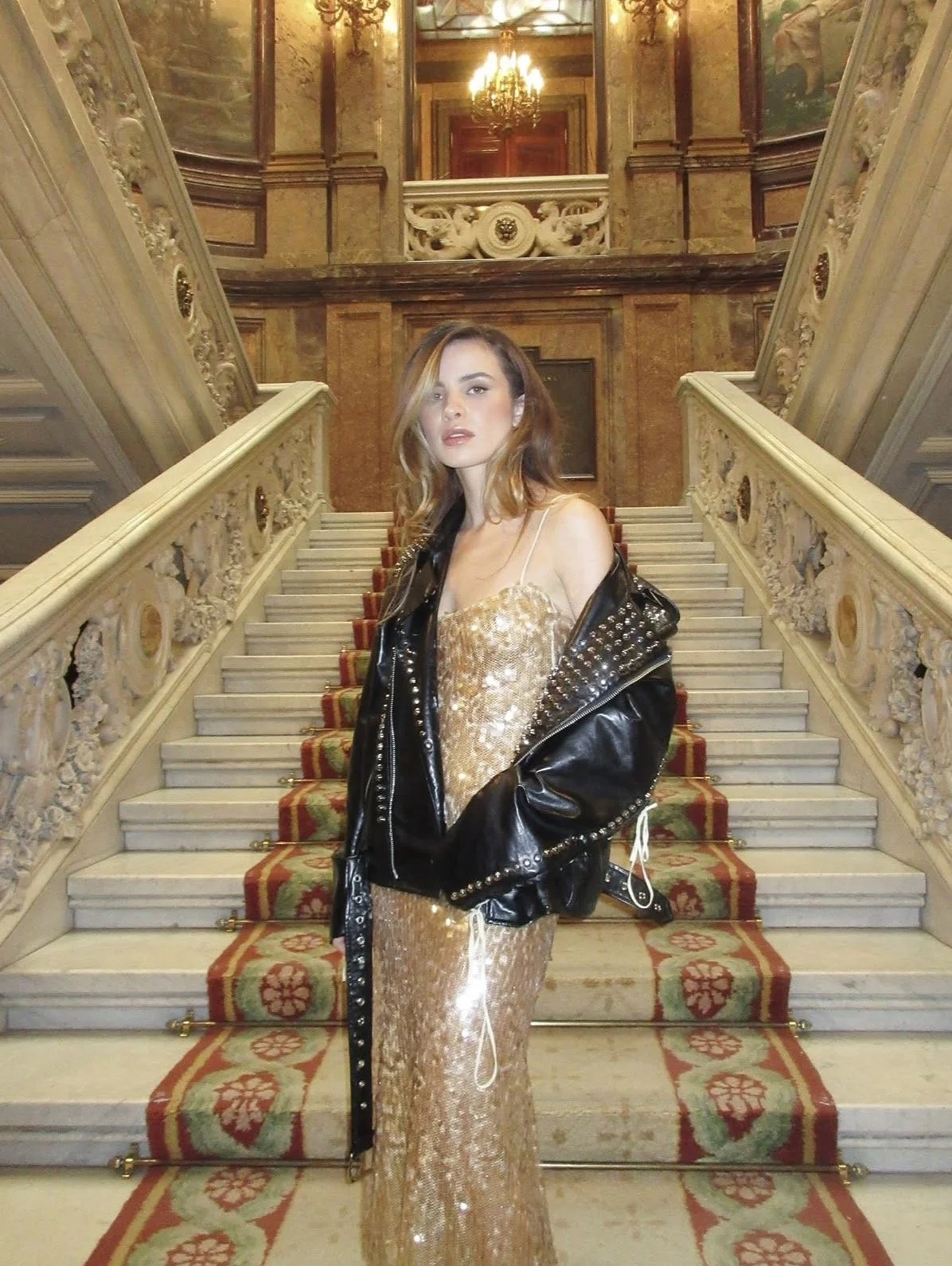
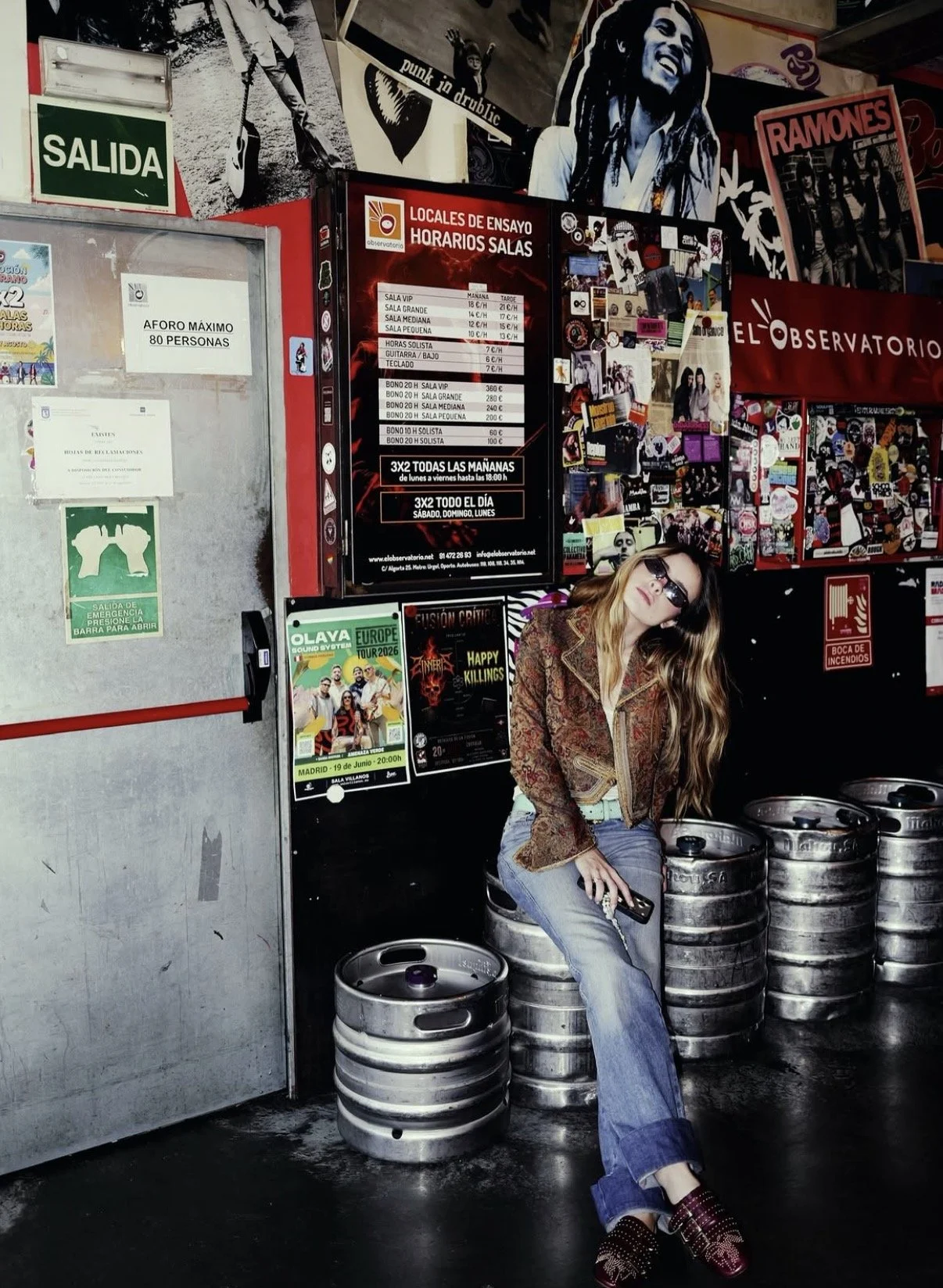
AR: Do you think you've brought something of your fictional characters into your music? Are there any songs that aren't so personal, but rather come from something you portrayed?
GB: Yes. I try to really experience what the character is going through. My first character was for a film called Beyond the Universe, which is on Netflix. She was 25 when I filmed, and I was 21. I was worried I didn't have the maturity to experience what that woman was going through, to have the strength that character had. She had lupus, she had a dream, and many challenges to achieve that dream. Through Nina, which is the character's name, I learned so much. I felt very empowered after playing her. She gave me a strength I didn't even know I had inside.
Then, with another character, it was the other way around: she was 17 and I was 24. So I thought, "How do I take a few steps back and remember the vibe I had when I was 17?" The first thing I did was call a friend and ask if she had a party she wanted to go to. She told me she was going to a birthday party, but that I wasn't invited. And I thought, "Perfect, I want to go to a party I wasn't invited to too." That's exactly what that character would do, because she was someone with so much life and energy.
Both of them taught me a lot, and I hope to have many more characters who will continue to teach me.
AR: How do you differentiate the themes according to the language? Do you feel there are things you dare to talk about in English, but not in Spanish or Portuguese?
GB: Yes. I think each Giulia was experiencing something different within this project. The English-speaking Giulia is dating an American, planning her wedding, living in Los Angeles. When you move to Los Angeles, it's a place with a lot of broken dreams. Everyone works in music or film, so you have to have a lot of faith in your dreams, because otherwise, you can quickly fall into something very difficult. It's a complicated city. That's why I think the English-speaking Giulia is living with confidence and almost wears a mask for the world. She's also in a calmer moment in her personal life.
The Portuguese-speaking Giulia is leaving her country, leaving her father's house, experiencing for the first time what it means to be an adult and grow up. The themes in Portuguese are more introspective, more real from a different perspective.
And I think the Spanish-speaking Giulia is the most dramatic. She's not afraid to delve deep into her feelings. I think that's very common among Latinos. Even reggaeton, though it's meant to be danced to, can have lyrics that break your heart. For me, Giulia in Spanish has a very vivid drama, a very strong intensity, and a very present romanticism.
I speak in the third person, but I am all three.
AR: Regarding the collaborations on the three EPs, especially with Micro TDH, what was that process like?
GB: With Micro, it was the only collaboration I did with another artist. It was a song we'd had for many years and that I'd wanted to release for a long time. Songs have their moment, but it had been about four years, and I felt that if I didn't release it now, it would never come out. I also worked with incredible producers. Caleb Calloway, for example. On the English-language tracks, I collaborated with artists I've admired for many years, like Justin Parker, who co-wrote some of Lana Del Rey's first album with her, songs like "Video Games" and "National Anthem," which I grew up listening to. Being able to collaborate with someone who's already amazing to me, and learning so much from their songwriting process, was incredible. I also worked with Fred, who had worked with Rihanna.
On the Spanish side, there were so many incredible women like Gale and Nicole Zignago, as well as many very talented producers, like the Julca brothers. I'm sure I'm forgetting some, but there were so many amazing people.
On the Portuguese side, I worked with Paul Ralphes, who's been a longtime collaborator of mine.
AR: You started making music in Portuguese, right?
GB: Actually, my first song was in English. It was called "With You," and it was featured on the soundtrack of a huge telenovela on Globo in Brazil. The song started getting airplay everywhere, but people didn't know I was Brazilian. They thought it was a song by Dua Lipa, Halsey, or someone else entirely.
Then I released my second song, "Chega," in Portuguese. At that time, I was in a very pop star phase, searching for my identity. I wore latex clothing, sharp nails, a giant braid, I did choreography… But when I saw the finished video, I didn't recognize myself. I went to the record label and told them, "I'm sorry, I know we've spent a lot on this, but it's not me. We have to take it down from YouTube because I don't recognize myself." That's when my existential crisis began. Then I talked to my mom and dad and told them I was going through a lot and wanted to go away for a weekend with my friends to Saquarema, to see a surf competition and have a quiet moment. It was at that surf competition where I wrote "Menina Solta," the song that changed my life. In the song, I talk about that competition and a girl who was with me. It was the first song in Portuguese that I felt everyone was singing along to—guys, girls, everyone.
"Menina Solta" opened many doors for me in Brazil. Finally, people started to know who I was. It was also the first song I made with Paul Ralphes, my biggest collaborator. He was the first person who didn't try to take over my publishing rights. I had written the song completely, and I was thinking, "I wonder what this publishing guy wants." But he told me, "You came here with the song finished. Whether you play this song on guitar or with production, it's the same song. I'll charge for the production, but I don't want anything from the songwriting." So, when people looked up who had written that song, only my name came up. That gave me a lot of credibility as a songwriter. Before, people might have thought, "Oh, if there are two other people in the credits, maybe they wrote the song." But with that song, I gained respect as a songwriter. That song went all over Brazil and many parts of Latin America, and that's where a great story began.
AR: From Europe, we sometimes don't realize the power Brazil has as a cultural community and what it can promote.
GB: Brazil is a focal point. You have to take advantage of that cultural focus to grow as an artist and amplify your voice. I love my country.
AR: Speaking of the EP, I wanted to ask you about some of the songs. The first is "Bye Bye Bahia." I really liked how you personify a place, how you turn Bahia into a person.
GB: Yes. Bahia is the name of a state in Brazil. The story behind that song was crazy. In the lyrics, the guy takes another girl to the same place where he said we were going to get married. So it was like I was talking to Bahía, because I didn't want to talk to the guy anymore. "Bye bye Bahía, don't forget that you were mine first." It's a goodbye that heals. He can take that girl as many times as he wants, but the first time he was there was with me, so he'll always have that memory.
AR: Then there's "Tonta." I loved it because it connects me to the queer community and to the concept of "bimbo": becoming a fool for love, like being made to become that way to please.
GB: Yes, it happens a lot. It was with the same guy from Bahía, but at a different stage. It was a time in my life when I thought, "This guy is the only one I'm going to stay with, acting like an idiot." I even forgot my own name. I was always laughing at everything, even if it wasn't funny. I wrote it with Nicole and a lot of other amazing producers. It was really cool making that song.
AR: How do you see the "bimbo" figure? Do you think a woman can feel empowered from that position, or do you see it as misogynistic?
GB: I think every woman can be in that position at some point, and that doesn't diminish her in any way. We can be very intelligent. If you watch Real Housewives, those girls are anything but dumb.
AR: Then there's "bebecito." In Spain, we say "migajera," like breadcrumbs: when your partner gives you so little that you cling to anything. I really connected with that meaning, with doing everything for him and accepting whatever he gives you.
GB: I think it has a similar vibe to Olivia Rodrigo's new album. She also talks about doing so much for a guy and him giving her nothing in return. I wrote "bebecito" at a time when I hadn't even realized that. At the time, it was a declaration of love. Now, with hindsight, I see that it was a super romantic song, but also from that place of accepting very little. When I was writing it, I thought, “Baby, if you follow me, I’ll follow you. Whatever you want, I’ll do it.” But thank God I grew up. It was from a boy to a man.
AR: Moving on from the album, what collaborations would you like to do in the three markets? And also, who are your role models?
GB: In Portuguese, I really love Rita Lee’s work. She was an artist who has passed away, but she was very avant-garde in her work for women. Her compositions always thought outside the box. She was a step ahead of everyone. I had the opportunity to be close to her at certain points in her life, and she was an incredible person who still inspires me in many decisions.
In English, I think Adele is a huge role model for me. I also love Amy Winehouse, but Adele is a benchmark: what a woman, what a show, what an incredible artist. As for a possible collaboration, I would say Olivia Dean, whom I love, and I feel like we’re on similar wavelengths.
In Spanish, I think role model and collaboration could be the same person: Rosalía, my queen. I would also love to collaborate with Lola Índigo. I met her at a Cult Gaia fashion show in New York. It was her, me, Emilia, Becky G… all the Latinas together at Cult Gaia, a powerful lineup. I would love to collaborate with all of them. I think there's a very strong wave of powerful women in the Latin world, each in her own way. Karol G is also an artist I love and would love to collaborate with.
AR: Let's move on to a skincare question. What products do you like or what routine do you have?
GB: For me, that comes a lot from my mom. My mom has great skin. Genetics plays a part, of course, but the most important thing is water. She also taught me not to use too many products. I think it's very common online these days to see girls with 45-minute skincare routines, and I don't have time for that. Besides, when you put on too many products, your skin doesn't know how to react because you're giving it too much information. I think you have to choose a good moisturizer, a good retinol if you're a bit older—because if you're very young you don't need it. I see 18-year-old girls using retinol and I think, "Honey, relax." Sunscreen is also important. I should use more; I don't use it as much as I should, but I know it's super important.
AR: And makeup? What's the one thing you need to put on before leaving the house?
GB: Lip balm. I can leave the house and forget my phone, but my lip balm is definitely with me.
AR: To finish up, recommend three songs from before these three projects. If someone is just discovering your project, what would you recommend from your catalog?
GB: I'd recommend a song called "Pessoa Certa Hora Errada," which means "right person at the wrong time." I love that song. I'd also recommend "Inolvidable," which I recorded with a video with André Lamoglia, right before he did "Élite." In fact, I was auditioning for Elite when we filmed the video, so we made it happen together. And the first one, "Too Bad," in English, because it was the song that started it all.
Words by @alraco43