
INTRODUCING ALVIE: A BRAND DRIVEN BY NOSTALGIA
Alvie was born not merely as a clothing brand, but as an exercise in memory. Through colors, everyday imagery, drawings, sheep, wet t-shirts, and seemingly childlike typography, the project seeks to reclaim a freer, more spontaneous way of engaging with life. Behind the brand are Álvaro Espinosa, Laura Neira, and Victor Ariza, three friends who turned a conversation in a Madrid café into a creative universe defined by nostalgia, nature, and freedom. To mark the launch of their first collection, we spoke with Álvaro Espinosa about the project’s origins, his childhood in Cádiz, the influence of his partner, teamwork, and the importance of crafting stories rather than simply producing garments.
Álvaro Ramos: The first thing I want to ask is where Alvie comes from. Why is this project emerging right now?
Álvaro Espinosa: Alvie is a brand that speaks of nostalgia, freedom, and fun. It stems from the idea of reconnecting with the child we all carry inside us. When we’re young, we enjoy much simpler moments without overthinking things. Yet, as we grow up, we often lose that way of looking at life. Alvie tries to recapture that feeling and transform it into clothing, images, and objects that convey emotion, spontaneity, and happiness. The idea had been in my head for two or three years. It was something I wanted to do but had never really considered possible. I hadn’t studied fashion, I didn’t have the resources, and I didn’t know where to start. I was passionate about the industry, but I didn’t see the project as viable. Everything changed when I told Laura, one of my best friends. We were at a café near my home in Madrid, and I explained the idea to her. She simply said, "Let's do it." That’s where it all began.
AR: Although the brand has a very personal component and you are its most visible face, Alvie is made up of three people. Who are you all, and how is the work divided?
AE: A lot of people associate the brand directly with me because I appear in front of the camera and because the name itself has a personal connection to me. But Alvie is made up of three people: Laura, Ariza, and me. The project wouldn't exist without them. Laura focuses specifically on brand image, marketing, advertising, and all aspects of communication. She is one of the most dedicated people I’ve ever met. She gives everything to the projects she believes in, and Alvie is a perfect example of that. Her creativity, commitment and hard work have been essential from day one, and the brand simply wouldn’t be what it is today without her. Ariza is a designer who brings technical and professional industry expertise to the table. Each of us offers something different, and that is precisely what makes the project strong. Concepts and designs emerge from conversations between the three of us. We explain what we envision to Ariza, and he manages to turn it into reality. I always say he’s the one who works the magic.
AR: How did Ariza get involved in the project?
AE: Ariza was already a friend of ours. At first, we kept the project fairly under wraps, but one day we decided to tell him about it because we needed the opinion of someone who knew the industry. After talking to him, he called to say he loved the idea and wanted to be part of it. His involvement made everything so much easier. Without Ariza, Alvie probably wouldn't have been possible or it would have taken another three years to get off the ground. He knows the industry, understands the processes, and has streamlined absolutely everything. Plus, the three of us get along really well, which is crucial when you’re building a project that is so personal.
AR: Where does the name Alvie come from?
AE: It’s a very personal story. My boyfriend’s friends, who are English, gave me the nickname Alvie because my actual name is phonetically tricky in their language. At first, I felt a bit self-conscious imagining the name written on a T-shirt or wondering what others might think of it. But gradually, I grew really fond of it. I talked to Finn, my partner, and he loved it. When he told his friends, they all reacted with great enthusiasm. That was exactly what I was looking for: a name that felt personal and cheerful, with a touch of nostalgia. Alvie represents the brand’s universe because it’s part of my own story, too.
AR: You mentioned Finn Thomas. Even though he isn’t officially part of the company, he seems to play a major role in the brand’s identity.
AE: He’s a huge source of inspiration for me. Obviously, the initial spark comes from within, from my memories and my own take on fashion, but having someone like Finn in my life is wonderful. He isn’t formally part of the brand, but he’s done so much for it. He’s helped us with everything, and I’d say that, in a way, Finn is Alvie, too. He’s also given me a more international perspective. When I met him, I barely spoke English; now I can communicate perfectly with him, even though I’m still a bit nervous about expressing myself in public. Being with someone from another country opens your mind, not just culturally, but also in the way you work and see things.
AR: What was like to produced and create the campaign for the brand?
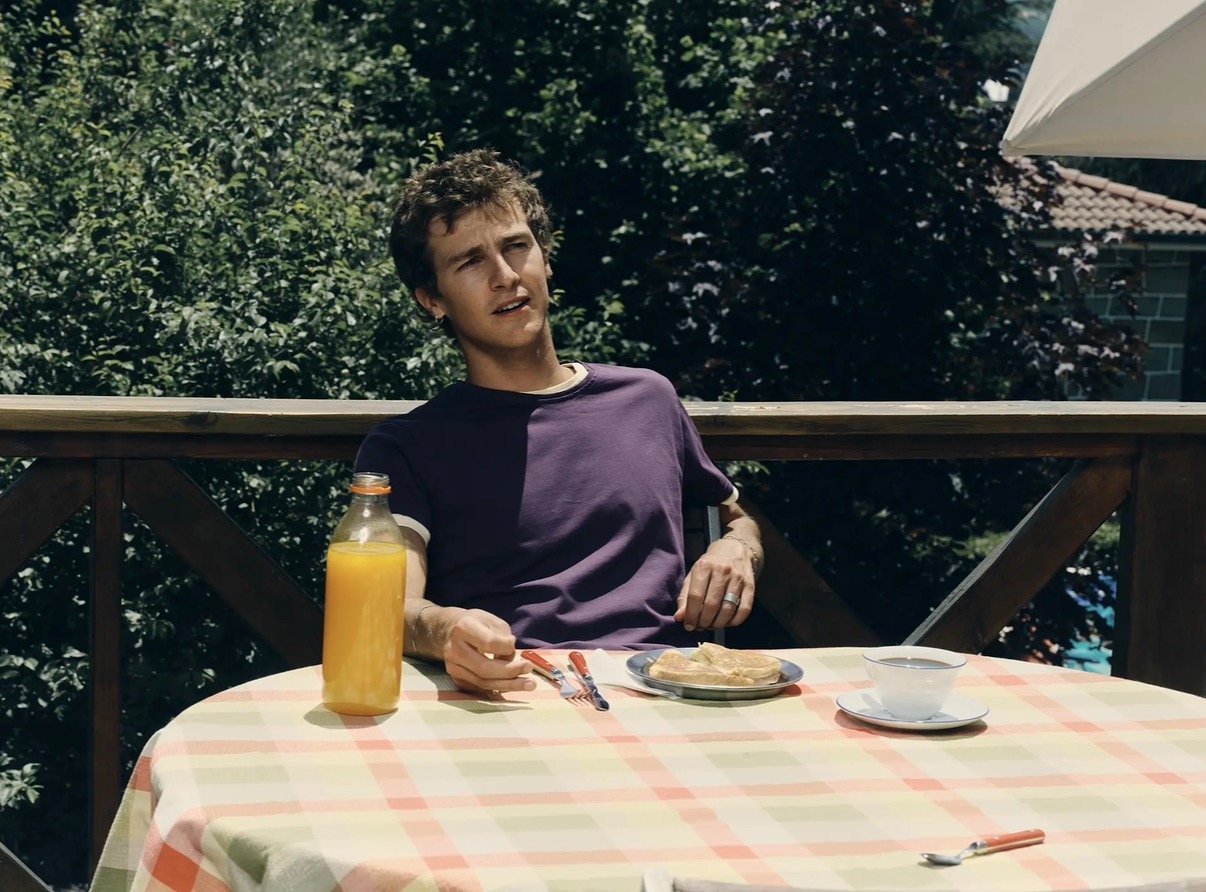
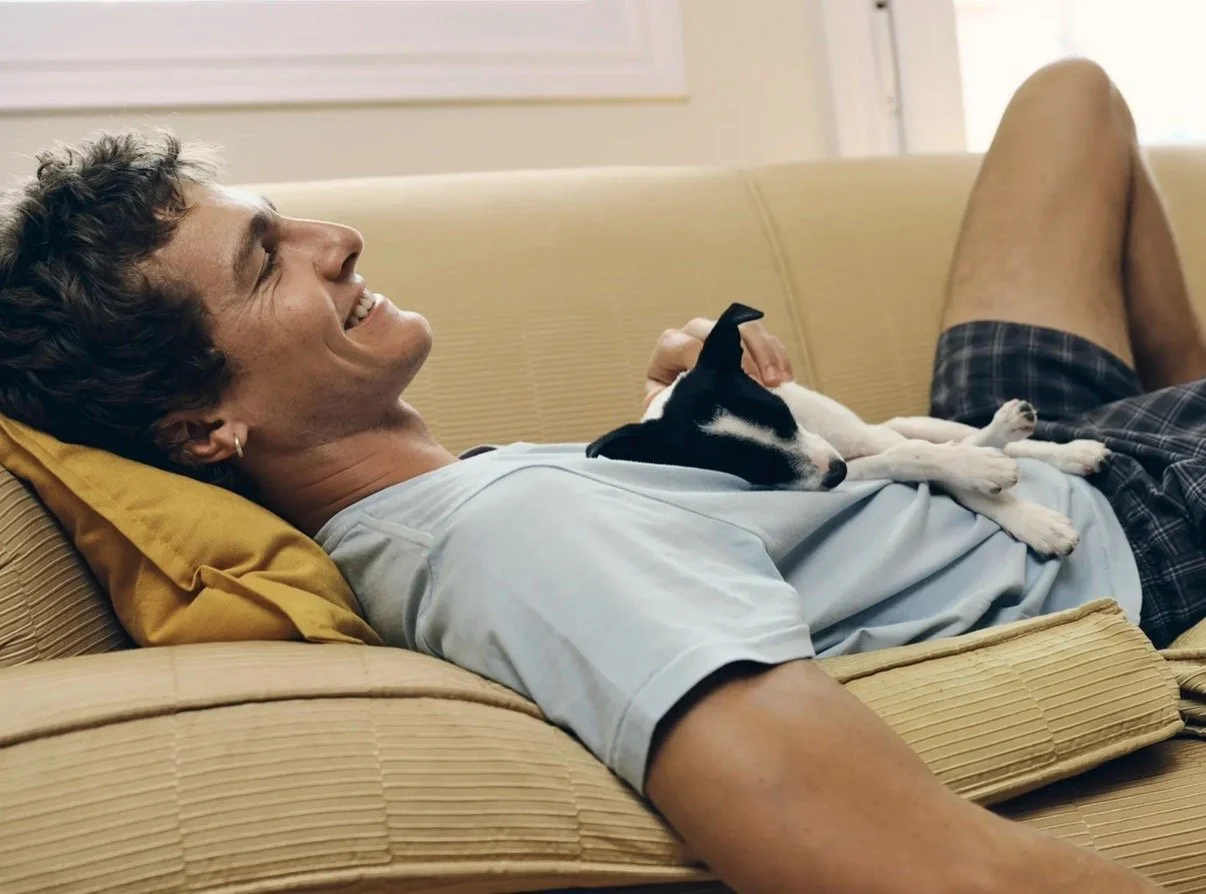
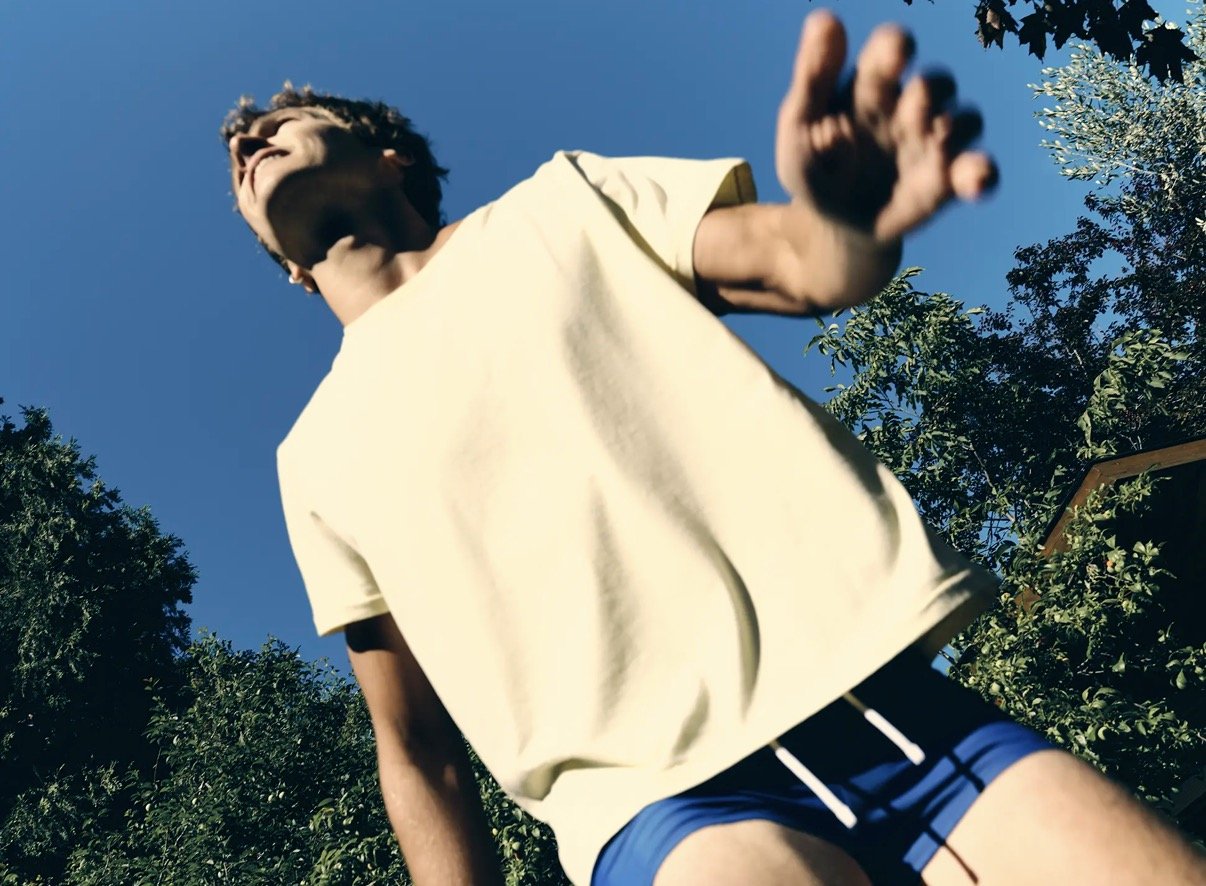
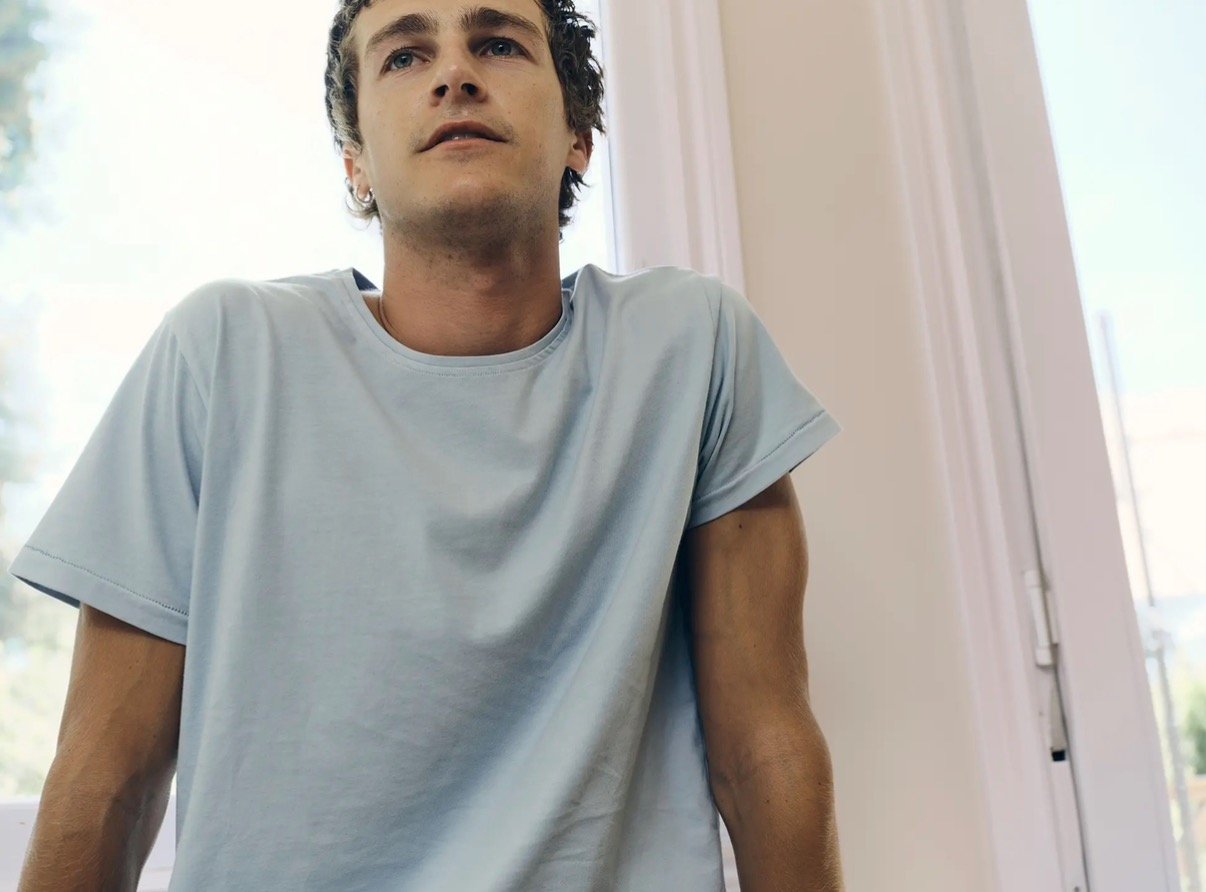
AE: It was a really interesting experience because, while I’d taken part in campaigns as a model before, I’d never been on the other side of the lens. At first, it was a bit stressful. I wanted everything to be perfect: the T-shirts, the poses, the details... Plus, it was Finn’s first modeling gig, so he needed someone to direct him. We tried to make him feel comfortable and relaxed. He did a great job, he was very professional and a lot of fun, too. In the end, the shoot was amazing. The original concept for the shoot was different, but we ran into a few issues and had to change plans just days beforehand. We eventually secured a house in Cercedilla, where Marta Rodru played a key role in bringing the campaign to life. She led much of the art direction, organised the production, and has been a fundamental part of the brand from the beginning. She is incredibly talented, and the project wouldn’t be the same without her. The photographers, Adrián Ramos and Noelia Soto, gave their vision to this project, creating an atmosphere that felt very natural and portraying the routines that can be lived with these garments. Being surrounded by creative, generous people has been one of the best parts of the project.
AR: The brand feels very personal yet very open at the same time. To what extent does Alvie reflect your identity?
AE: Alvie stems from my personal tastes, my understanding of fashion, and memories that have stayed with me since childhood. It’s a deeply personal project, but I want anyone to be able to relate to it and make it their own. Nostalgia is universal. We all have memories of moments when we were happy without knowing exactly why. The brand also has a queer sensibility because that’s part of my identity and how I view the world, but I don’t want to limit it to a single experience. I want everyone to be able to find their own memories within Alvie.
AR: What was your childhood like, and what memories are finding their way into the brand?
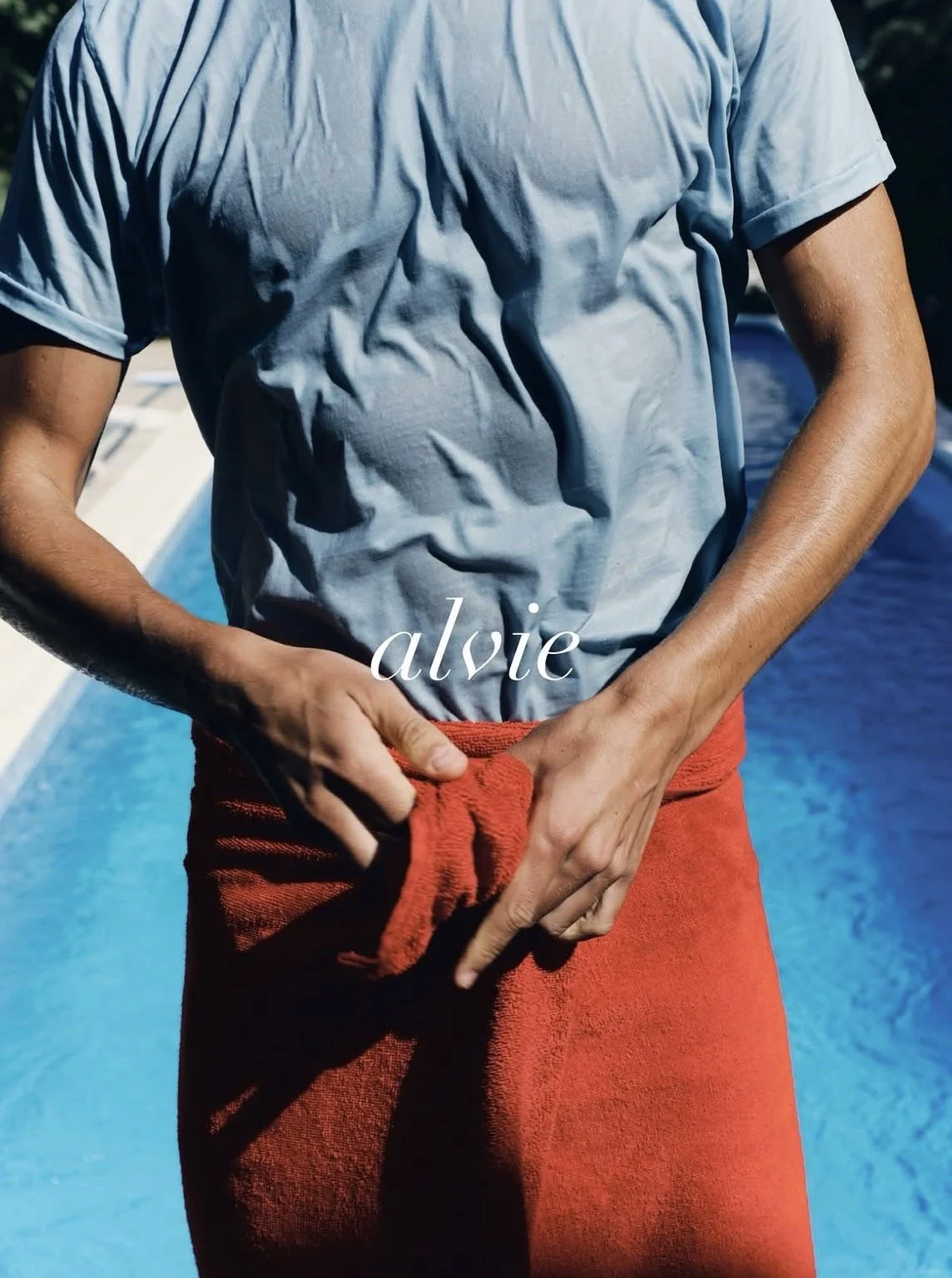
AE: I had an incredible childhood. I feel very grateful because I was lucky enough to really enjoy every moment. I’m from a small town in Cádiz. My grandmother lives in the countryside, so my childhood was closely tied to the beach, nature, and a pretty quiet lifestyle. I moved to Madrid six years ago and love living here, but when I took a trip surrounded by nature, I was reminded of that sense of tranquility. It made me think about how I lived as a child and also how I would like to live many years from now. It is that feeling of being able to breathe, of unplugging, and of not being in a rush. When I was little, I used to spend my weekends playing in the small square below my building. There were trees and bushes, and I would build a sort of house inside one of them. I would wake up without a care, have breakfast, go down to play, come back for lunch, draw, play Nintendo, and then go back outside. I would get my clothes dirty, and I didn't care. That is one of the images I most want to recapture: a child's favorite t-shirt covered in mud or water, and the absolute freedom of not worrying about it.
AR: You’ve also spoken openly about playing with Barbies and growing up surrounded mostly by female friends.
AE: Yes. I had a Nintendo, toys, Barbies, Playmobiles... I always surrounded myself with female friends and never really had many male friends. Playing with Barbies was a safe space for me. It was what I enjoyed, and my parents never treated it as a problem. To them, it was completely normal, as it should be. I never had any serious issues with the boys, but I didn't feel entirely comfortable. I’ve always been surrounded by women, some since I was three years old, and I feel deeply grateful for the people around me.
AR: One of the most visible symbols of the first campaign is the sheep. Where did that come from?
AE: The sheep came out of a trip to England. I was staying there, surrounded by nature, and one day I drew some sheep. It might look like just a photo or a drawing of animals, but for me, it holds so much meaning. It was one of those moments where I realized just how happy I was. Since then, that image has popped up everywhere. I have it painted, printed, on a label, on Instagram, and even as my wallpaper. I wouldn't say the sheep is officially a brand mascot. For now, it’s more of an aesthetic and emotional touchstone. It emerged spontaneously and ended up representing the sense of tranquility I want to convey. We’ve also used the drawing on a postcard so we can write handwritten messages. We want the garments to feature imperfect, personal, handmade details—the kind a child might create, or an adult who still holds onto that inner child.
AR: That handmade element also appears in the manifesto, the posters, and the way the images are altered.
AE: The three of us developed the manifesto together, building on the initial mood board Laura and I had created to pitch the project to Ariza. I love crafts, painting, and working hands-on with things. That’s why I also hand-lettered some of the words that appear on the posters. We didn’t want everything to look overly perfect or digital. Imperfection is also part of Alvie’s identity. We want the human touch to be visible, for the text to look like it was written with a pen, a crayon, or chalk.
AR: It’s like imagining a child’s pencil case, but translated into a brand’s universe. You use several typefaces in the visual identity. Is that a deliberate choice?
AE: Yes. We didn’t choose the typeface for convenience, but because we liked it and it fit the project. Alvie is like a child who is going to grow up. As the brand evolves, its image, assets, and communication style will change too. It will always keep that inner child, but it will mature over time. The typography is part of that specific moment. It appears in campaign images and will be on the website, but we don’t want to use it rigidly for absolutely everything. We want people to eventually see that lettering and automatically think of Alvie. But we also want to maintain the freedom to play with different writing styles and materials. A child’s mind isn’t stable or perfectly consistent; it’s full of ideas, colors, and diverse stimuli. That freedom allows us to experiment.
AR: At a time when so many young brands are emerging, how do you want to position Alvie within the Spanish fashion landscape?
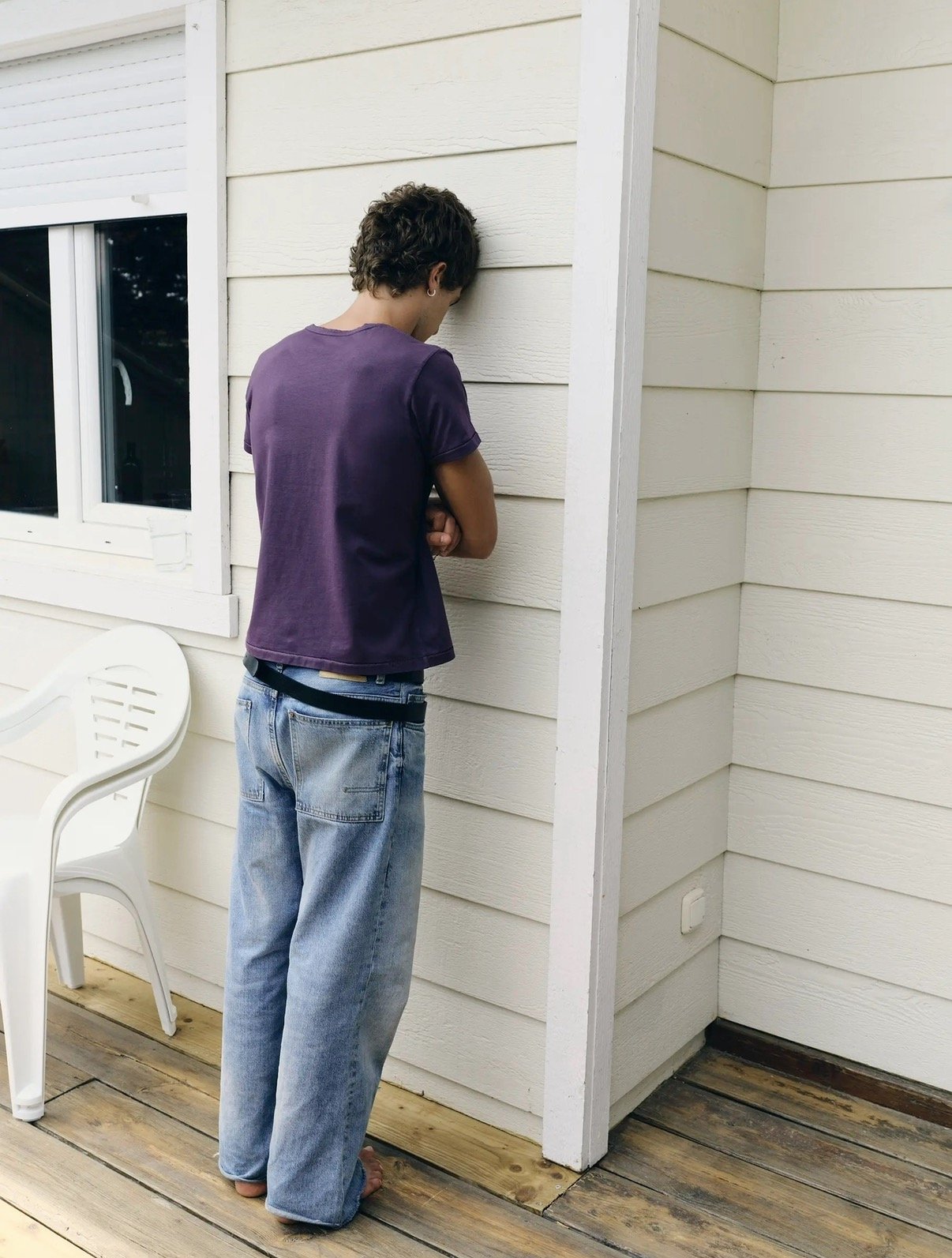
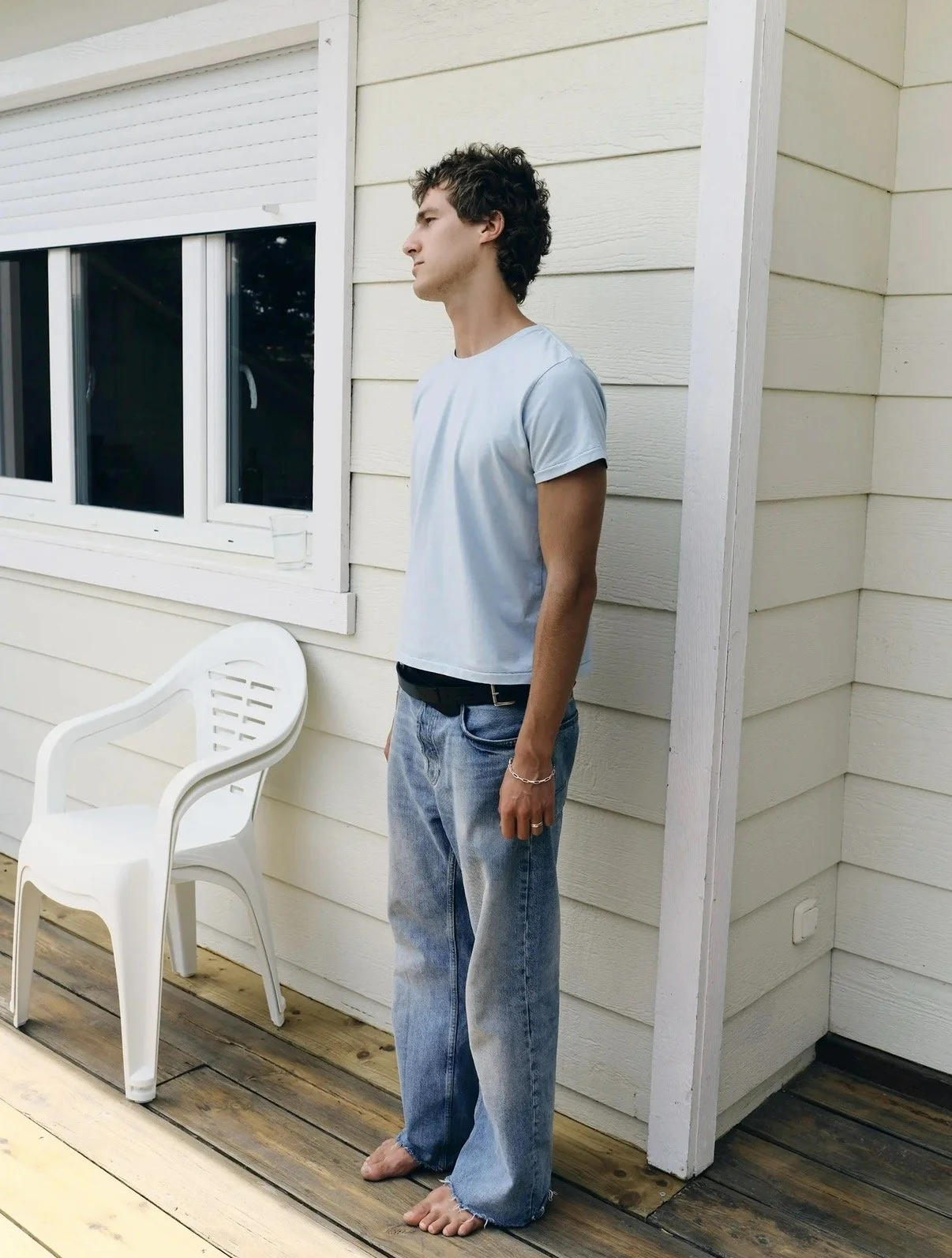
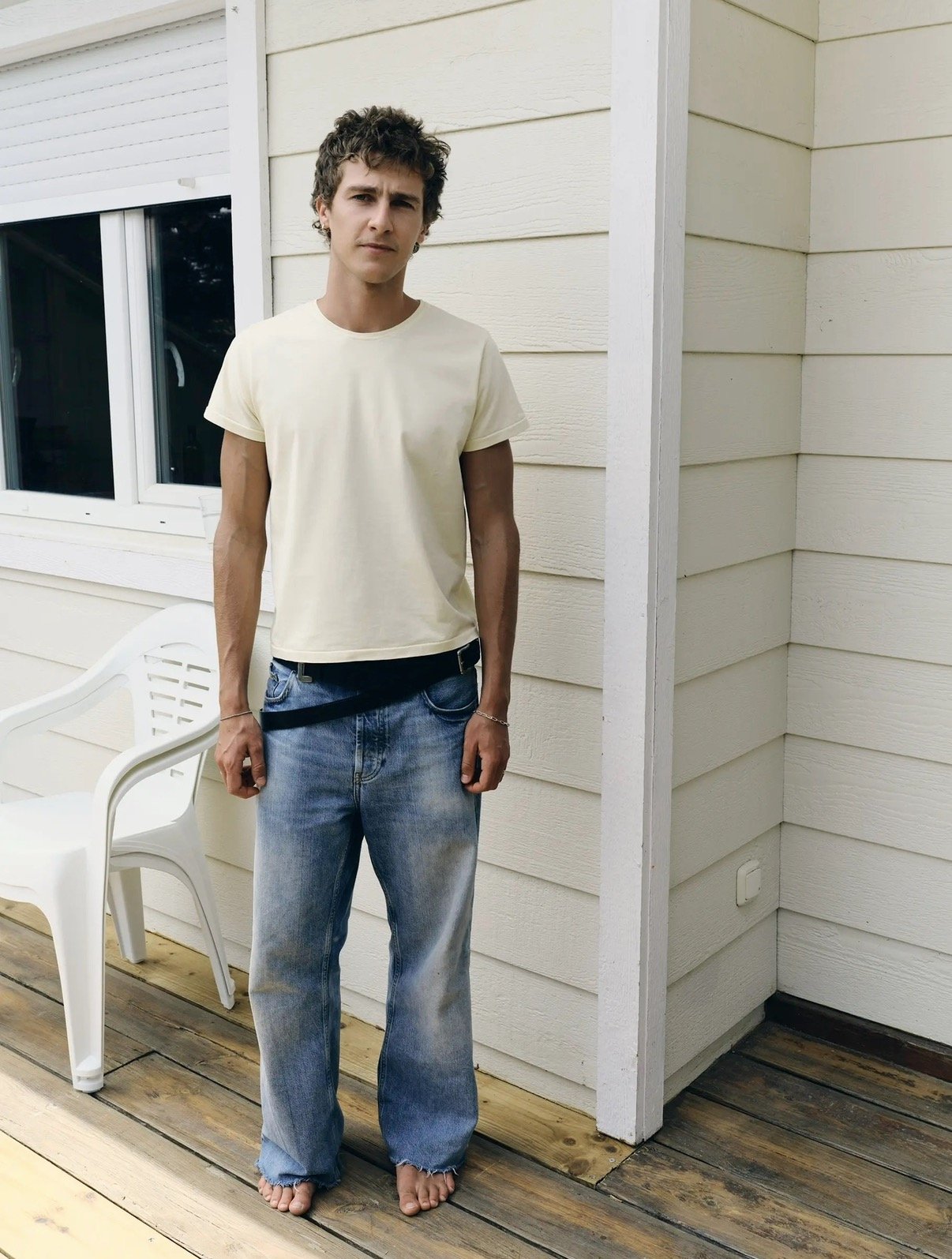
AE: I think what sets us apart is the way we build the product, starting from a place of memory. For the initial launch, I wanted to create the T-shirt I would have loved to own and wear every day as a kid. In fact, I feel like I actually had a similar shirt, and that feeling was the starting point. We didn't want to design a T-shirt just for the sake of it; we wanted to create a garment that conveys comfort, summer vibes, and memories. A piece you can get dirty or wet in, something you can really live in. On the surface, it looks like a basic tee, but to me, it’s the perfect T-shirt. The cut, the fabric, and the colors took a lot of testing to get right. People might not pick up on the emotional significance it holds for us, but I also think many are looking for exactly that: a great basic tee with a beautiful color and a cut that really works.
AR: What exactly does this first collection include?
AE: It’s an introductory collection, a "hello" to the world. It consists of a single T-shirt style available in three colors: sky blue, butter yellow, and an eggplant or purple shade I’ve been obsessed with lately. We’re also launching two double-strap belts, one black and one brown. I find the brown one particularly beautiful; it has a more refined, unexpected touch. We initially wanted to include some washed-finish trousers in very special colors. But after countless trials, we still haven't quite nailed the perfect pair, so we decided to hold off on them. We’d rather wait than launch something we aren't completely sold on. All in all, this first release consists of the three T-shirts and the two belts. We produced the absolute minimum quantity possible. Naturally, we hope to need restocks, but we want to start cautiously.
AR: Will you be working with "drops" or traditional collections?
AE: The plan is to work with collections. This first one serves as an introduction or a welcome, but we already have the next one ready to go. We also have several future photoshoots planned. We want our campaigns to tell a story, so that anyone following the brand from the start can watch that "kid" grow up. I think it’s wonderful that the community can witness the project’s evolution. Fashion allows you to change, experiment, and build new worlds every few months. Obviously, you have to be mindful of overproduction, but creatively, it’s important to accept that something you created six months ago might no longer represent you in the same way. Garments can be photographed again, reinterpreted, and featured in new stories. You shouldn't be afraid to revisit a product if you can tell a different story with it.
AR: Your campaign images don’t always show the product in an obvious way. Are you aiming to build a visual narrative rather than just doing conventional advertising?
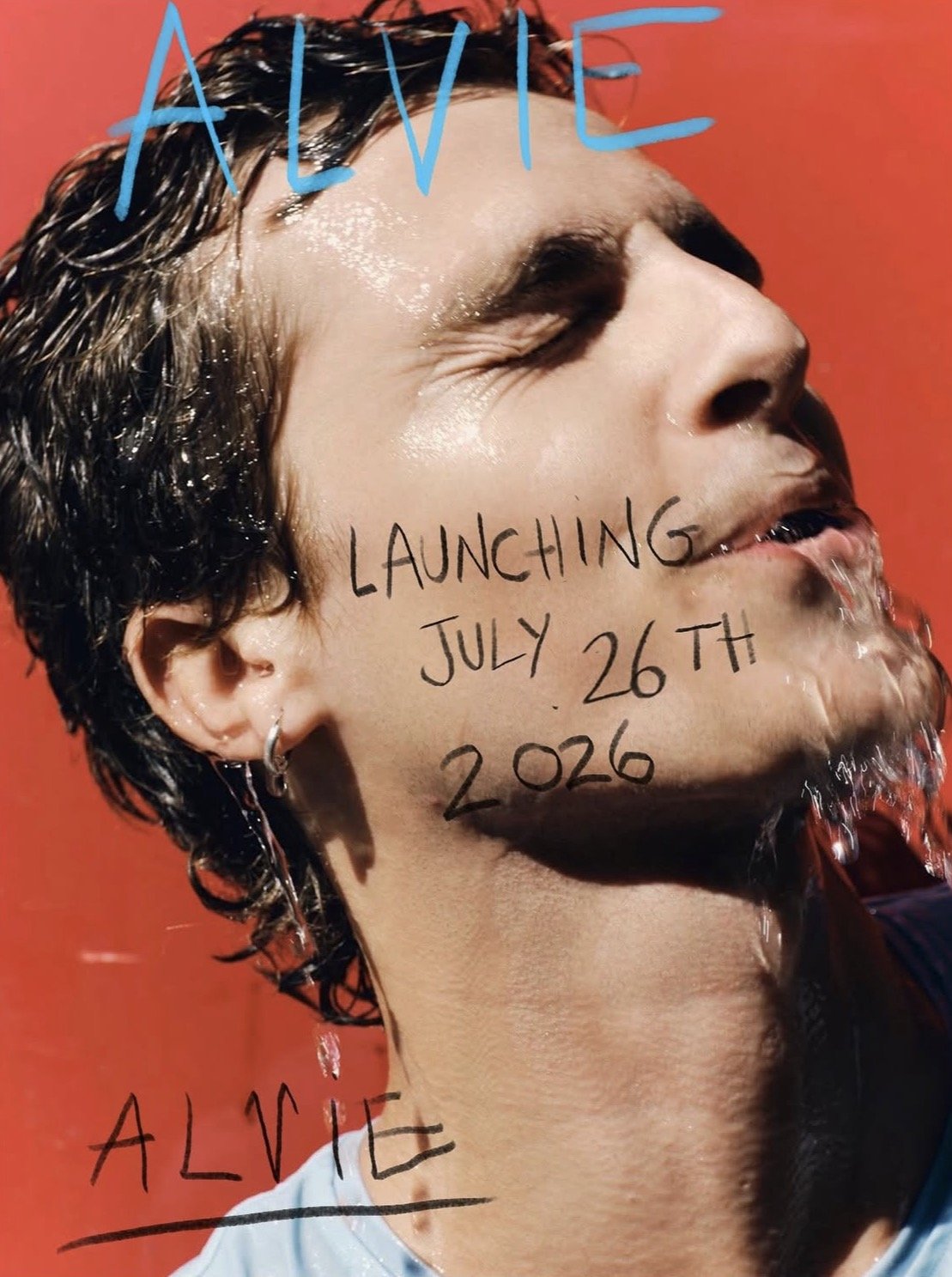
AE: Yes. We want to spark people's imaginations. For instance, one image shows Finn drinking water. The red background is actually part of a car, and the water is pouring from a bottle. We loved the result when we zoomed in on the photo. It also tied into the idea that it doesn’t matter if the T-shirt gets wet or dirty. It’s a garment meant to be lived in. Some people might wonder what that image has to do with the brand since the product is barely visible, but for us, it’s part of our identity, too. On social media, there’s a feeling that you always have to show exactly what you’re selling, but many brands build their world by sharing art, objects, or images that aren't ostensibly about the product. We know the photo shows someone drinking water, but someone else might look at it and imagine something entirely different. That openness is interesting, too.
AR: There’s a strong emphasis on color. What influences shape that visual direction?
AE: Lately, I’ve been really inspired by colors and color combinations. I love mixing red and blue, for example. On the poster announcing the drop, the name "Alvie" was originally written in black over one of the images, but I changed it to blue because I thought, "Alvie is a kid, so it needs to be colorful." I worked at Loewe, and that experience has clearly influenced me as well. I learned so much there, especially about craftsmanship and the importance it holds in Spain. I already liked Loewe, but working there has allowed me to better understand its visual language and the value of something as distinctive as the way it works with materials. Obviously, we have different visual references, but we aren't trying to copy any specific campaign. Many connections emerge unconsciously because they are part of the imagery we consume.
AR: Everyday life seems to be at the heart of the entire project.
AE: Yes. I really love those everyday moments. When you’re little, you wake up without a care in the world, have breakfast, go out to play, come home, draw, have an ice cream, or jump into a pool. They seem like ordinary actions, but as you grow up, they take on a whole new dimension. Alvie aims to bring those childhood moments to a young or adult audience. It’s not about dressing up like a kid, but rather reclaiming the ability to enjoy something simple. During the shoot, for instance, Finn and I ended up jumping into the pool for the final photos. The T-shirts look wet, and it works perfectly. That spontaneous moment ended up capturing the essence of the brand beautifully.
AR: Before creating Alvie, you studied acting. How did you go from there to founding a brand?
AE: At first, I was torn between studying design and acting. I ultimately chose acting, but in recent years, I started feeling uninspired. I felt like I wasn't fully committing myself, and I wasn't in the best place mentally, either. I decided to take a break, catch my breath, and spend more time with myself. I also needed to step out of my routine a bit. I think that distance is what helped me regain my inspiration and discover new ways of creating. I never would have imagined that everything happening this year could actually come to pass. I’m very happy now. Everything is new, but I feel like my ideas are much clearer.
AR: Would you say Alvie stems more from creating images and narratives than from designing garments?
AE: To a large extent, yes. I’m interested in building stories. Obviously, the clothing is fundamental, and we want the product to be well-made, but I’m not a designer. What I bring to the table is a vision, an emotion, and a whole universe. That’s why working with Laura and Ariza is so important. I might imagine a scene, a memory, or a feeling, but I need the team to turn it into a campaign, an identity, and a garment. Alvie doesn't want to limit itself to just manufacturing objects. We want to create images that people remember and that, over time, can spark a sense of nostalgia.
AR: Throughout this process, you’ve also had to face the fear of what others might think.
AE: Yes. I’ve always been a fairly insecure person. At first, I worried a lot about what people would say. Comments from friends didn’t always help, either, because I didn’t always get the reaction I was hoping for. But that has also allowed me to grow and learn to see things differently. I’ve realized I can’t build a project based constantly on what others expect. Surrounding myself with friends, having Finn in my life, and meeting new people has really helped me value myself more. It’s the first product we’ve launched, so it’s natural to feel some fear. But you also have to remember that the project is yours. If you truly believe in the idea, you have to keep going.
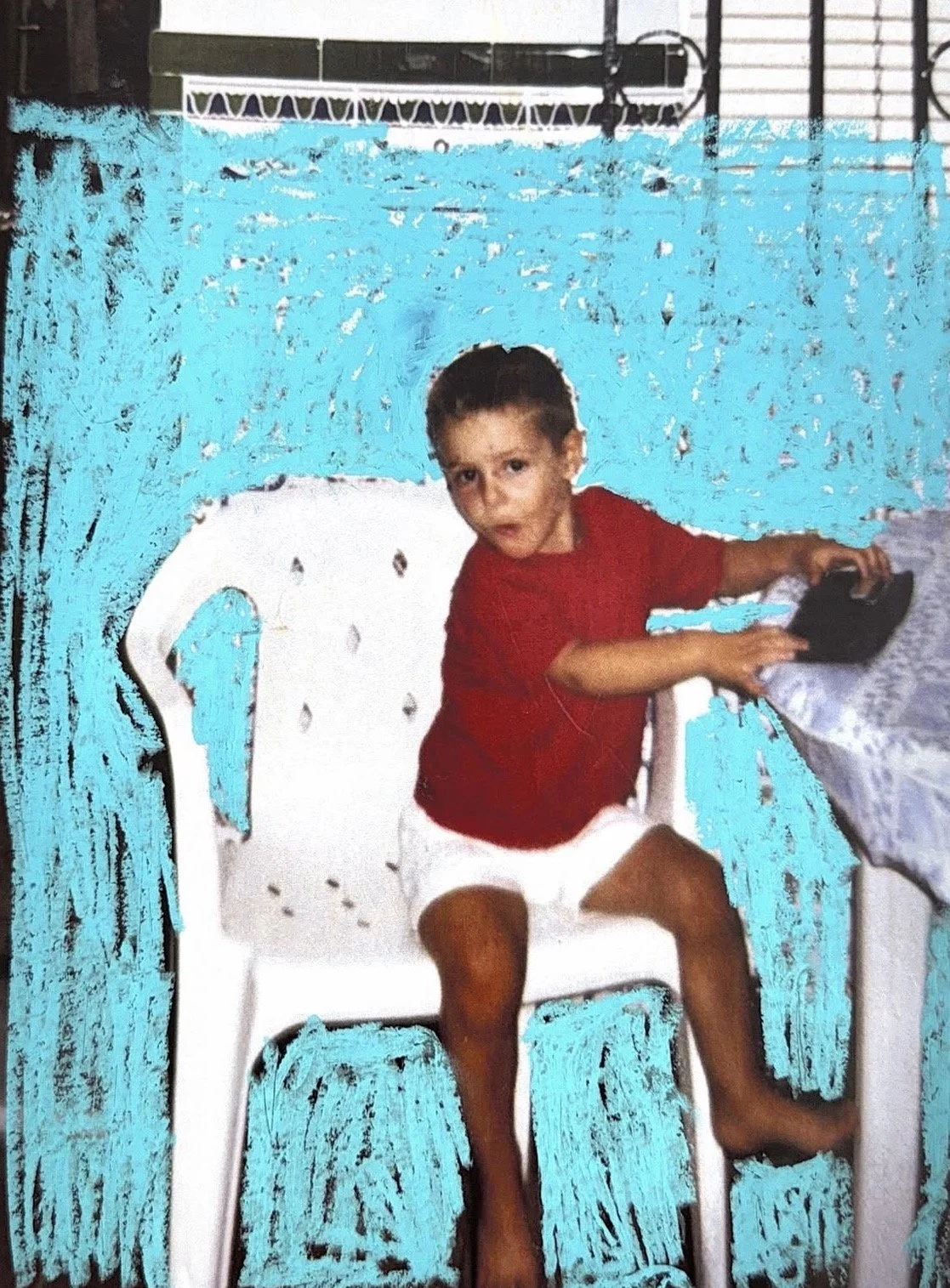
AR: What would you say to the Álvaro in those childhood photos?
AE: I’d never really thought about that question. When we’re little, we don’t think much about what our future selves might say to us. We live in the moment and don’t have so many expectations. I think I’d tell him to keep living that way, enjoying every moment. I don’t like focusing too much on the future or dwelling on regrets about things I’ve done. What I love most about life is the unexpected, things that just happen. Two or three years ago, I was much more worried about my future and wasn't in a great place. Now, I feel like I have a much clearer vision. I think that young Álvaro would be very proud of me.
AR: What can we expect from the next chapter of Alvie?
AE: Alvie’s playground will evolve with each collection. The next collection is already well underway, though I can’t reveal too much just yet. If I had to define it in one word, I’d say "imagination." Or maybe "fantasy world." Alvie starts by talking about real memories, but it also wants to share imagination with the world. I’m really excited to show the brand’s next visual direction, even more so than showing the actual garments.
AR: To wrap things up, what do you want someone to feel when they enter Alvie’s universe?
AE: I want them to feel happiness, a sense of connection, and freedom. I’d like them to recall something from their childhood, even if that memory has nothing to do with mine. I want them to think of an afternoon spent playing, a wet T-shirt, an imperfect drawing, or a moment of happiness when they weren't glued to their phone. I also want Alvie to create new memories. Nostalgia doesn’t have to look only to the past; we can build experiences that, years from now, we’ll look back on with that same fondness. Ultimately, that’s what Alvie is all about: rediscovering the child within, letting that child grow alongside us, and never letting it fade away.
Questions by @alraco43