
LA BOLA NEGRA BY LOS JAVIS (SSIF’26): BENEATH THE FIELDS OF SPAIN MANY LOVE STORIES REMAIN BURIED
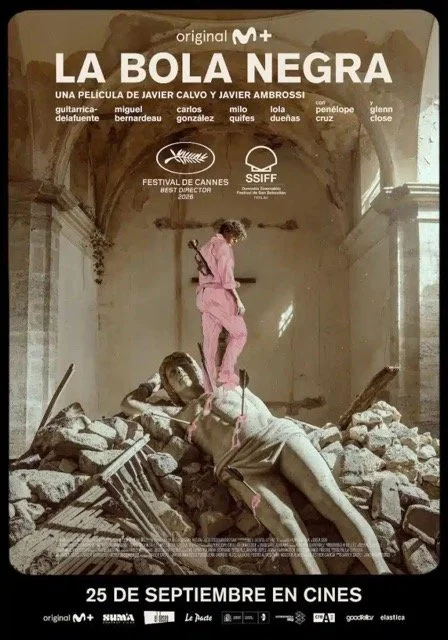
Some stories are not meant to be remembered quietly. They return through images, through bodies, through desire, and sometimes through cinema. La bola negra, directed by Javier Calvo and Javier Ambrossi, does precisely that: it takes the unfinished work of Federico García Lorca and turns its absence into a living story. Across 1932, 1937 and 2017, three men are connected by desire, repression, memory and everything history tried to erase. The film is not simply about Lorca. It is about what happens to the people who come after him when the things they are forbidden to say become part of their inheritance.
What makes the film immediately striking is its aesthetic. Every frame feels composed rather than simply captured. The production design, costumes, lighting and cinematography create a world that feels simultaneously historical and dreamlike, maintaining the baroque visual ambition already associated with the Javis. The result is a film that looks almost impossibly beautiful.
And then there are the performances. Álvaro Lafuente brings an extraordinary fragility to Sebastián, while Milo Quifes gives the first story a particular elegance and vulnerability. Miguel Bernardeau carries the weight of Rafael with a quieter intensity, allowing emotion to exist in the spaces between words. Lola Dueñas is magnetic in every scene she inhabits, bringing warmth and strangeness to a world that could easily become overly solemn. And then there is Penélope Cruz: glamorous, almost untouchable, yet completely integrated into the film's theatrical universe. Her presence feels like an apparition, brief, immaculate and impossible to ignore. The cast is one of the film's greatest strengths because nobody seems interested in simply "playing" an idea. They give these characters bodies, contradictions and desire.
The music deserves its own paragraph. Raül Refree's score does not merely accompany the images; it seems to haunt them. It gives the film an almost physical emotionality, moving between tenderness, foreboding and grief. And Álvaro Lafuente's "La Nieve", inspired by Lorca's final letter to Rafael Rodríguez Rapún and by Sebastián, extends that relationship between music, memory and desire beyond the film itself.
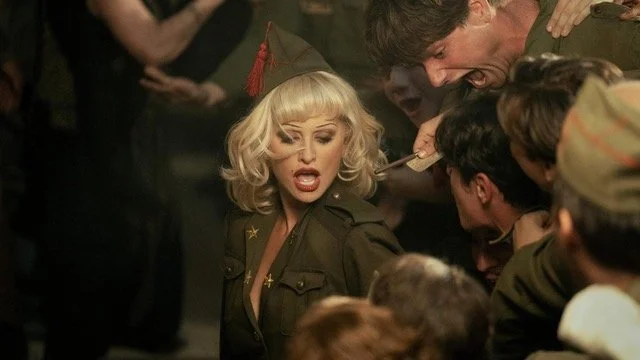
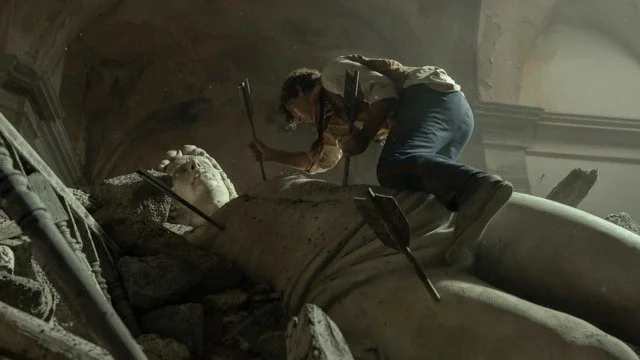
The most powerful section, for me, is the one that brings Lorca's La bola negra onto the screen. Lorca only left a handful of pages of the unfinished work, beginning with a young man rejected from a Granada casino through the symbolic vote of a black ball. The film takes that fragment and imagines the life that could have existed beyond those pages. It is one of the most beautiful depictions of the Spanish Civil War I have seen, not because it makes war beautiful, but because it finds beauty in the human beings caught inside it.
There is, however, one element that feels less convincing. The 2017 storyline breaks quite sharply from the immaculate visual language established by the earlier periods. Its contemporary aesthetic feels more recognizable, more digital and less carefully constructed, and that contrast can make the transition feel almost like entering another film. The decision is understandable, especially because the story is deliberately moving between different historical realities, but visually it weakens some of the extraordinary coherence created by the first two chapters.
Still, La bola negra understands something fundamental about Lorca: his work survives because it refuses to belong entirely to the past. His poems continue to be quoted by politicians, activists and public figures precisely because their language still gives form to things that are difficult to say. In 2026, Pedro Sánchez invoked Lorca's memory and his verses in commemorating the 90th anniversary of his assassination, while only days ago New York mayor Zohran Mamdani quoted ‘Canción del jinete’ while speaking about fascism, isolation and the possibility of a better world.
That is perhaps what makes the film feel so relevant. Like poetry, it understands that memory is not a museum. It is something that moves between bodies. Something inherited. Something that can hurt, but can also connect us.
Words by @alejandracaas