
MADDY STREET SPEAKS ABOUT THEIR CAREER AT ROCK EN SEINE 2026
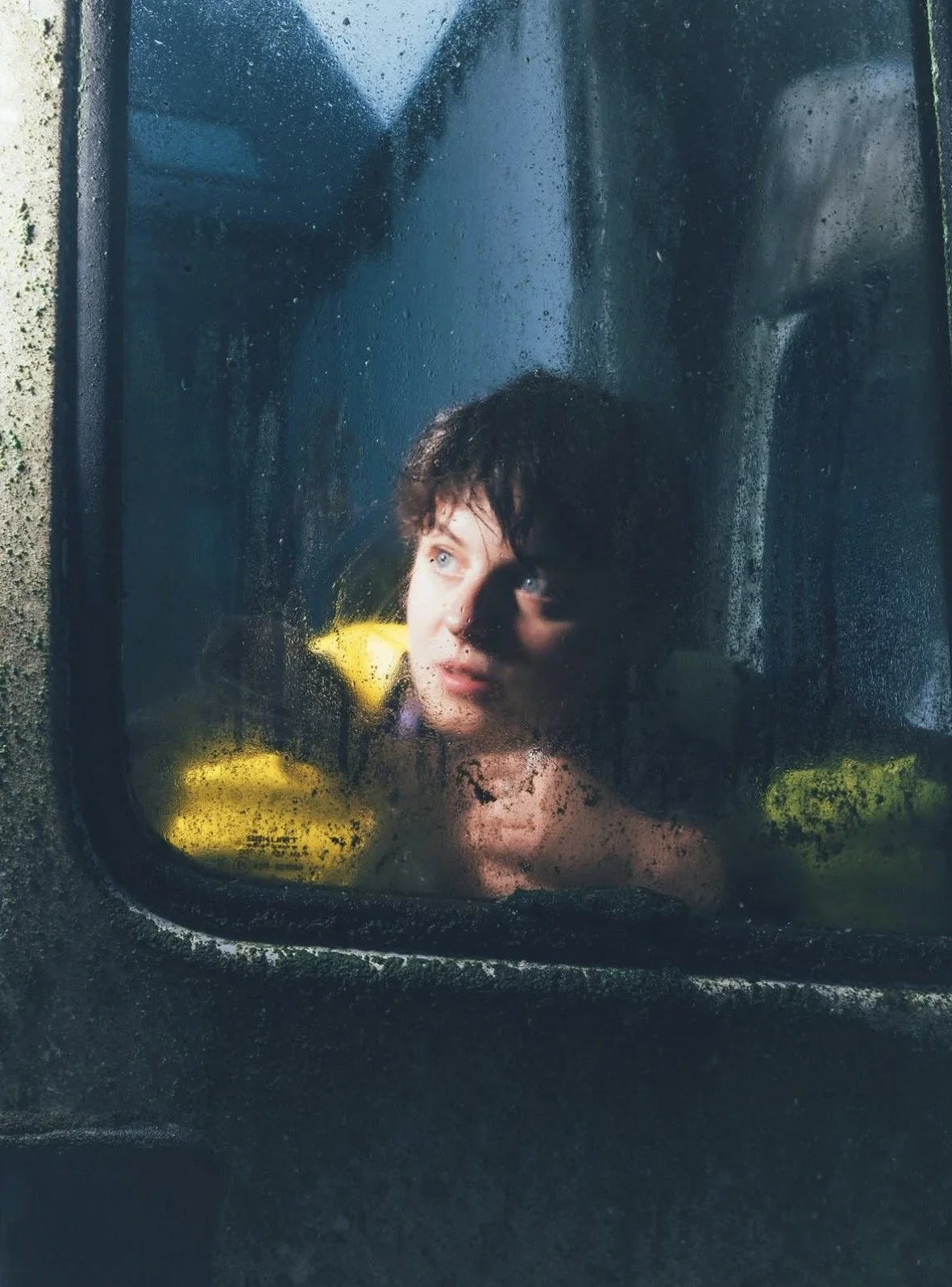
Maddy Street refuses to fit neatly into a single genre or identity. Moving restlessly between house, punk, electronic music, rock and pop, the self-produced artist turns that refusal into the foundation of a project built around instinct, vulnerability and unapologetic self-expression. Music has also become a tool for understanding their own identity: from coming out as queer and non-binary through “British Boy?” to reconnecting with the rural landscape where they grew up, Street’s work increasingly blurs the boundaries between artistic persona and personal history. Following their appearance at Rock en Seine, Maddy Street speaks about authenticity in an increasingly polished and AI-driven industry, growing up far from the big city, fashion as an extension of performance, and why the next chapter means going back to their roots.
Álvaro Ramos: How would you introduce Maddy Street to someone who has never listened to you before and is just discovering your work?
Maddy Street: Maddy Street is music for hyperactive ADHD queer people who love house music, punk, electronic music, rock and pop. People who love everything and want to find all of that in one place — and who like to jump a lot onstage. That’s what Maddy Street is.
ÁR: There’s a strong sense of identity and self-expression throughout your music. Has making music helped you understand yourself, or does the music usually come after you’ve already figured things out?
MS: That’s a great question. I think it depends on the period of my life. But when it came to coming out as someone who is queer and non-binary, I did it through music. I wrote an entire EP called “Baby Boy”, and that’s how I came out to most people, my parents and everyone else. That was how I did it. So sometimes music definitely helps. It can be a tool for getting through those things and understanding yourself.
ÁR: Do you think there’s still pressure on artists to create a very clear, marketable version of themselves? How do you deal with that through social media and the way you present yourself publicly?
MS: There’s definitely pressure, especially when it comes to musical style. The fact that I explore so many different styles makes it harder for some people because you can’t describe what I do in just two words. It doesn’t fit neatly into one thing. But I think the social media content that works best for me is when I’m genuinely having fun with what I’m doing. When I make videos and create stuff that feels fun and entertaining, it doesn’t feel difficult or forced. That’s what works for me.
ÁR: Tell me about your songwriting process. How does a Maddy Street song usually begin?
MS: Most of the time, it starts in my notes app. It can happen at any time of the day, anywhere. I’ll suddenly have an idea and just start writing it down. Then I get into the studio and develop it from there. I produce myself, so I can take that initial idea and start building the whole song around it.
ÁR: Looking through your catalogue, I noticed a shift in your visual identity. There was a period where yellow was very present, whereas your more recent imagery feels more natural, rural and almost vintage. Where does that change come from?
MS: Because that’s where I’m from. That’s my home. That’s where I grew up. I grew up in the middle of nowhere, in the countryside, and I think people who come from places like that don’t get represented very often. I grew up around farms and fields. That was my environment. This time, I wanted to showcase that more. I wanted to show that people who make the kind of music I make don’t necessarily all come from big cities or subcultures that exist within those cities. Some of us come from the middle of nowhere too.
ÁR: Why do you think people connect with your music?
MS: I think it’s because I’m very straight to the point. I’m rough around the edges. We’re living in a world where anyone can make music with AI, and everything can feel so easy and polished. I don’t want to say boring, but sometimes it can become boring. So when somebody shows a little bit of truth, a little bit of emotion and something that feels genuinely real, which is what I try to do, I think people connect with that. They want that. Someone like Billie Eilish is a great example. She can be incredibly raw, in a great way. I love her so much. I think people are looking for that kind of thing. They want real human emotion when someone is singing about something.
ÁR: How connected are you to the clothes you wear? Do you see fashion as another way of expressing yourself as an artist?
MS: I really like clothes. Right now, I’m working with a really cool creative called MCW, who created all the outfits for this show. She uses recycled fabrics, and we worked on the colour palette together. I also really like flames, so I have flames on my legs today. Fire has always been a symbol that I like having around me. I really enjoy working with outfits in that way. And I’m happy that my stage clothes are slowly becoming my everyday clothes. I’ll wear this all day. That’s where it’s going.
ÁR: What can we expect from you in the future? Looking at the direction of your recent singles and their artwork, it feels like you might be moving towards something more introspective.
MS: Absolutely. I’m definitely going back to my roots. I don’t know exactly when I’m going to release it, maybe in a year or two, but it’s going to be much more introspective. I want to do more than that too. I want to make a short film in the countryside where I grew up. That world is definitely going to become a bigger part of what I do.
ÁR: What does playing Rock en Seine mean for your career?
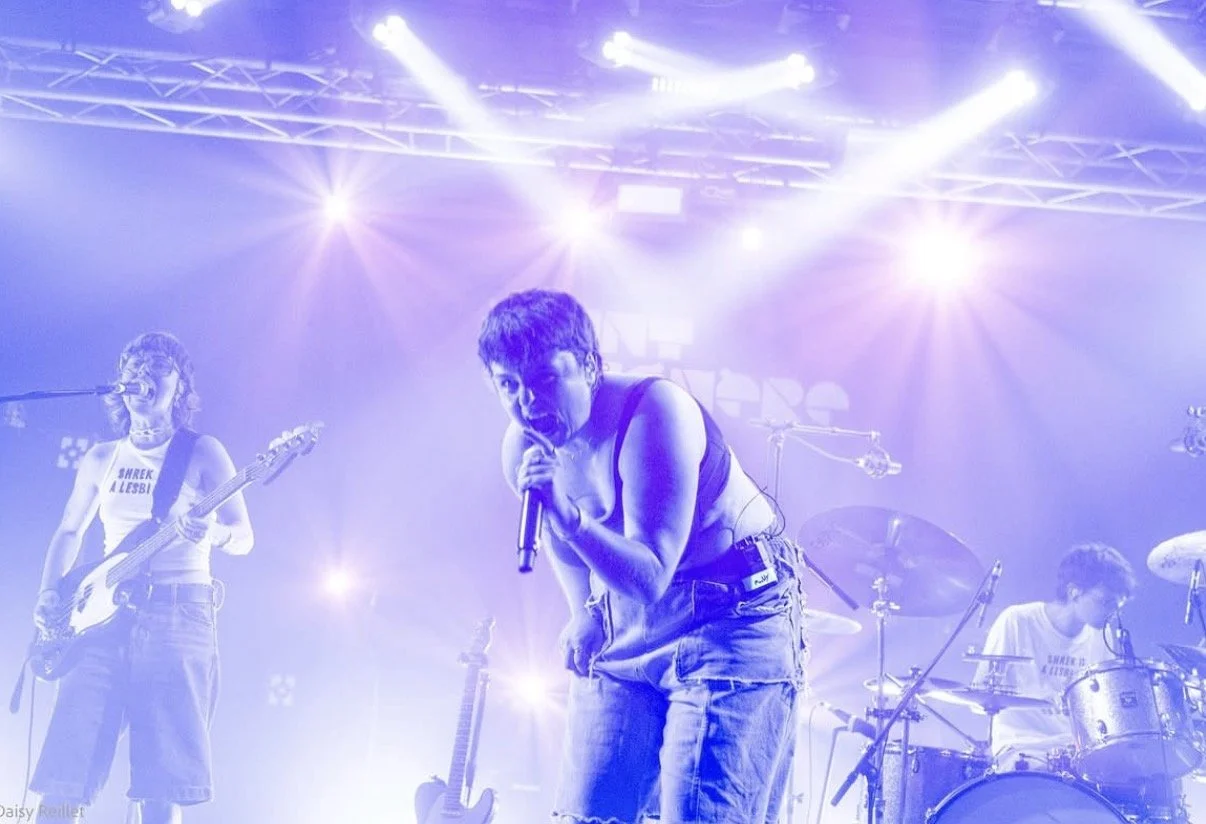
MS: It’s massive for my career. It was an emotional moment when I found out I’d been selected. Playing in front of such a big crowd at such an iconic festival, alongside names and people that I absolutely love, is crazy. To think that I’m here doing this today is kind of unbelievable. I think it’s a big step for me and a great place to be at this point in my career.
ÁR: How do you approach building a setlist before a show or a tour?
MS: It changes a lot depending on how the shows go. We’ll play something and think, “Okay, that was the reaction to that song,” and then change things accordingly. So the set is constantly evolving. I also make remixes of my own songs specifically for the stage, so there are always things changing. And I like adding something unexpected. We didn’t do it today, but usually I’ll put one or two songs into the set that people might not know, so they get to discover something new as well.
ÁR: Finally, what would you say to a new generation of queer artists who want to put their music, paintings or any other form of art out into the world?
MS: Do it without thinking first about what the people around you are going to say. And understand that everything takes much longer than you think. You might see an “emerging” artist suddenly playing all these gigs and think, “Oh, they must have been doing this for a year or two.” No. They’ve probably been doing this shit for ten years, people just didn’t know who they were before. It takes much longer than you imagine. But I think the more authentic you are, the better. If you keep going and you genuinely love what you do, just do it. Just fucking do it.
Questions by @alraco43