
MAGI MERLIN SPEAKS ABOUT POWER HOUSE AT ROCK EN SEINE 2026
Magi Merlin doesn’t seem particularly interested in fitting into a genre or, for that matter, any kind of predetermined box. Her music moves freely between sounds and references, while the visual universe surrounding it feels just as considered: clothes, hair, makeup, photography and physical objects all become extensions of the songs themselves. For her, being an artist means building a world. But that world doesn’t need to be overly polished or calculated. Quite the opposite: there’s an instinctive quality to the way she approaches both music and imagery, an attraction to things that feel tangible, human and alive. Ahead of her performance, the artist sat down with us to talk about personal style, pop stardom, sexuality, victim blaming, making art in the age of AI and why young musicians should start by looking at the community around them.
Álvaro Ramos: For someone discovering you for the first time, how would you introduce yourself?
Magi Merlin: My name is Magi Merlin. I’m a musician and I make music that I like to call “broken R&B.” Basically, it can be anything and everything you want it to be. It’s everything and nothing at the same time. There’s no box, and that’s what makes it fun. Outside of music, I love skateboarding and I love clothes.
Álvaro: Talking about clothes, how important is it for an artist to be involved in developing their own style? Do you prefer doing it yourself or trusting a stylist?
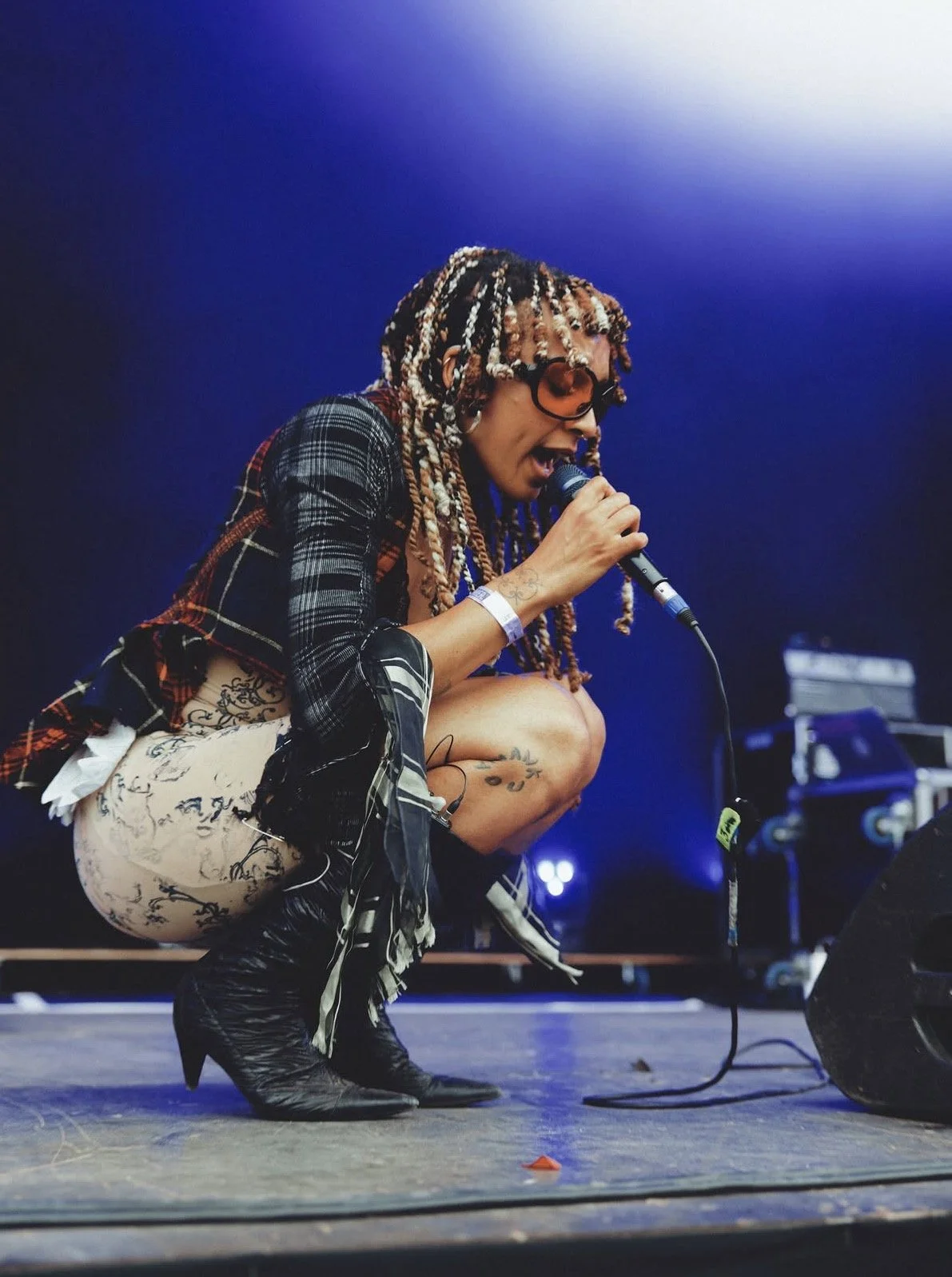
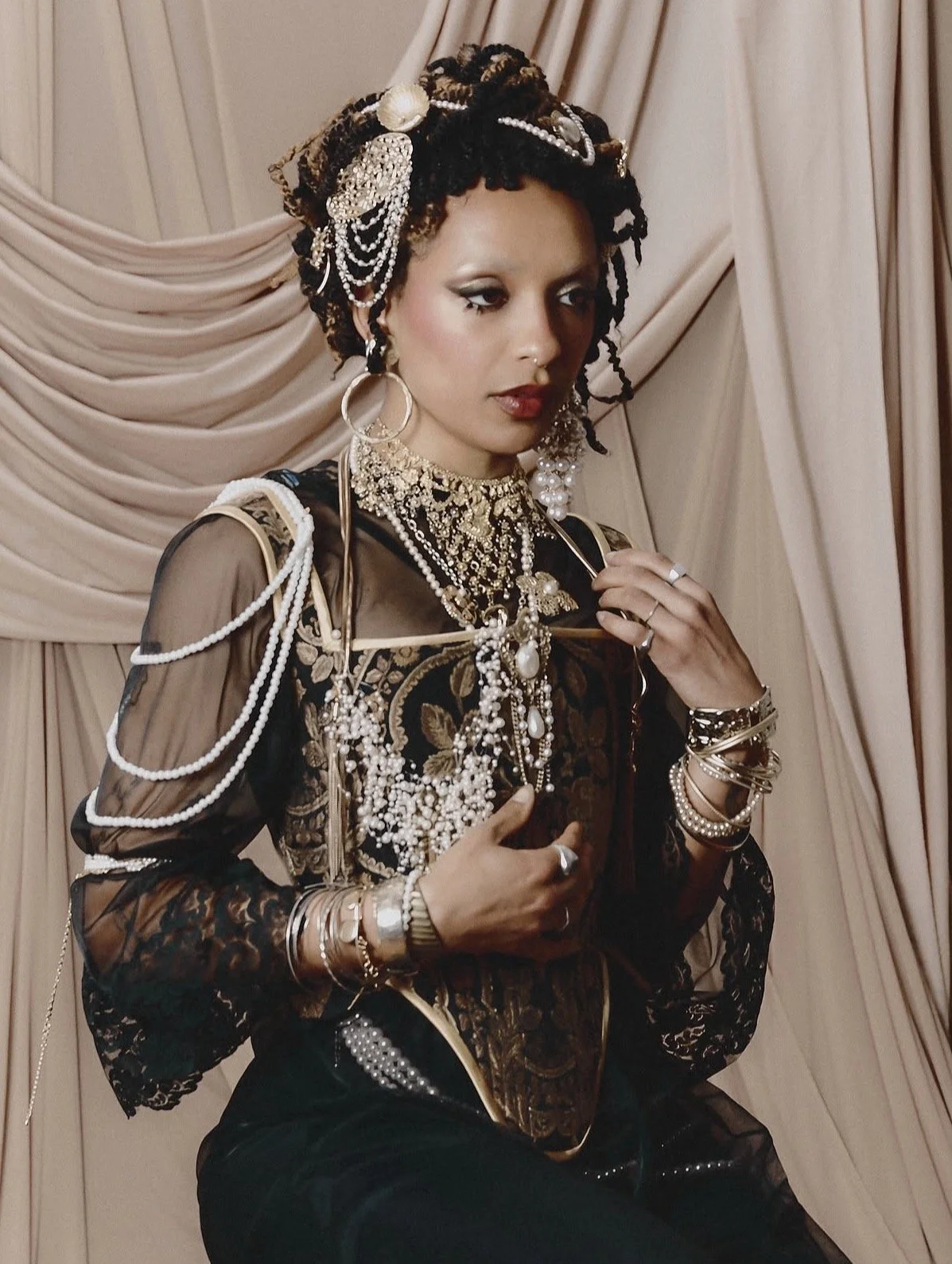
Magi: Technically speaking, I’m my own stylist. That’s not to say I wouldn’t want to work with a stylist, because I love working and collaborating with other artists. For me, clothing is really important, especially on stage. It represents what the music looks like. And that includes everything: clothes, hair, makeup… I don’t think every artist necessarily needs to be super involved in that side of things. Some people are naturally less interested in it. But I do think what you wear says something. It’s another way of speaking.
Álvaro: Your visual identity has felt very strong from the beginning. When did you start thinking of yourself as an artistic director of your own project?
Magi: I think I started calling myself an artistic director while I was working on the record. I was making the moodboards, finding the team and putting everything together, and at some point I was like, “Okay, I think this is actually what I’m doing.” The visual side was really, really fun. It was something I genuinely enjoyed putting my time into. I spent maybe a year and a half, or even a little longer, thinking about what this record was going to be. We worked with a lot of really cool people and businesses across the board to make the videos, clothing, makeup, hair; everything. It was amazing to make the music, get it to a point where it felt finished and strong, and then build all of the visuals around it.
Álvaro: How did you approach the difference between the album cover, the single artworks and the lettering?
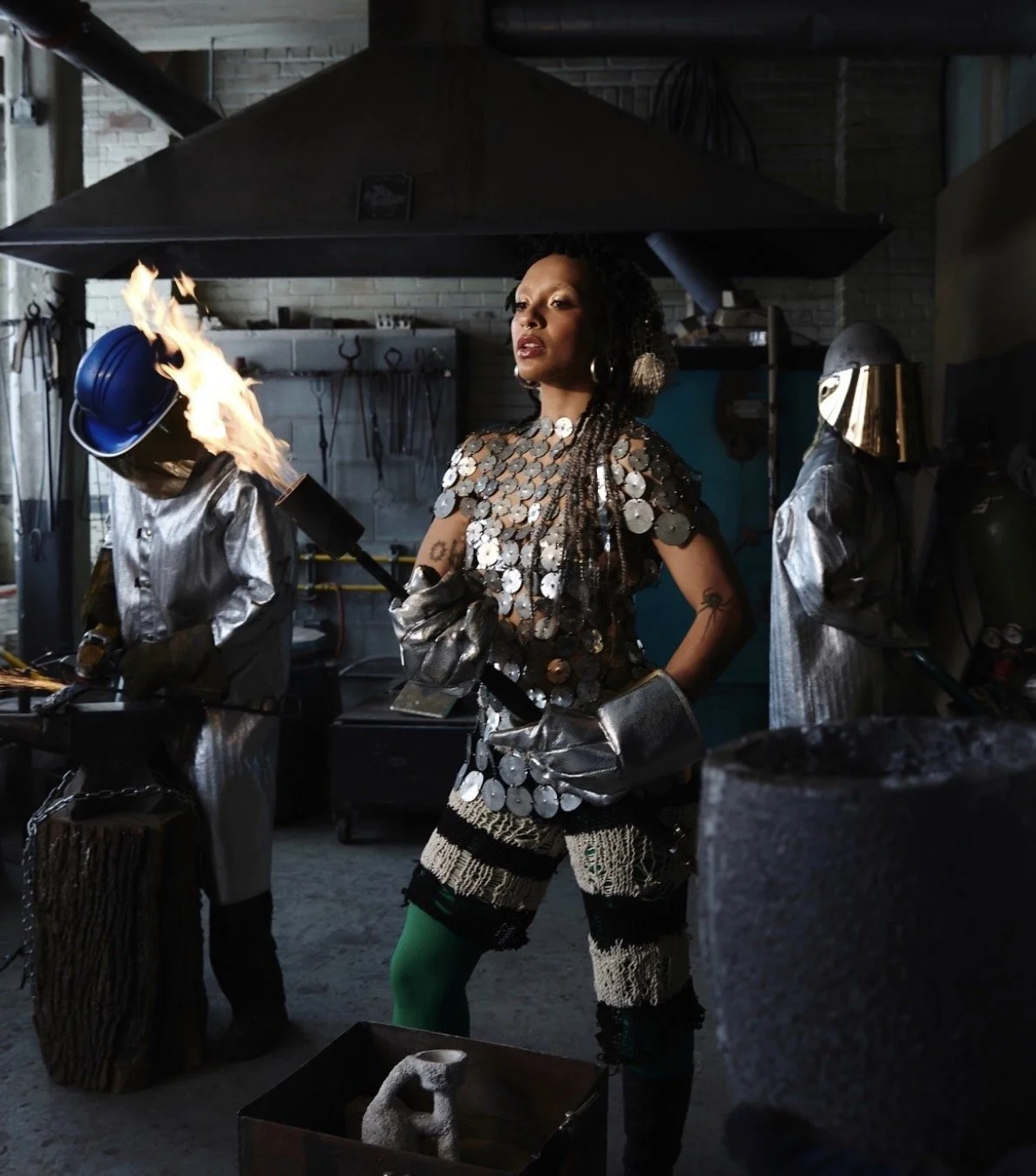
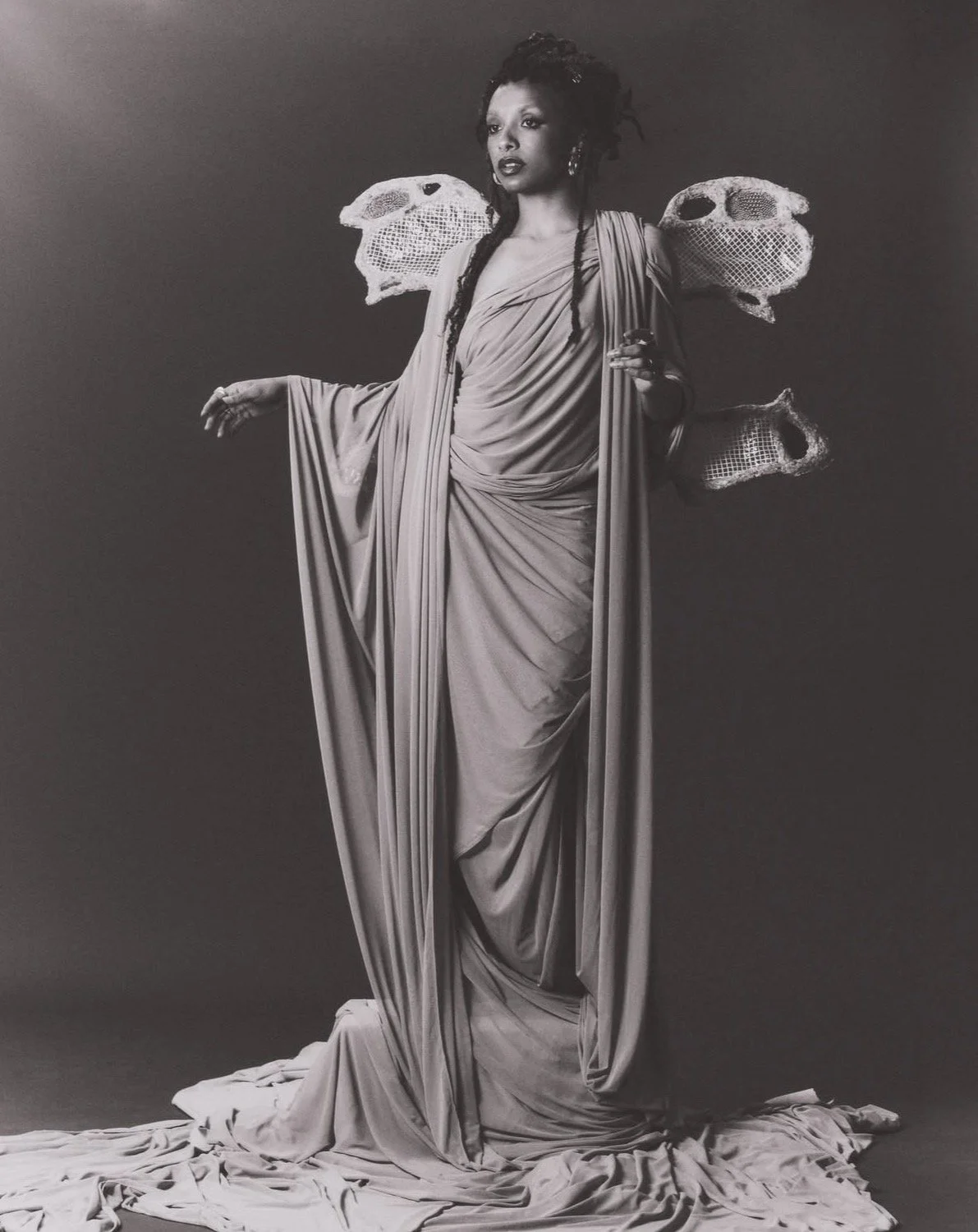
Magi: For the single artwork, I wanted everything to exist in real life and to be photographed on camera. There’s something really special to me about knowing that there’s an actual object behind an image; something you could touch, bring home or wear. For one of the singles, for example, there’s a bag with my face on it. We actually made that bag. There were wings that I wore that one of my friends made out of paper. I love things like that. For the album artwork, it became a whole process in itself. We went to this metal workshop to shoot it. I really wanted everything to feel physical and real. When it comes to the lettering, it’s much more intuitive. Sometimes I just feel like, “It should look like that.” I’m sure there’s a deeper meaning somewhere, but for me it’s more about exclamation. It’s about speaking loudly.
Álvaro: You talk about pop stars. What is a pop star to you?
Magi: I think a pop star is somebody who is very loud, not necessarily all the time, but definitely on stage. Somebody who can stand there, fully in their body and in their power. Ideally, for me, a pop star is also somebody who uses their access for good intentions and to benefit other people. That can mean writing songs that help people feel seen in the world, or saying things into the microphone when you’re onstage. I think all of that counts.
Álvaro: Last weekend I was at an urban music festival in Spain and asked a heterosexual male artist how he felt about talking openly about sex in his songs. He told me the biggest obstacle was knowing that his mother is his biggest fan and would hear everything. How do you feel about being open about sex and sexuality in your own music?
Magi: I feel pretty open about it. But that’s actually a great point because sometimes you do think, “Oh, my grandmother is going to hear this,” or, “My mom is going to see that.” I feel like I can get away with just warning them: “Hey, by the way, you’re going to hear me say this,” or, “You’re going to see me like this.” Once I’ve said it, everyone is on the same page and I feel more comfortable. When it comes to sex, I feel pretty empowered by my sexuality. I don’t feel too shy about it, and I feel lucky to be able to say that.
Álvaro: In one of your songs you talk about high school. Do you think we still divide and categorise people as adults in the same way we did when we were teenagers?
Magi: Yeah. I think the first thing is that we don’t have to be so divided. We can all just be here and communicate with one another. We don’t necessarily have to get along, but we can figure out some common ground. I feel like people can be very quick to say, “No, I don’t talk to people who do this,” or, “I don’t associate with people like that.” That’s something a lot of people probably experienced in high school, where everybody was separated and there was no need to understand anyone else’s point of view. It was just, “This is my lane.” But we’re growing up. It’s time to open up as we grow.
Álvaro: Another song I really love is “EAT!ME!OUT!”. The opening creates this immediate image of seeing someone from across a space. What were you thinking about when you wrote it?
Magi: I was imagining city lights at night. You’re dressed up, you’re feeling super confident, you’re feeling yourself. I really wanted to establish that tone. But there’s also another idea in the song. Everyone is breaking their neck to look at her and then, somehow, that becomes her fault. She looks great, but suddenly she’s responsible for the fact that you’re the one looking at her. Maybe it’s not her fault. She can look beautiful without being blamed or hurt because of it. I was thinking about victim blaming and the way people talk about women: “What was she wearing?” Maybe she was wearing a short skirt or whatever, but that has nothing to do with anything. Women are assaulted regardless of what they’re wearing. It should never be part of the question.
Álvaro: Your music also has a very tangible, instrumental quality, and you perform with a band. How important is that to you in a world increasingly dominated by AI and synthetic sounds?
Magi: I’m really not into AI, and I think a lot of artists would agree with that.
There’s something fantastic about having people involved in creating the art that we consume. It’s the same thing I was talking about with the covers and the physical objects. There’s something really cool about knowing that people made it.
It’s exciting to see people playing instruments and engaging with the world around them. There’s something incredibly human about it.
I love playing with a band. The more people I can have onstage with me, the happier I am. Brass, strings, anything; I get super excited about being able to showcase that and experience it myself.
Álvaro: How do you imagine your live performance? What are we about to see?
Magi: I think it’s going to be really fun because I’m not going to take it too seriously. That’s when I have the most fun: when I’m not putting too much pressure on myself and I feel like I can just be exactly what I want to be. I can scream, I can do whatever I need to do. It’s also the most fun to watch somebody completely let go. So I think that’s what I’m going to do: let go.
Álvaro: What are some of your references, whether musical, visual or otherwise?
Magi: There are so many. I’ve been watching a lot more movies lately, and film has become a big source of inspiration. But also nature. Just being here, looking around you, everything can be inspiring. Musically, I love Hiatus Kaiyote. Frank Ocean is such an incredible writer. There are so many musicians and people coming out right now who are just amazing.
Álvaro: Finally, what would you say to a new generation trying to pursue a career in music?
Magi: Make art with your friends. Really cultivate the community around you. Look at what’s going on in your city and show up to events. Have fun and never forget where you come from, babe.
Questions by @alraco43