
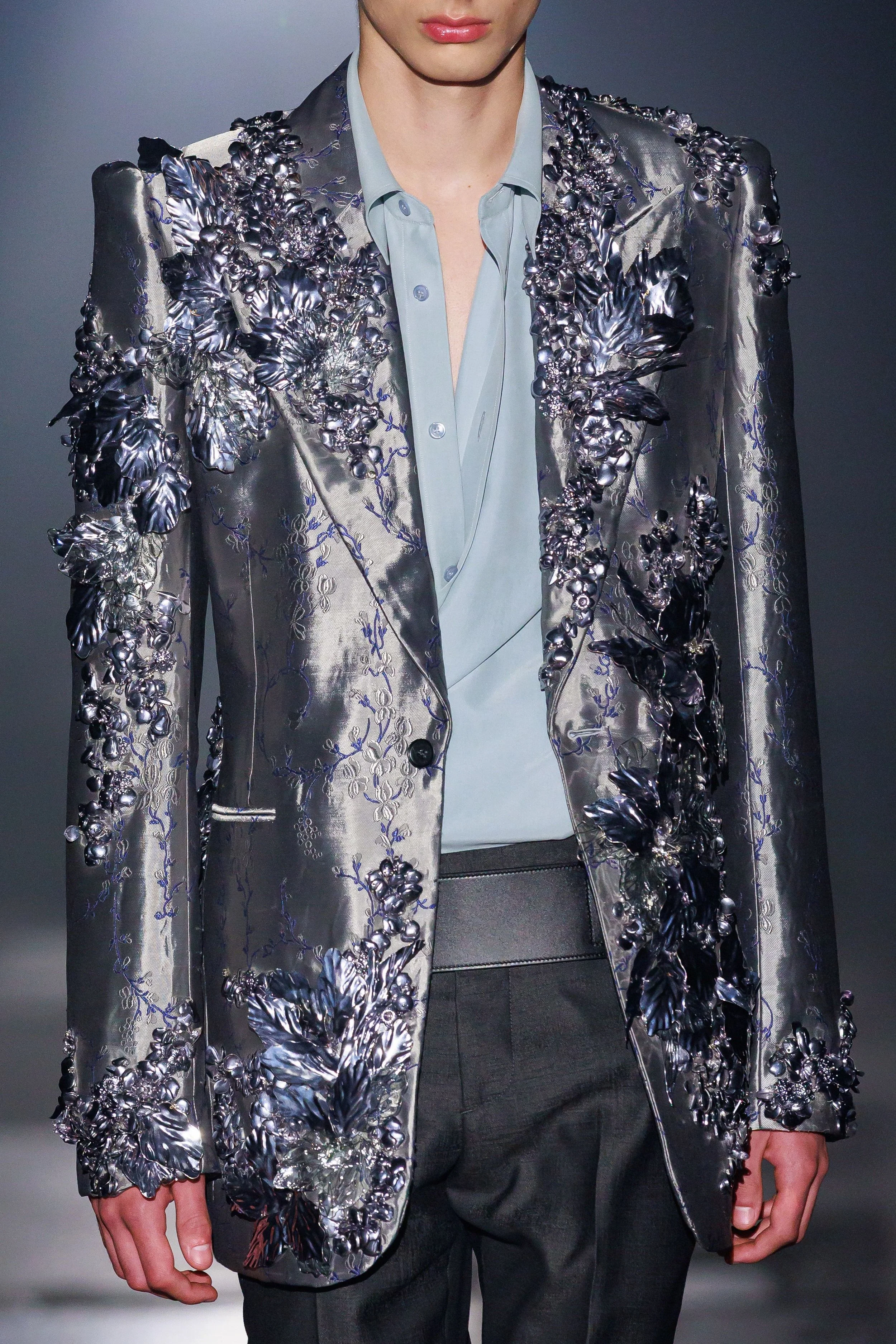
Suits with different silhouettes, sheer fabrics and metallic details. Alexander McQueen’s new collection certainly does not go unnoticed. Seán McGirr returns to the brand’s London roots with a collection that combines tailoring, transparency and elements inspired by the city of London.
McQueen’s Spring/Summer 2027 collection marks the brand’s return to London Fashion Week, where it had not presented an official runway show since 2001. For creative director Seán McGirr, this city is more than simply the place where the brand was born; it is also a source of inspiration. After so many years of presenting its collections in Paris, returning to London represents a major opportunity to reconnect with the brand’s origins and its audience.
The collection celebrates London’s personality and rebellious spirit. Seán McGirr draws inspiration from both the city’s architecture and religious art, as well as the lights of its nightlife and parties. Through this approach, he manages to combine two worlds that may seem opposite: elegance and urban style, together with something more daring and rebellious.
According to ELLE magazine, the show took place at Lincoln’s Inn Chapel, a historic venue in London that provided a unique atmosphere for the presentation (Velasco, 2026). The choice of location perfectly complemented the ideas behind the collection, which combined historical references with elements connected to urban culture and London nightlife. The ancient architecture contrasted with the fabrics, metallic accessories and more daring designs. In this way, the venue was not simply the place where the collection was presented, but also helped communicate its central idea of contrast.
Suits are one of the most important elements of this collection, as McGirr uses traditional British tailoring while experimenting with shapes and cuts to give the garments a different appearance, moving away from the more conventional style we are used to seeing. The jackets and trousers do not always follow the same lines, but instead feature different silhouettes. British tailoring has always been recognised for its precision in cutting and its meticulous attention to detail. However, in this collection, it is not used solely to create classic and formal garments. Instead, the designer introduces new ideas to demonstrate that a suit can also be different, have its own personality and adapt to different lifestyles, professional environments and personal tastes.
Another aspect that stands out in the collection is the selection of fabrics. There are many fluid, lightweight and transparent materials, such as tulle and organza, which are combined with stronger materials, such as leather. Shiny fabrics, including satin, are also used to bring light to some of the designs. Among the garments presented on the runway were sheer dresses, jackets with blurred prints and dresses decorated with silver leaves that moved as the models walked. The sheer fabrics add a delicate and lightweight touch to the collection. In contrast, the leather and metallic details create a much stronger effect. This combination allows the garments to have different styles while still belonging to the same overall vision. There are also floral elements, either in prints or in the form of raised, textured embellishments. These details add more colour and movement to the looks and contrast with other, darker garments.
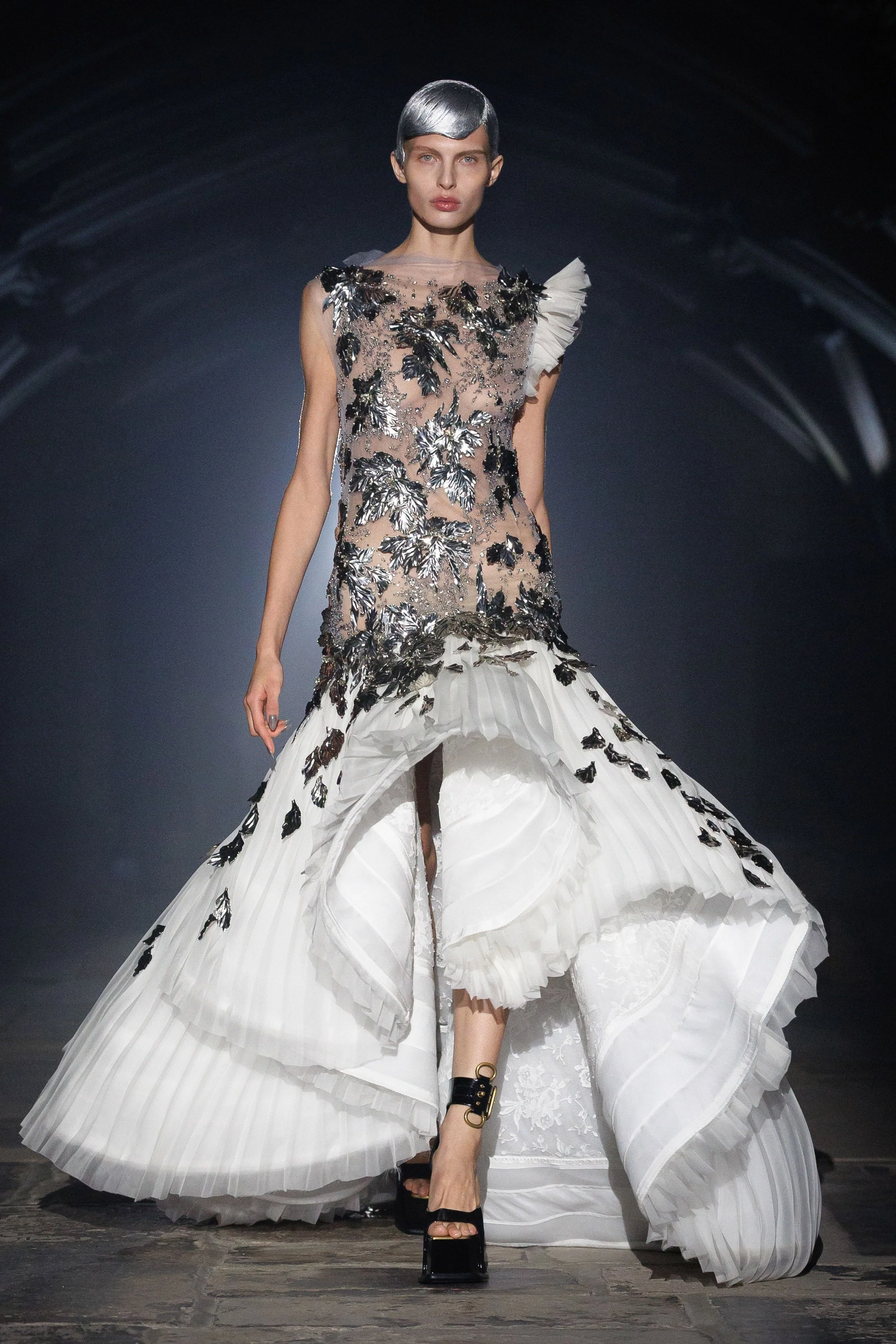
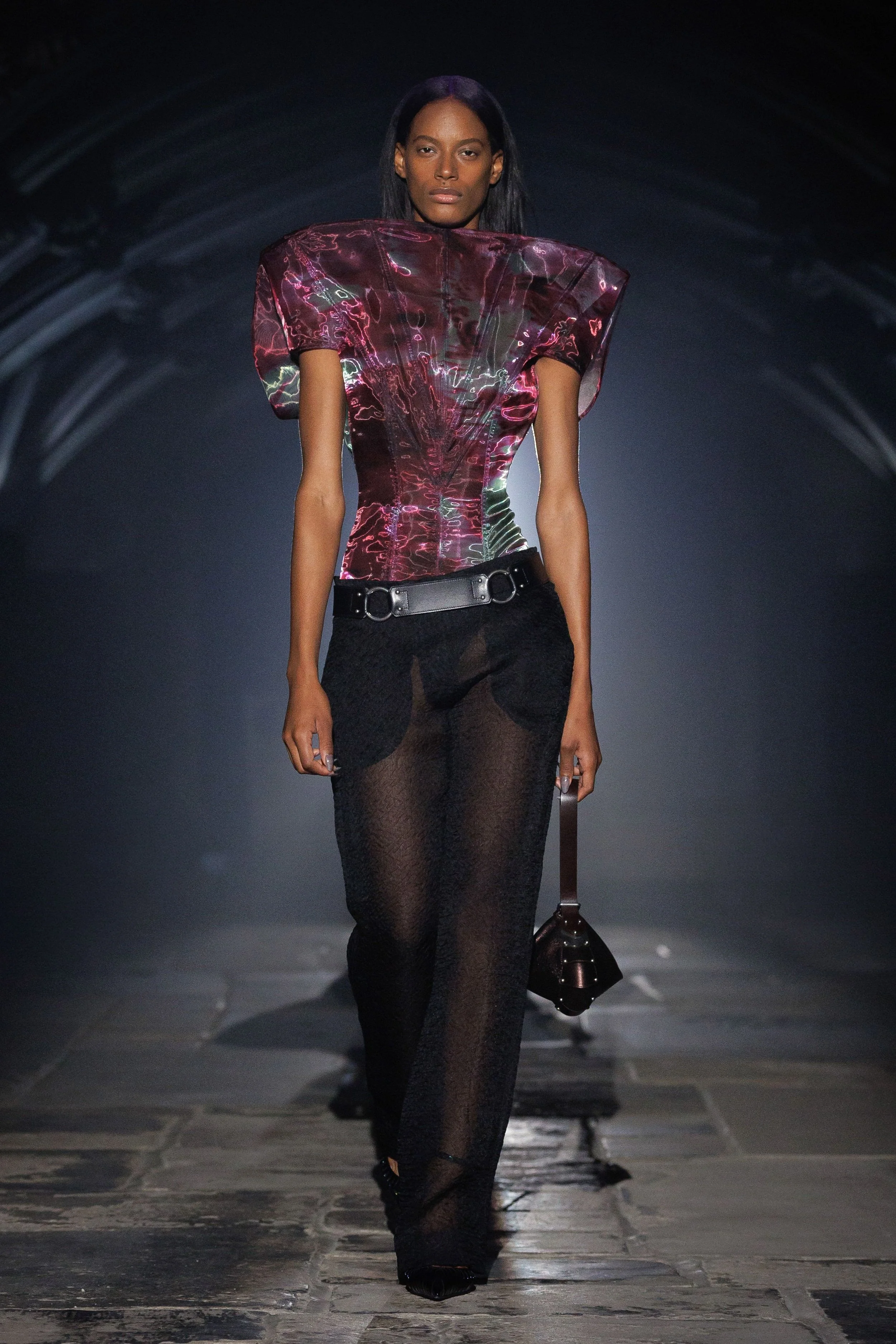
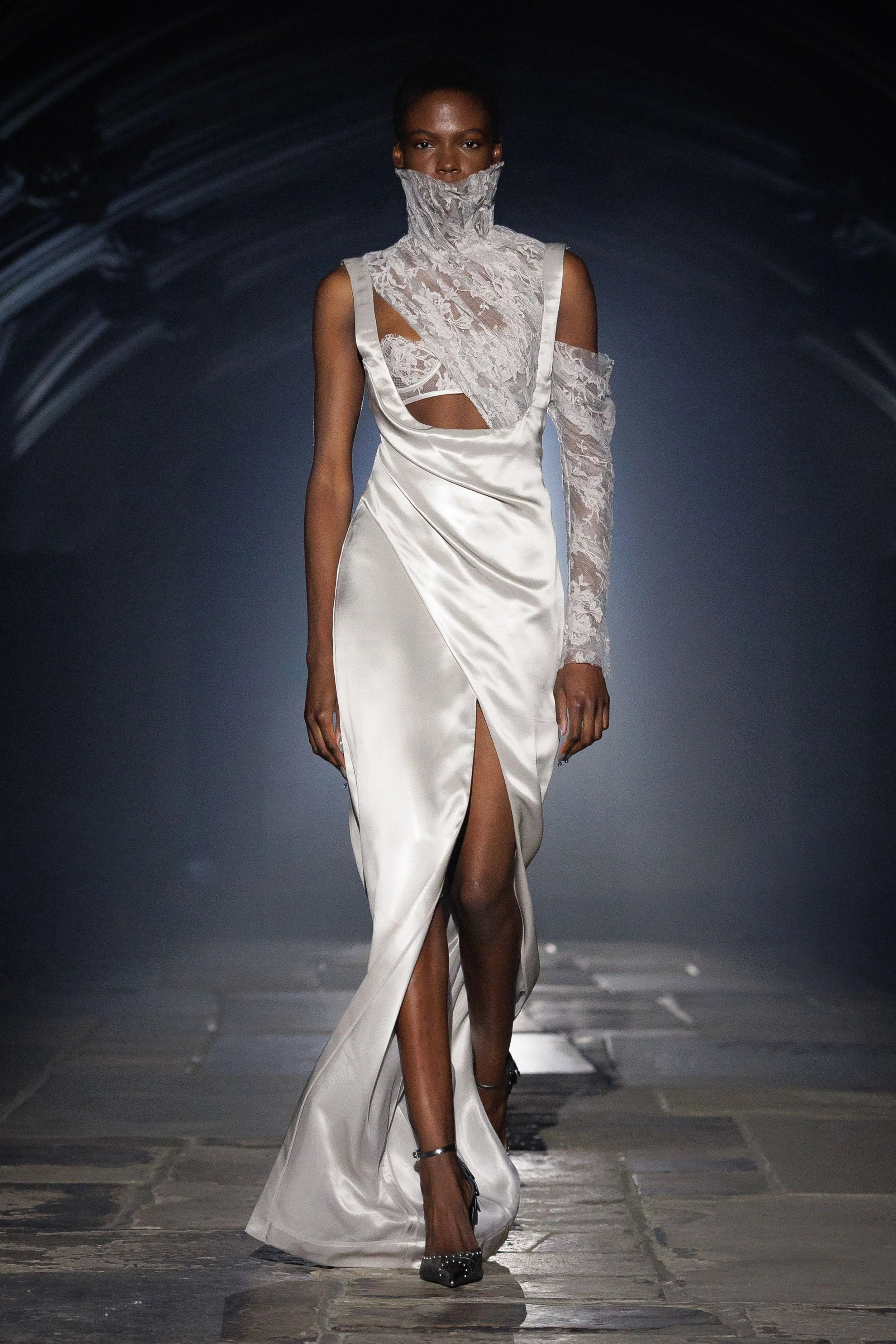
The combination of materials is particularly important in this collection because it helps communicate its main idea: bringing together elements that appear to be opposites.
One of the most interesting ideas behind the collection is its inspiration from religious art and London’s rave culture. Although these two worlds are quite different, Seán McGirr brings them together through the concept of opposites, using elements that combine the calmness of the daytime with the energy of the night.
Religious art inspires some of the shapes and colours used throughout the collection. References to angels, for example, can be seen in certain garment shapes, silhouettes and details. On the other hand, rave culture is more closely associated with electronic music parties, colourful lights everywhere and a freer way of expressing oneself through clothing. These elements are reflected in some of the collection’s colours, such as pink reflections on the garments and silver-toned hair. They are also present through shiny fabrics, metallic accessories and the models’ makeup. The collection brings together the celestial and the urban, combining religious references with the colours of nighttime parties.
Accessories play a very important role in this collection. For this collection, creative director McGirr once again collaborated with Shaun Leane, a well-known jewellery designer who has a long-standing relationship with the McQueen brand. Leane has worked with the fashion house in the past, and his designs are often recognised for their use of metal and their distinctive shapes. His involvement in this collection helps connect this new chapter of McQueen with part of its history.
The accessories include metallic pieces worn over the garments, creating a contrast with the lighter fabrics. One of the looks worn by Karen Elson, one of the supermodels featured in the show, included a harness made entirely from recycled silver and designed by Leane specifically for the runway.
These accessories add much more strength to the looks and give some of the garments a bolder appearance. They mainly include harnesses, chokers, belts and similar pieces. These accessories highlight the importance of details and craftsmanship within the collection. They also strongly recall McQueen’s identity, as the brand has always been characterised by incorporating unusual elements and highly original details.
Makeup and hairstyles are always key elements in bringing a creative concept to life, and they were therefore essential in completing Seán McGirr’s vision.
Some models wore their hair styled upwards into sharp, pointed shapes, almost resembling horns or something similar. This gave the looks a much bolder appearance and reflected the rebellious side of London that had already been mentioned. This styling contrasted with the more elegant suits and garments inspired by religious art.
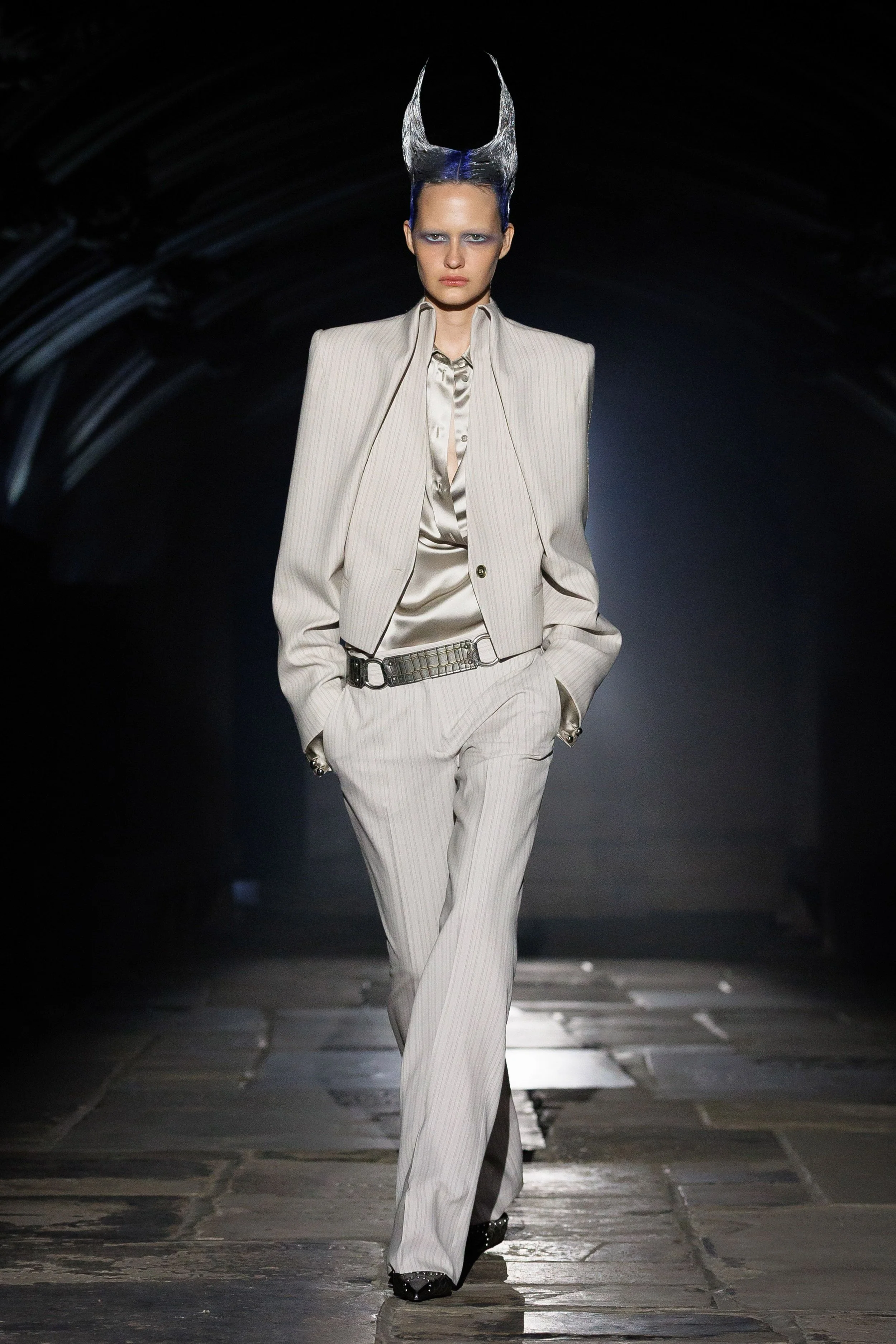
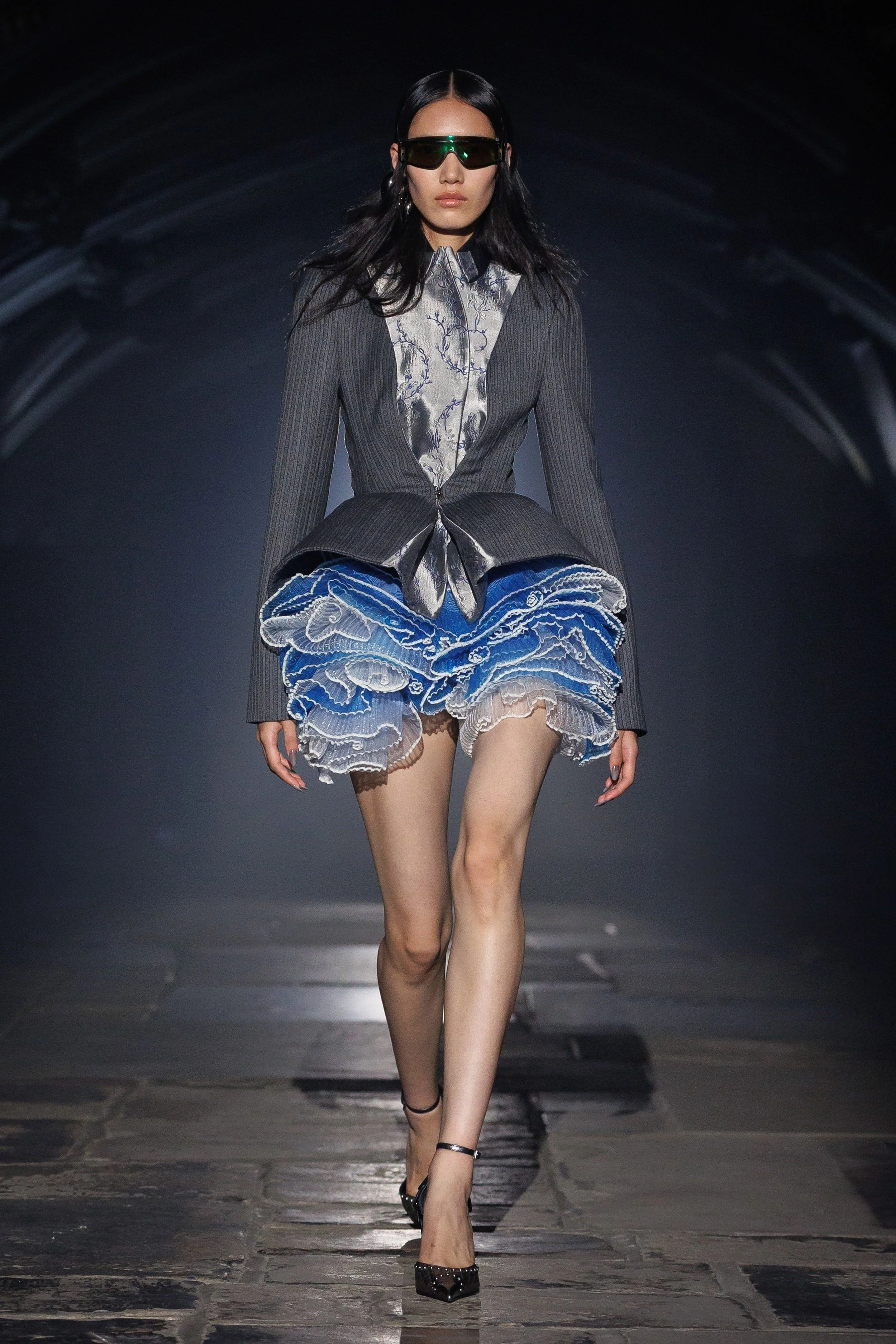
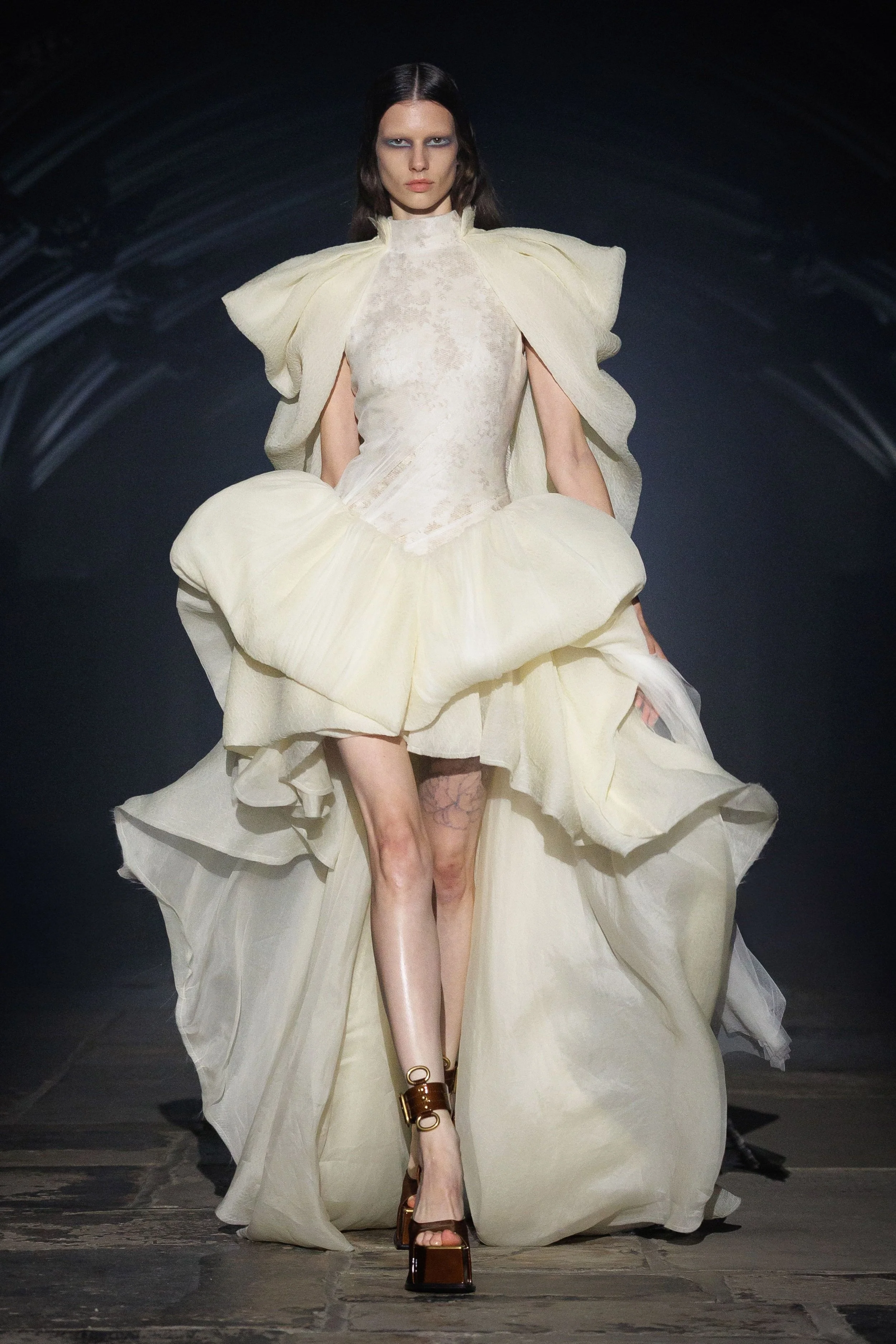
To bring these ideas to life as effectively as possible, Anthony Turner was responsible for the hairstyles, while Daniel Sällström took care of the makeup. Anthony Turner is a hairstylist who works in the fashion industry and has been involved in numerous fashion editorials and runway shows throughout his career. Daniel Sällström, on the other hand, is a Swedish makeup artist who carries out much of his work in London. His style is particularly recognised for its experimental makeup looks and for combining alternative culture with numerous references to nightlife. This made him the ideal person to bring the show’s vision to life.
Another important part of a fashion show is the famous front row. Choosing the people who sit in this area of the runway is not simply a matter of whether they are celebrities, but also depends on their personal style, the way they dress, their relationship with the brand and the image they can communicate. Fashion brands usually invite people because they fit in with their aesthetic. In addition, these guests can also increase the collection’s visibility through the media and social networks. For this reason, the front row is not just a place from which to watch the show, but also a communication tool used by fashion brands.
Among the people who attended the show were actress Caitríona Balfe, singer Florence Welch, actress Emma Corrin and designer Alexa Chung. Their backgrounds are quite different, but they all have something in common: they are connected to the worlds of culture, fashion or entertainment. Florence Welch, for example, is the lead singer of Florence and the Machine, a band known for its theatrical and somewhat mystical aesthetic, which is also reflected in Florence’s personal style. This aesthetic can be closely associated with McQueen’s more dramatic and creative side. The presence of these guests helps to better define the collection’s vision and the message that the brand and Seán McGirr wanted to communicate through the show.
Finally, looking towards the future and this new chapter for McQueen, what we can take away from this collection is that the brand is seeking to place greater importance on the quality of its garments and the craftsmanship behind every look. It also aims to offer a more complete collection, featuring suits, clothing for different occasions, evening dresses and the brand’s signature footwear. Seán McGirr faces the challenge of maintaining the brand’s identity while also bringing his own ideas and creative vision to it.
Words by @francesarobba
Translated by @alraco43