
PERU GOENAGA GOIKOETXEA: AN IN-DEPTH INTERVIEW
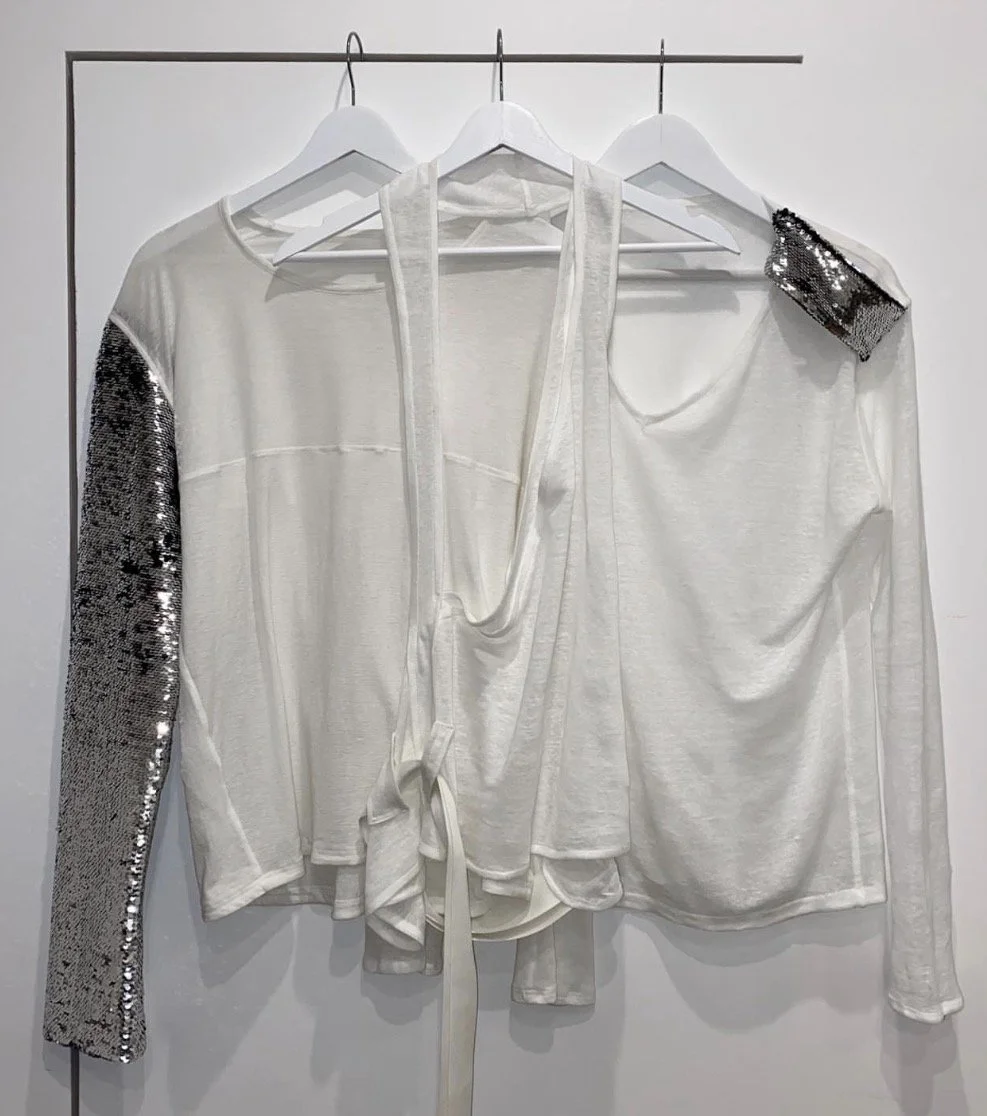
Sometimes, the most interesting paths in fashion don't begin in a workshop, but in unexpected places. Perú Goenaga Goikoetxea (San Sebastián, 25 years old) is the perfect example of this creative dissonance. Before graduating from the prestigious IFM in Paris with a specialization in creative pattern making, Perú trained as a special education teacher. His transition from teaching to design gives him a unique approach, capable of bringing order to complexity and finding a sensitive side to technical aspects. He presents SOMNIS (act), his graduation collection. A collection that, beneath an appearance of almost mathematical rigor, hides a profound irony about masculinity and an artisanal resistance to the speed of the industry. In this interview, Goenaga opens the doors to his geometric utopia, where the abstract art of the 1950s collides with 1980s skiwear.
Miguel San Sebastián: To begin, could you introduce yourself? Not only as a designer, but also as a person. Who is Perú Goenaga inside and outside of this collection?
Perú Goenaga Goikoetxea: I'm Perú, I'm 25 years old, and I come from San Sebastián, in the Basque Country. I just finished my studies at IFM in Paris, specializing in creative pattern making. As a fun fact, before dedicating myself to this, I was a primary school teacher, specializing in special education. That's my background before arriving in Paris.
M: SOMNIS (act) blends two very different worlds: the abstract art of the 50s and the skiing of the 80s. What was it like to revisit those old graphics and transform them into something contemporary?
P: Visually, they're not so different. Ultimately, they're opposing concepts: abstract art versus technical clothing from a pop and superficial era, but in a graphic sense, the avant-garde movements of the 50s took time to resonate with society. In the 80s, you already see the consequences of that art in prints and interior design. For me, those worlds were already intertwined: they're powerful graphics, with distinct colors and a lot of contrast. It was easy to bring them together.
M: In your manifesto, you say that you "force" yourself to transform existing forms into real garments. Do you think design has to be a little unsettling to arrive at something new?
P: Absolutely. If something resonates directly with the public, it means it's already part of the culture, that it's been consumed before. What's truly new is what you don't understand at first, as happened with abstract art, which at the time seemed like a pantomime. To find something new, it's necessary to be unsettling.
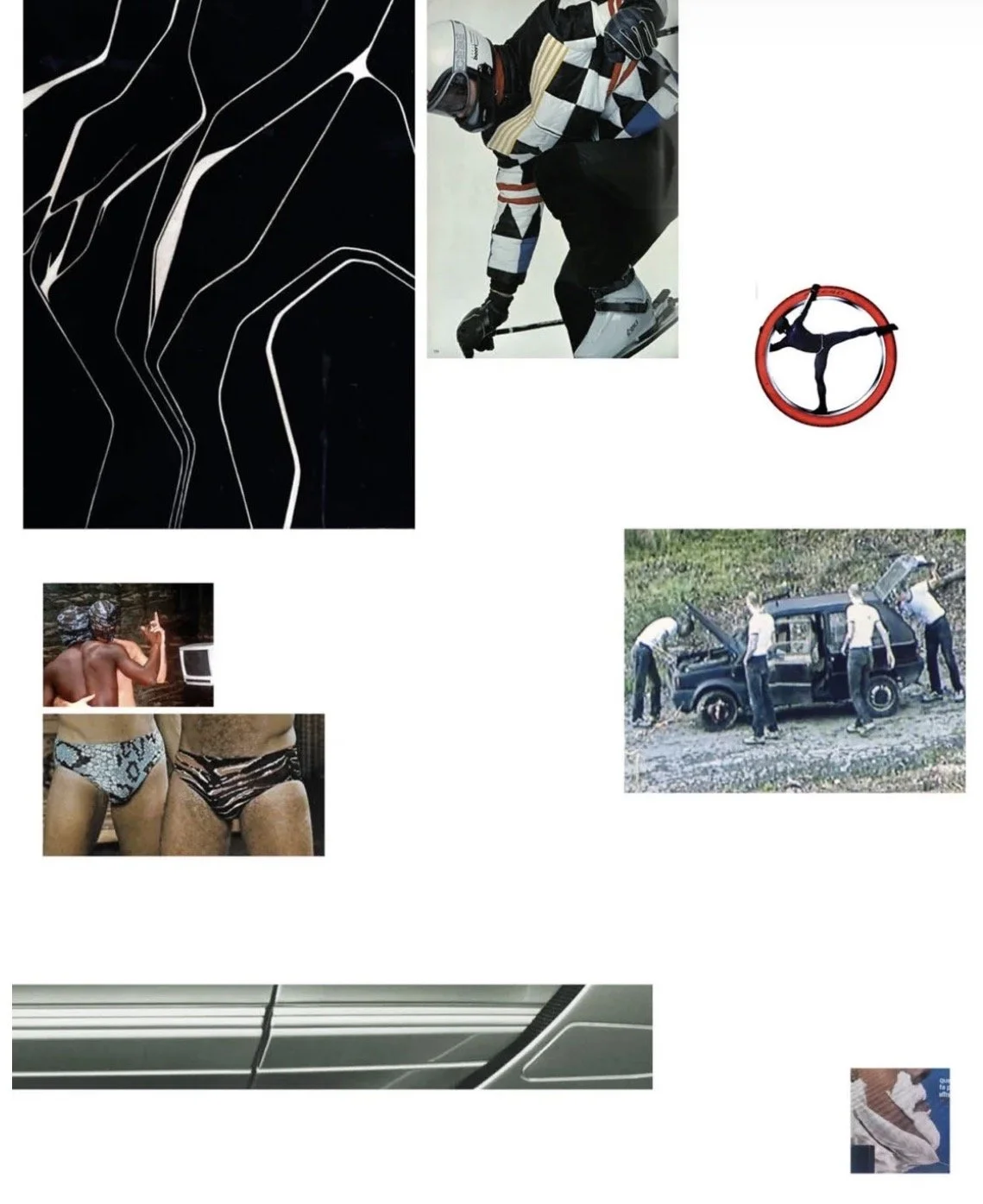
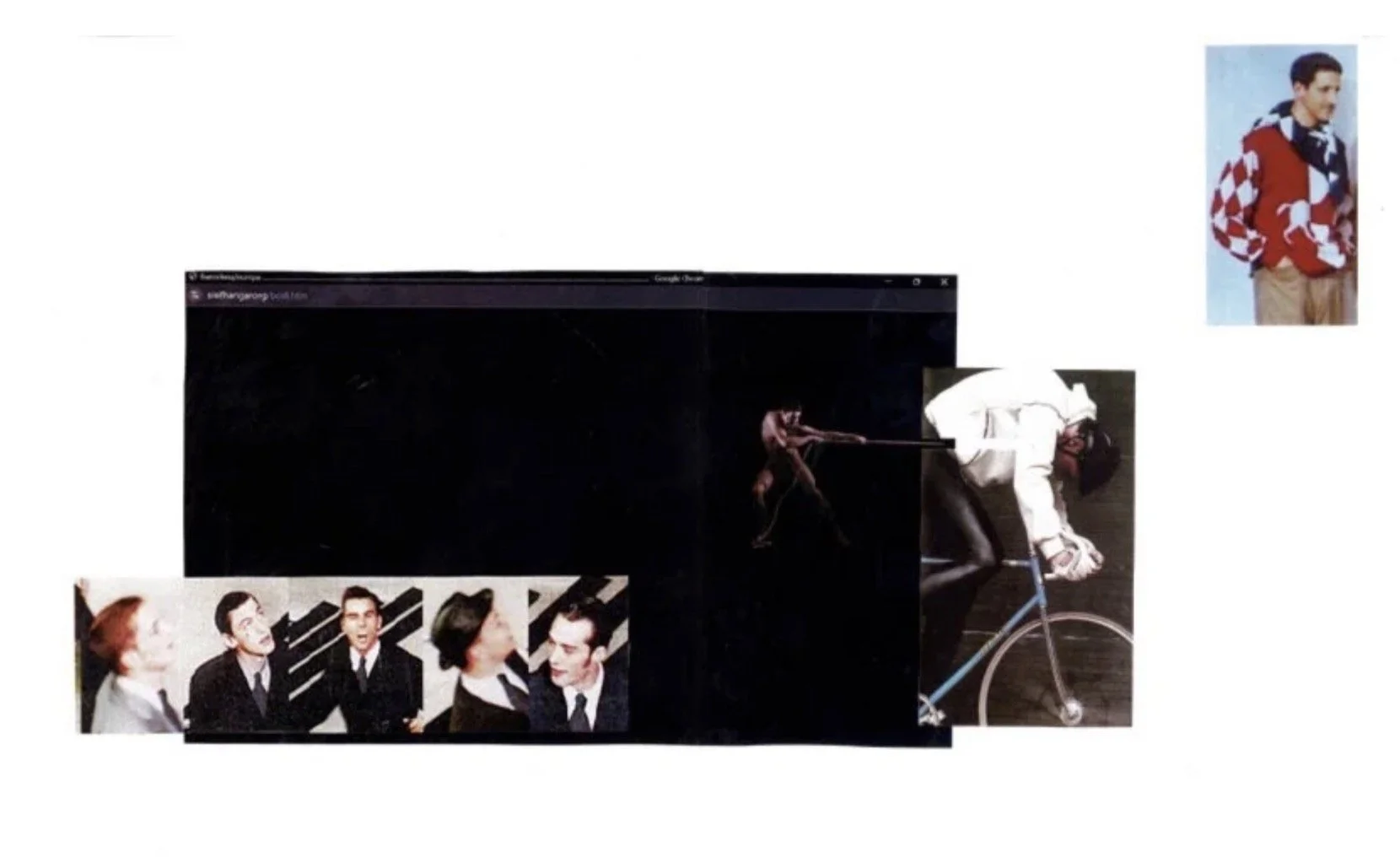
M: In the collection, you combine the freedom of dreams with technical precision. How do you balance that more intuitive aspect with the exact work of pattern making?
P: I see it almost as a political ideology: first, you have a clear vision of your utopia, and then you act to achieve it. My utopia is abstract forms, dreams. But we live in the real world, and that utopia has to be brought down to earth. That's where technique comes in: constructing those forms so that they become real clothes. It's the balance between dream and action.
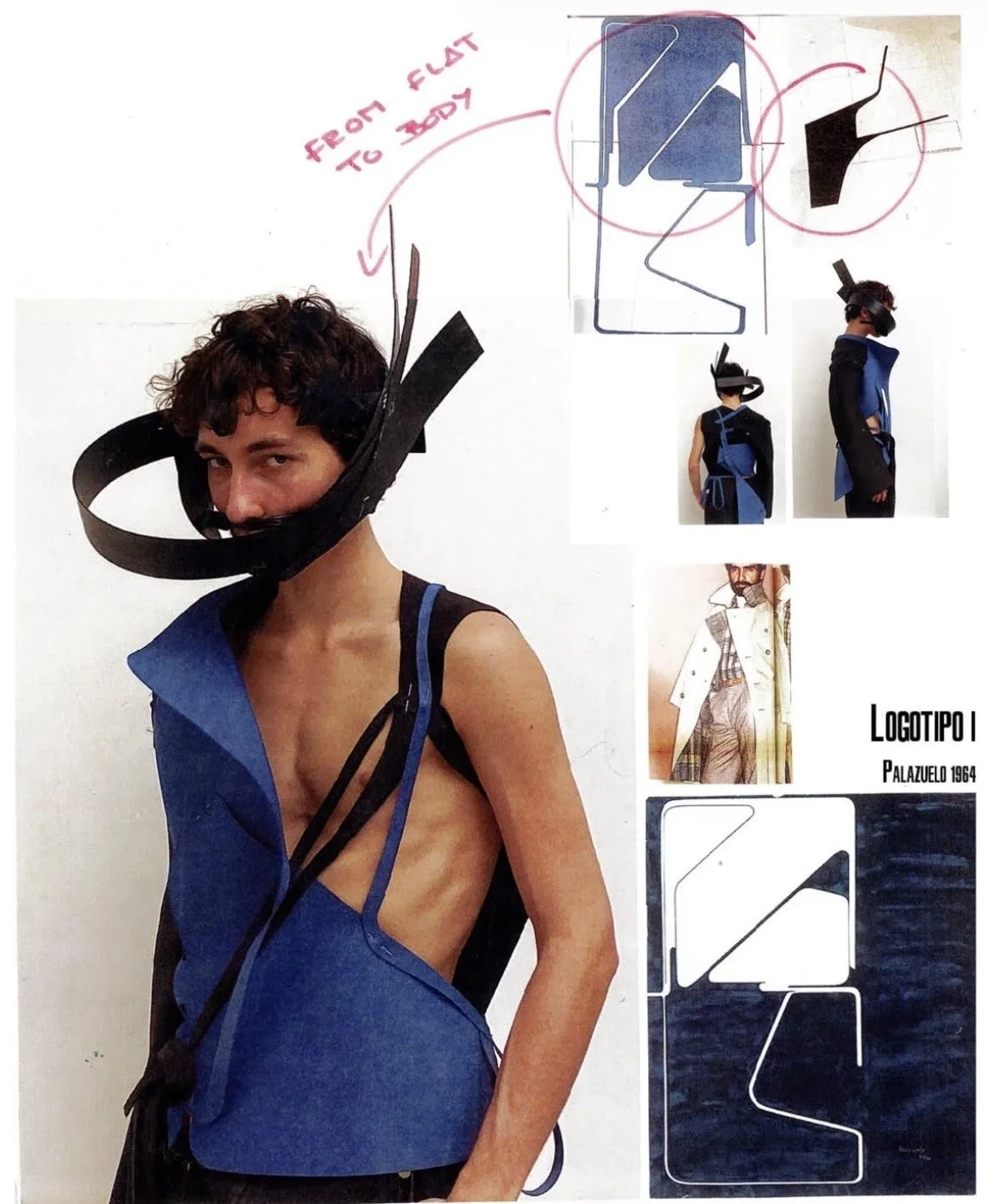
M: The collection seems to tell a story of a journey: from a flat drawing to a garment with volume. How do you make a line from a painting end up becoming something wearable?
P: By forcing the painting to clothe the body. Sometimes it requires a modification, other times it's a matter of forcing yourself to see where the line goes, how it surrounds the anatomy, how it interacts, how it enters and exits the body.
M: Your garments are somewhere between sculptural and sporty. How important is real functionality in pieces that are born from such abstract forms?
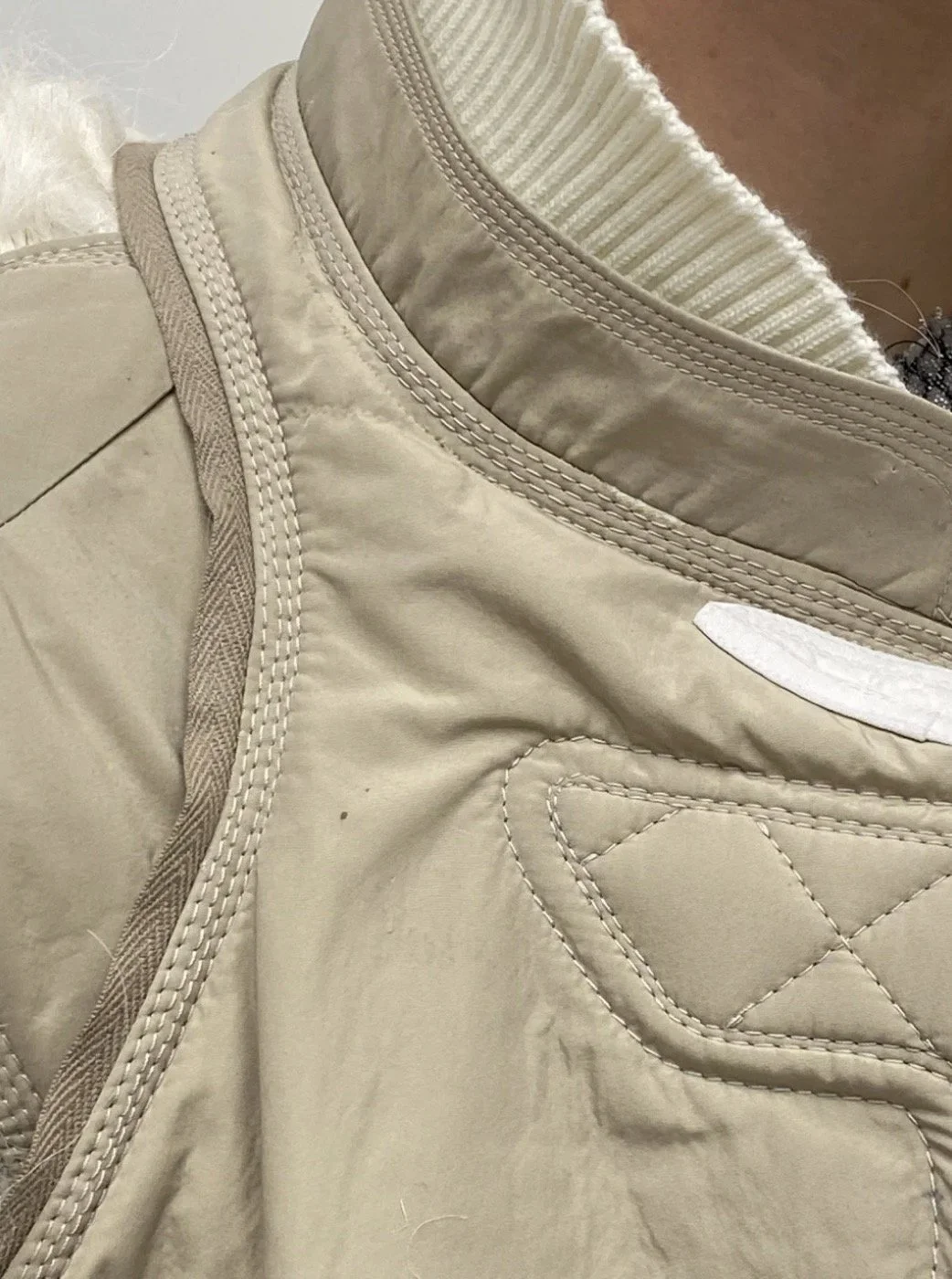
P: Although the collection is conceptual, I'm a bit obsessive about function. The details come from ski or motorcycle jackets, and almost all of them serve their purpose: the zippers are real pockets, the topstitching holds, the quilting protects. If you include a technical detail, it has to be there for a reason, even if we allow ourselves some aesthetic liberties.
M: You work a lot with your hands to move away from the digital. What attracts you to returning to touch, to the material, at a time when everything is screen-based?
P: For me, it was vital to focus on the materiality rather than the theoretical idea. Almost the entire collection was made without preliminary sketches, going directly to the mannequin with the material in hand and letting it flow. I was looking for that sculptural and sensory character.
M: You use very different materials: technical fabrics, quilting, transparencies. How do you decide which such opposing materials can coexist in the same look?
P: By seeking extremes, sometimes almost for the absurdity of experimenting. I like to mix super sporty and technical 80s finishes, like quilting, with more delicate fabrics like chiffon. You find the balance by working on the look: seeing where there's not enough fabric or where there's too much weight.
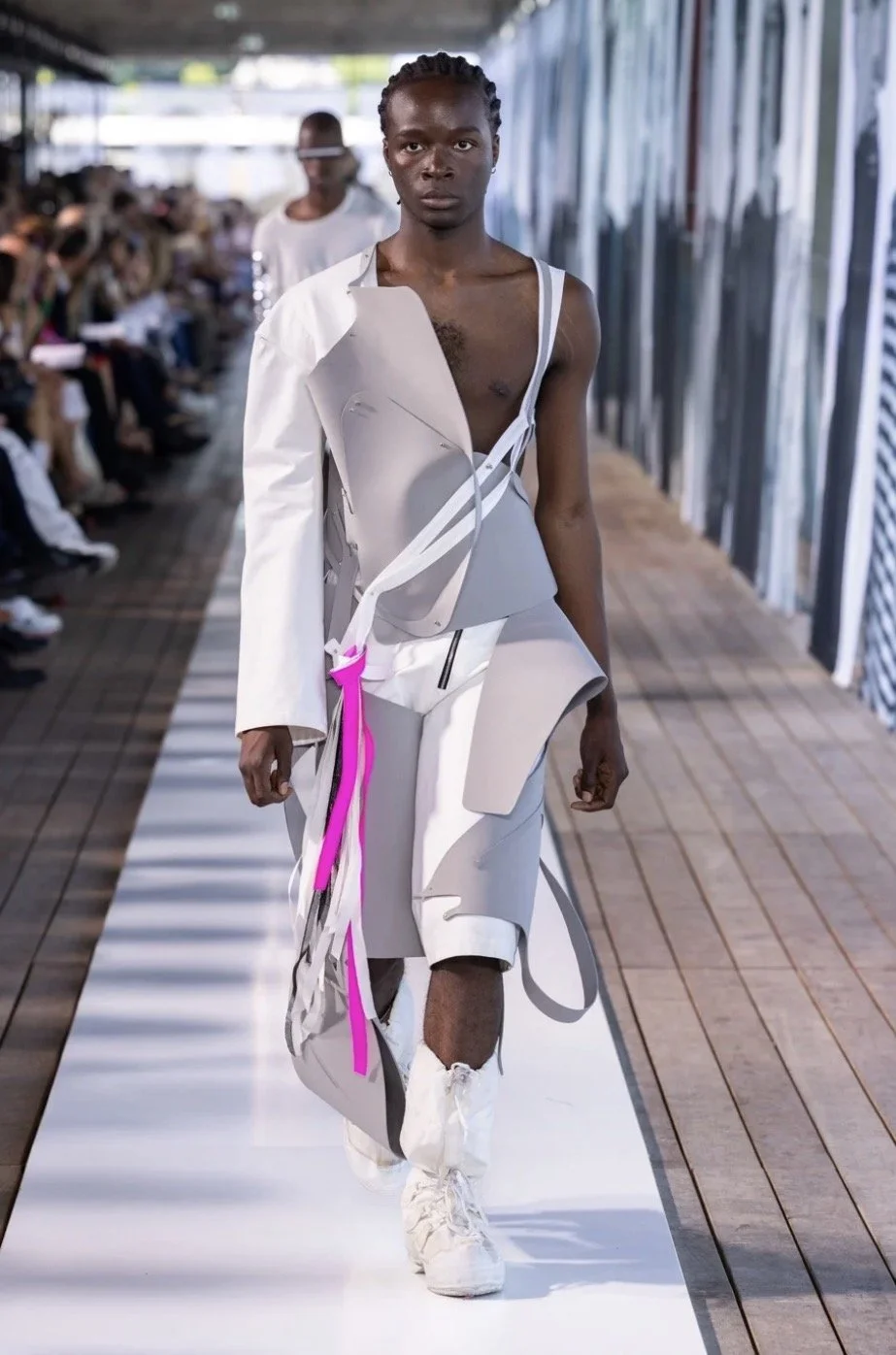
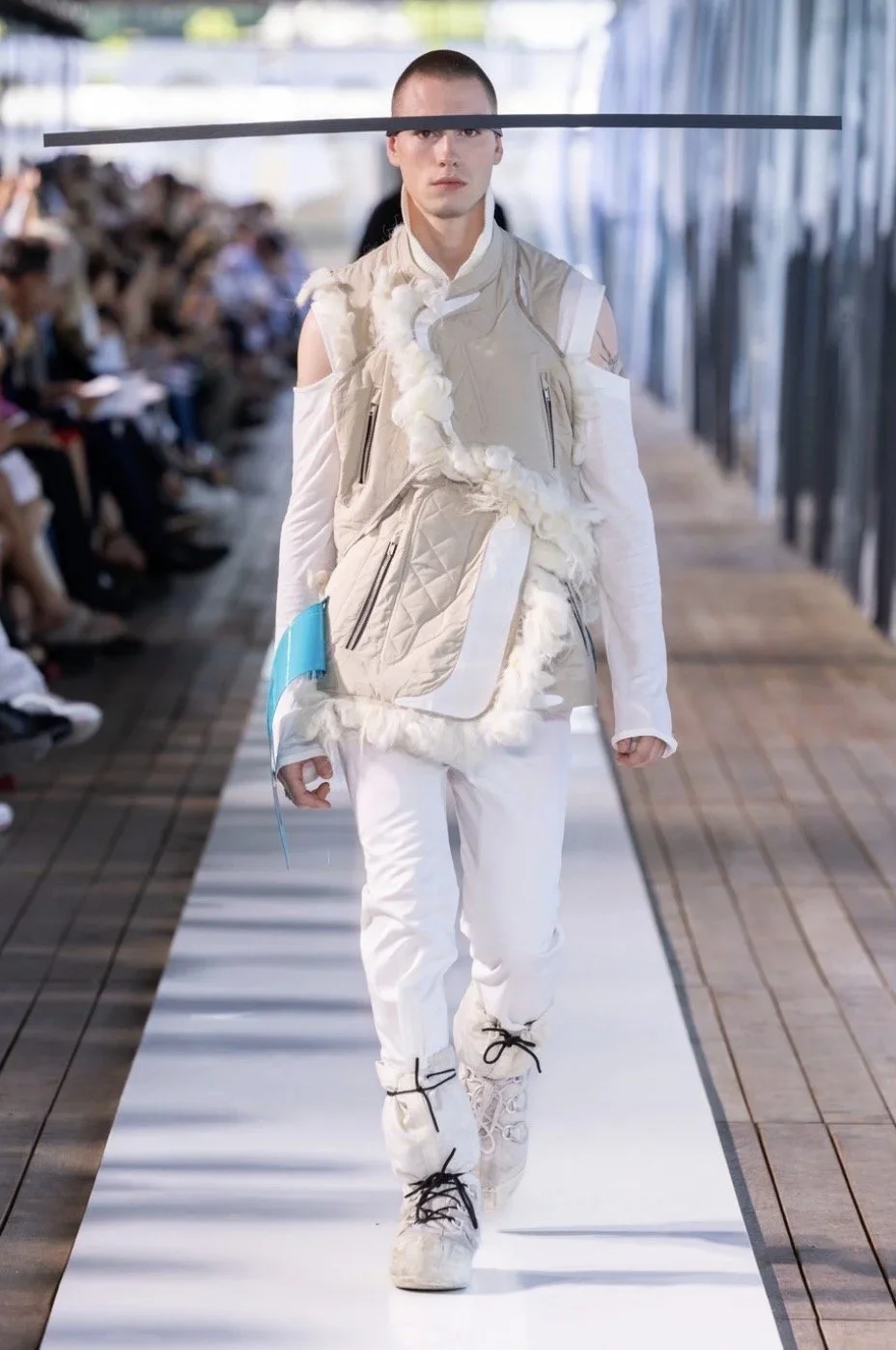
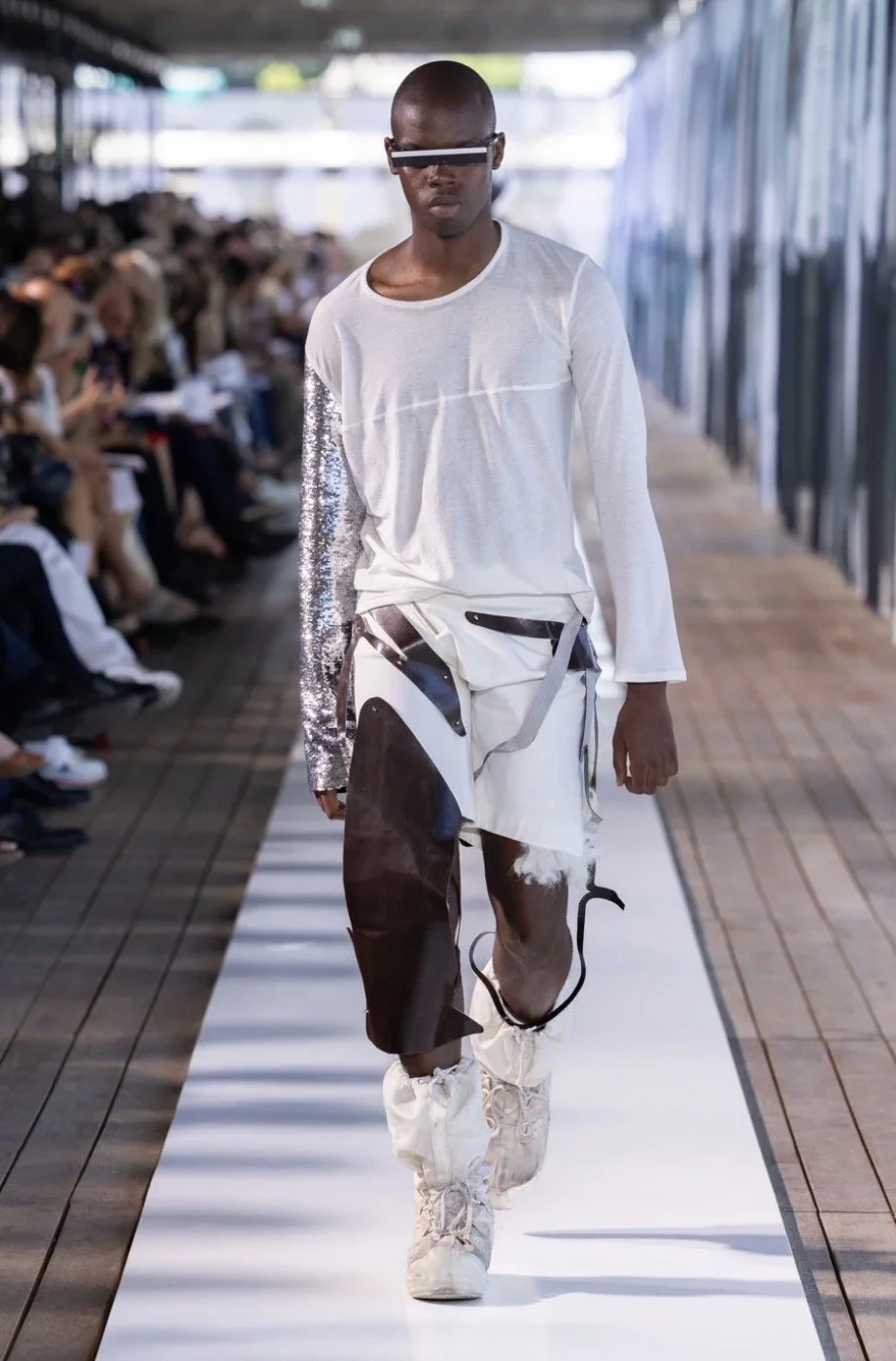
M: Some shapes cover the face or divide the body into parts. What would you like the audience to feel when they see these powerful silhouettes on the runway?
P: It amuses me, because there's an irony behind it. The pieces that cover the face, like the horizontal headdress or the one that encircles the head, are inspired by male facial hair from the 80s: the unibrow, the full beard... It's a way of dividing the body, creating voids. It's a minimalist and understated absurdity; a way of poking fun at the seriousness of men through a very polished aesthetic.
M: Some garments look like authentic geometric puzzles. What role do these "trans-geometric patterns" play in how you tell the story of the collection?
P: They are puzzles, yes. Although the collection seems very produced, it was born intuitively. The first look is the "mother look," the most abstract, and I decided not to change it from the beginning to keep the basis of the geometric theory pure.
M: It seems your process seeks a personal balance. Is this collection, in a way, your way of reconciling what you imagine with what you execute?
P: Yes. Designers tend to dress their ideal world. This collection has many parts of me: the serious technique, the understated abstraction, but also a maximalist side. It's a mix of science fiction and reality that really represents me: something very serious, but full of hidden jokes.
M: You mention Pablo Palazuelo as a major influence. How does his conception of art influence your way of dressing and constructing a 3D body?
P: All the "trans-geometric" work comes from him. His conception of art is philosophical and spiritual, based on finding the number through mathematics. I've borrowed his theory: having established, almost mathematical, rules, but leaving room for intuition when molding on the body. M: The man in SOMNIS (act) seems strong, prepared, but also introspective.
M: What message do you want to convey with this character, poised between reality and dreams?
P: It's a hyper-masculinity that laughs at itself, but enjoys it. It's not a fluid collection; it's very masculine, but so much so that it ends up turning around and becoming something open, modern, and comfortable.
M: You use color very sparingly: a lot of white and small touches of neon. How does color help you direct attention in such complex designs?
P: White seemed the purest to me. It helps the viewer understand the complexity of the pattern without distractions. The neon touches act as graphic highlighters. I also like the calm of monochromatic schemes and the layering of different tones.
M: While many opt for speed, you choose difficulty and detail. Do you feel that designing this way is a form of resistance?
P: A little, yes. I was very stubborn in not wanting to do something commercial just for the sake of success. It's my opportunity to show who I am from the inside out. Today we tend to peel back layers to fit in; this process has allowed me to add more layers of myself. It's important to resist and commit to our utopia.
M: SOMNIS (act) invites you to move, but it comes from a lot of thinking. Do you think fashion needs more time to “dream” before producing?
P: Absolutely. SOMNIS (act) is an invitation to dream about your ideals, without thinking about what others might want. And then to act, to fight for what you want.
M: Many pieces seem to envelop and protect the body. Do you want your garments to be a refuge for the wearer?
P: They function more like a uniform. When you wear them you feel strong, but they maintain a point of inner sensitivity that balances that assertiveness.
M: If you had to describe SOMNIS (act) in three words, what would they be?
P: Dream. Act. Act.
questions by @miguelsansebastian
translated by @alraco43