
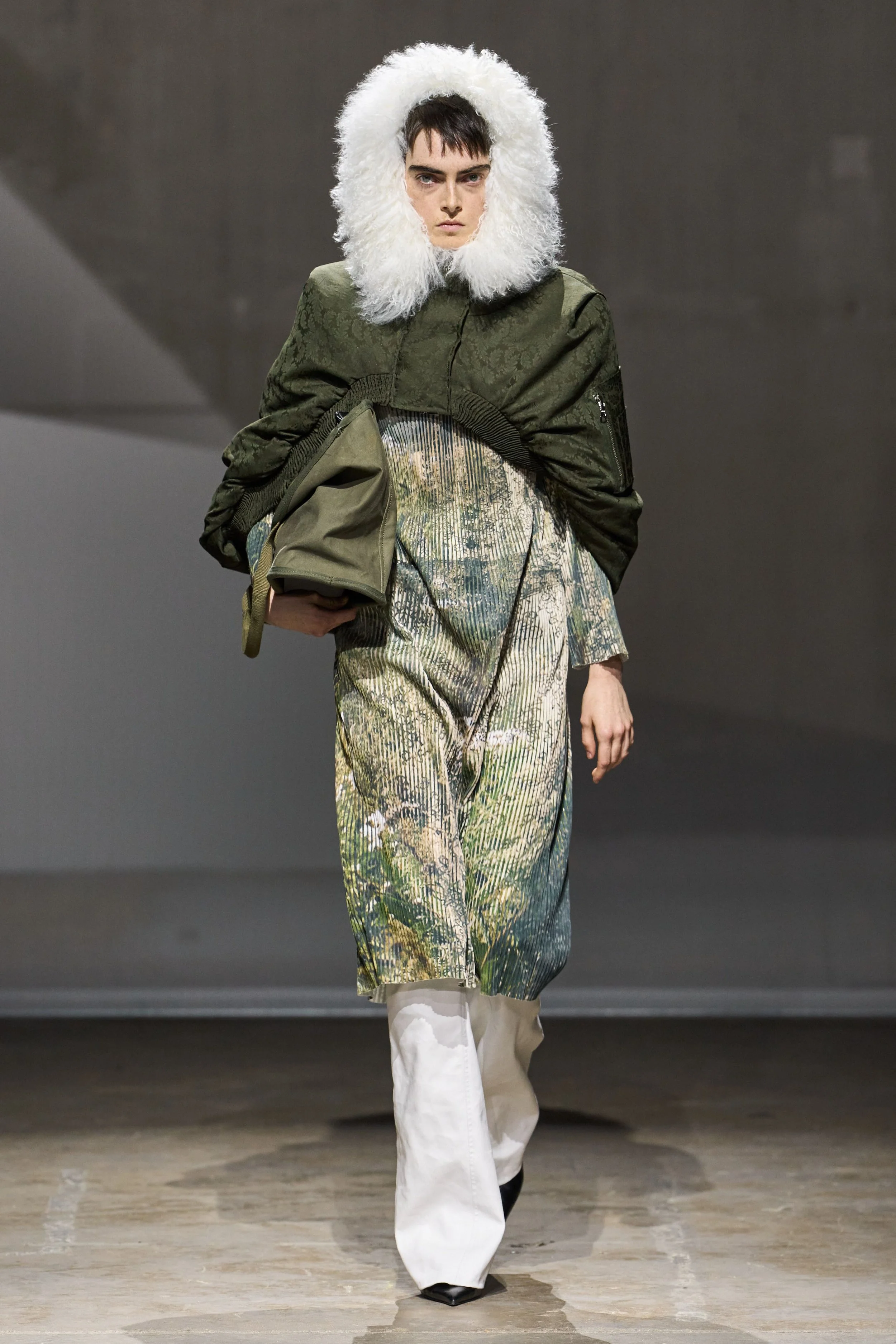
If someone asked me what spring would look like in a world shaped by the climate crisis, I would tell them that Petra Fagerström’s Spring 2027 Ready-to-Wear collection makes it perfectly clear. The designer also plays with a touch of irony, which is reflected in the collection’s title: Swedish Summer. We usually associate spring collections with lightweight fabrics, bright colours and garments designed for warmer weather, but this collection is quite the opposite. We see leather pieces, coats and furry garments, all mixed with flowers to give that subtle nod to spring. Even the animal prints contribute to this feeling. Some of the prints almost look as though they are transitioning from a dark winter into a powerful spring, with those knife-like cuts and pleats. It takes us away from that idealised version of spring, one that is soft, delicate and full of colour.
There are clear references to the 1940s and 1950s, particularly through the full circle skirts with their sharply defined pleats, silk lingerie with lace details, and fitted jackets with shoulder pads that strongly recall Dior’s New Look. However, these references are not there just for the sake of nostalgia. She combines details from such a feminine and sophisticated era with much heavier, more streetwear-inspired pieces, such as black leather and warm parkas. Through this, she is not trying to dress a submissive woman from the past, but rather to show that women today can wear elegant and feminine clothing without sacrificing their strength or comfort. Ultimately, she is questioning the idea that dressing femininely means supporting a traditional lifestyle, such as the trad wife ideal. Liking pretty dresses, bows or vintage clothing does not mean you have to accept the social role that has historically been associated with those garments.
Speaking of trad wives and how the collection indirectly references them, it makes me think a lot about what has been happening in the world lately. Ever since this phenomenon started appearing in different countries, with the US seemingly becoming the centre of this whole movement, we have seen women talking about how they should be submissive to men and all that... In my opinion, it is absurd. How is this possible when so many women have spent years fighting against exactly that, fighting for equal rights with men, for the freedom to dress however we want and for the right not to be trapped in stereotypes? Why are these women starting to think this way? What makes them see things like this? I genuinely do not understand it, nor why they try to pull other women into it. Every woman has free will; you can do whatever you want without having to worry about whether a man approves of it or justify yourself by claiming that women in the past were less capable, less developed or, to put it more bluntly, less intelligent.
As I mentioned earlier, every woman can dress femininely without falling into the role of a typical trad wife. You can be a feminine girl and still be powerful. It is quite similar to what I personally do. I love dressing femininely, although I sometimes feel that I do not fully commit to that aesthetic because I tend to mix it with much more urban pieces. This is where travelling so much has opened my eyes, and how, without even realising it, I combine my love for cute things with streetwear fashion. It is exactly the same thing that happens in this collection.
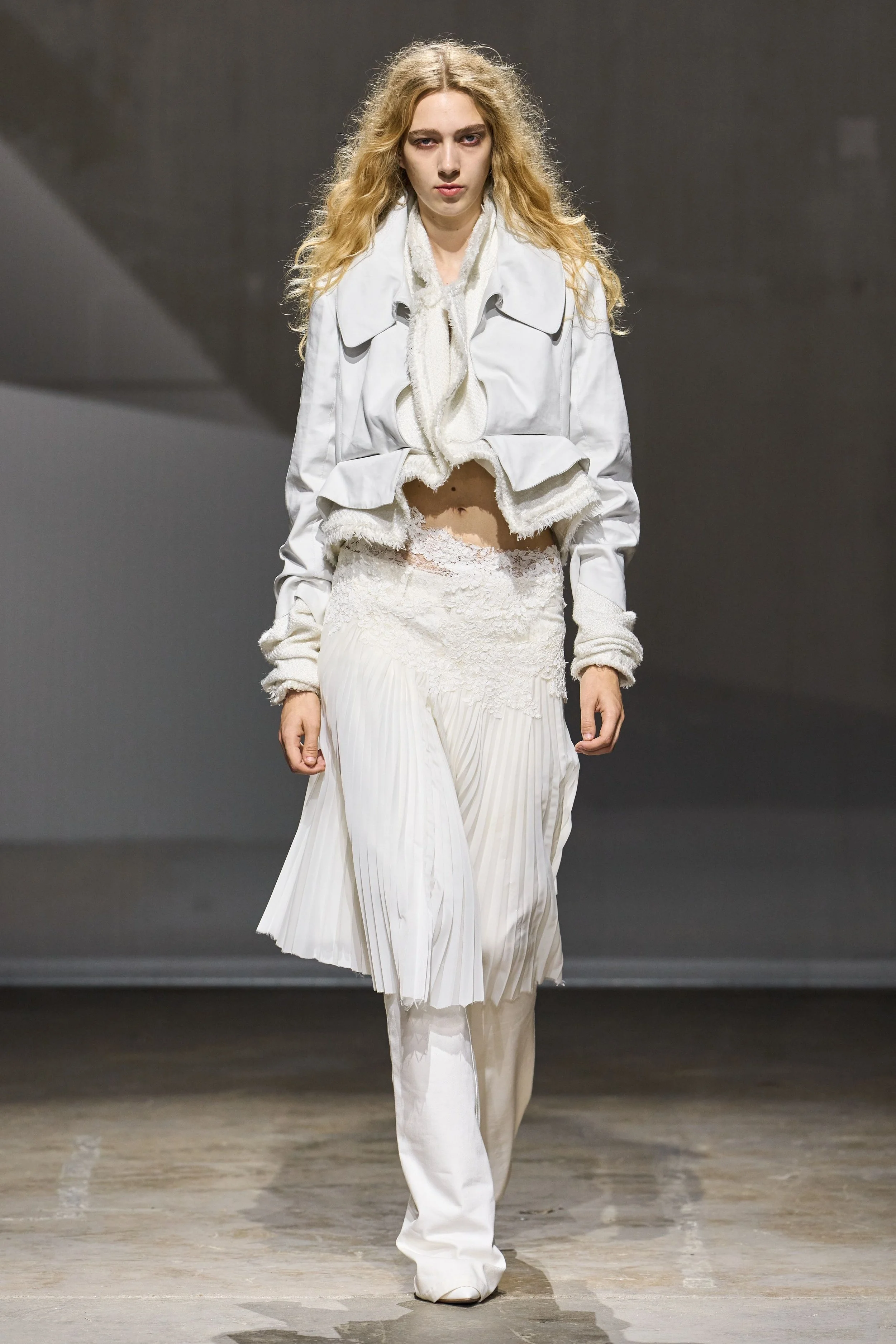
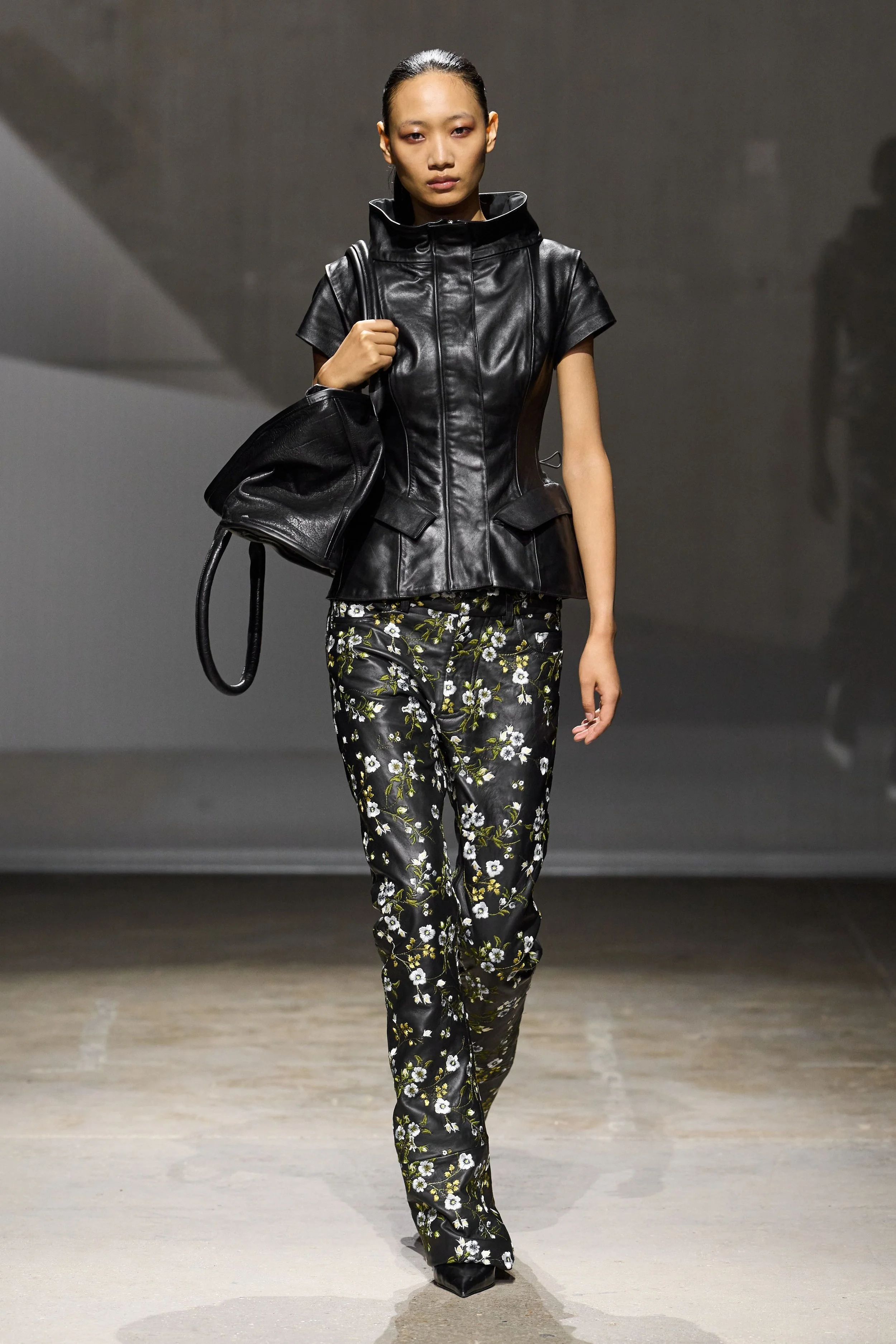
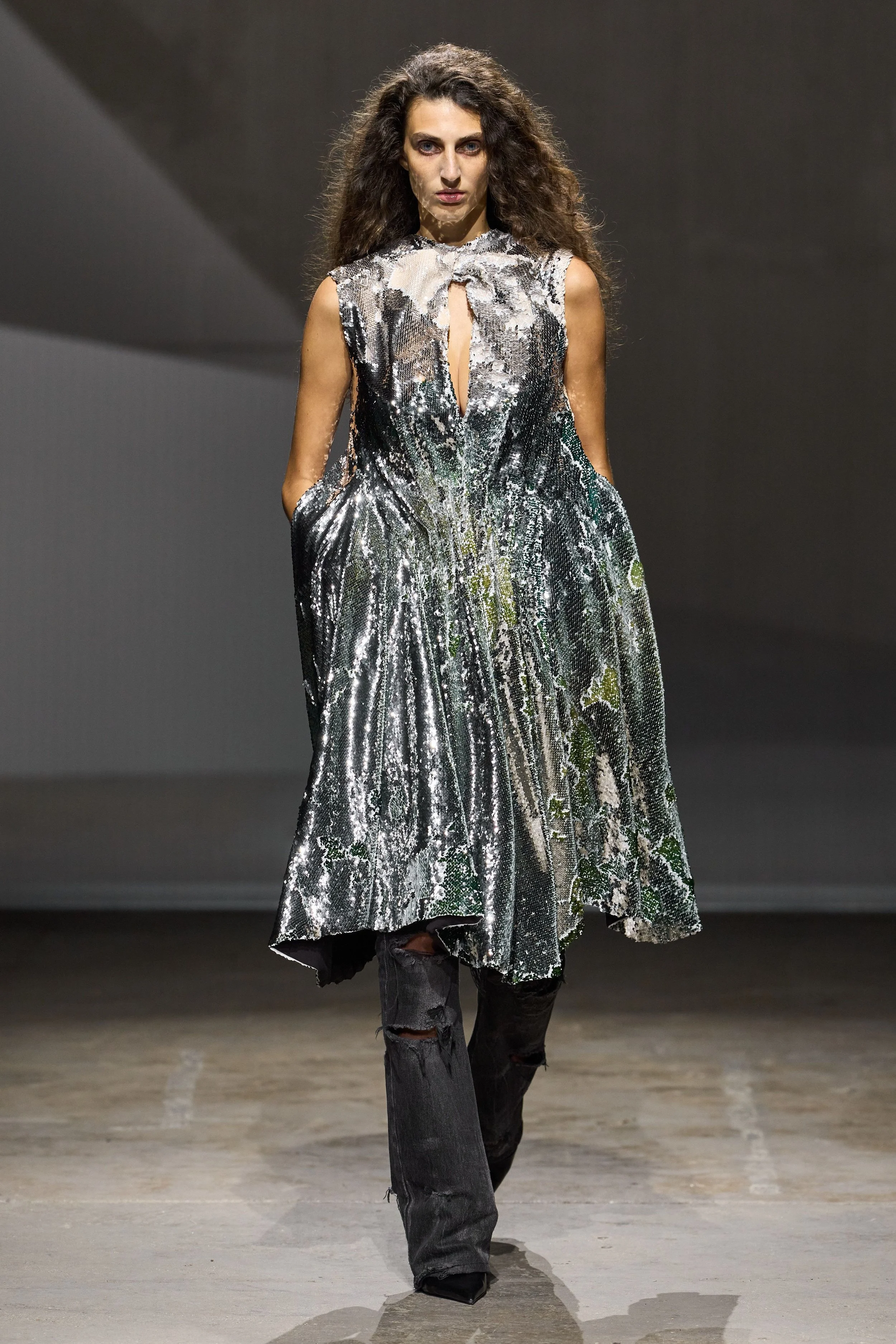
Another thing that immediately comes to mind when looking at this collection is the anime NANA. For me, it is one of the works that best represents this combination of romance and rebellion. Through characters such as Nana Osaki and Nana Komatsu, we see two very different ways of expressing femininity. Nana Osaki is associated with punk aesthetics, leather, fitted garments, boots and references to Vivienne Westwood, whereas Hachi tends to present a much sweeter and more romantic image, with delicate dresses, bows and vintage-inspired pieces. However, what makes it interesting is that neither of them represents just one way of being a woman. Both have contradictions, insecurities and personalities that are far more complex than their appearances might suggest.
Although the aesthetic of NANA is much more punk and urban than Petra’s, I feel that they share the same idea: clothing can express different sides of our identity. The difference lies in how they approach this concept. While the anime explores these two sides through characters with very distinct personal styles, the collection brings them together within the garments themselves. A leather jacket can retain a classic, feminine silhouette, while a seemingly delicate dress can hide unexpected details. In both cases, what matters is not having to choose between being sweet or rebellious, but understanding that these two sides can coexist.
On the other hand, the collection also reminds me a lot of Paradise Kiss, another work by Ai Yazawa in which fashion plays a fundamental role. In this case, the connection is not so much about punk aesthetics, but rather about how the characters use clothing to construct their identities. Through the design process, fabrics, patterns and silhouettes, we see how a garment can become a way of expressing who you are or who you want to become.
This particularly reminds me of the reflection the runway itself inspires: what kind of woman would you like to become? It is not simply about designing beautiful clothes, but about exploring an identity through fashion. The characters start with different aesthetic references and transform them into their own creations, mixing historical elements with a much more contemporary vision. In a different way, Petra does something similar by bringing back 1950s silhouettes and combining them with the elements I mentioned earlier.
It also reminded me quite a lot of a Korean series, especially its main character. I feel that she would wear many of the looks from this collection. Moon Dong-eun builds her image through understated garments, structured coats and dark colours, which work perfectly with her personality and dark past. Her femininity is not about attracting attention through embellishments or accessories, but rather about conveying a sense of control, distance and confidence. To me, her wardrobe almost works like armour. It is discreet, yet it communicates a strong and determined personality.
The colours are nothing particularly extraordinary, but at the same time, I understand why they were chosen. White and black appear in almost every look, reflecting an elegance and sophistication that complement the more classic silhouettes. However, in a few looks, this palette is suddenly broken up by darker shades of red and green. They are used as accents rather than in complete looks, appearing in details such as a jacket or part of a top. For example, red makes me think of a more sensual, self-assured and powerful woman, whereas dark green conveys something more natural or mysterious. What is interesting is that neither colour ever takes over the collection. Instead, they appear in small doses, almost as though they were introduced to break up the repetition of black and white without losing that overall aesthetic.
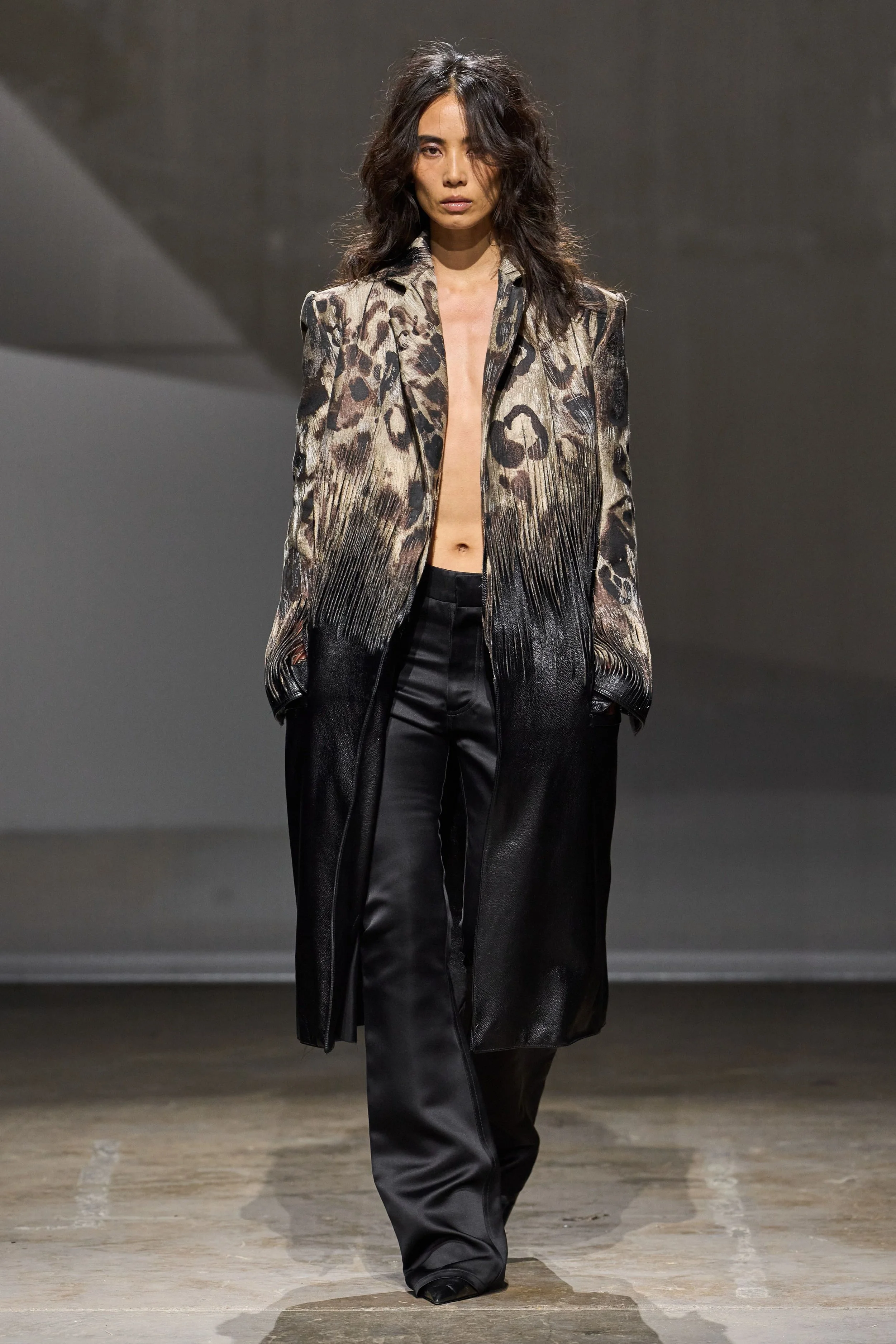
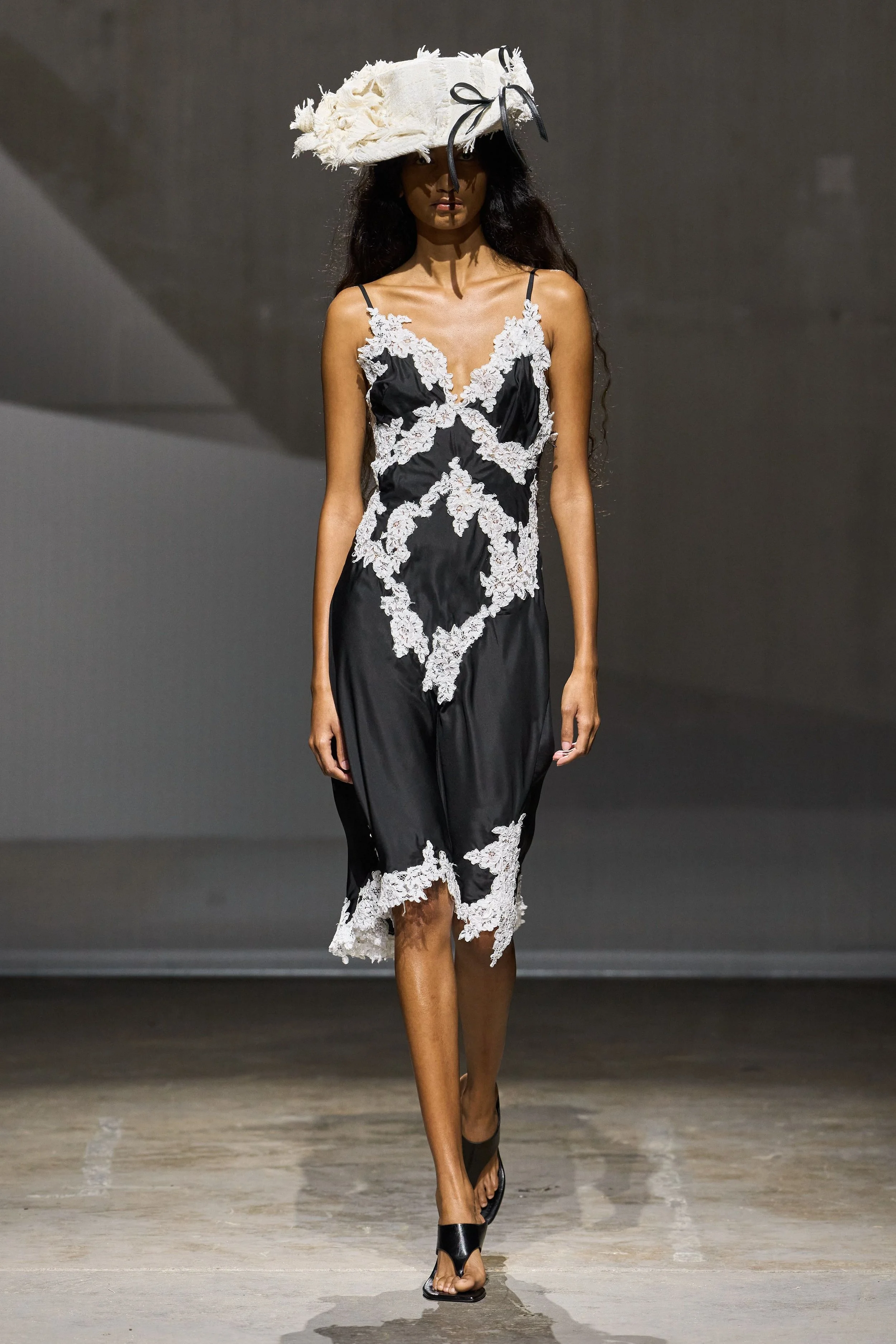
One thing I simply cannot get out of my head when looking at this collection is how incredible the knife-like cuts and pleats are on some of the garments. I find it fascinating how two fabrics or two different visual effects can be combined until they become one. It is almost as if the clothing is playing with our perception.
After doing a little more research, I discovered that the designer had explored the world of artificial intelligence during her master's studies at Central Saint Martins. Apparently, she became interested in the errors and unusual combinations that emerged when asking AI to mix a feminine 1950s aesthetic with more utilitarian, urban garments. And although it might sound a little crazy for a designer to find inspiration in something like that, I think that is ultimately where she really hit the mark. She did not simply copy whatever appeared on a screen; instead, she took those contradictions and translated them into garment construction, experimenting with the way the pieces were built.
I find this particularly interesting because it shows that technology does not necessarily have to replace creative work. It can also serve as a tool for discovering ideas that might never have occurred to us otherwise. In fact, I think the concept of a glitch fits perfectly with what happens in this collection. The garments seem to trick the eye, combining codes that we would not normally associate with one another and challenging the way we expect clothing to be constructed.
The show closes with "Edge of Seventeen" by Stevie Nicks, which, in my opinion, is a choice that fits quite well with what the collection seems to be trying to communicate. The song has a very distinctive energy, with a rock edge that makes me think of a confident, independent woman who does not need to fit into other people's expectations. For me, it connects with the idea of femininity that I feel is reflected throughout the collection: a woman can be elegant, sensual and delicate, while also being strong, intelligent and capable of making her own decisions.
Ultimately, I feel that this is one of the things I like most about this collection. It is not just about creating beautiful and eye-catching garments, but about making you stop and really look at them, wondering how they were made. It is a way of experimenting with fashion that goes beyond silhouettes or fabrics, because it also plays with the way we perceive what is right in front of us.
Words by @vane2002
Translated by @alraco43