
XRIZ AND FUEGO SPEAK ABOUT NANANA

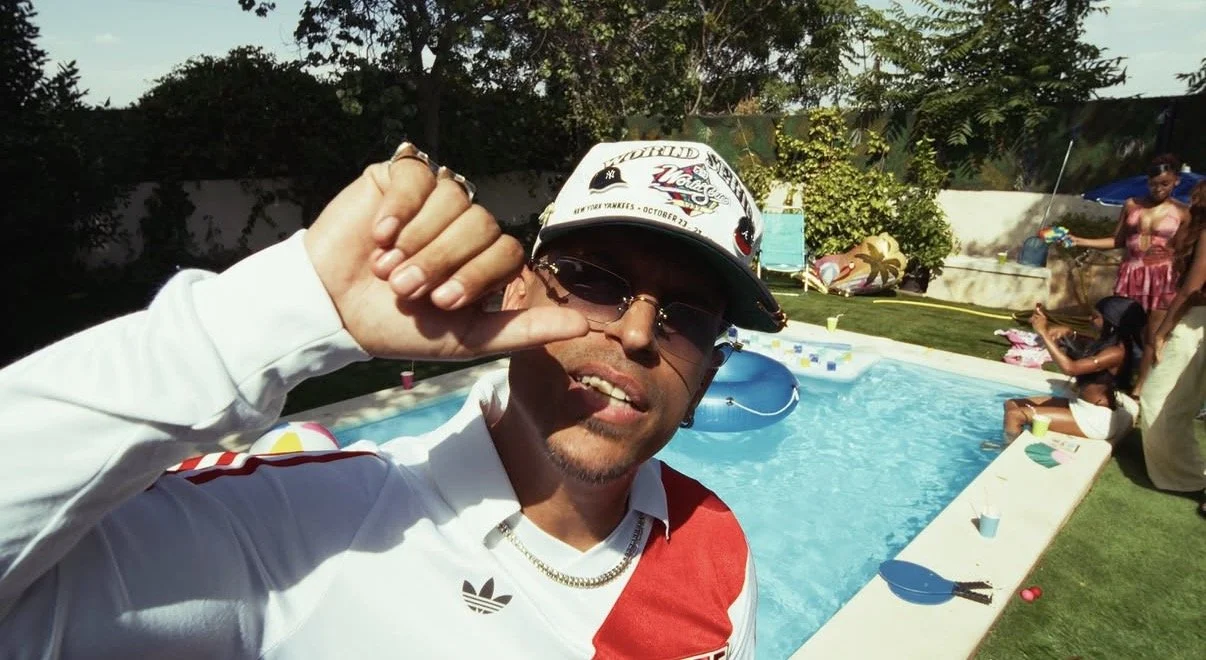
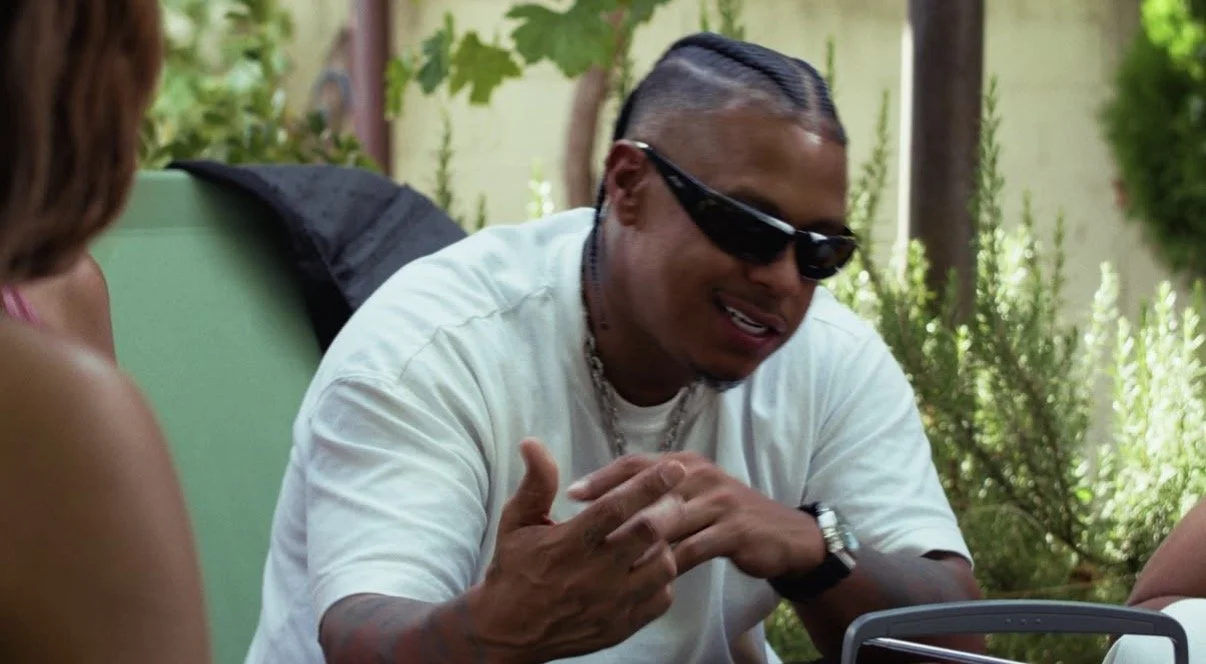
After years of crossing paths on stages and behind the scenes, Xriz and Fuego have finally joined forces on “NANANA,” a summer-ready single that blends the melodic sensibilities that made them fan favorites with a more contemporary sound. Though both artists emerged during the formative years of Spanish-language urban music, neither is interested in nostalgia for its own sake. Instead, they see themselves as veterans still evolving, navigating an industry transformed by algorithms, social media, and changing audiences while continuing to build on careers that have endured well beyond fleeting trends. In this conversation, the duo reflects on the making of their collaboration, the realities of today’s music business, the evolution of reggaeton culture, and why longevity, patience, and authenticity matter more than ever.
Álvaro Ramos: To start off, who are you in 2026? Where do you come from, and where are you headed?
Xriz: People have known me for many years, and I’m still the same person, keeping my name and my essence. I come from the Canary Islands, and I continue to take our music all over the world.
Fuego: I’m the same way: still myself, but evolving and exploring new musical paths. We keep working to reach places we haven't been to yet.
AR: Who are the "resentful ones" you talk about in the song?
X: We all are. We’re the ones tired of having someone show up; just when we’re at our best, happy, and over a past relationship, to remind us of the situations we got into and where we shouldn't go back.
AR: How did “NANANA” come about? Have you known each other for a long?
X: We’ve known each other for a few years. We’d been wanting to work together for a while, and whenever our paths crossed, we’d say we needed to do something. This year, we had several joint performances; we managed to align our schedules and hit the studio. The track came together almost instantly. We’re really happy because everyone who’s heard it says it reminds them of our earlier songs, but with a fresher, more modern sound. Plus, it’s a song that’s very easy to learn. You listen to it a couple of times, and it gets stuck in your head.
AR: Will it be part of an album, or will it stand alone as a single?
F: Right now, it’s a single for people to enjoy. What happens next depends on the reception it gets. It’s up to the public whether we get back together and make more songs, or if this guy and I never speak to each other again.
AR: Your songs are often associated with summer and moments of celebration. What is it like creating music that ends up becoming part of people's memories?
X: We make music for moments and feelings. It’s summer right now, so we think about what people want to feel during this time of year. We talk about love, heartbreak, and situations anyone can relate to. These are the things that make the world go round and move us as individuals. Since it’s so hot out, the least we could do was release a song that’s a bit refreshing.
F: Although, with me, we all end up getting burned.
AR: You recently performed the song at a club. How did the audience react?
X: The reaction was great. We initially wanted to organize a small event for about fifty people, but over a hundred showed up because everyone wanted to be there. People connected with the song immediately. Many came up to tell us the track was incredible, that it was stuck in their heads, and that it had such good energy. We’re really happy and can’t wait to perform it everywhere this summer.
AR: Fuego, you’ve worked across different markets. What differences do you see between the US industry and the Spanish one?
Fuego: The urban music industry in the US is massive, but it also has certain limitations. A US-based artist might find it harder to break into countries like Colombia, Bolivia, or Venezuela because the audience doesn't always understand the language. As Latin or Spanish artists, we have access to many countries in Latin America as well as Europe. We can travel and connect with diverse audiences through the Spanish language. In terms of musical quality, I think we’re on the same level. The Latin market is going through a very strong period right now. Xriz is learning Chinese now, and I’m learning Korean, so we can break into the Asian market too.
X: The next step is putting together a K-pop group.
AR: And what are the differences regarding budgets, promotion, and how the industry operates?
F: Nowadays, there isn't as much of a difference as there used to be because everyone has to use social media. Even major movies need to leverage streamers, influencers, and content creators to get people to go see them. Years ago, getting a song played in Miami, or getting it onto specific radio stations or promotional slots, could require huge budgets. People spent anywhere from tens of thousands of dollars to figures nearing a million. And that might just be to work in a single state or specific region. If you wanted to expand into other territories, the budget would go up. Music videos were also made on a near-cinematic scale. Today, social media has democratized certain aspects, though it has also created new demands for artists.

AR: Xriz, for those who aren't as familiar with your background, how would you summarize your career?
X: I started making music between 2007 and 2008. Around 2010, I began building a larger audience in Spain. Then came "Me enamoré," which I released in 2013; it blew up in both Spain and other European countries. That also brought me closer to Latin audiences and allowed me to meet artists like Fuego, Jowell & Randy, J Balvin, and many others. Even though I didn’t collaborate with all of them, I was able to interact with them, get to know them, and learn a lot from the way they worked. All the constant effort over these years has brought me to where I am now. We haven't reached the place we want to be yet, but we’ll get there.
AR: Do you prefer a career built slowly over immediate success?
X: Absolutely. Good things take time. You can achieve success very quickly, but that doesn't mean you’ve built a career. I prefer moving step by step, getting people to connect with me, and creating an audience that can enjoy my music for many years.
AR: How important is aesthetics to what you do?
X: I think aesthetics are still important, but not in the same way as before. Years ago, it seemed like you had to be the best-looking, dress a certain way, and have a perfectly polished image to stand out. Now we see kids from the street wearing basic clothes, no stylists, who still achieve huge success. Then the logic of the industry and capitalism kicks in: when you have more visibility, it seems like you have to wear jewelry, designer brands, and specific looks to project an image of success or quality. But I think the audience doesn't focus as much on how much each garment costs anymore. What matters is the perception and how you wear it.
AR: I notice you’re wearing a piece from a Spanish brand. Do you think national brands support local artists enough?
X: I like supporting everything made in Spain. I love wearing local brands and buying their clothes, rings, or t-shirts. I’d also like for brands to support us more. But I understand there are so many artists and profiles out there. Until they find someone who fits their identity, or see that an artist is already supporting the brand, they might not reach out. It also depends a lot on public relations. We’re looking for someone who can help us connect with brands and generate those kinds of opportunities.
AR: You consider yourselves artists from an earlier generation, yet still active. How do you prefer to define that position?
F: We are living legends.
X: We aren't has-beens. We are legends, and we’re going to remain legends.
AR: Is "flexing" still as important as it was in the reggaeton of the past?
X: I don't think so. Flexing, understood as showing the world you have more money, jewelry, or success than others, has lost its momentum. The problem is that there’s a different kind of flexing now. Some people try to show off how humble they are. When someone constantly highlights that they’re helping a cause or donating money just to publicly demonstrate their humility, they cease to be humble. Humility is something people should recognize based on your behavior and the way you live. It’s not something you need to announce. Sometimes, that kind of public display of charity ends up being more of a flex than what the guys showing off cars and chains used to do.
AR: Have you ever gone into debt or spent exorbitant amounts on clothes?
F: There was a time when I was a huge fan of what artists like Future were wearing. It was all Gucci, Louis Vuitton, Chanel; that kind of brand. I used to go to Bal Harbour in Miami, where all the luxury stores are, and I’d buy three outfits for huge sums. I even spent close to twenty thousand dollars at one point. I don’t regret it. I lived it and enjoyed it. That was where I was at the time, and it’s part of my story. Now, I see it as secondary. I realized that “I” am the outfit. I can wear anything and, if I know how to style it, make it work. I’ve always had that flow since I was a kid.
X: I really like fashion too, though I’ve never spent those kinds of amounts. When I was in China, I went into a mall full of local brands you can’t find in Europe. There were incredible pieces priced at three hundred, seven hundred, or even more. If I hadn’t been on a more touristy, backpacking-style trip, I probably would have spent a lot of money. They were pieces that would really turn heads back home because no one else would be wearing them. I brought back some pants, t-shirts, and quite a few pairs of sneakers. Next time, I’ll bring a bigger suitcase and be ready to shop.
AR: How did your collaboration actually come about?
X: We ran into each other at a show in León early in the year. We’d already talked about working together before, having met at other events, like one in Marbella. In León, I told him to come over to the hotel because I had a small studio set up with the producer. We started trying out ideas, and Fuego laid down some rap verses. Since we both had to perform and didn't have much time, we decided to continue the next day in a proper studio. We waited a bit after that because we both had other releases scheduled. We decided to set aside July to drop the track, and here we are.
AR: What role do collaborations play these days? Will we see remixes with six or seven artists again?
X: It’s tricky because music is consumed so quickly now. It’s hard to get people to listen to a seven or eight-minute track all the way through. There are massive collaborative tracks featuring lots of artists, but the audience ends up remembering only thirty seconds or the parts performed by two or three specific names. You can get seven people together giving it their all, but most of the audience will only engage with the fifteen-second clip that went viral on TikTok.
F: Some collaborations work better than others. If you bring together several artists who are making waves, and the public was anticipating that union, it can become something huge. But if you put together seven artists people don't know yet, as harsh as it sounds, the audience probably won't be interested. People tend to consume what they’re already familiar with.
AR: However, there was a recent period in Spain when collaborative projects helped build a new urban music scene.
Chris: They certainly do help. Some remixes and collaborations can change an artist's trajectory or spark new movements. But there has to be a reason for those people to come together. It’s not enough to just tack names onto a song. There has to be chemistry, anticipation, and an interested audience.
AR: How do you view the current state of festivals? Is the live music industry in decline?
Chris: I don’t think the festival industry as a whole is collapsing. In specific cases, like certain reggaeton festivals, there might be business-related issues. If an investment group buys an event and realizes they need to invest two, three, or four million just to make a minimal profit, they’ll likely decide it’s not worth it. That doesn’t mean the public has lost interest in festivals. It means the business model was flawed or the investment didn’t yield a sufficient return.

AR: You have extensive catalogs. How do you approach a festival set compared to a headline show of your own?
F: We’ve mostly performed in clubs, at festivals, at municipal celebrations, and at various other types of events.
X: We both come from a time when lots of clubs, local councils, and festivals wanted to book us. That was our job and our livelihood, so we were constantly performing in those kinds of venues. We’ve done so many shows in that format that we’ve never really needed to organize many headline concerts of our own. I would like to create a concept in the future that combines old songs, a sort of throwback set, with all the new material. I have a pretty clear idea of how I’d approach it. But I think every project has its moment. The nightlife scene seems to be changing, too.
AR: There are more and more daytime events and parties that start early. Do you notice that?
X: Absolutely. People are tired of going out so late. They’ve turned into "young fogies." It used to be that "dry" parties were for teenagers and nightlife was for adults. Now, it seems like afternoon parties are for adults, while young people are the ones staying out until the early hours. But there is also an economic and employment reality. People don’t want to head to a party at three in the morning if they have to work the next day. We live in a country where many people work incredibly long hours just to afford an apartment. If you go to a party at five or six in the afternoon, you can be back home by nine or ten, get some sleep, and work the next day. "Tardeo", afternoon partying, works because it fits better with people's real lives, and because that’s where they’re spending their money now.
AR: Fuego, from an international perspective, do you notice that shift in nightlife culture too?
Fuego: Yes, definitely. It’s not the same as it used to be. The vibe is different. People used to dance more. Now, a lot of people are glued to their phones, waiting only for the part of the song they know so they can record themselves.
X: I see it all the time. Instead of enjoying the concert, some people hand their phone to a friend, turn their backs to the stage, and record themselves singing the specific snippet they want to upload to TikTok later. I want to keep a memory, but if you’ve paid to see an artist, you should also enjoy the moment. If you want to watch a video on your phone, you can always just watch one someone else recorded.
AR: You’ve experienced the industry both before and after TikTok. How has the way music is released changed?
F: People used to seek out music. If you made a good, high-quality song, people would find it and listen to it because they genuinely liked it. Now, you have to constantly put the content right in front of the person. It’s a completely different job.
X: Sometimes we feel like old-school bank robbers trying to chase after a new system. You used to have the chance to look for what you liked. I’d visit urban music sites and listen to both well-known artists and ones I’d never heard of. That’s how you discovered music. Now, algorithms constantly force-feed you what you’re supposed to like. There used to be the excitement of anticipating a release, too. You knew or had a hunch that an artist was about to release a song, so you’d stay tuned to the radio, and when it finally played, it was a moment of pure joy. Nowadays, you can find everything instantly, but some of that excitement has been lost.
AR: Do you think people enjoyed music more in the past?
X: Yes, life was better in that regard back then. You’d go see an artist because you genuinely liked their music. Now, some people go solely to get a viral video for TikTok. It’s sad that happiness depends on how many views, followers, or interactions you can get after an event. Some people end up with four hundred videos saved on their phones that they’ll probably never look at again.
AR: How do you use your phones in your day-to-day lives?
X: I spend a lot of time on TikTok and Instagram because I need to know what people are consuming and what kind of content I should post. Unfortunately, we artists rely quite a bit on that. We have to look for content that can reach the widest possible audience. I hope there comes a time when we have such a solid fanbase that we don’t constantly depend on going viral, and social media serves only to remind people that we’re still here.
F: I mostly consume comedy, movies, series, and music. I also listen to my own songs thousands of times. When someone asks me which artists I listen to and looks at my Spotify, I’m probably the first name that pops up in my recent searches.
AR: You also consume a fair amount of long-form content, not just quick videos.
F: Yes, I like movies, series, and that kind of content.
X: I’m somewhere in the middle. I watch anime and other things too, but I need to understand how the industry works these days. We grew up in an era before we had internet-enabled phones. We even used payphones to send messages. We lived through the whole transition from having no internet to consuming it constantly. New generations are born with a phone in their hand. We’ve had to adapt to everything. Plus, algorithms are constantly changing. You log into Instagram and discover they’ve tweaked how it works again, even though the day before you’d already watched a video explaining the latest change. It’s exhausting trying to stay up to date all the time just to get your music out to everyone.
AR: Do you feel an obligation to constantly create content?
F: Yes. Now we’re the "content guys." You have to post a lot, especially to showcase the music. If you’re talking to a streamer or someone with an audience, you have to make the most of that platform.
X: The industry forces you to stay constantly active. It’s not enough to just release a song and wait for people to discover it.
AR: For someone wanting to hear more of your music, which projects would you recommend?
F: I’d recommend “Fireboy Forever 2”. To me, it’s the bible of trap music. If you want to understand the origins of the sound many artists are using today, you have to listen to that album.
X: Aside from everything I’ve released in 2026, I’d recommend the “Otro Mood” EP. It’s a project I enjoyed from the moment of creation right up to its release. As the title suggests, it shows a different mood and a different style of mine. It features five songs where I explore Trap&B, Afro-fusion, and more romantic themes. I also really love its visual aesthetic; it’s one of the projects I’m most proud to share with the world. Then there are songs like “Mi Chula”, “440” (a reggaeton track with Carlito Rossy), “Mi niña bonita,” “Mi paz” (with Chris Rieder), and “Tu calor,” which is a much more upbeat track.There’s a playlist on my Spotify profile featuring all my music so people can discover it easily.
AR: To wrap things up, what advice would you give to the new generation of artists and creatives?
X: Do everything with love, a calm mindset, and patience. We live in a world full of hate, war, and envy. You need a strong mind to withstand whatever challenges might arise along the way. It doesn’t matter if they want to be singers, producers, sound engineers, designers, or pursue any other creative discipline. They have to love what they do and understand that building something takes time.
F: This industry isn’t easy. There are so many people out there, including those who pose as managers, record labels, or companies without actually being legitimate. You have to be very careful, thoroughly vet any proposal that comes your way, and analyze every situation before signing or agreeing to anything. And, above all, one must always believe in oneself.
Questions by @alraco43