
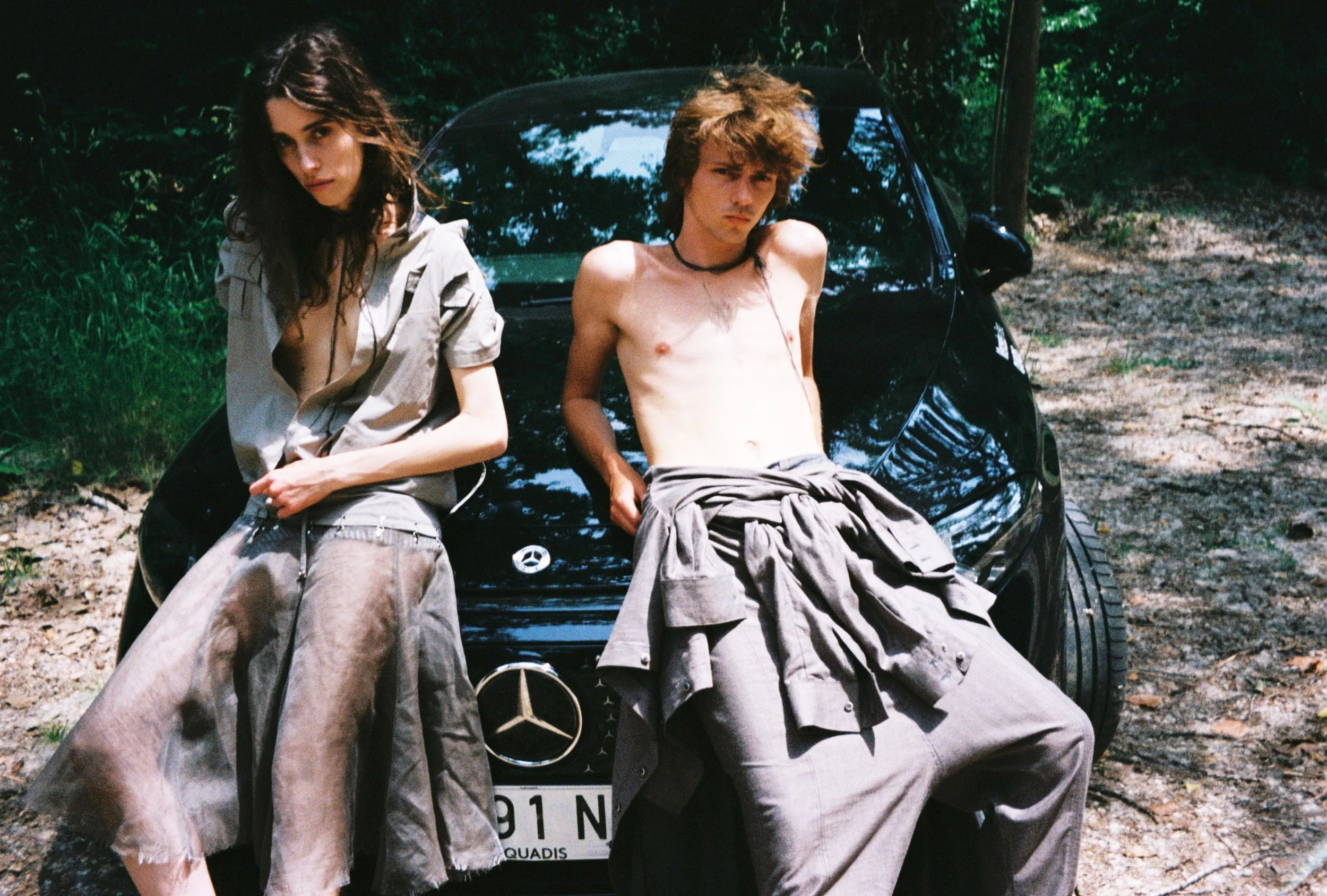
Javier Guijarro isn’t interested in dressing like the past. He’s interested in what happens when you take it apart. Born in 2000, the Catalan designer has quickly carved out his own space in the new generation of Spanish fashion, turning the codes of traditional menswear into something sharper, freer and distinctly contemporary. Since officially launching his namesake label in 2024, Guijarro has moved from the EGO runway at Mercedes-Benz Fashion Week Madrid to Paris Fashion Week, catching the attention of names like Charli XCX along the way.
But beyond the growing international recognition, what makes Guijarro’s universe compelling is its refusal to choose between seemingly opposing worlds. Rural nostalgia meets metropolitan attitude; Mediterranean landscapes collide with precise tailoring; inherited wardrobes are reworked for a generation less concerned with rules than with individuality. Rooted in local craftsmanship, considered materials and an unconventional understanding of luxury, his work finds its strength in that tension between tradition and disruption. With his latest campaign, Guijarro invites us further into a world where the familiar is never quite what it seems.
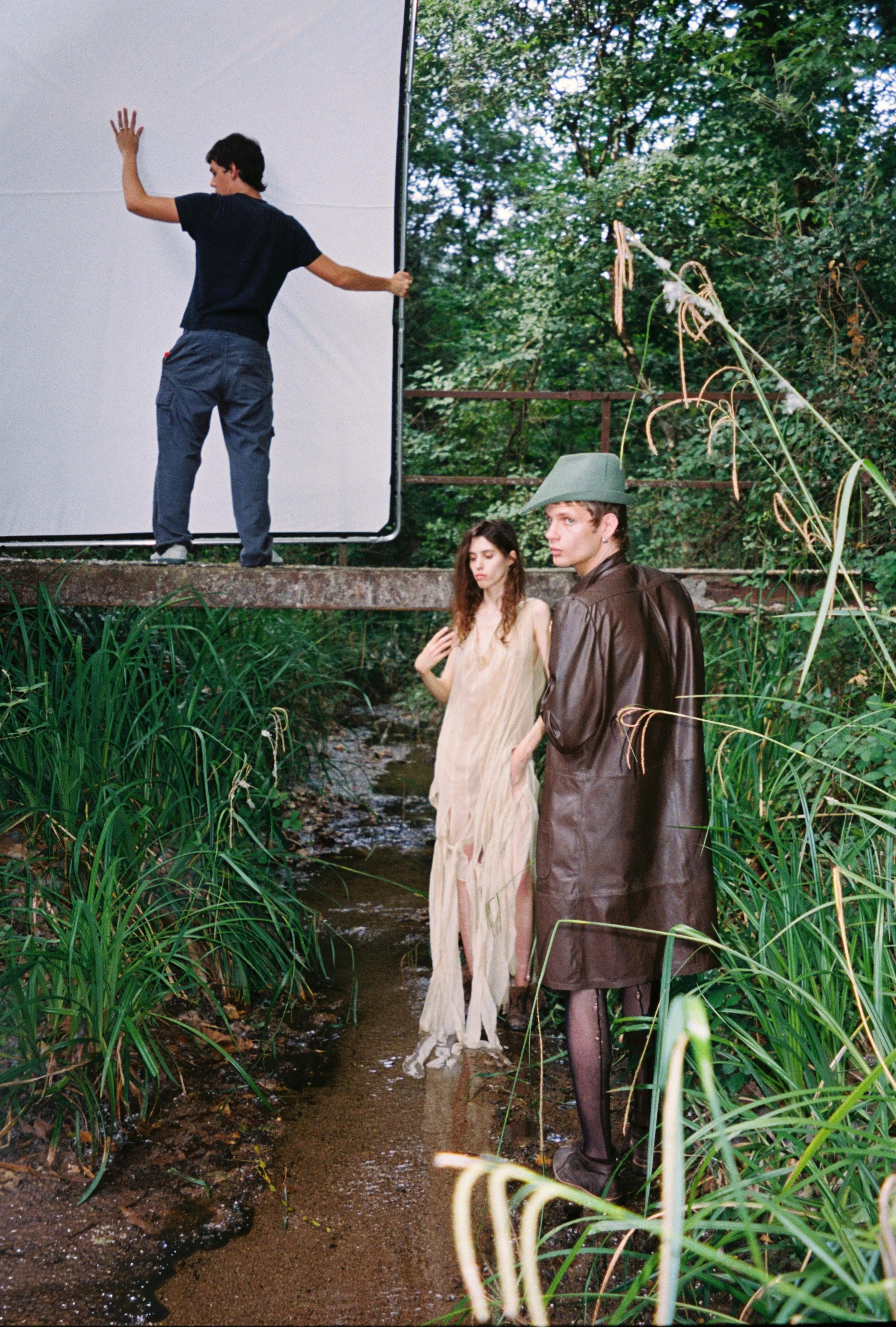
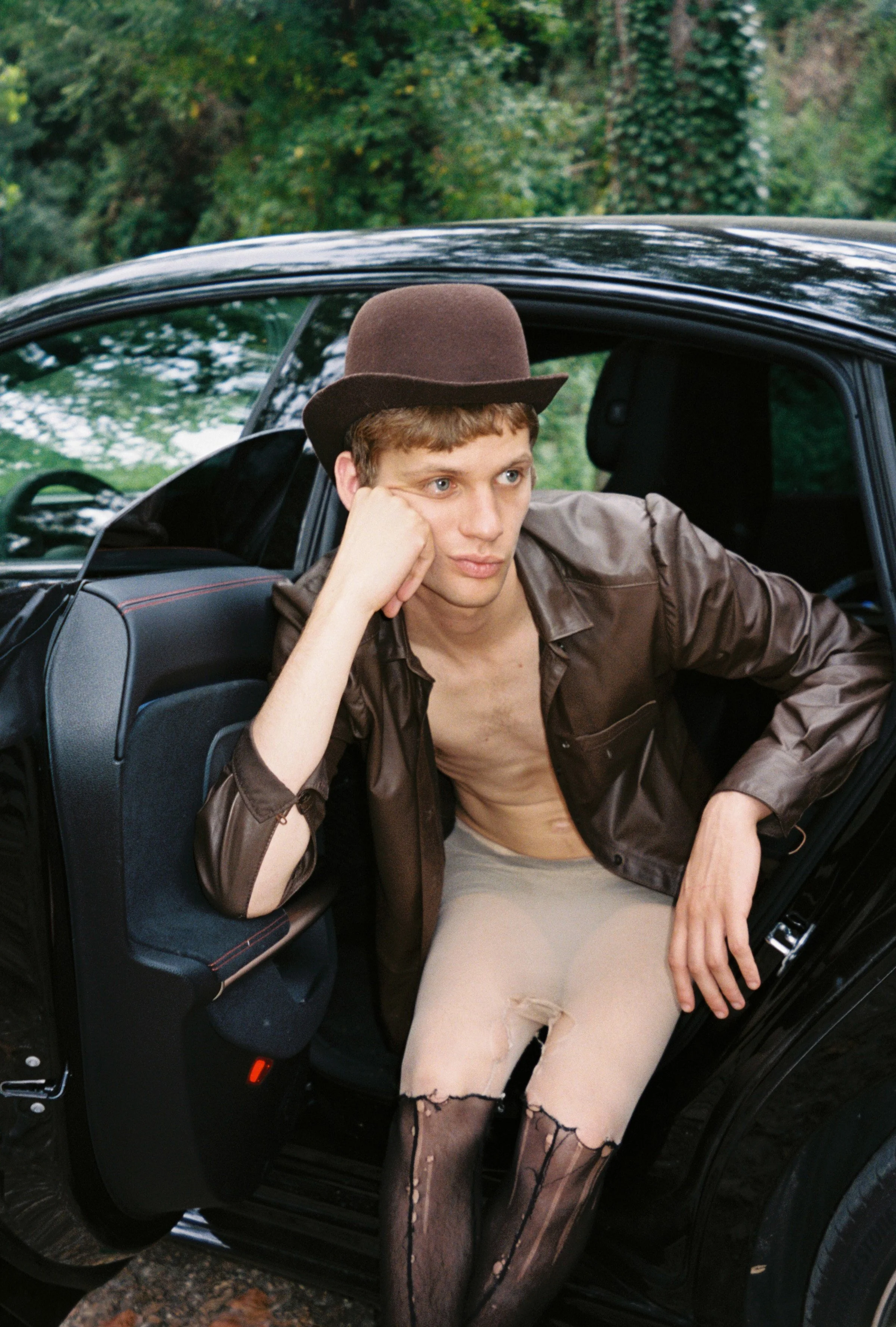
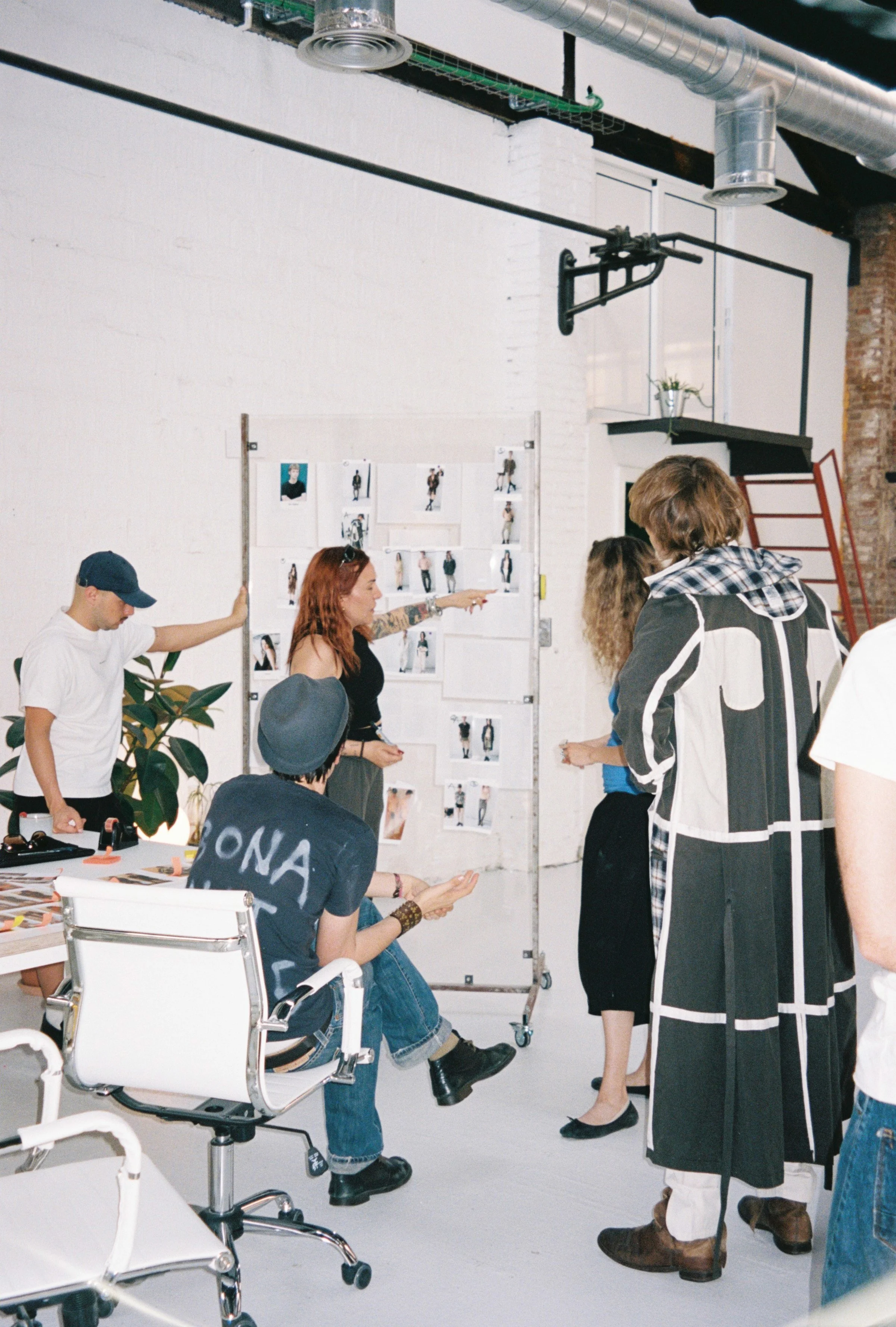
That dialogue between tradition and reinvention took on a new dimension in March 2026, when Guijarro made his debut on the official Paris Fashion Week calendar with his Autumn/Winter 2026 collection. Following a year of dressing some of pop culture’s most recognisable faces, from Charli XCX to Aitana, the designer brought his distinctly Mediterranean sensibility to the French capital. On the runway, familiar codes were pushed into unfamiliar territory: heritage checks, traditional wools, leather and silk met sculptural silhouettes, waxed surfaces and weatherproof finishes. But it was in the imperfections that the collection revealed its character. Loose threads, distressed details and garments that appeared to have brushed against the branches of a wild landscape blurred the boundary between meticulous craftsmanship and nature’s unpredictability. Rather than romanticising the countryside, Guijarro made it feel raw, tactile and unexpectedly modern.
The runway was only the beginning. For Fall/Winter 2026, Guijarro takes his universe beyond the catwalk and deep into the woods. Photographed by Brett Lloyd and styled by Alba Melendo, the campaign imagines a generation of young people retreating into forgotten natural spaces, somewhere between escaping the world and inventing a new one. One of its key references is Hirokazu Kore-eda’s Monster (2023), a Japanese film that explores childhood, misunderstood identities and the fragile relationship between society’s expectations and personal freedom. Told through shifting perspectives, the story gradually reveals the bond between two young boys who find refuge in an abandoned train carriage, away from the judgement of the adults surrounding them. It is precisely this intimacy, this desire to carve out a space where identity can exist without explanation, that resonates with Guijarro’s vision. Here, nature becomes more than scenery. It is a place of resistance, discovery and transformation, where the rules of the outside world begin to lose their meaning.
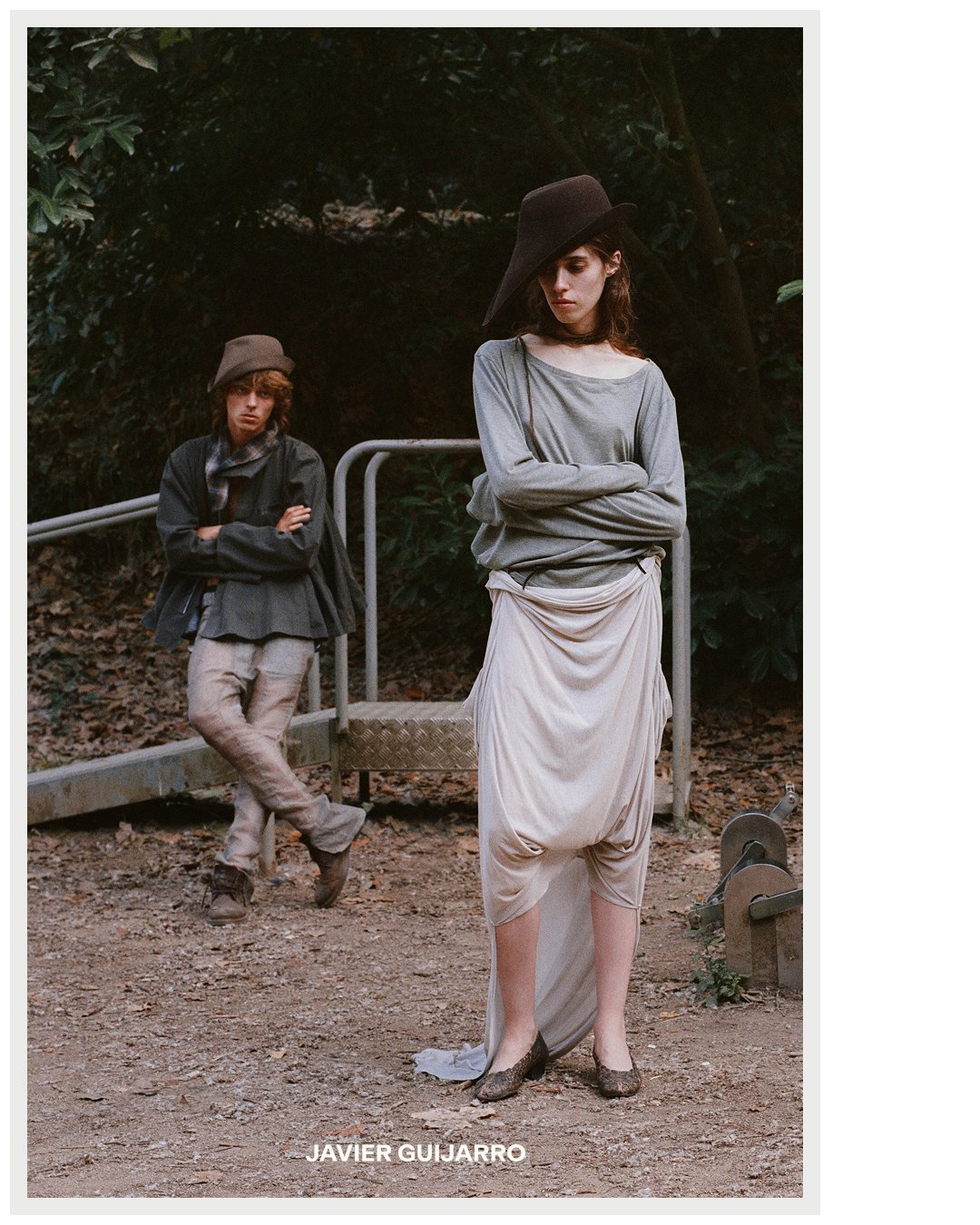
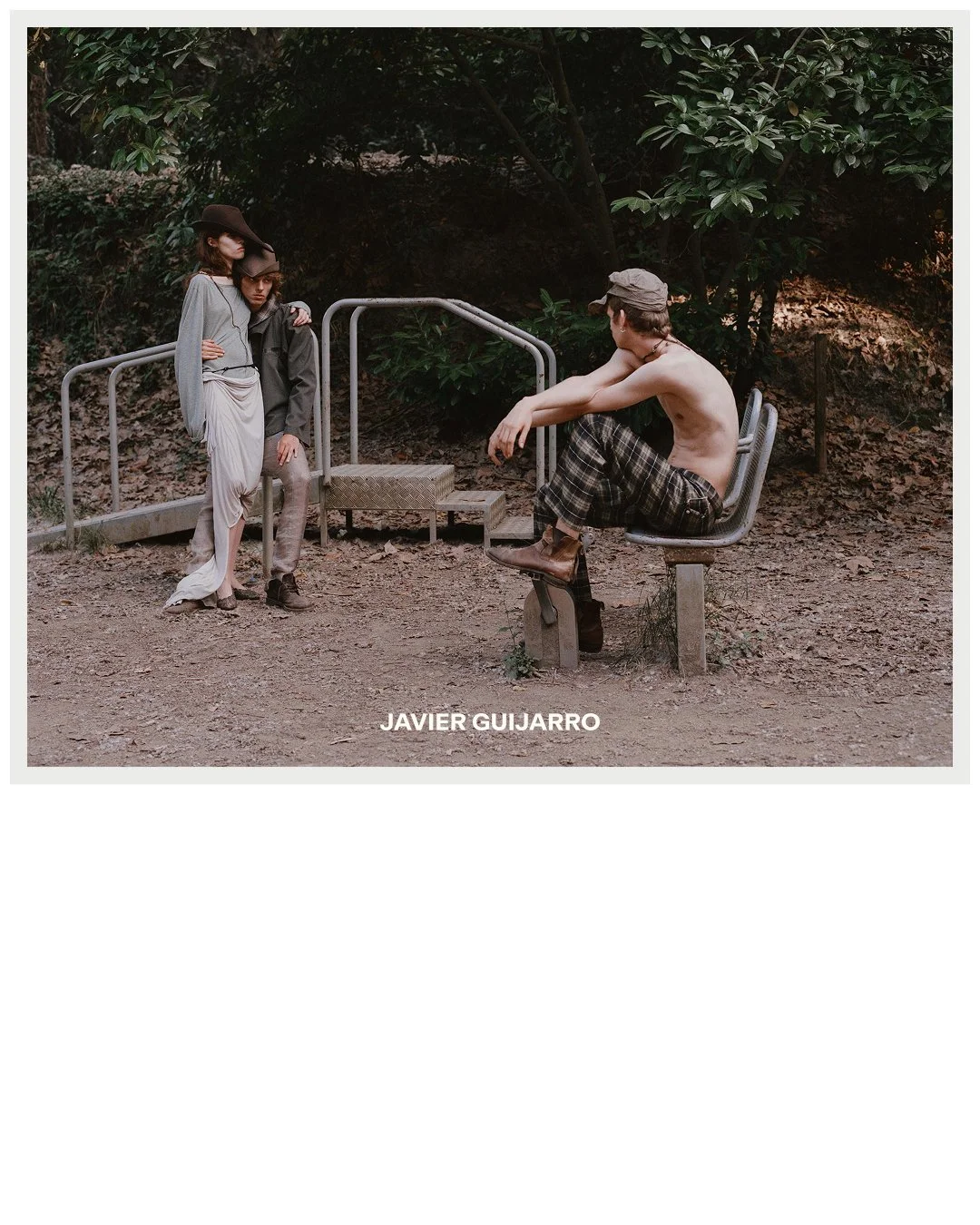
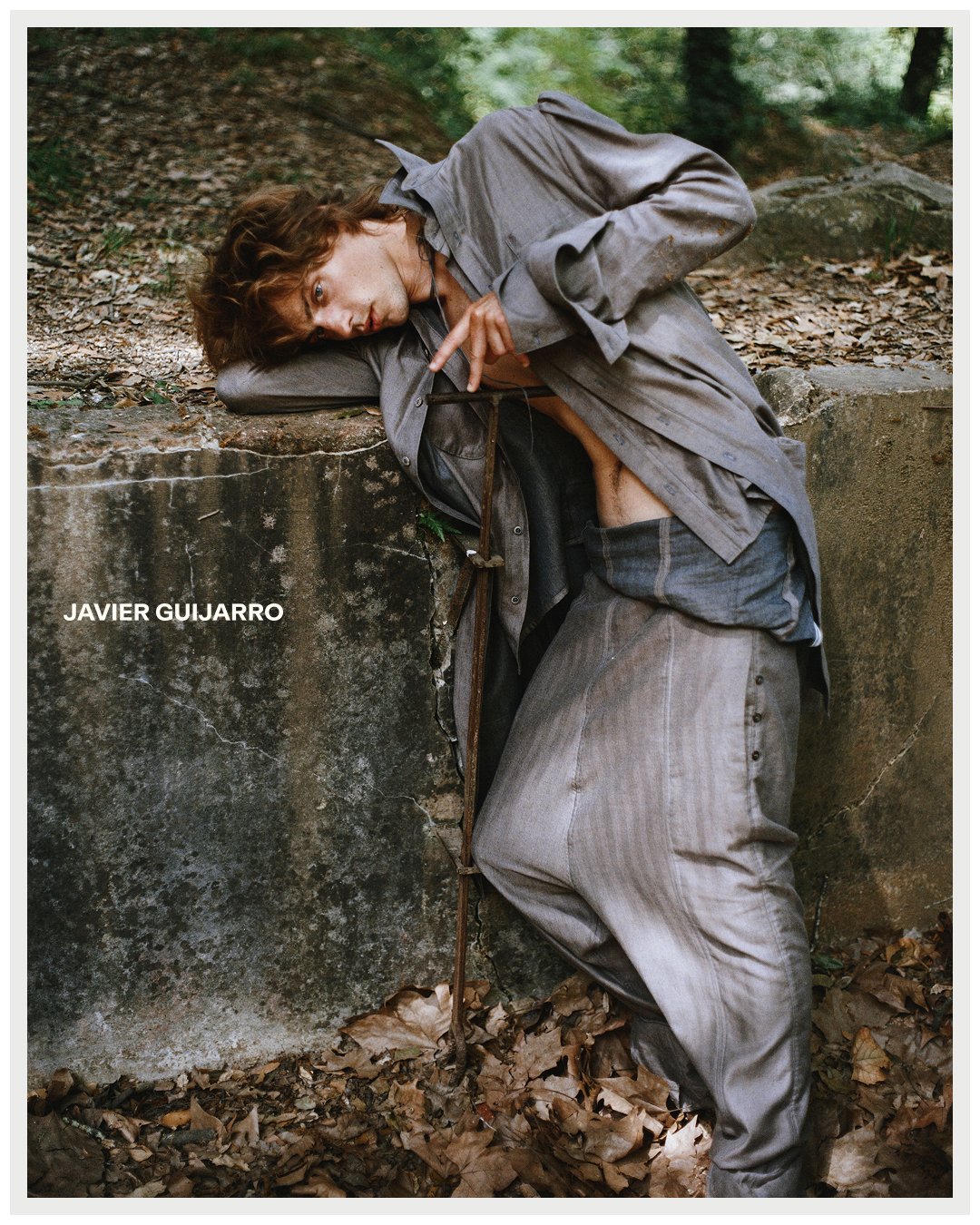
A second reference comes from Patrick McHale’s animated miniseries Over the Garden Wall (2014), a hauntingly beautiful journey following two brothers lost in a mysterious woodland known as the Unknown. Drawing on old folklore, autumnal imagery and the unsettling logic of fairy tales, the series exists somewhere between childhood innocence and something considerably darker. Guijarro channels that same ambiguity, turning the forest into a territory where beauty and unease coexist, and where getting lost might be the only way to find yourself. Bringing this cinematic universe to life is a collaboration with Mercedes-Benz that extends beyond conventional sponsorship. Through Mercedes-Benz Prelude, a campaign film directed by Hugo Pisón, and an accompanying behind-the-scenes documentary, the automotive brand becomes part of the creative journey, connecting movement, design and storytelling. A further photographic series, captured through Guijarro’s own lens, places a Mercedes-Benz vehicle within the production’s visual narrative. The result is an unexpected meeting of worlds: the wilderness and the machine, youthful escapism and contemporary luxury, all caught in the tension between the freedom to disappear and the desire to go somewhere new.
Beyond the clothes, the cinematic references and the carefully constructed imagery, Guijarro’s latest campaign is a reminder of why giving space to a new generation of creatives matters. At a time when the fashion industry often seems more interested in reproducing what already works than questioning what comes next, emerging voices bring something that cannot be manufactured: a different way of seeing the world. Guijarro doesn’t simply revisit tradition; he challenges who it belongs to and what it can become. And perhaps that’s where the real value of supporting young talent lies. Not in expecting them to follow the paths already laid out, but in giving them the freedom, resources and visibility to create their own. Because the future of fashion won’t be shaped by those who preserve its rules, but by those who dare to rewrite them.
Words by @alraco43