
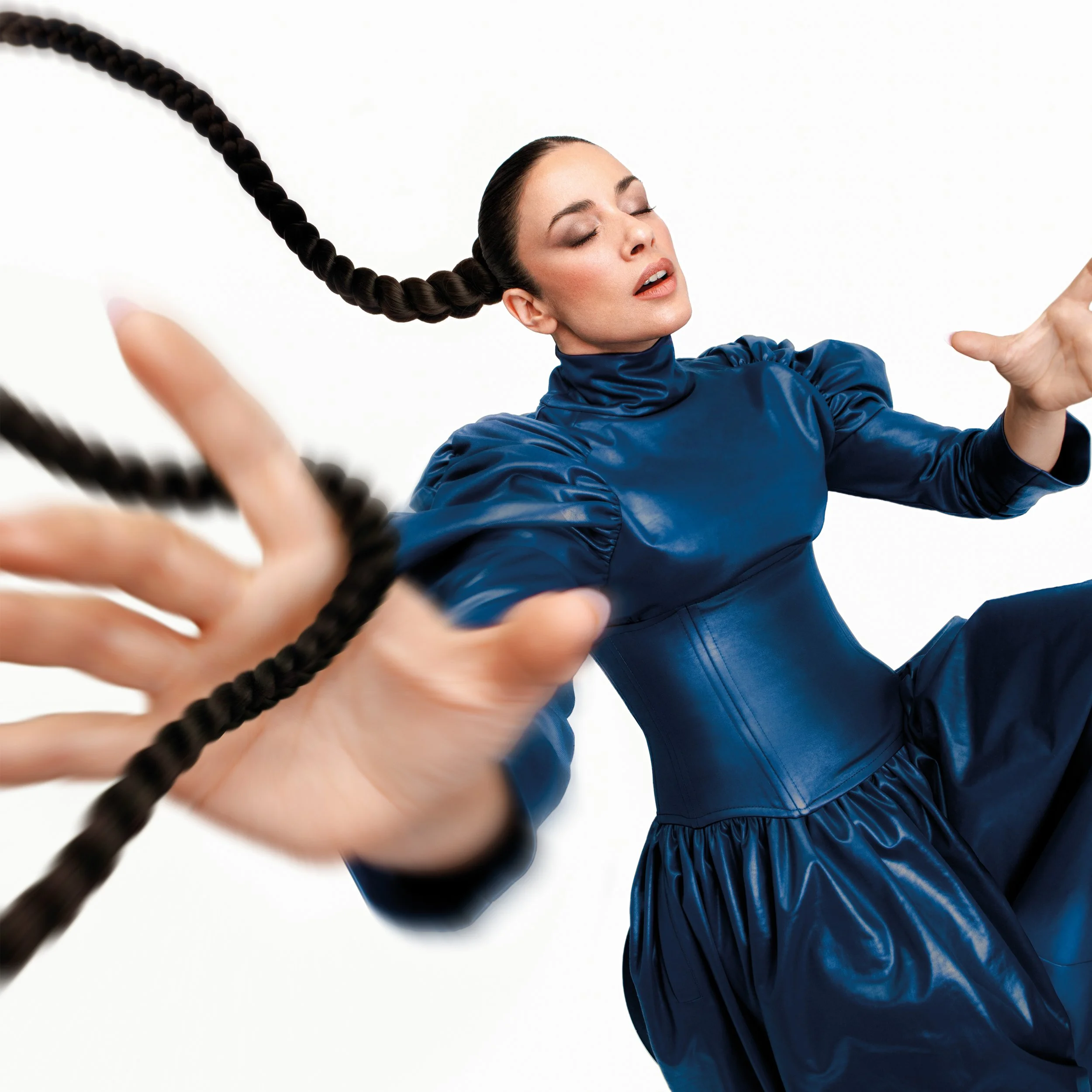
Three years after representing Spain at Eurovision, Blanca Paloma presents Trenza mía, a debut album that explores different forms of love, vulnerability, and detachment. Far from limiting herself to the musical universe that first brought her international recognition, the artist constructs a world where tradition and experimentation coexist, drawing inspiration from the poetry of Sor Juana Inés de la Cruz and Fadwa Tuqan, the legacy of Federico García Lorca, the zambras of Estrella Morente, and contemporary electronic sounds. Eleven songs that unfold as chapters of a personal journey in which the past does not disappear but is transformed.
In this conversation, Blanca Paloma reflects on the relationship between identity and media exposure, silence as a creative tool, and the importance of reclaiming cultural references without turning them into museum pieces. She also discusses her collaboration with Rocío Márquez, the political dimension of music, and the challenges of building an authentic career in an industry defined by immediacy.
ÁLVARO RAMOS: After Eurovision, many people probably had a very specific idea of who you were and what you represented within the music industry. Did you have to break away from that image to create Trenza mía?
BLANCA PALOMA: I don’t feel that I’ve had to break away from anything. I’m a very constructive person, and I believe that everything we experience adds something to who we are. I’m incredibly grateful for the opportunity Eurovision gave me to dedicate myself to music in a more focused way. Music had always been part of my life, but more in the background. I had never really imagined it becoming my sole professional activity. Thanks to that experience, I’ve been able to continue developing the path I introduced at Eurovision, where I established a foundation that brought together traditional roots and electronic music. And I say roots rather than flamenco because what I do isn’t strictly flamenco. It draws from flamenco, but also from many other traditions. I don’t feel that I’ve had to abandon that identity. I’ve simply expanded it. Everything is part of the same process.
AR: You’ve explained that this album is an opportunity to tell your own stories. What part of Blanca Paloma are we discovering for the first time when we listen to it?
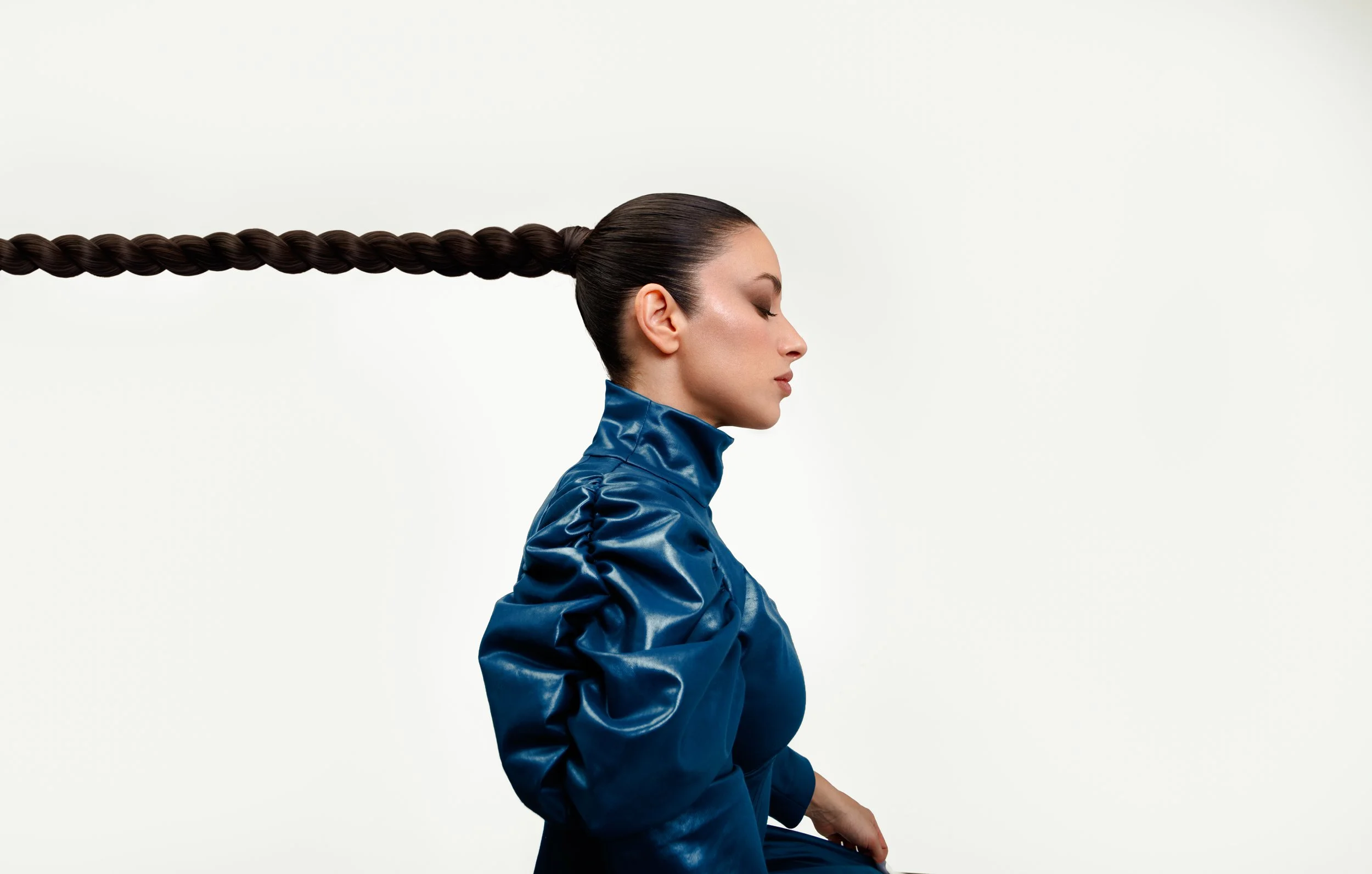
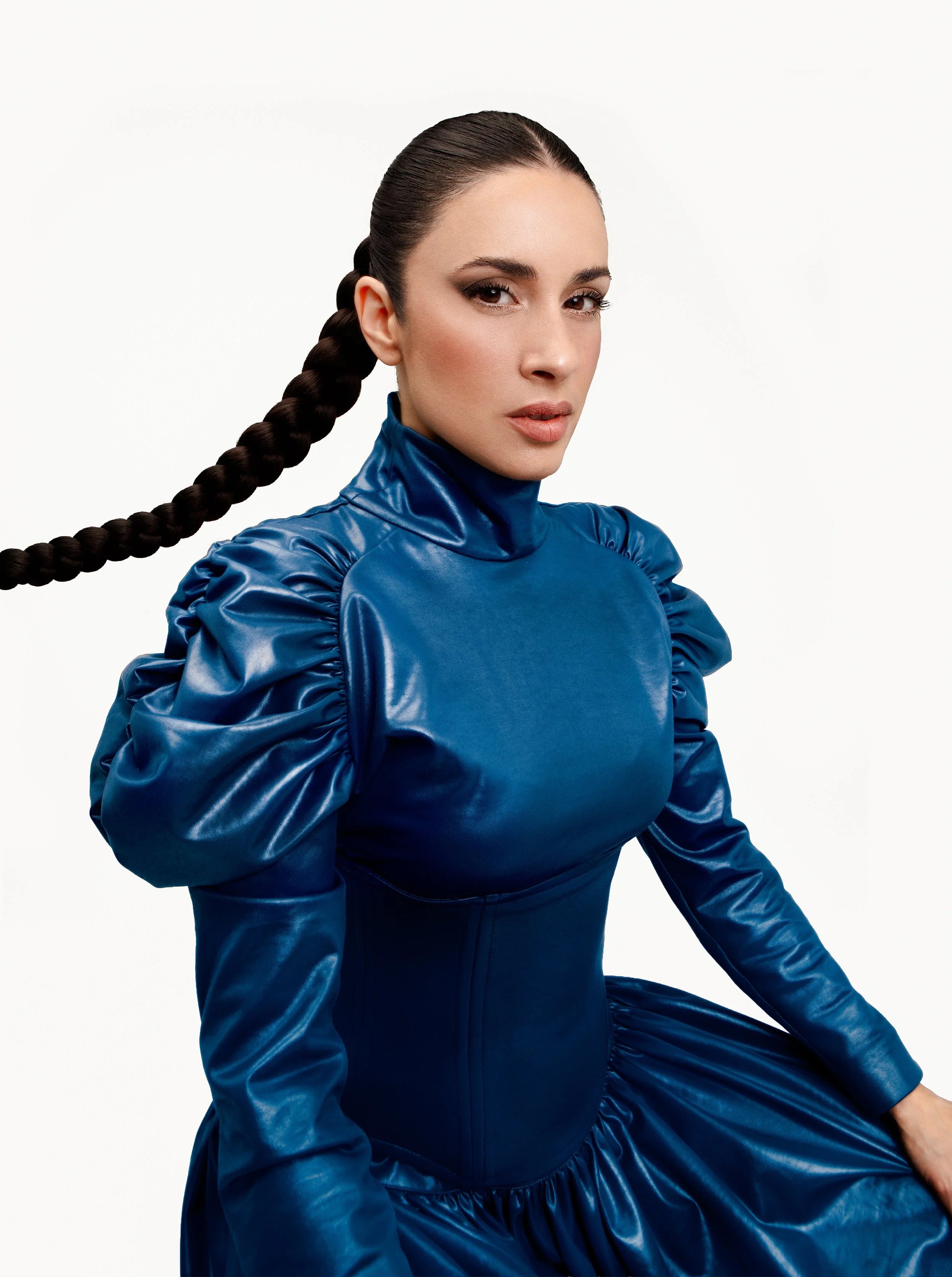
BP: The album is called Trenza mía because fourteen years ago I cut off my braid as a symbol of detachment. It was a very transformative experience. Physically expressing that gesture through my own body had a profound effect on me. I felt that my fears and insecurities were gradually falling away and that I could step onto the stage with greater confidence.
When I started developing this album, I wanted to return to that idea of transformation because I think it connects perfectly with the songs. In fact, on the day of the release, I cut off my braid again as a symbol of detachment and openness to whatever comes next. It’s like facing a blank canvas without fear. But letting go doesn’t mean breaking with the past. All those experiences are already part of me. Obviously, I’ll keep talking about Eurovision, and people will keep asking me about it for the rest of my life, but I didn’t want it to become the center of my career. That happens to many artists when they become associated with such a significant event. Eurovision is an enormous musical platform, and moving beyond that experience isn’t easy. But other things have happened since then, including my Goya nomination, and all these experiences are gradually building a career. This album is also part of that process.
I think Trenza mía allows people to get to know me across a much broader emotional spectrum. We’re not always empowered; there are moments of vulnerability too. In fact, the opening track is probably the most fragile and delicate song I’ve ever written. And beginning from that place was a conscious decision. The album has a cyclical structure: it starts in an intimate, minimalist space and eventually returns to it, but through transformation. Because cycles never bring you back to exactly the same place. You’ve always acquired another layer along the way.
AR: During the creative process, after Eurovision, we saw you distance yourself from the media noise and seek a kind of retreat. What did you find in that silence after experiencing so much exposure?
BP: I think silence is necessary regardless of whether you’re successful or exposed to the media. It helps me reflect and look inward, and at that moment, it also allowed me to keep my feet on the ground. For me, the greatest success of the entire Eurovision experience was precisely managing to remain grounded. I felt calm throughout the process, but afterward, there’s an emotional hangover that you have to gradually work through. During that retreat, I felt two things. First, I had so much to be grateful for. I needed to stop, acknowledge everything positive that had happened, and thank myself for allowing myself to experience something that hadn’t even been part of my plans or dreams.
Second, I needed to remind myself why I was making this album. After so much exposure, certain things around me had changed. I was no longer starting from anonymity, and perhaps this wasn’t the debut album I would have imagined making before Eurovision. Nevertheless, I believe it’s the album that best represents me at the moment of its release. It’s consistent with who I was before and who I am now. It preserves my essence, but it also incorporates what I’ve learned from the industry, experiences that have pushed me outside my comfort zone, things I’ve discovered I don’t want, and others I’ve allowed myself to explore.
AR: Your music has always had a very strong visual identity. Costume, the body, scenography, and movement all seem to belong to the same language as the songs. When you compose, do you hear the music first, or do you also begin to visualize that universe?
BP: I don’t think I have enough experience yet to create all those elements simultaneously. Right now, I’m at a stage where I’m reaffirming myself as a lyricist. I’ve been involved in songwriting in different ways throughout my life, but I needed to prove to myself that I could write not just the eleven songs on the album, but many more, so I could then select, develop, and refine the material. I didn’t want to settle for the first thing that came along.
For me, lyrics carry enormous weight. I like creating through images and metaphors, building a language that is almost always hopeful but also reflective. Everything that makes up the visual narrative of a song comes afterward. With this first album and my first tour, I’ve also had to be realistic about the resources available to me. Even though I’ve participated in Eurovision, the team and structure an artist needs have only been developing over the past three years. So I wanted to turn that circumstance into something positive. I was interested in making the album and its staging feel like a blank canvas, where the songs could speak for themselves. I wanted the voice, the instruments, and the lighting to guide the experience. I think lighting is one of the most versatile scenic resources and also one of the elements through which you can achieve the most with the least.
AR: You mentioned that while you were composing, things were happening in the world that you found difficult to translate into songs. Do you think artists have a responsibility to take a stand on what’s happening around them, even when doing so might come at a cost?
BP: If you’re asking me personally, I would say yes, without a doubt. Of course, I respect that everyone manages their career and personal life however they want or however they can, but I would like to see more artists with much greater visibility than mine speaking out. For example, the other day Aitana shared a comparison between a current image of Gaza and an older one, and I felt compelled to write to her to celebrate it. I wasn’t expecting it, and I thought it was an important gesture. I believe those actions also raise awareness and create a different kind of connection with audiences. When I say that I composed this album while being affected by the context we’re living through, I don’t mean that the entire project was shaped by it. But I did want that reality to be reflected in some way.
Translating frustration and hopelessness into a song is incredibly difficult. I’m still working on it. Since songwriting has become a more important part of my profession, I’ve come to appreciate singer-songwriters’ lyrics even more. In a way, they were the influencers before social media existed. There was a connection with audiences that also came from their social commitment. The difficult part is finding a way to express all of that without turning it into a political pamphlet. Eventually, I came across a poem by Fadwa Tuqan, a Palestinian poet, that allowed me to do so. The poem is called Un instante (A Moment), and it appears just before the final song. For me, the two pieces work as a diptych. The poem introduces the album’s closing track and perfectly summarizes the idea that, after completing the journey, you never return as exactly the same person. What’s beautiful is that, rather than remaining trapped in the past or becoming anxious about the future, the poem celebrates the present. It’s a kind of carpe diem: we have a flower in our hands, and we should enjoy it before it withers.
AR: Moving into the songs themselves, Contigo opens the album from a particularly vulnerable place. Did you envision the record as a journey from emotional attachment toward detachment?
BP: Not exactly. The order of the songs doesn’t follow a literal chronology. Many factors come into play, including elements of musical psychology, such as the keys and the emotional states that different songs evoke. I wanted the journey to feel organic because personal processes are never entirely progressive or linear. There are always moments of doubt, situations where you lose yourself, find yourself again, and keep moving forward.
Contigo is the entrance to that world. It’s a song where I open myself up and reveal my weakness, that attachment to an absence. Then comes Lo fugaz, where there’s a sense that time has passed, the wounds have healed, and everything has been overcome. But then Cuento de hadas arrives and questions that apparent stability.
I’m a Gemini, and I consider myself quite a dual person. I can contradict myself, and that song is precisely about that. It’s about how something that looks like a fairy tale can conceal toxic dynamics. There are relationships where good and bad things coexist, but when that alternation creates a constant imbalance, it eventually becomes unbearable. The song explores that instability while approaching it from a playful perspective. I laugh at my own duality and also at the duality of the world. We live in a hostile environment, but we try to find light wherever we can in order to survive.
AR: In Sentaíta en la escalera, that search for light becomes particularly apparent. The song begins with imagery deeply connected to tradition but introduces electronic production that seems to transport us into another universe. What interests you about bringing together worlds that, at first glance, seem so distant from one another?
BP: I like songs that don’t necessarily end where they begin. I try to give them a twist, take them somewhere else, and catch the listener off guard. Ultimately, life works that way too. Unexpected events always disrupt the path you had imagined and force you to step outside the straight line. And often, those unexpected places are the ones that teach you the most. With this album, I didn’t want people to put me in a box. I didn’t want someone to simply say it was an album of traditional roots and electronic music. It is, but it’s also many other things. Suddenly there’s a bachata, at another point you hear drum and bass, and some songs might take you into a more rock-oriented universe. I didn’t want to confine myself to specific stylistic parameters. Instead, I wanted to use all those tools in service of the story I was trying to tell. There’s also a conscious decision to leave certain songs more stripped back, with less production, allowing the voice to lead. In others, the voice and the production become one. I like having different emotional states throughout the album so that the journey never becomes monotonous.
In Sentaíta en la escalera, I also return to something I really enjoy doing as a songwriter: taking existing traditional material and rewriting it. The original passage describes someone sitting on the stairs, waiting for a future that never arrives. I transform that idea and end up saying that I’m calling out to the future, that the future is already approaching. I’m interested in expanding the meaning of those expressions and finding another perspective. That song creates an imaginary landscape from which to believe in a better world. I often turn to nature because I feel that’s where everything begins. They’re images I invent to weather the storms, hold on to the good things, and remain hopeful.
AR: There’s something particularly interesting about the references in Trenza mía. We encounter Estrella Morente’s zambra, the words of Sor Juana Inés de la Cruz in Expresión, the world of Lorca, and the Palestinian poetry of Fadwa Tuqan. At the same time, we’re living through a moment when many young artists are reclaiming these cultural imaginaries. I’m thinking of Yerai Cortés, for example, or projects such as the podcast Las Hijas de Felipe. Is that connection between cultural memory and contemporary creation something you’re consciously exploring?
BP: I think we’re living through a very interesting moment for cultural memory. There’s a desire to pay tribute to and revisit the references that have brought us to where we are today. We’re seeing it across different artists and disciplines. It’s almost like a new era in which tradition and cultural roots are being valued again. These references have endured precisely because they remain relevant. In my case, I also try to maintain a balance between male and female figures. There’s Sor Juana Inés de la Cruz, Fadwa Tuqan, Lorca’s verses… But beyond paying tribute to them, I also use those materials as a songwriting strategy. They’re starting points that inspire me and help me escape the blank page. You don’t always have to start from scratch. I think what’s interesting is asking yourself what you can contribute to something that already exists and belongs to our collective cultural memory.
AR: Trenza mía itself revisits a zambra we know through Estrella Morente. What made you decide to reinterpret a song you had already heard and performed so many times?
BP: It’s a song I’ve sung thousands of times. I’ve inhabited it so deeply that, at a certain point, I began asking myself what I could bring to it, what I could add to the interpretation Estrella had already given us. When I met her, I mentioned that I was thinking about covering it. It was almost as if I were asking for her permission. And she told me that the zambra belonged to everyone. I thought that was beautiful because it connects with a way of understanding music that I deeply share. When an artist releases a song, in a sense, it stops belonging exclusively to them. It becomes something other people can interpret, transform, and make their own. It becomes part of a shared cultural heritage.
AR: In Tarara loca, alongside Rocío Márquez, you revisit a figure deeply rooted in Spanish popular culture. However, the song offers a different reading of that character, one much closer to freedom and autonomy. How did that reinterpretation come about, and what does Rocío bring to it?
BP: It’s the first collaboration I’ve ever done within my solo project, and for me, Rocío was the perfect person for this song. La Tarara is a traditional character who has survived through countless popular verses describing how she dresses, how she dances, or how she behaves. Ultimately, they reflect something we love doing as a society, which is commenting on other people’s lives. I wanted to turn that perspective around and write a song about an empowered character who takes pride in refusing to conform to social expectations. And for me, Rocío represents exactly that. She has a doctorate in flamenco and an incredibly deep understanding of the tradition and what is considered its purest form, yet she’s not afraid to hybridize it and fuse it with other musical languages, including electronic music. For me, she’s a teacher. And working with her has also shown me that she’s an incredible collaborator, both onstage and off. It’s been an enormous privilege to share this song with her.
AR: One decision that particularly stands out on the album is the absence of Eaea. After everything that song meant for your career, why did you decide not to include it on your debut record?
BP: There’s no strategy behind it. I simply feel that Eaea already belongs to the Eurovision universe and, in a way, to that particular moment. It could perfectly well have been included on the album. Some people might have chosen to add it as a bonus track to increase streams because we know the industry is very numbers-driven and heavily influenced by marketing. But for me, it was important to respect the conceptual journey of Trenza mía. I wanted to finish with the poem and the final song because that ending has a particular meaning within the journey I’m proposing. Including Eaea just for the sake of it didn’t feel right. That doesn’t mean I’ve abandoned the song. In fact, I still perform it live. It remains part of my repertoire and my identity as an artist. And who knows? Maybe one day it will appear on another album, perhaps even in a different version.
AR: Finally, I’d like to move away from the usual advice given to emerging artists. Based on your own experience, what would you say to someone trying to build a music career and find their own voice?
BP: I think I’d ask them the same question I asked myself when I went on that retreat: Why are you really doing this? Why are you pursuing that dream? What part of yourself do you want to express through it? I didn’t start out seeing music as a business. Obviously, it’s now become my job and my livelihood, and I hope it can remain that way for a long time. But we all know how difficult it is. There’s an enormous amount of music out there, so much saturation, and now we also have to deal with everything that’s emerging through artificial intelligence.
That’s why I think it’s essential not to lose sight of the reason you started. Whether you reach great heights or not, whether you achieve the goal you set for yourself or fall short of it, if you know why you’re doing something, the process itself already has meaning. There’s a line by Jorge Drexler that I really love: “Love the journey more than the outcome.” I think that’s what it’s about. Enjoying the mistakes, the successes, the growth, and the learning. Allowing things to happen without constantly thinking about what your next big achievement should be. I have a clear idea of where I want to go, but I also know that life will find ways to surprise me and take me to places I never imagined. Ultimately, Eurovision was exactly that: something that had never been part of my plans and ended up transforming everything.
You can experience Trenza Mía live in the next following dates:
Oct. 24 2026, Sala X, Sevilla, Spain (tickets through this link)
Oct 30 2026, Gran Teatre D’Elx, Elx, Spain (tickets through this link)
Nov 06 2026, Teatro De Las Esquinas, Zaragoza, Spain (tickets through this link)
Jan 23 2027, La Sala, Madrid, Spain (tickets through this link)
Questions by @alraco43