
ZELIG DAVOULT: AN IN-DEPTH INTERVIEW
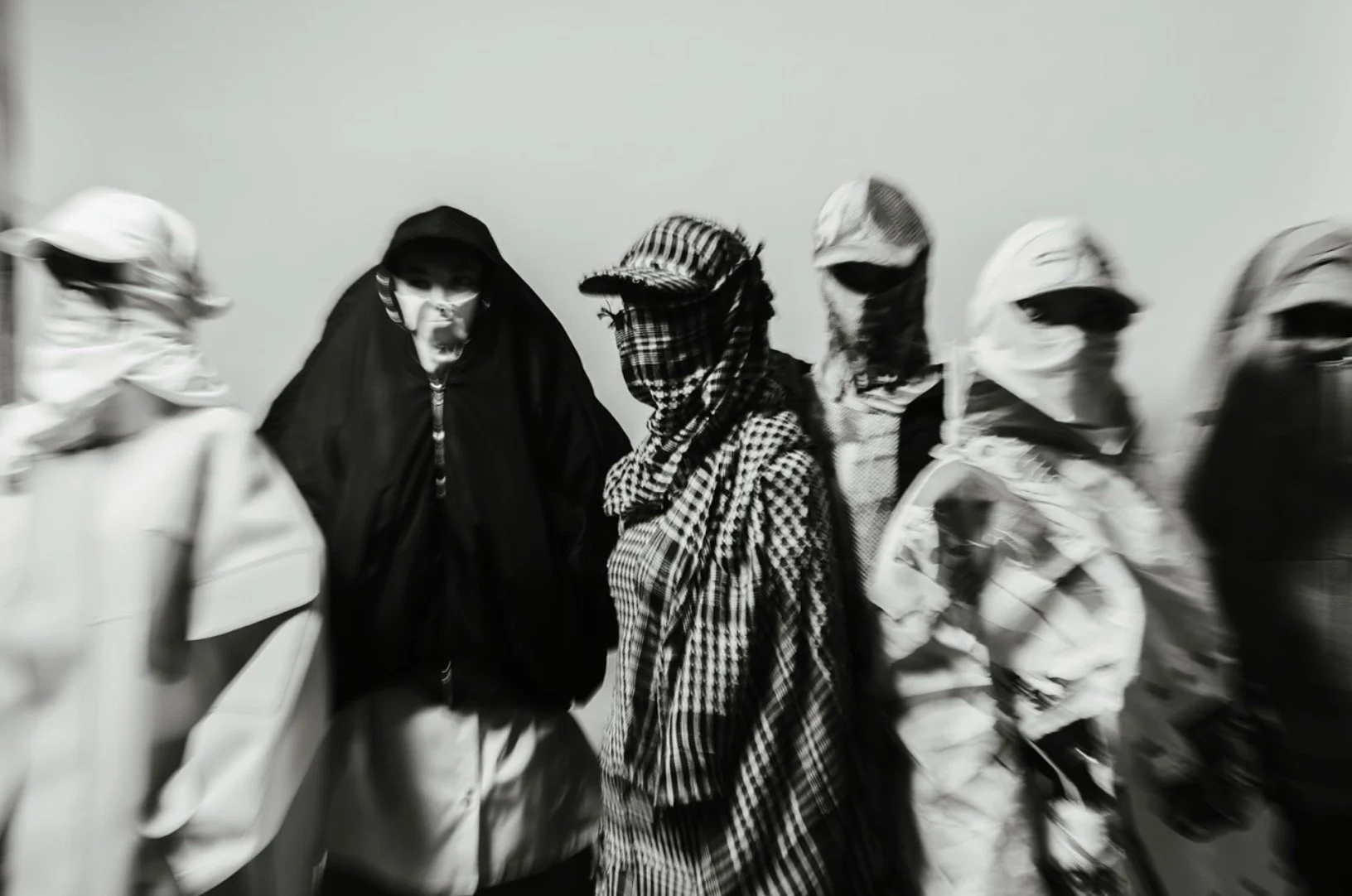
In VIENDRA LE TEMPS DU FEU, fashion becomes a site of confrontation—between order and chaos, visibility and protection, individuality and collective resistance. Drawing from personal political history, street protests, and rigorous training at the Institut Français de la Mode, Zelig Davoult constructs a wardrobe rooted in everyday archetypes yet charged with urgency and dissent. This interview traces the ideological, technical, and emotional foundations of a collection that treats the street as both stage and battlefield, where garments operate as uniforms, shields, and statements—bearing witness to global struggles while asserting fashion’s power as an active, political force.
Laura Fernández: What inspired the title “VIENDRA LE TEMPS DU FEU” for this collection?
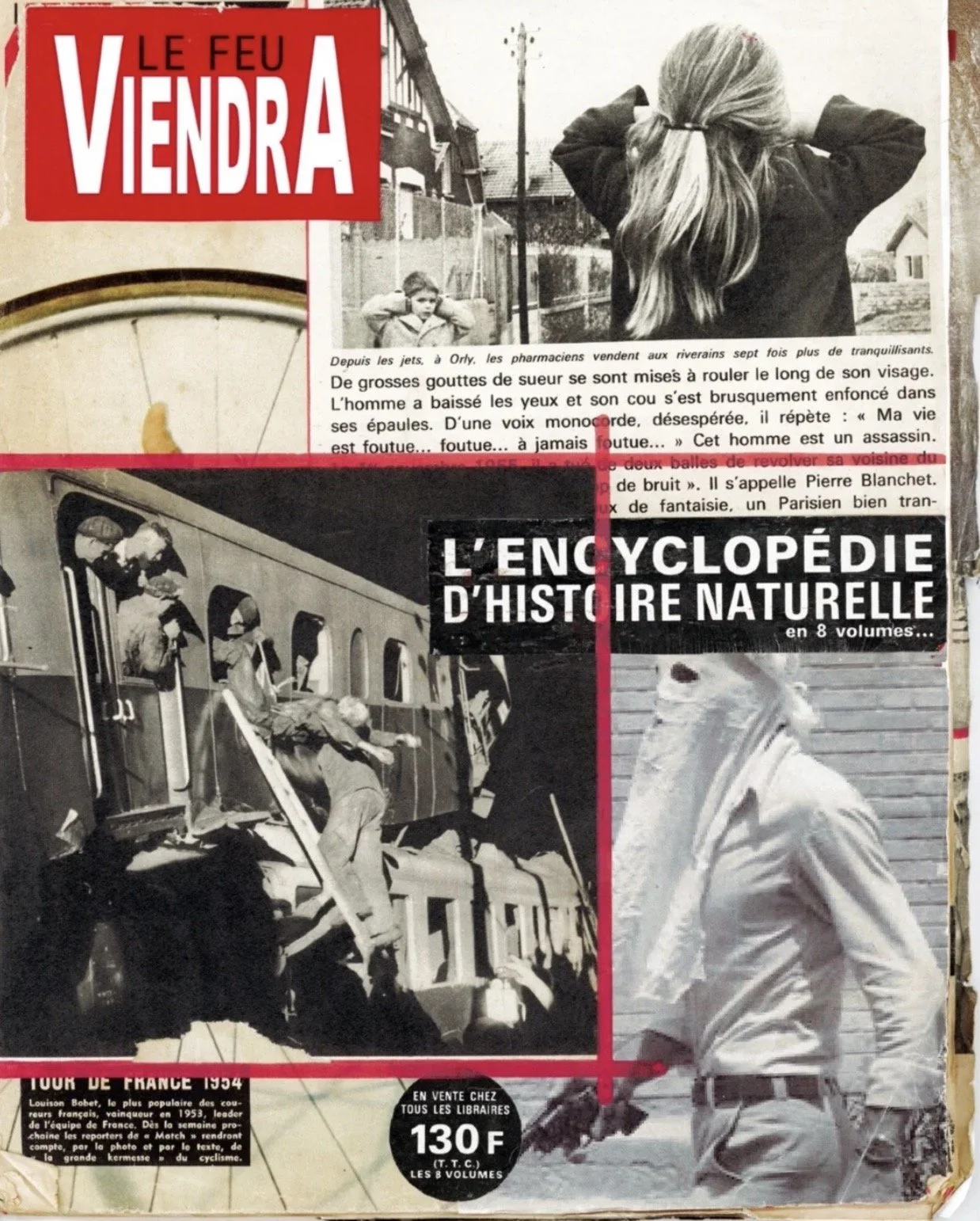
Zelig Davoult: A few months before starting this collection, I saw a poster on the street with those same words, and they resonated deeply with what I was thinking at the time. Initially, the collection was supposed to be titled VOIR LE MONDE BRÛLER (“See the World Burn”), in reference to a French song. But VIENDRA LE TEMPS DU FEU had a more urgent and prophetic tone; a kind of warning: chaos is coming.
LF: How did the idea of treating the street as a stage for protest, for tension between order and chaos, come about?
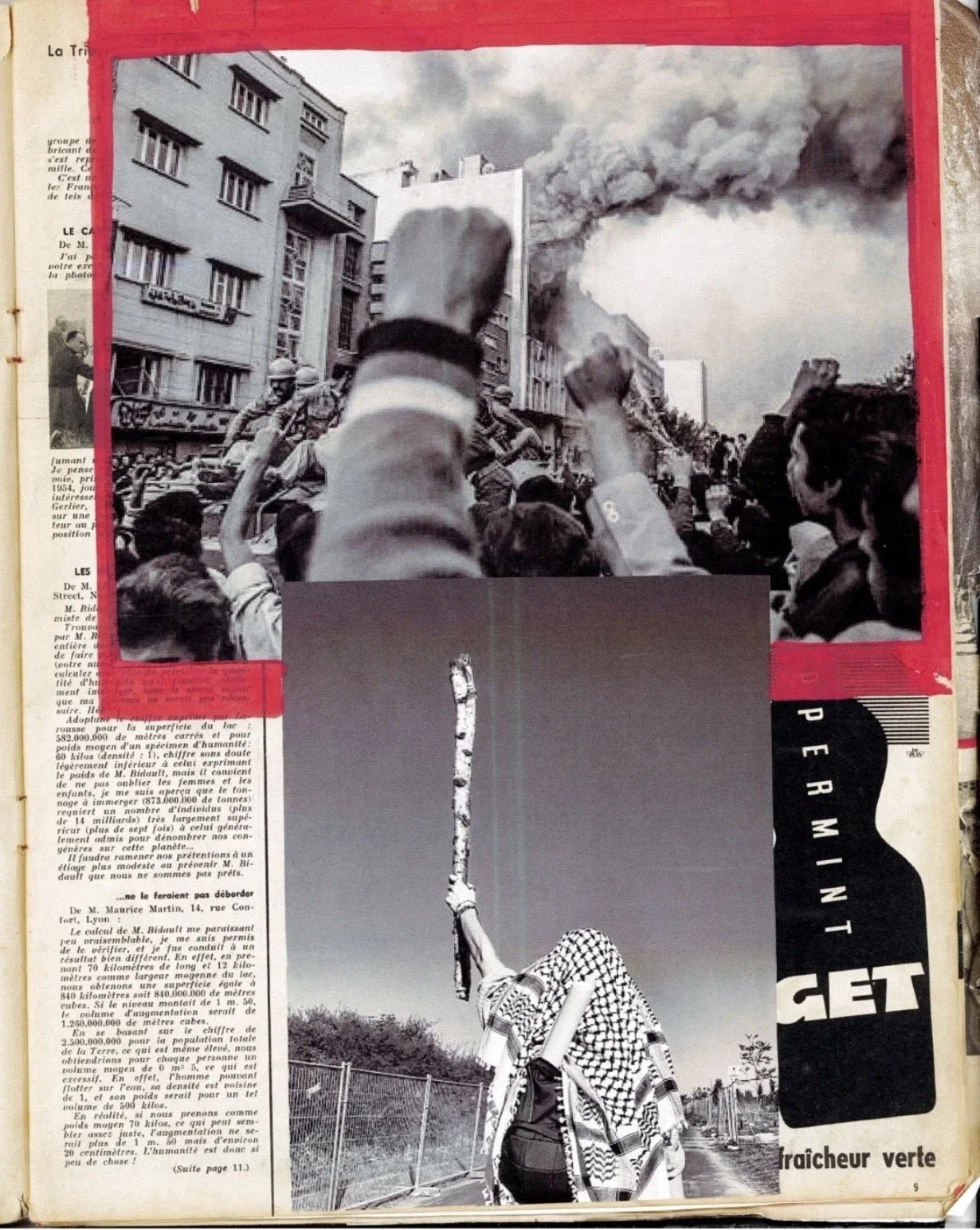
ZD: My political involvement began with street protests when I was a child, marching with my parents. Since then, I’ve been fascinated by that environment where tension is at its peak and chaos is always near. Protests show the direct confrontation between order and disorder; Protesters facing the police, and that chaos is often a response to the violence of the establishment or those who represent it in the streets.
LF: How did your training at the Institut Français de la Mode (IFM) influence your process? Was there a project or class that led you to such a political collection?
ZD: IFM played a fundamental role in teaching me to transform an abstract political idea into a concrete fashion proposal. The school gave me the technical foundation I needed: pattern making, tailoring, construction, textile experimentation, and that technical framework became the tool that allowed my political thinking to take shape. There was a project in my second year that was particularly decisive. We had to create a tailored jacket and trousers. Instead of approaching it from a classical perspective, I designed a “sweatshirt protest uniform,” a hybrid between tailoring and protest gear. That project was the first time I understood that I could unite political statements with rigorous fashion construction. It taught me that activism could live within the garment, not just as graphics or slogans.
LF: How do you define your relationship with fashion: as a designer, an activist, or both?
ZD: Sometimes both, sometimes not. In my personal work, the activist dimension is essential; it shapes how I think about bodies, power, and society. But I still want to grow technically as a designer, and I know that working for established brands won't always allow me to blend fashion and activism. Both roles coexist, but in different ways depending on the project.
LF: You reinterpret archetypes like workwear, tailoring, or sportswear. Why are you drawn to “everyday clothes”?
ZD: Because it's what I wear. It might sound obvious, but I want my designs to be wearable, by real people, in real life. Sometimes the garments become more complex, but the goal is to create clothes for an active life, not for elitist environments. My work is rooted in the street, in working-class aesthetics. It would be strange to use its energy without adopting its codes; it would be a kind of social appropriation, and I refuse to do that.
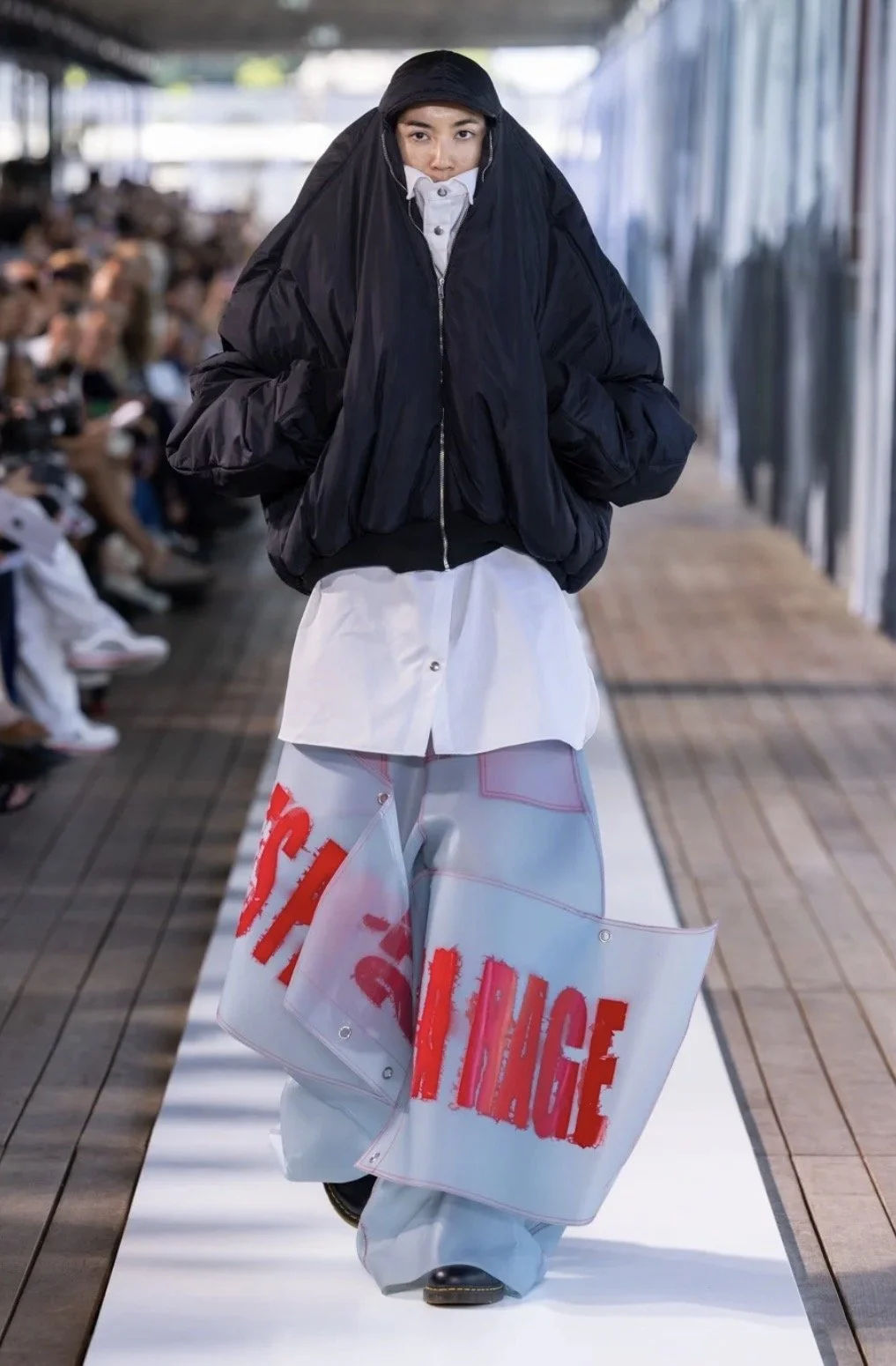
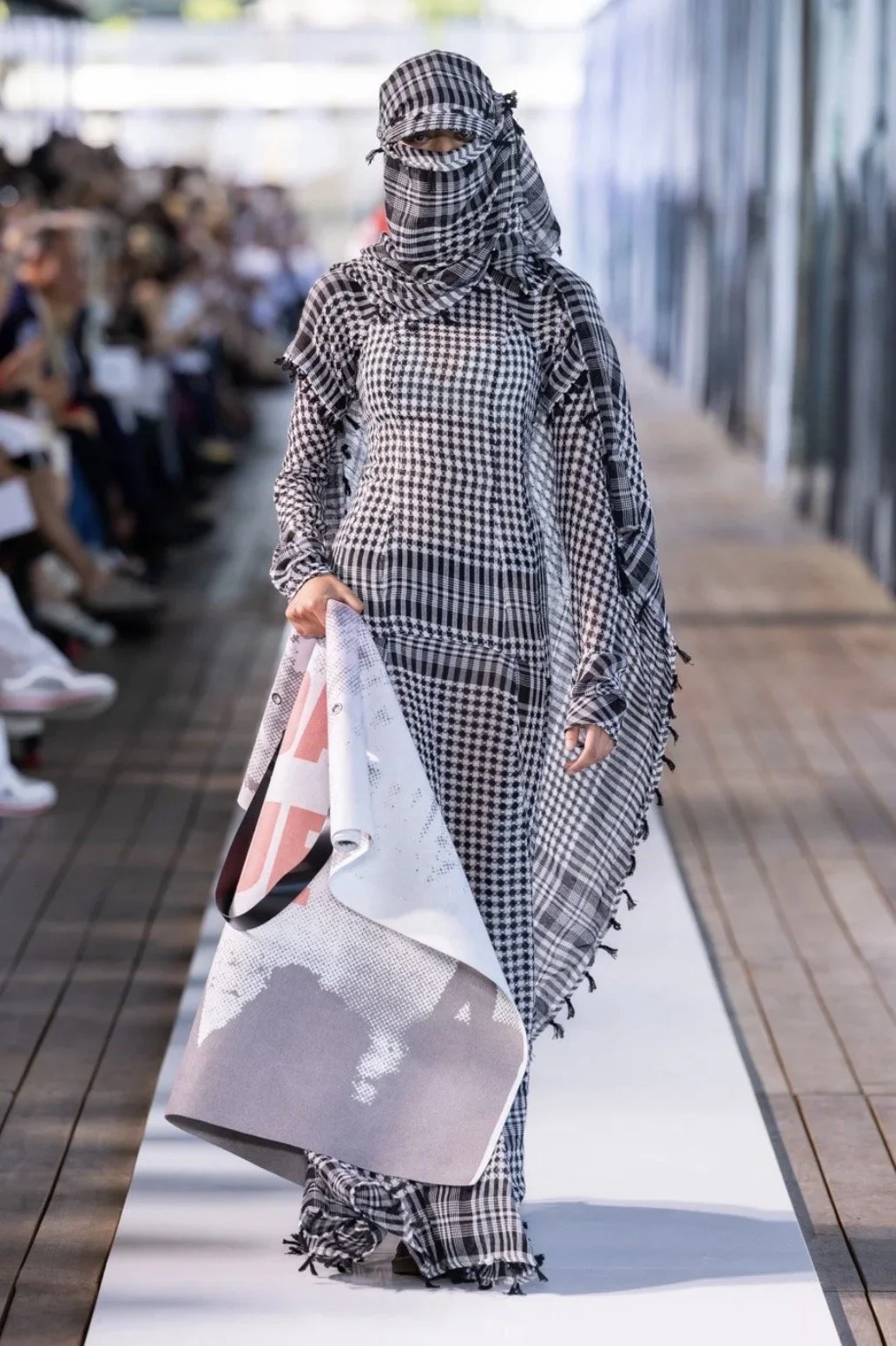
LF: Many of your pieces have strong symbolism, like the kewiyeh. What does it mean for you to incorporate this fabric? And what message did you want to convey with the “neo-kewiyeh dress”?
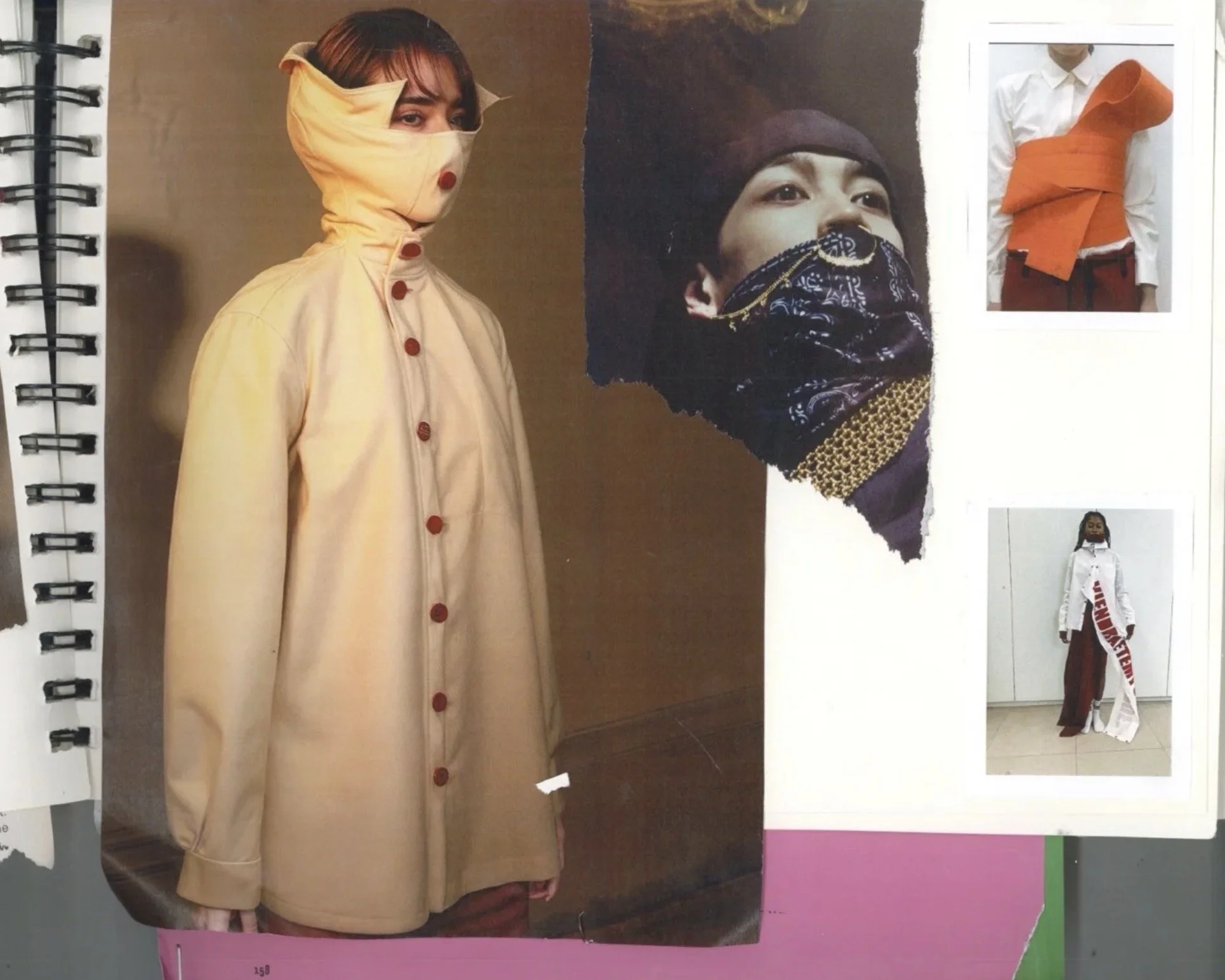
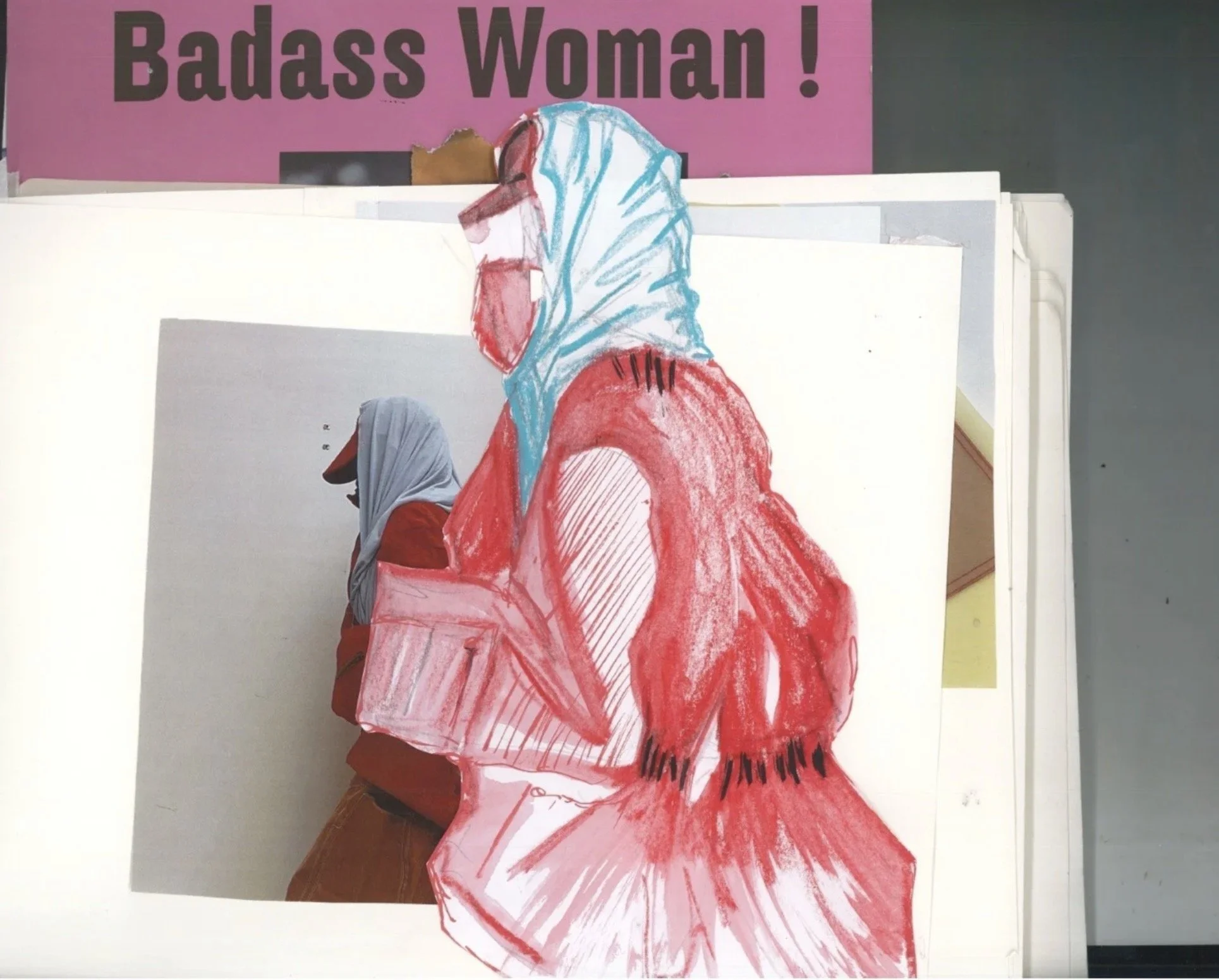
ZD: First, I wanted to bring Palestine to the runway, as a gesture of opposition to the Israeli government and its supporters who are trying to erase Palestinian existence. The kewiyeh is a historical symbol of Palestinian resistance, and that's why I used it. But with this silhouette, I also wanted to question how Muslim women are perceived in public spaces. It was a way of saying "shut up" to those who assume that a woman who wears a hijab is automatically oppressed. In my look, she hides her face, yes, but she stands proud in front of everyone, strong and confident, defending her beliefs.
LF: Some jackets and pants include phrases like "Kill Fascism." How do you choose these phrases and balance design and political message?
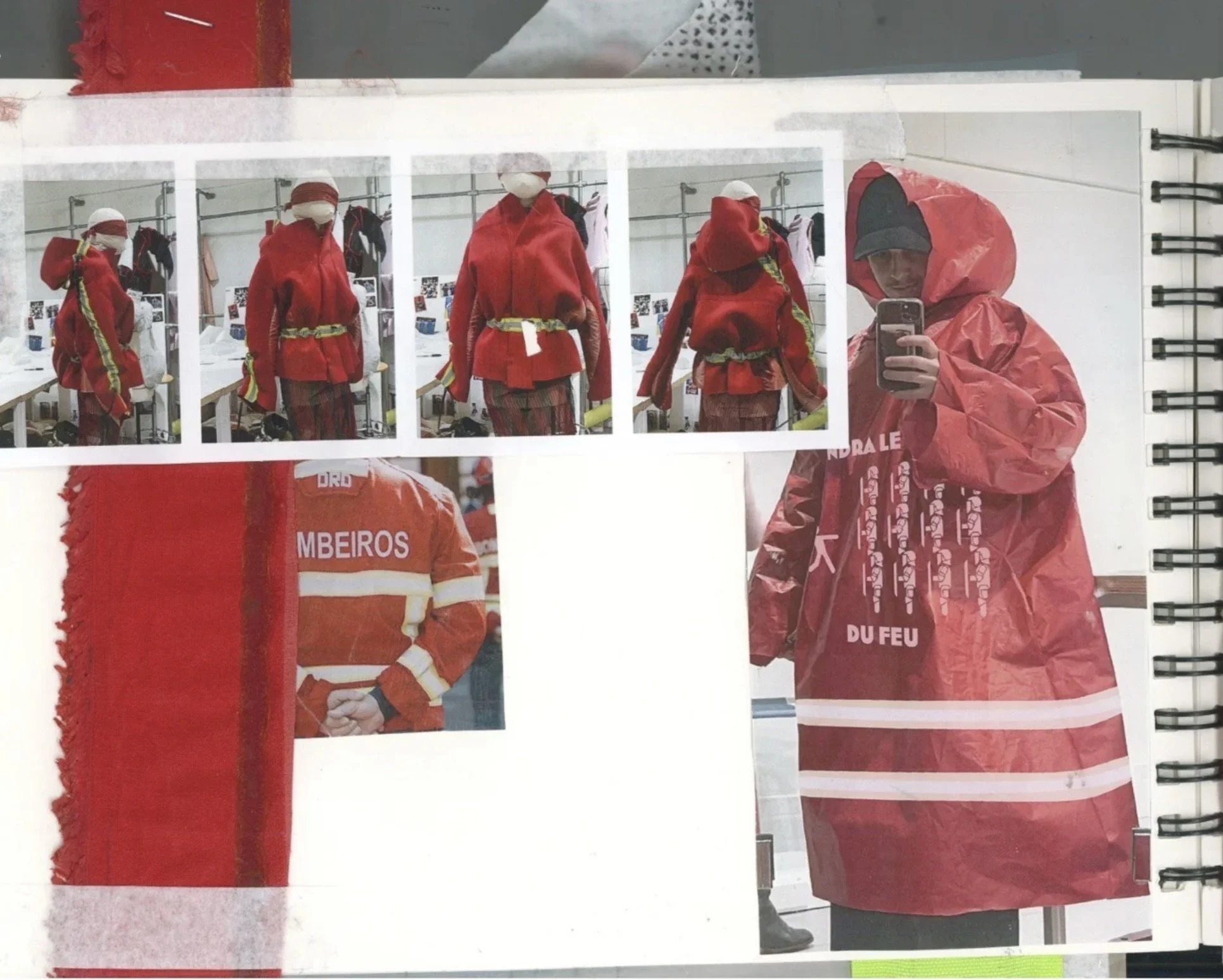
ZD: I work with two complementary stances: the shapes and construction evoke hiding and protecting oneself, the graphics express empowerment. During protests, individuality dissolves into the collective. So, in my work, you first hide, and then you stand up for your ideas.
LF: The idea of the uniform is strong in your collection. What does a “uniform” represent in this context?
ZD: For me, uniforms represent the political moment when bodies cease to be isolated and become collective. A protest only becomes a protest when people align—not necessarily in opinion, but in presence. Clothing plays a huge role in that. Uniforms erase class, gender, and origin. They transform vulnerability into cohesion. In uprisings, people often dress similarly—sweatshirts, masks, bomber jackets—not for fashion, but out of necessity and recognition. This “street uniform” is a tactical tool against repression, surveillance, and fear. So in VIENDRA LE TEMPS DU FEU, the uniform is a form of resistance. It is a rejection of individualism. It is the textile equivalent of saying: we are together, we fight together, they cannot separate us.
LF: How did you technically work with the fabrics to achieve the silicone, the rips, or the poster-like pieces?
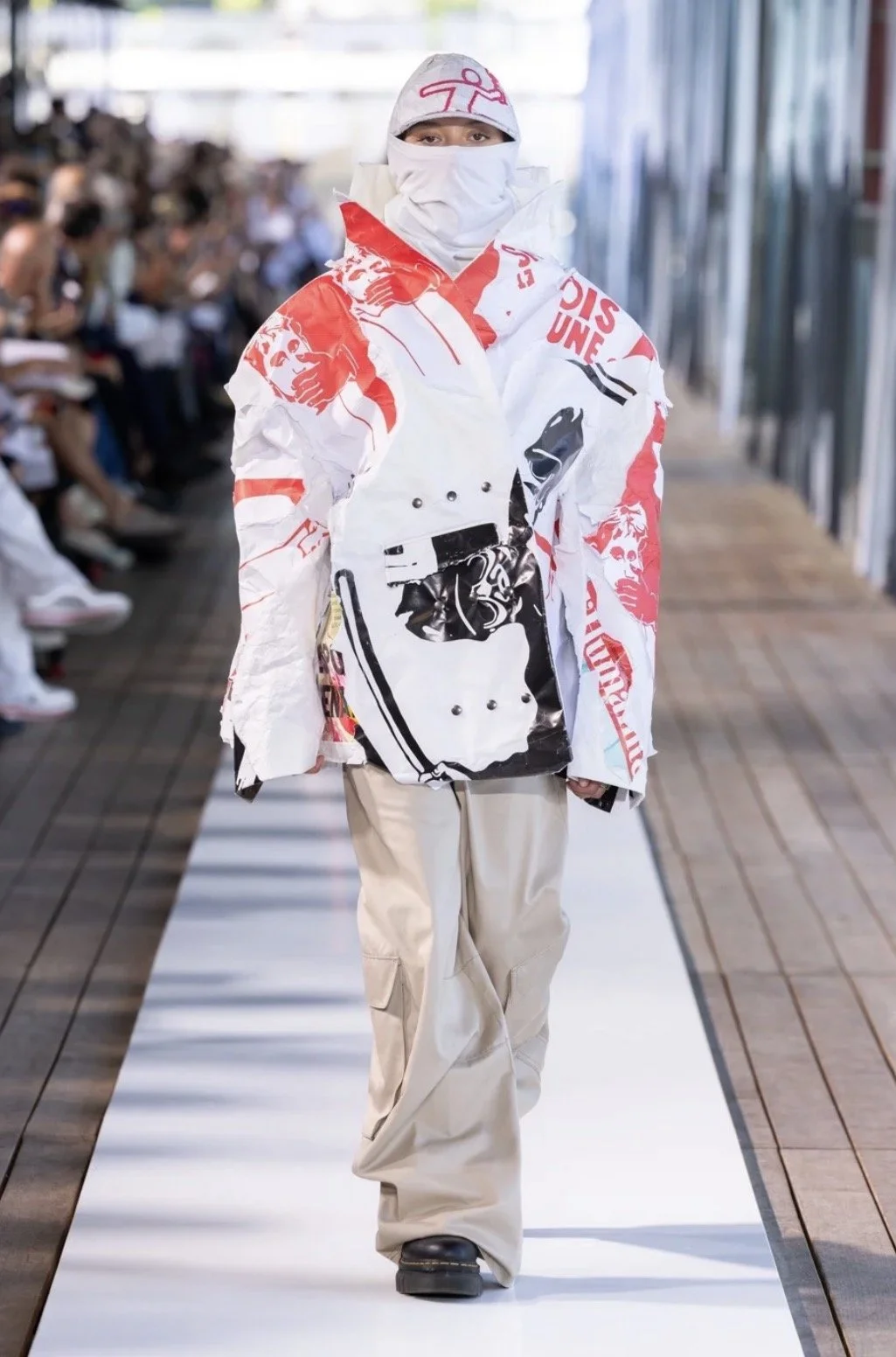
ZD: It wasn't easy, but I wanted the textures to reflect the street. So I moved away from conventional fabrics. For the "paper tailoring" pieces, I sourced real posters from May '68 and hand-sewed them onto a thin layer to maintain a handcrafted look while building a real tailoring structure underneath. Then I tore the outer layers to evoke the torn posters you see around the city. For the silicone pieces, I experimented a lot. I melted and shaped the silicone myself, especially for the trousers and the pleats at the bottom.
LF: Some garments look like shields or protective gear. What is your vision of fashion as protection?
ZD: Fashion as protection isn't just physical; it's about regaining control over how your body looks, is interpreted, or is worn. On the street, clothing becomes armor against surveillance, judgment, discrimination, and sometimes, literal violence. A sweatshirt, a mask, a bandana: these are not just garments. They are tools. They allow you to move anonymously, resist categorization, and escape the mechanisms of power that try to identify and monitor you. Protecting yourself is profoundly political. It's about deciding your visibility on your own terms, choosing what you hide and what you reveal, rejecting the gaze imposed upon you.
LF: Were there any artistic, historical, or cinematic references behind this universe?
ZD: Absolutely. Edward Said, Angela Davis, and Orwell's 1984 helped me think about power and identity. The idea of hidden faces comes from superhero culture—from Spider-Man and Star Wars to MF DOOM.
LF: How do you relate your work to current global protests and repressions?
ZD: Seeing recent events in Nepal or Madagascar gives me hope for our generation, for our capacity to resist, rebel, and reinvent how we organize ourselves. Creatively, it motivates me. Many struggles are underrepresented in the public sphere, and that inspires both what I create and how I resist.
LF: What role do the local and the global play in your collection?
ZD: I worked on both levels. Being French, some struggles were familiar and natural to me. But I also researched rebellious attire from around the world. The bomber jacket references English Red Skinheads; the sweatshirt has a more American influence, inspired by the “ghetto uniform.” With the keWiyeh, I didn’t want avague, universal call for peace. I wanted precision. This look speaks specifically to the crimes of the genocidal Israeli army in Gaza and the West Bank. That's why the back of the dress says GAZA SOCCER BEACH, a reference to a song about the ongoing genocide in Gaza.
LF: How do you manage the production of the garments? Do you work with specific artisans?
ZD: For this collection, I did everything myself, with the help of teachers and machines at the school. From prototypes to the final stitching, including logos, prints, and embroidery, everything was done by me and my girlfriend. Having complete control helped keep the process cohesive.
LF: What difficulties did you face designing such an ideologically charged collection? Did you consider its commercialization?
ZD: Commercialization was never part of the plan, and that made the creation process easier. Now I'm thinking about it for future projects, but I haven't yet found an ethical and accessible way to do it. I'm still working on it.
LF: At the graduation show, was there a specific staging to reinforce the message?
ZD: We didn't have control over the staging. But the music, Sega Bodega's "Fade Into You," created a beautiful energy. The slow tempo made the models walk slowly, creating a suspended moment.
LF: How did you choose the models?
ZD: I wanted people who truly shared my commitments. I involved the models from the beginning so we could talk, especially since the themes were sensitive. It was about finding people who were happy to carry the message and able to embody it.
LF: How has the collection been received?
ZD: I had no expectations after working on it for a year. But a few weeks before the show, more people at the school told me how important it was to them, so I hoped others would feel the same. Now, months later, I'm very happy. Most of the feedback mentioned a "positive shock." People were happy to see this message during Fashion Week and within the school. I know it closed some doors because it was "too political," but overall it generated engagement, and the message was understood; that was the most important thing.
LF: What do you hope people feel when they see your pieces?
ZD: A mix of reactions. If someone feels outraged, then the work was successful—they're reacting, discussing it. But I also want people involved in the collection's political demands to feel represented in fashion, without having to hide that part of themselves, and even proud to embody those commitments.
LF: Looking ahead, do you want to continue exploring political fashion?
ZD: I have to. These six looks were just one angle: street protest. But there are many other forms of resistance I want to explore. And many more struggles I want to highlight through design. Activism is part of my life. It will always shape how I think about bodies, movement, and fashion. But I also want to continue learning within brands, grow technically, and build long-term consistency in my work.
questions by @lauraafdeez
translated by @alraco43