
AN IN-DEPTH INTERVIEW WITH LEYRE KYMA
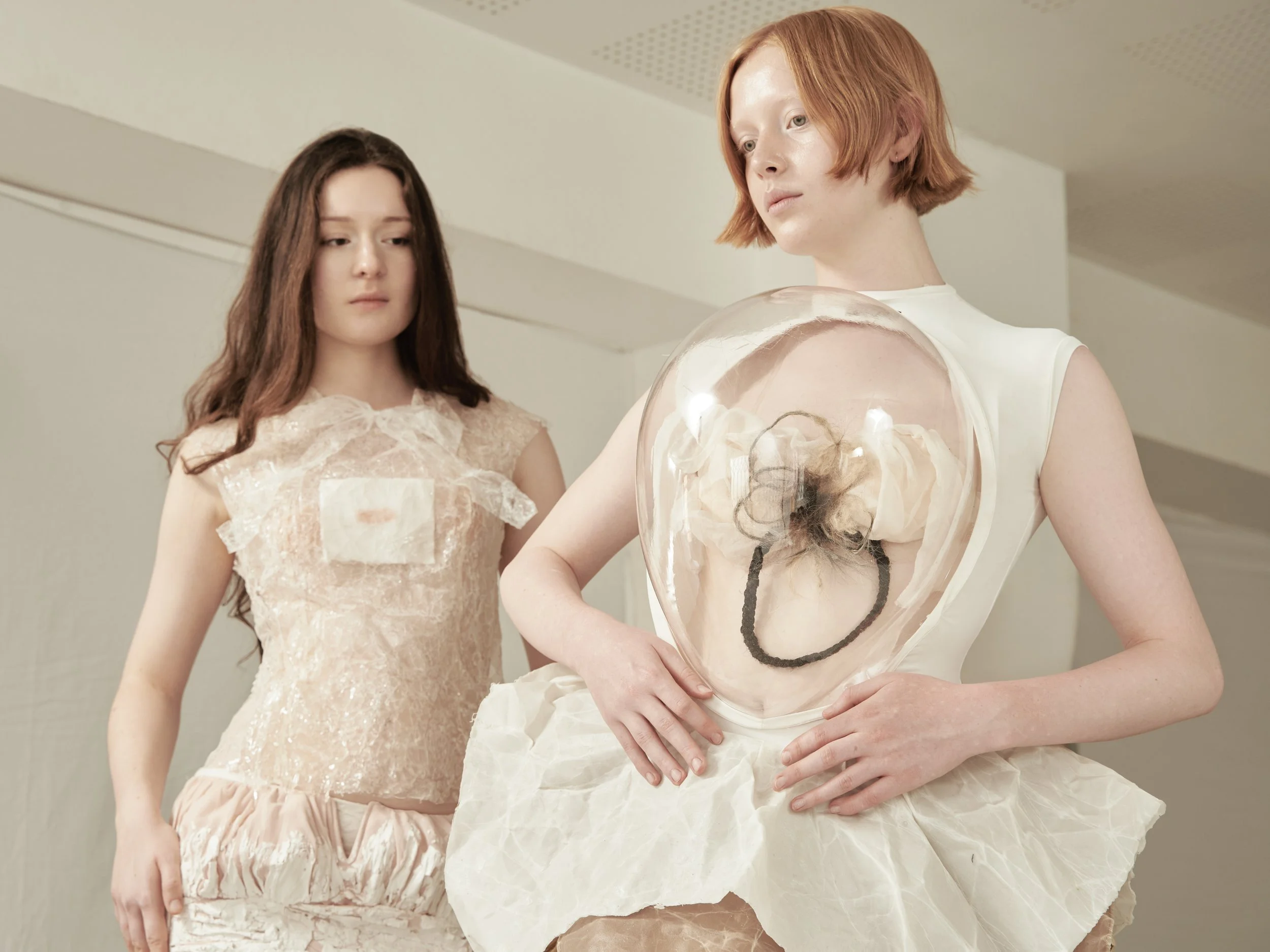
editoria photos by @carlos.castrosin
For Leyre Kyma, fashion is less about clothing than it is about communication. Currently studying at Central Saint Martins after formative experiences in Scotland, Ecuador, Berlin, and Stockholm, the Basque creative has developed a practice that sits somewhere between fashion design, textile experimentation, and contemporary art. Rather than pursuing luxury for its own sake, Kyma is driven by a desire to translate memory, identity, and the passage of time into physical form, using garments as vessels for deeply personal narratives. In this conversation with Álvaro Ramos, she reflects on her journey to one of the world’s most prestigious fashion schools, the realities of class and competitiveness within the industry, and the conceptual foundations behind Forever Together, an ambitious multidisciplinary project that challenges conventional ideas of what fashion can be.
Álvaro Ramos: How would you define Leyre Kyma in 2026?
Leyre Kyma: I think I’m at a point where I’m trying to decide who I am as an artist or a designer, what matters to me and the path I want to follow. One of the most important things I’ve discovered this year is that I’m not really interested in building a career around luxury or just a specific aesthetic. I’m much more interested in what I can convey through my work. I constantly ask myself if I can convey emotions through clothing or tell stories with it. And to do that, I don’t want to limit myself exclusively to designing garments. If a project requires incorporating other mediums, I’m completely open to it. That’s also why I’m not sure I want to define myself solely as a fashion designer. Even if it sounds a bit pretentious, I’m perhaps more interested in thinking of myself as an artist.
AR: There’s also a certain gap between textile art and fashion design.
LK: Totally. I’m deeply interested in textiles and want to keep experimenting with them. Ultimately, my work is very much about introspection and making visible the things I want to express. Right now, I’ve chosen clothing as my form of expression, but it could have been something else. Clothing is simply the medium I’m using at the moment.
AR: What was your journey like before arriving at Central Saint Martins?
LK: I studied in Scotland at Gray’s School of Art, part of Robert Gordon University. Then I went to Ecuador for a year because I’d become quite overwhelmed by the fashion world. I had the opportunity to present my graduation collection at London Fashion Week with Fashion Scout, and I felt like I’d seen that world up close a bit too much. I thought, "I need to step away from this for a while." After that, I returned to Europe for a four-month internship with Hodakova in Stockholm. Later, I was in Berlin working with a small brand called Anekdot, which specializes in sustainable lingerie and swimwear. After that, I enrolled in the Graduate Diploma program at Central Saint Martins, and now I’m about to start my master’s degree.
AR: What challenges have you faced since entering Central Saint Martins?
LK: One of the biggest has been confronting the economic disparities among students. There are people around me with practically unlimited resources, people who don't care how much they spend on a project or how much time they can afford to work for free. I’ve always been quite vocal about that: I come from a working-class background, as does my family. There are a lot of sacrifices behind my being able to study here. I constantly have to seek out financial aid, scholarships, and solutions. I have to work with what I can actually access. I can’t just decide to buy meters and meters of silk on a whim. That inevitably shapes the way you work.
AR: How did the idea of pursuing fashion first come about?
LK: I think it started in a way I considered superficial for a long time, though I now realize it wasn't quite that way. I grew up in Ordizia and was one of the few people of color in the town. Plus, in the Basque Country, identity and nationalism carry immense weight. I felt like I wasn't "truly Basque," so there was always a lingering question about who I was. In a way, I used fashion to find myself. I started by looking outward a lot, trying to discover what existed beyond my hometown and how I could get out of there. I had always drawn, my whole life. But I used to draw animals, landscapes... When I was about fifteen or sixteen and started getting interested in fashion as a form of individual expression, I began sketching clothes. My mother saw how focused I was on it and was incredibly supportive. She sent me to London for a week to take a short course at UAL, and that’s where I discovered it could actually become a career. I first applied to Central Saint Martins in 2018 and didn't get in. I didn't even really know what a portfolio was. I had studied the social sciences track in high school, so practically everything I knew about art, crafts, or creative processes, I had learned on my own. That’s why I’m so grateful that Robert Gordon University accepted me. They gave me the space and resources I needed to discover who I was as an artist without trying to limit me too much.
AR: How has your creative language evolved since then?
LK: I’ve always liked to think and reflect deeply before doing anything. I need there to be an intention and a story behind it. But perhaps the themes I was initially taught in fashion school felt too superficial to me. It was something like: “Let’s pick this book, this movie, or this concept and build a collection around it.” There came a point when I realized that didn’t interest me. I needed to work on issues I had a personal connection to. I started exploring things that were happening to me or topics that were taking up a lot of mental space, usually because they were related to circumstances I was living through. And then I try to turn those reflections into something tangible. At one point, Galliano was a huge reference for me because I was fascinated by his ability to create performance, emotion, and spectacle. But the more I’ve studied, the more interested I’ve become in achieving that same emotional impact while adding layer upon layer of meaning. Lately, I’ve been looking a lot at Margiela, but one of my biggest references right now is probably Hussein Chalayan. His pieces can be visually striking and make you immediately wonder, “What is happening here?” But when you dig deeper, you find a profound philosophical and conceptual narrative. That interests me immensely.
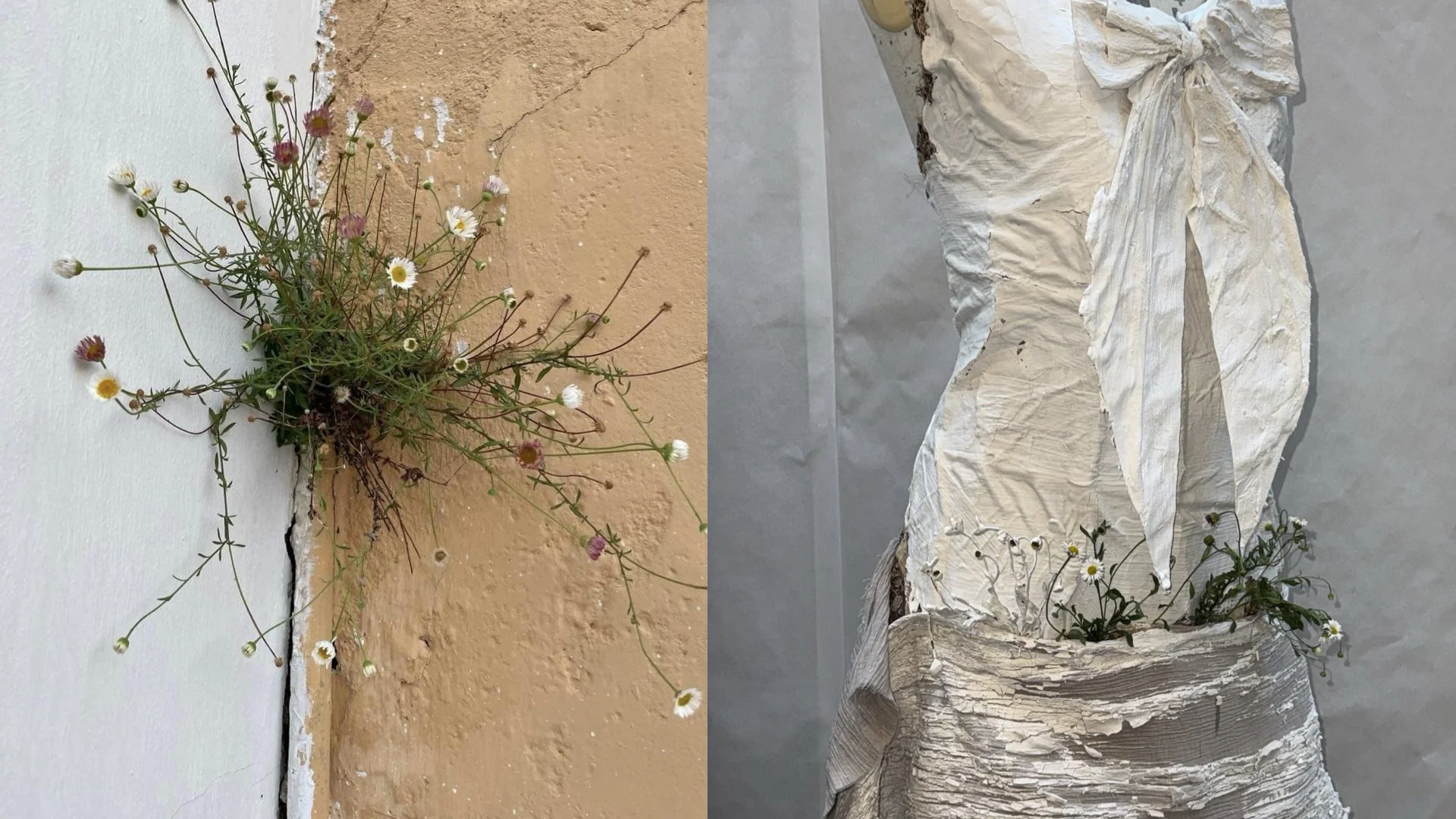
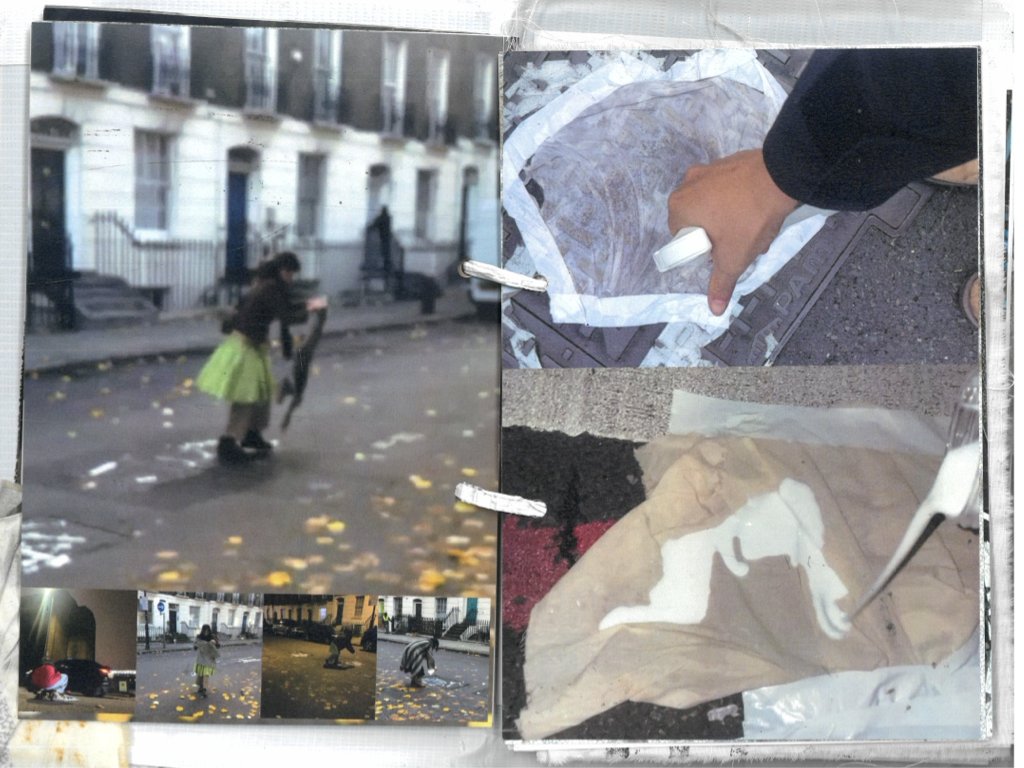
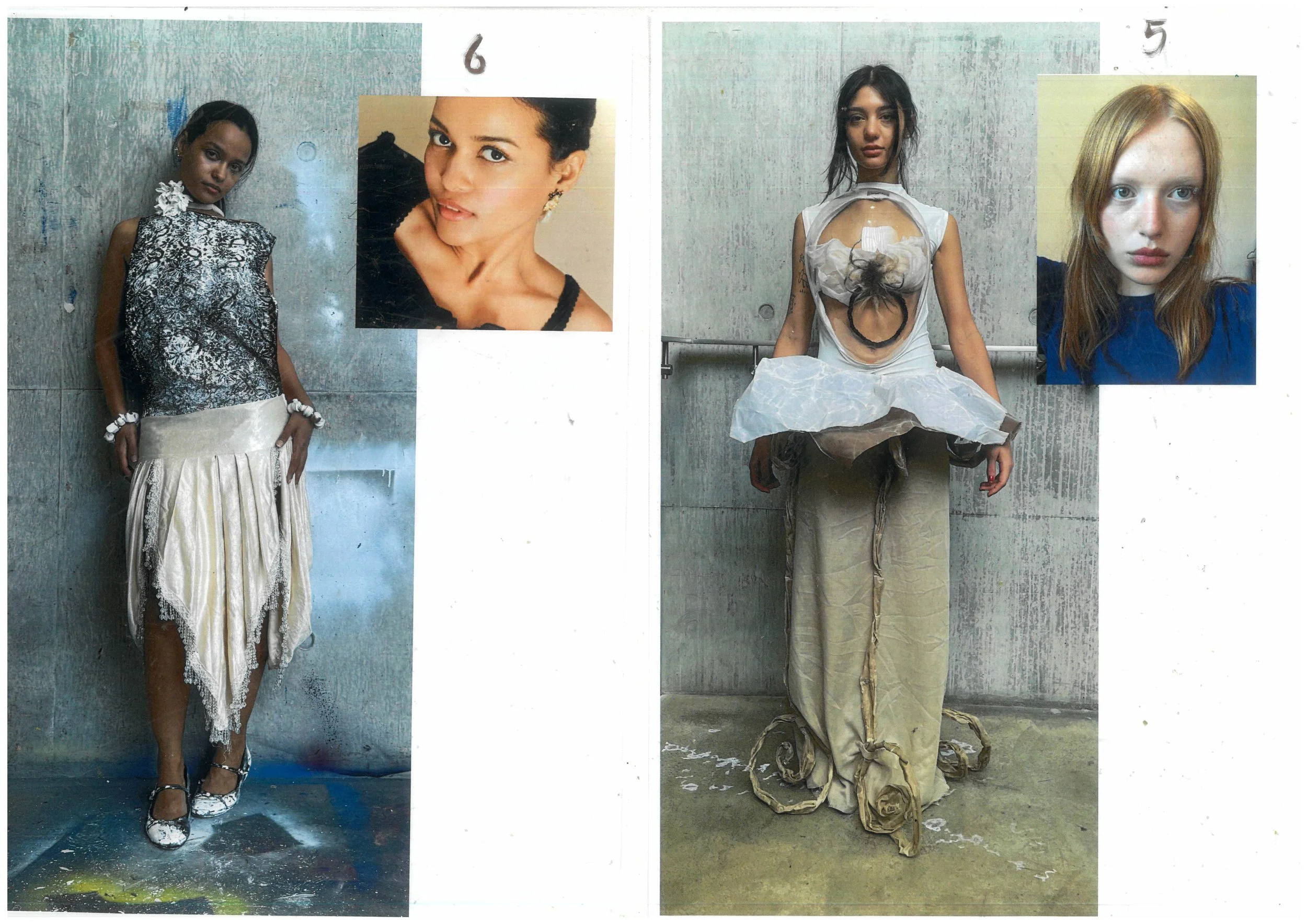
AR: In other words, you might make a T-shirt and a pair of trousers, but there are five thousand words behind them explaining why they exist.
LK: Exactly. And I’m going to believe those five thousand words. They won’t be made up after the fact just to justify the collection. I need to create the mood board first, not afterwards. Without that emotional and conceptual foundation, I feel completely lost. It was interesting back at university; I’d see classmates immediately start making prototypes and spend months developing them in various ways. Meanwhile, I might spend days at home thinking, writing, thinking again, and writing some more. They’d tell me, “Leyre, you’re running really late.” And I’d reply, “I can’t work if I don’t know why I’m doing this.”
AR: Before getting into “Forever Together”, what projects do you consider significant in your career?
LK: The previous major project was my graduation collection. Almost two and a half years passed between that collection and “Forever Together”. It was called “To My University Years”, and it was a sort of memorial to mark the end of my university days: my friendships, my relationships, and that version of myself that was fading away. I wanted to face that ending positively. Not seeing it as the death of something, but rather with gratitude that it had existed. Many ideas that continue in my current work emerged back then. I used to go to flea markets, repurpose fabrics and found materials, and take small elements representing my university life; encasing them in resin to turn them into a kind of lucky charm. It was a way of giving physical form to those memories.
AR: And then came “Forever Together”. How did that project begin?
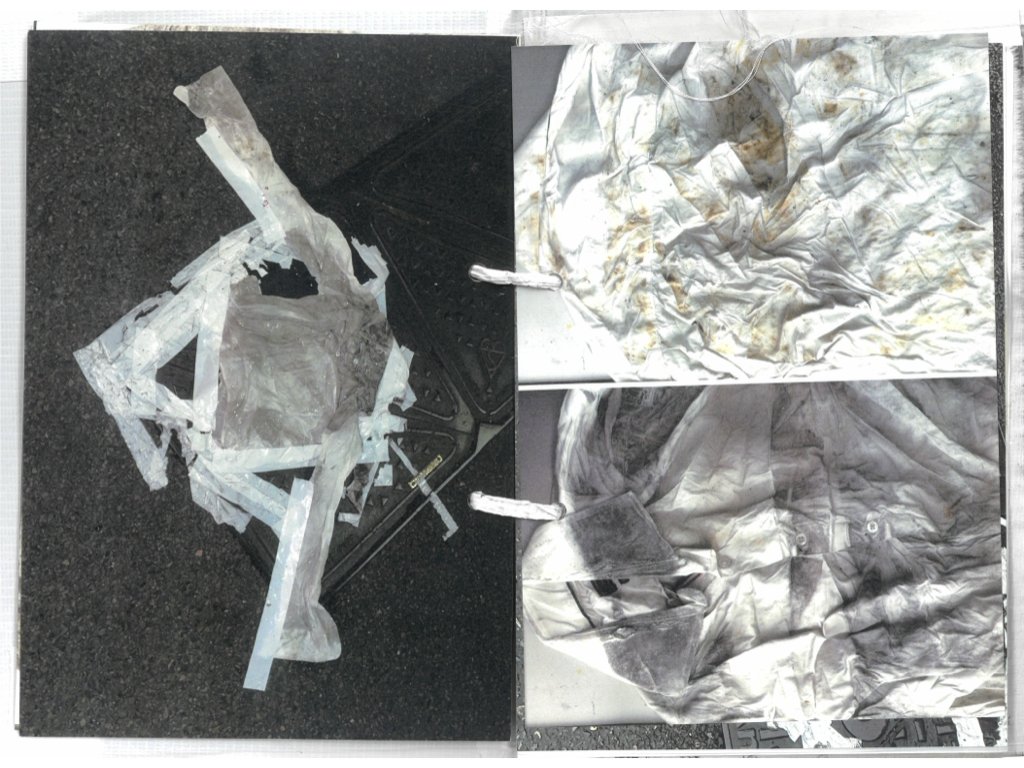
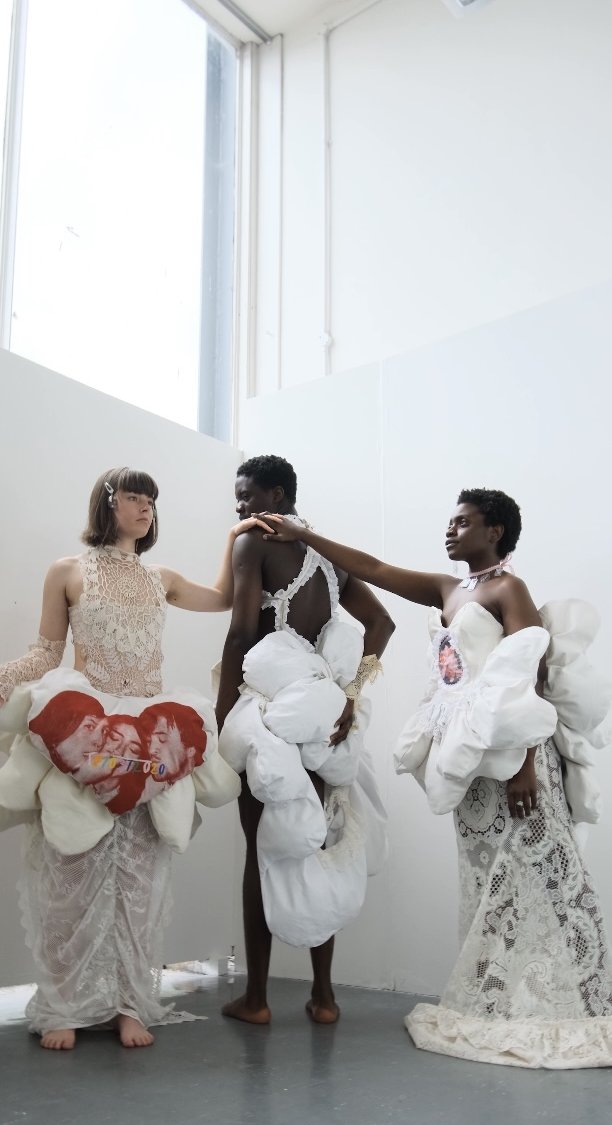
LK: It came about at the start of the Graduate Diploma. I found a subject I needed to talk about: the changing nature of relationships, my fear of those changes, and how the realities around me could transform. I quickly realized the topic was too vast to develop within a two-month project. The first experiment involved placing garments on the streets of London. I wanted to study how the passage of time could leave a physical mark on a piece of clothing. When I presented that work, I decided I didn’t want to view it as a standalone project, but rather as part of something much larger. My professors accepted the proposal, and from then on, I steered the rest of the course projects toward “Forever Together”. I structured it into three chapters: “Trace”, “Preserve”, and “Surrender”,so it would fit the academic schedule.
AR: So, the academic system itself shaped the form of the project.
LK: Yes, absolutely. And I have to admit, I need a certain amount of academic structure. Without it, I tend to lose focus. After graduating, I spent about two and a half years trying to start projects that I never actually finished. I need someone from the outside telling me, "This has to be done by this date." Plus, Central Saint Martins keeps you constantly active because you’re surrounded by incredibly talented and ambitious people. You can’t afford to let your guard down too much. And the resources there are amazing. There are specialized technicians and workshops for practically anything you can imagine. I developed the “Preserve” bubble in the wood workshop, for instance. I showed up there saying, "I need to make a plastic bubble, how can we do it?" They taught me vacuum forming (a technique usually used for other things) and we found a mold someone else had left behind: a sort of giant wooden egg. I said, "This works." We placed a plastic sheet over that egg and built the piece from there. That opportunity to talk to technicians from completely different disciplines and use processes that don't typically belong to fashion is something that really interests me.
AR: Perhaps it’s also about broadening the idea of what fashion can become.
LK: Yes. Central Saint Martins is also very focused on luxury, on creating highly desirable objects with exquisite finishes and high-quality materials. And that’s great, but it’s a path so many people are preparing for. Personally, it doesn’t excite me all that much. What excited me was discovering all those workshops and thinking, “What can I do with this?” When I discovered I could melt wax and apply it to materials, I thought, “Perfect, I’ll put wax over the clothes and see what happens.” Those kinds of discoveries are what motivate me.
AR: What was the process of getting into the Central Saint Martins master’s program like?
LK: In my case, it was surprisingly smooth. There were two application rounds. Practically all my peers decided to apply in the second round because they wanted to produce more projects and show as much work as possible. I did exactly the opposite. I needed stability. I had left my boyfriend and friends behind in Berlin, and I needed to know whether London was going to be nine months of my life or two and a half years. So, I applied in the first round, even though almost everyone advised me to wait. I had already made it to the interview stage the previous year (though I didn’t get in) so they were already familiar with some of my work. This time, I presented “Welcome to London”, “Trace”, three new looks, and my graduation collection. When I put it together, I thought, “This truly represents me.” I didn’t want to build a portfolio specifically designed to please someone else. I have to like my work. I have to feel proud of it. In February, I was told I’d been accepted, and it was a huge relief. From then on, I could dedicate the rest of the course solely to developing my own vision.
AR: You mentioned “Welcome to London”. What was your experience arriving in London like compared to Scotland or Berlin?
LK: Completely different. When I arrived in Scotland, it was the first time I’d lived outside Spain. Aberdeen is a much smaller, quite affordable city, and I remember the people being incredibly friendly. The Scots are some of the best people I’ve ever met. I felt at home there very quickly. London was the opposite. It’s huge, incredibly expensive, and often you feel like no one cares about you. I lived in a windowless basement flat. My room was maybe two square meters, and I shared the house with four other people who barely even said hello to each other. We only spoke when someone wanted to tell you off for leaving a single grain of rice in the kitchen. I remember arriving and thinking, "What have I gotten myself into? I was happy in Berlin."
AR: How do you handle the competitiveness within the fashion world?
LK: It’s complicated. There’s so much competition, and even if you try to stay out of it, you inevitably end up comparing yourself to others. You can sense the anxiety in the air. Everyone wants to stand out above the rest. That doesn’t necessarily mean they want to step on you, but they do want to be seen more than anyone else. And to achieve that, some people will pay whoever they need to, give up sleep, or spend their entire vacations working in the studio. That can become extremely toxic. There are people who completely put their personal lives aside for the sake of fashion. I decided I didn’t want that. If succeeding in this industry means completely sacrificing my life outside of it, then I’d rather not have that success. I tried to set boundaries for myself. At one point, I decided I would go home at seven every evening. If others stayed, fine. I was leaving. And during my time off, I tried not to do anything related to fashion. I need to have a separate life because, otherwise, this would completely drain me. I’m twenty-five years old and haven’t even really started in the industry yet. I don’t want to be burnt out before I’ve even begun.
AR: But you also say that this competitiveness is fostered by the university itself.
LK: Absolutely. It’s not just the students. The university fuels that system, too. It’s present in the way professors speak, in who gets certain scholarships, who makes it into the show, who gets into the master’s program and who doesn’t. Everything constantly turns into a ranking. Right from the start, they made it clear that there were people willing to do absolutely anything to get into the MA, and that we were competing against all of them. I think there could be a much more community-oriented structure: helping each other and growing together. But often, the message ends up being very individualistic: you win, you get the scholarship, a certain person notices you—and not the others. I find it toxic.
AR: Did you get a scholarship for the master’s program?
LK: Central Saint Martins awarded me a grant of about seven or eight thousand pounds, which obviously helps me a lot. The biggest sponsorships aren't announced until the first month of the course. There’s one I’m particularly interested in and I am manifesting with all my might: the Sarabande Foundation. I try not to get too delusional, but I think my practice aligns with the kind of things they usually support: projects with a strong philosophical underpinning, experimentation, and proposals that look beyond traditional fashion, sitting somewhere between contemporary art and fashion. It will also depend on who else got into the master’s program and how many people are developing similar practices. I hope I at least make it to the interview stage.
AR: Even though it has toxic elements, do you think competitiveness also improves the work?
LK: Unfortunately, yes. When you don’t have anyone around to compare yourself to, it’s much easier to feel comfortable with what you’re producing. At Central Saint Martins, you’re constantly seeing people do incredible things, and that forces you to ask yourself how much more “you” can do. It can make you lose your head a bit, but it also pushes you forward. I had a friend I admired a great deal. She had secured a Sarabande scholarship during her BA, and for her collection, she had created hats, shoes, accessories, and even her own textiles... There were so many layers. I would look at her and think, "Look at everything she’s creating." I think I’ve also produced far more than I probably would have in a different context. There’s always someone doing more, creating more layers, or taking a project even further. That pushes you to improve the quality of your own work, too.
AR: Let’s talk about the materiality of “Forever Together”. How did the experiment of leaving garments out on the street come about?
LK: It started with a very simple idea: I wanted to physically see the passage of time on a garment. At first, I tried placing fabrics at subway entrances and exits. I’d leave signs asking people not to remove them and film people walking over them, but they’d disappear right away. I imagine security removed them; plus, they were getting in the way of foot traffic. So I thought, "Where can I put them so no one moves them?" There was a metal drainage grate in the middle of the road right in front of my house, so I decided to place them there. Even then, I lost about forty percent of the pieces. The ones that are part of the project are literally the survivors. I also discovered that I had very little control over the outcome. If it had rained or there was some humidity, the fabric would end up covered in marks, creases, and traces of the drain’s texture. If it was very sunny and completely dry, the piece might just end up dirty. I tried to monitor the conditions, but a part of the process was inevitably left to chance. And that ended up being part of the project, too.
AR: After “Trace” came “Preserve”.
LK: Yes. The “Preserve” bubble was precisely about trying to keep something intact within a structure. It was an obsession with protecting it at all costs.
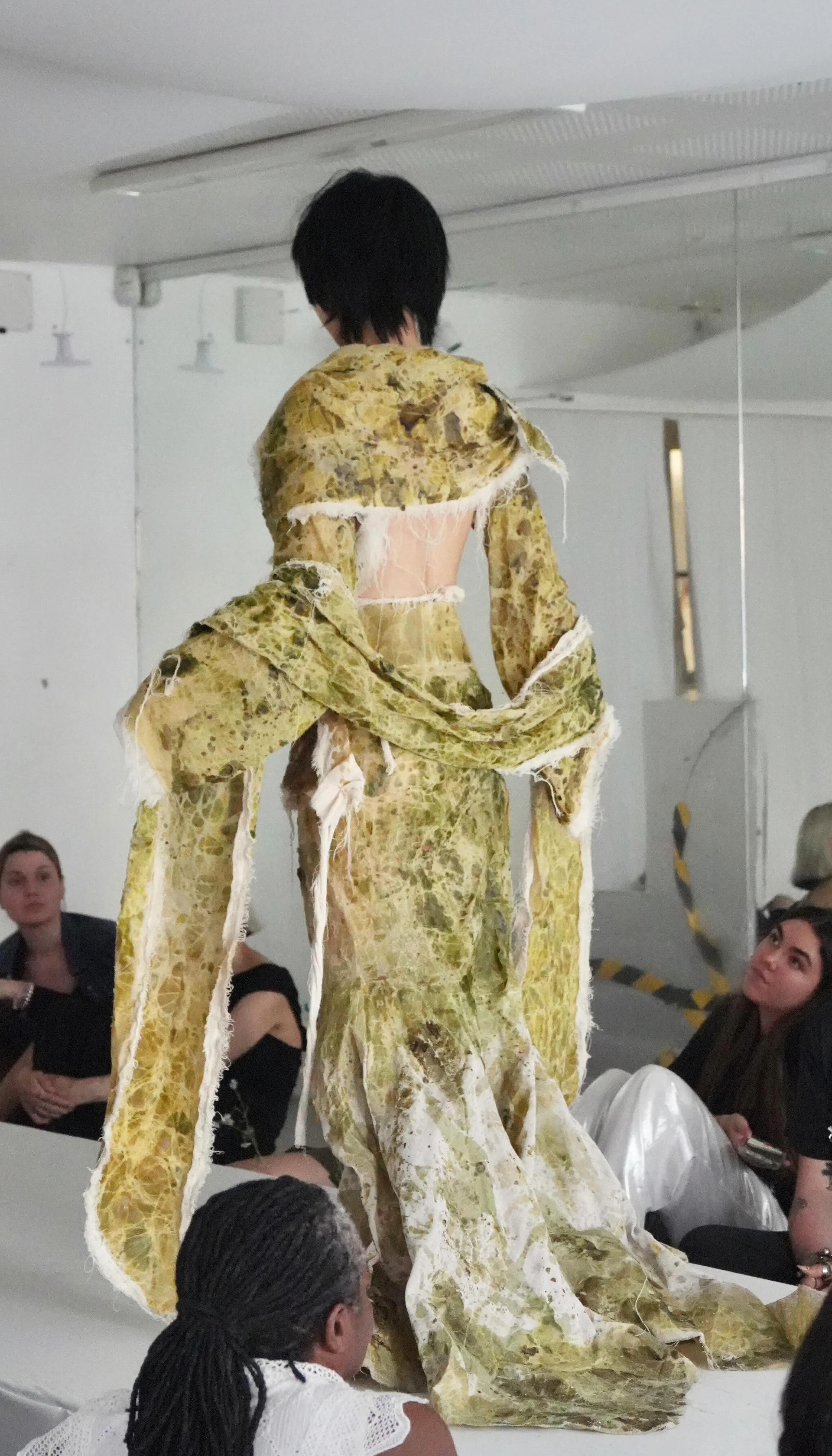
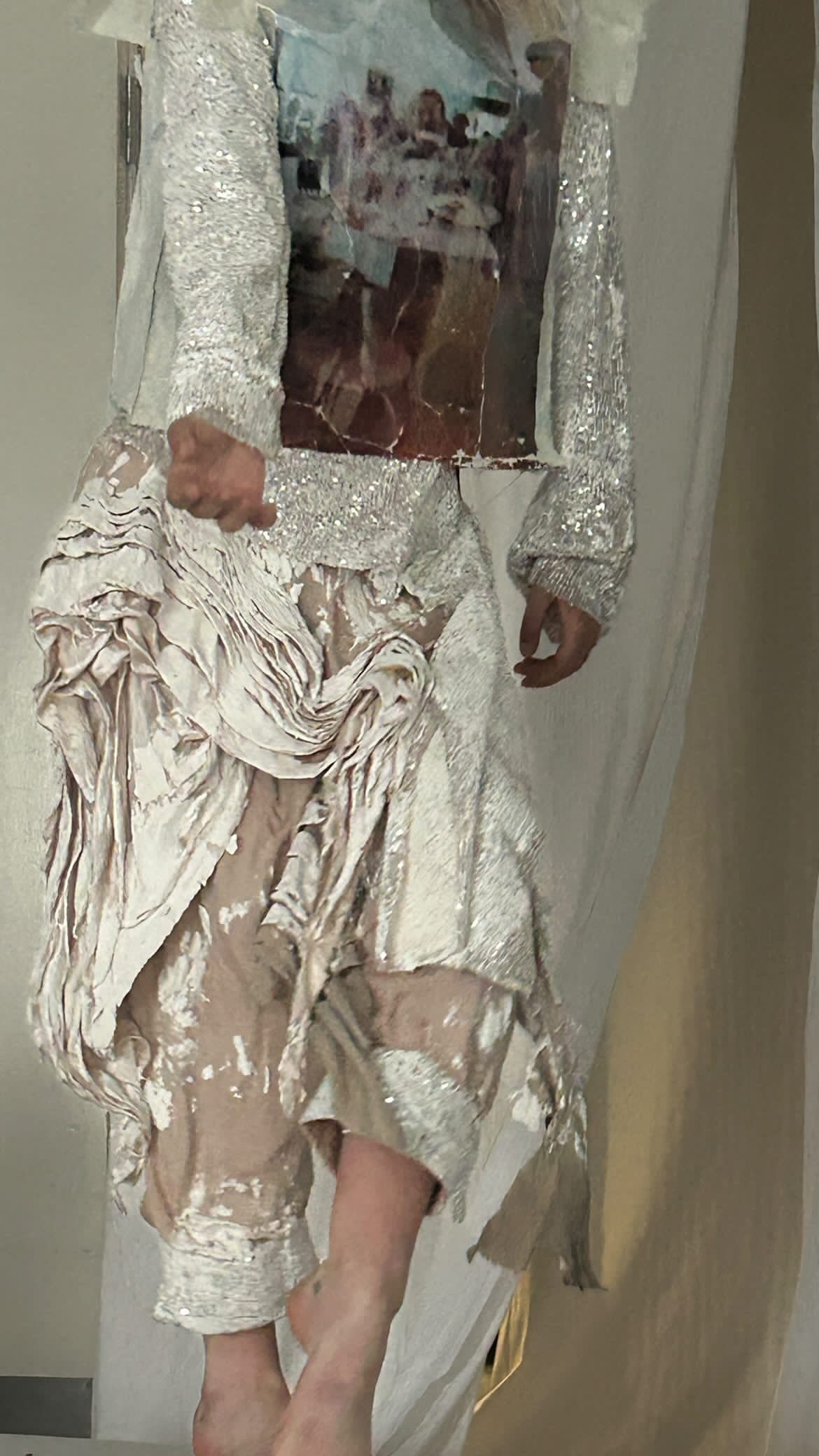
Then came “Surrender”, which is practically the opposite. “Surrender” means stopping the fight against time. If “Trace” was about studying time and “Preserve” was about trying to resist it, “Surrender” was about accepting that you can’t keep something alive and completely intact at the same time. For something to be alive, it has to be in motion. That’s why I wanted the garments to stop being static and instead be constantly transforming.
AR: That’s where the wax comes in.
LK: Yes. I’d been experimenting with wax since the start of the course. I had an idea I’d originally conceived for “Trace”: printing an image onto wax applied to a garment so that, as you wore it and moved, the image would start to break apart and fall off. It didn’t work conceptually for “Trace”, so I shelved the idea. When I got to “Surrender”, I thought it was the perfect place to use it. The very act of wearing the piece causes it to transform.
AR: You also worked with materials similar to a medical cast.
LK: That came about from a completely random situation. My boyfriend was bitten by a Rottweiler on the street and had to undergo surgery. He had to keep his hand immobilized for quite a while. I thought about how a cast tries to keep something static to protect it, prevent it from getting worse, and allow it to heal. That sense of protection fit the project perfectly. So, I started experimenting by applying that same type of material over the clothing. From there, it was all about asking myself which materials could express things breaking, breaking free, or escaping from a structure. I also observe what happens on the street a lot. For instance, I was really interested in those daisies that pop up growing through the concrete. No matter how rigid the structures we build are, there’s always something that finds a space to keep growing. Nothing truly remains static.
AR: The project also ended up becoming a performance in London. How did that come about?
LK: At the start of the course, Emma Poos, who studies Narrative Environments, wrote to me. We didn't know each other, but she told me she wanted to specialize in developing shows and was looking for a designer to collaborate with on creating one as part of her thesis. I thought it was perfect. We agreed from the start that many fashion shows had become too superficial: you arrive, look at clothes for a few minutes, and leave. We felt there was huge potential to turn a show into something more interactive and to get the audience to understand the project's origins before they even saw the garments. We worked together for practically the whole year.
AR: How was it ultimately structured?
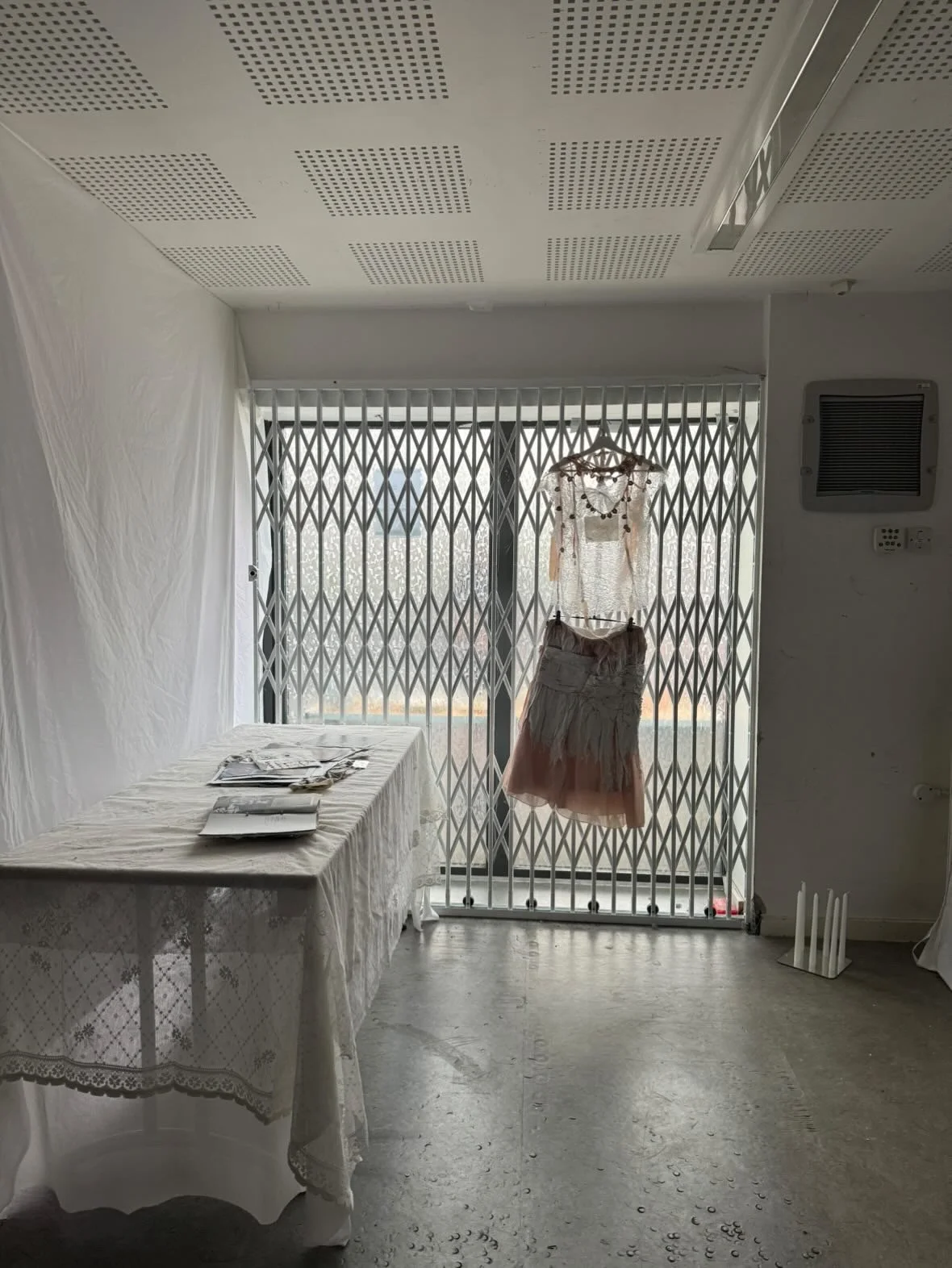
LK: Emma’s original proposal was much more ambitious, but it was too expensive and we didn't have the resources. I found a youth hub in my neighborhood that had a sort of dance hall with a huge mirror, and they lent us the space. We kept Emma’s conceptual structure and divided the event into three parts. First, the audience would enter, and we’d have a conversation. I’d introduce the theme, and we’d ask them about their relationship with time, change, or transformation. Then, I’d explain where my project came from and why I needed to talk about it. Next came the show itself. And afterwards, a small exhibition opened, just for that day, where people could get up close to the garments, look at the sketchbooks, read the books, and gain a much better understanding of the entire process. It was important to me that it wasn't just about looking at clothes from a distance.
AR: What was it like bringing the Leyre Kyma universe into a physical space for the first time?
LK: I felt incredibly proud. We ended up with about twenty people involved. We didn't have the money to pay a full crew, so practically everyone participated voluntarily because they wanted to be part of the project. We had never produced anything like this before, yet we managed to pull it off within budget and using only what we had on hand. We also put a lot of work into the sound, and we had a dancer wearing one of the wax pieces. During her performance, the garment would break apart live, so the audience could actually witness the transformation process. We got some incredible photos, and people really enjoyed it. I remember a friend of mine, Carlos, who came along as a photographer to help us out, telling me before the event: "This is the perfect show to fail at. It doesn't matter what happens. We're here to learn." And in the end, it worked out. I think that’s precisely why we’re so proud of it.
AR: There’s also an interesting concept around creating things without necessarily having vast resources.
LK: Yes. I think a lot of people believe that if they can't afford to do something in the traditional way, then it's better not to do it at all. And that’s a problem because it ends up homogenizing everything. Everything has to look the same to be considered valid. Plus, in London, there are associations, community spaces, and institutions with resources that you can often access simply by reaching out to them. Sometimes people don't even send the email because they assume the answer will be no. Our show was very different from the norm, and at first, we even struggled to convince certain people to attend. I’m not a well-known figure either, so it was natural for someone to think, "Who are you, and why should I spend my time going to this?" But eventually, some people believed in the project; they came and really connected with it. That was beautiful.
AR: Are you interested in entering “Forever Together” into international competitions?
LK: Yes. Now that I’ve finished the course, I want to start looking into various international awards and competitions where it would make sense to submit the project. Up until now, I’ve had practically no time because I was completely focused on developing it. But I think it’s the natural next step: understanding which international platforms might truly align with my practice and starting to showcase the work.
AR: And do you envision yourself participating at some point in more traditional spaces within the Spanish industry, like EGO or Madrid Fashion Week?
LK: Yes. There’s a funny internal struggle there. On one hand, I do many of the things we associate with a traditional emerging designer, yet on the other, I constantly say I don’t want to be just another traditional emerging designer. I think there’s a part of me that “does” want to reach those milestones. I’d love to be able to present at a major Fashion Week. The only condition is that there be a willingness to understand my work from a slightly different perspective. I get so many comments like, “Your clothes aren’t wearable,” “this can’t be sold,” or “this isn’t commercial.” And I think: let’s try to look at it differently. Fashion can be so much more than a product designed for everyday consumption. Not everything has to become a wardrobe staple. There’s room for a custom piece, a performance piece, an art piece, or something created for a completely different context. If the industry is willing to accept me and the types of products and projects I want to develop, I’d be delighted to present them in spaces traditionally defined as fashion.
AR: Do you see yourself working for other brands, or do you want to focus exclusively on your own practice?
LK: I’m not ruling it out. If an opportunity came up with a brand that respected my work, and where I felt I could learn things I don’t know yet, I’d be very interested. I’m at a stage where I still need to grow, learn, and build up my skillset. What I won’t accept is precariousness just for the sake of saying I work for a specific brand. One thing that’s always scared me about this industry is how normalized absurdly long hours, very low wages, and the need to live in incredibly expensive cities have become. Working in fashion can be extremely precarious. I’m not going to stay somewhere just for the prestige of saying I’m there, all while earning minimum wage and working fifty hours a week. In that case, I’d rather be a teacher, something that also interests me, so I could have stability and develop my own projects on the side. But if a major brand could teach me processes or skills that would later help me establish myself as a freelancer, artist, or independent designer, I’d certainly be open to that experience.
AR: To wrap things up, what can we expect from Leyre Kyma moving forward?
LK: I hope it continues to grow and evolve based on what you’ve already seen. Stories, emotions, and the conceptual background will remain fundamental. Experimentation will also always be at the forefront of everything I do. I want to keep creating deeply personal projects, while trying to ensure there’s a universal connection that allows others to see themselves reflected in them. And above all, I hope my work keeps changing. I don’t want it to be static. I don’t want Leyre Kyma to be exactly the same a few years from now as it is today. I want it to keep moving and developing naturally, and, hopefully, find its own space within the fashion world.
Questions by @alraco43