
LES MISÉRABLES BY FRED CAVAYÉ (SSIF’26): A STORY ABOUT THOSE WHO CANNOT ESCAPE THEMSELVES
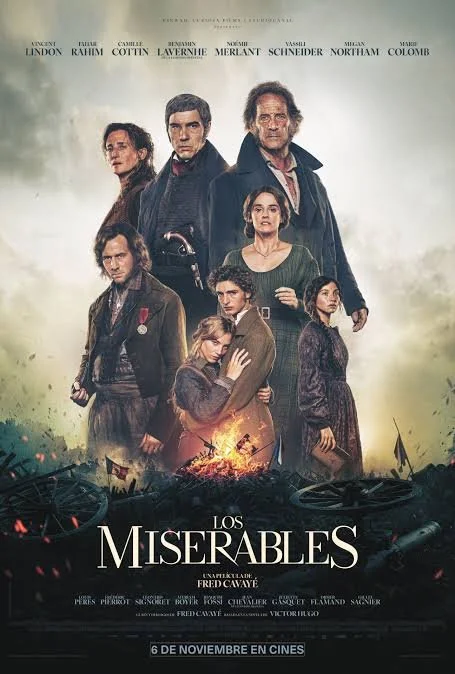
Victor Hugo's ‘Les Misérables’ has never really belonged to the past. Although its story is rooted in nineteenth-century France, its questions have remained stubbornly contemporary; what happens when poverty becomes a condition rather than a circumstance? How far can the law go in the name of justice? And what happens when people become trapped by the labels society has given them: criminal, innocent, respectable, worthless?
Frédéric Tellier's new adaptation returns to Hugo's world not simply to reproduce one of the most familiar stories in French literature, but to look again at the people who inhabit it. At its centre is Javert, a man who has built his entire understanding of the world around order, punishment and an absolute distinction between right and wrong. Played by Tahar Rahim, Javert becomes something more complicated than the rigid policeman traditionally imagined: a man whose certainty gradually begins to collapse when reality refuses to fit the moral categories he has constructed. For Rahim, exploring the character meant looking beyond the archetype and into the wounds that created him, particularly Hugo's brief references to Javert's mother and his origins.
That complexity becomes particularly visible when Javert watches the revolutionary uprising from behind a window. For Rahim, this is the moment when the character begins to understand that his obsession with imposing order has helped produce precisely the chaos he wanted to prevent. His entire worldview starts to malfunction, leaving him with no clear place within the world he thought he understood.
Alongside him are Camille Cottin and Benjamin Lavernhe as the Thénardiers, perhaps two of Hugo's most morally uncomfortable creations. Their relationship evolves across years, transforming from petty bourgeois innkeepers into organized criminals, while their complicity and power dynamic constantly shift. Cottin describes having grown up with the Thénardiers almost as a cultural definition of wickedness, before discovering, as an adult, the possibility of understanding the misery that lies behind their exploitation of others.
What makes this adaptation particularly compelling is precisely this refusal to leave its characters comfortably divided between heroes and villains. Even the most disturbing figures are given an internal logic. The Thénardiers exploit people who are themselves living in misery; Javert enforces a law that he believes will create order, only to discover that his certainty has contributed to chaos. In both cases, the film asks whether people are simply evil, or whether they are products of the conditions they are desperately trying to escape.
Hugo's France may belong to another century, but the film's central tensions remain remarkably recognizable: inequality, poverty, social exclusion and the human desire to escape the circumstances into which we are born.
Below, Tahar Rahim, Camille Cottin and Benjamin Lavernhe discuss the characters behind the mythology: the choices that make them human, the violence that makes them difficult to inhabit, and the uncomfortable question at the heart of Hugo's story, whether justice without compassion can ever truly be justice.
Words by @alejandracaas