
Yohji Yamamoto SS27: A Quiet Reflection on Modern Masculinity
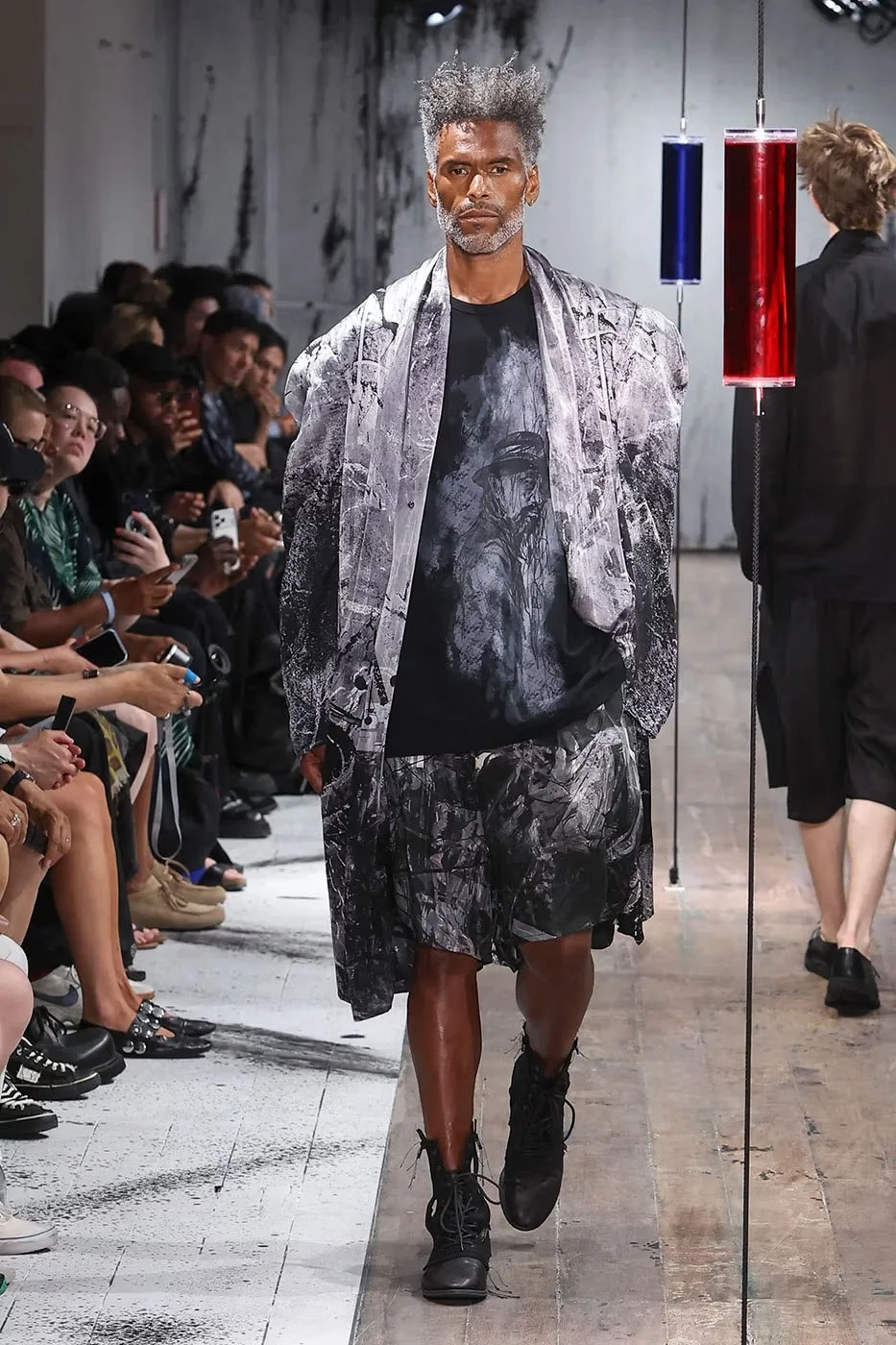
There is something unmistakable about a Yohji Yamamoto runway show. It doesn't demand attention through spectacle or speed. Instead, it asks the audience to slow down. Every step, every silhouette and every fold of fabric unfolds with intention, creating a rhythm that feels almost meditative amid the intensity of Paris Fashion Week.
For Spring/Summer 2027, Yohji Yamamoto once again proves why his work exists beyond trends. Rather than chasing novelty, he continues to refine a language he has spent decades perfecting, one where tailoring becomes emotional, and clothing speaks as much about the person wearing it as the garment itself.
This season, the designer explored masculinity through a softer, more introspective lens. Gone is the idea of strength as something rigid or imposing. Instead, Yamamoto presents a man who embraces complexity, allowing vulnerability and confidence to exist side by side.
The collection revolved around one of tailoring's most fundamental elements: the shoulder. Jackets appeared reconstructed, elongated or subtly distorted, with sleeves shifting position or disappearing altogether. Traditional proportions were questioned without ever feeling forced, resulting in silhouettes that felt simultaneously familiar and entirely new.
As always, movement played a central role. Long coats floated effortlessly, oversized trousers created generous volumes and layered garments moved naturally with the body. Nothing felt static; every piece seemed designed to evolve with each step down the runway.
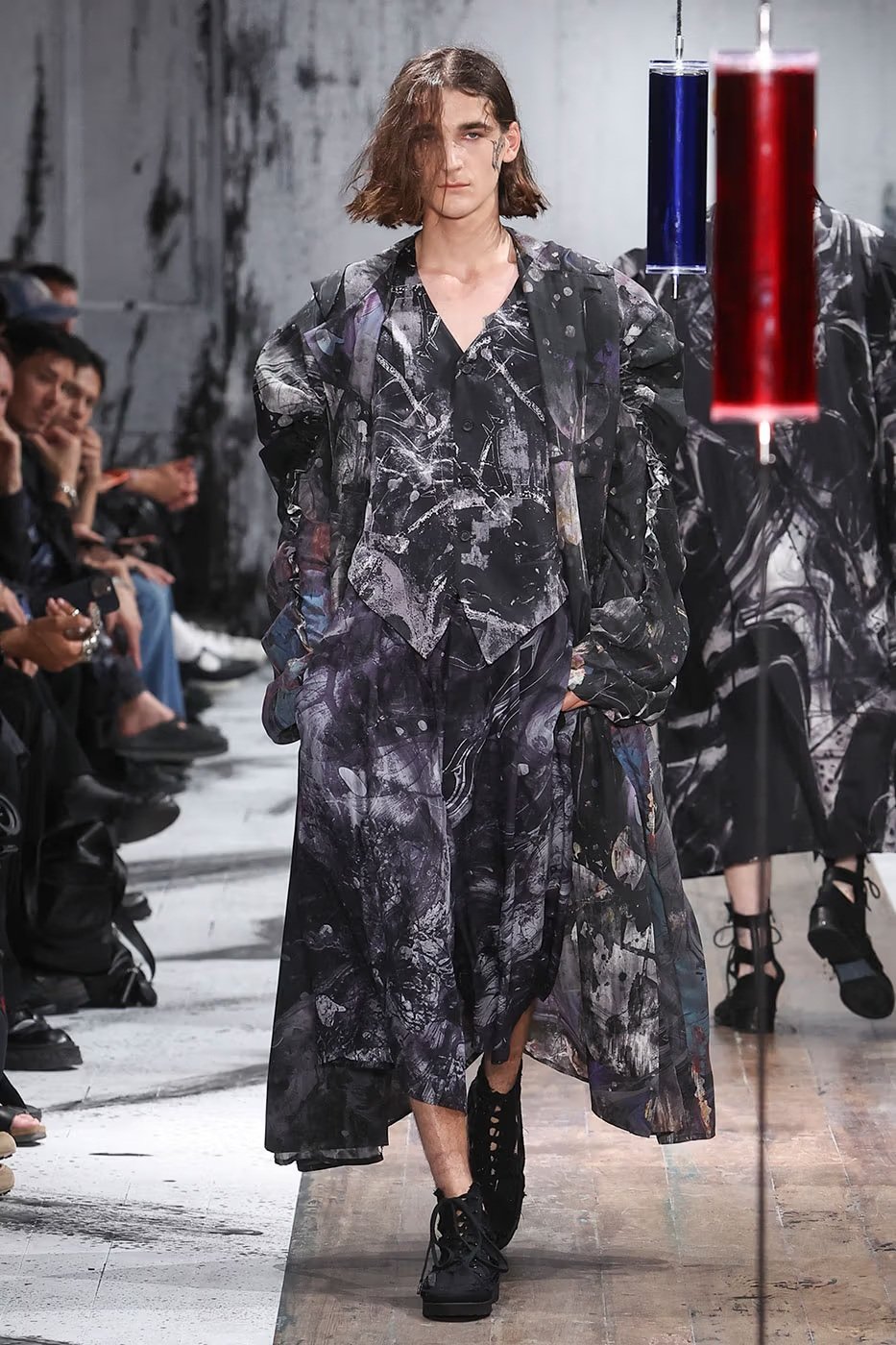
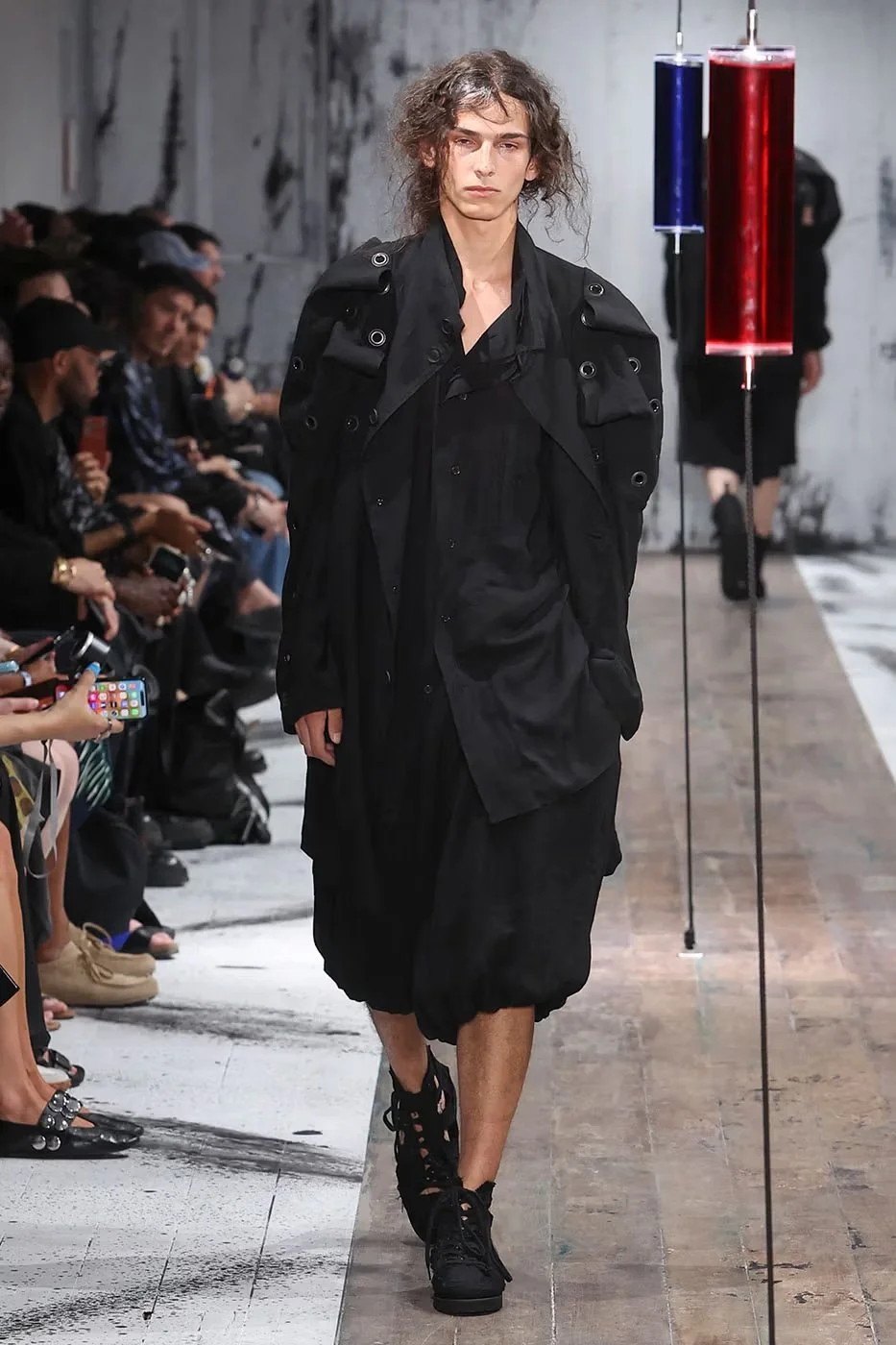
The material palette reflected the same quiet sophistication. Yamamoto stayed loyal to his signature black, complemented by natural linen, lightweight wool, lace and richly textured velvet. Small flashes of metallic finishes and deep crimson punctuated the collection, subtly recalling historical armor and ceremonial dress without slipping into costume.
History has long been part of Yamamoto's creative vocabulary, and this season was no exception. Medieval-inspired symbols, crosses and heraldic references appeared throughout the collection, not as decorative elements but as metaphors for identity, resilience and personal transformation.
Equally significant was the casting. Models of different ages, body types and identities reinforced Yamamoto's long-standing belief that fashion should never be confined by conventional standards of beauty or gender. The clothes belonged to people rather than categories.
Several garments also featured poetic phrases printed across their surfaces, touching on memory, longing and the search for something beyond the present moment. Rather than delivering a direct message, these fragments encouraged personal interpretation, adding another emotional layer to the collection.
At a time when fashion often competes through increasingly elaborate productions, Yohji Yamamoto demonstrated that true impact doesn't necessarily come from scale. There were no distractions, only exceptional tailoring, thoughtful construction and an unwavering commitment to craftsmanship.
Perhaps that is what continues to make Yohji Yamamoto so relevant today. In an industry driven by constant noise, he reminds us that restraint can be just as powerful as excess, and that the most memorable collections are often those that leave space for contemplation rather than instant gratification.
Words: @annaamaso